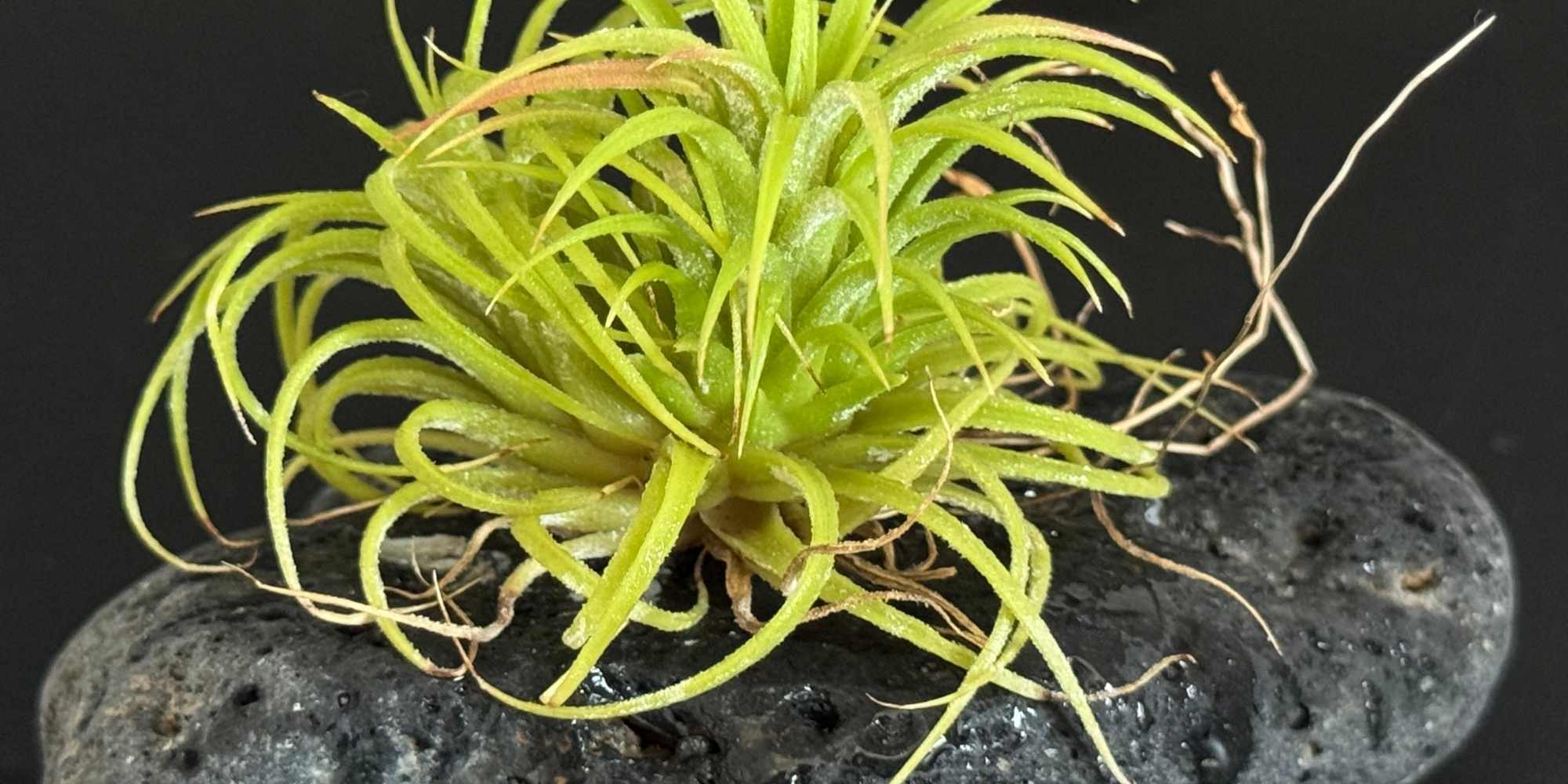
Tillandsia: common diseases and parasitic pests
Our advice for treating them naturally and preventing their appearance.
Contents
Tillandsia, nicknamed the “air plant”, is a fascinating plant that defies the classical laws of botany by growing without soil, on a support such as a branch or a piece of driftwood, or suspended. However, its ease of cultivation and hardiness do not protect it from harm. The slightest spot or the slightest change in texture can signal an imbalance or some form of poor health, indicative of disease or pest attack.
Discover our complete guide to identify, understand and treat the pests and diseases that threaten your Tillandsias.

Pests of Tillandsia
Although growing without substrate, Tillandsias still attract major sap-sucking pests. This is simply because they develop mainly due to unsuitable atmospheric conditions.
Mealybugs or armoured scale insects
It’s pest number one. Scale insects are recognised by their white cottony masses, often hidden at the base of leaves or in the rosette centre. Armoured scale insects, more discreet, look like small immobile brown or beige crusts.
Symptoms? General weakening, yellowing of leaves, and presence of honeydew, a sticky substance that can encourage development of sooty mould.
Treatment? Isolate plant immediately. For a light attack, use a cotton bud soaked in 70% alcohol. For a heavy infestation, spraying a mixture of water, black soap and a little vegetable oil will smother the insects.
Aphids
Aphids mainly attack tender young shoots and sometimes flowering stems.
Symptoms? Distorted flowers or new leaves.
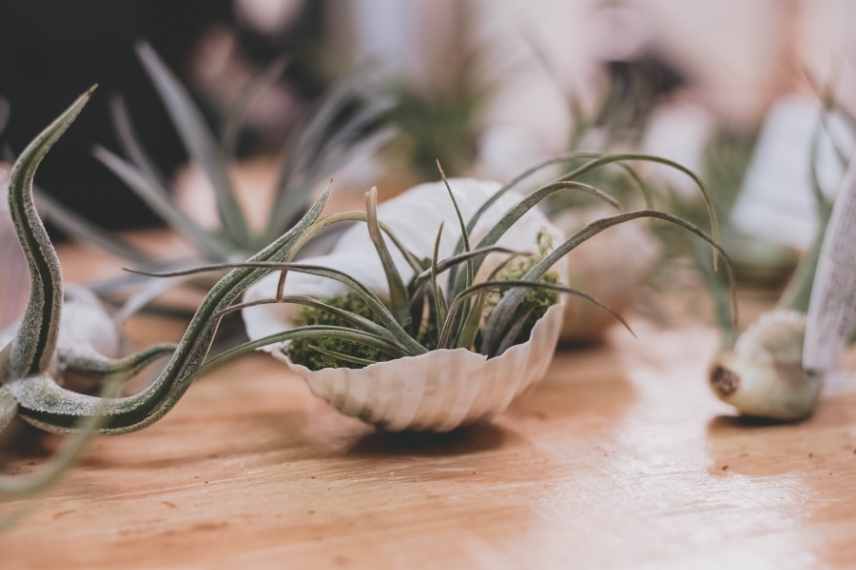
Although growing without substrate, Tillandsias still attract major sap-sucking pests
Treatment? A vigorous rinse with clean water is often enough. Otherwise, black soap remains the go-to solution.
Red spider mites
Red spider mites are mites that mostly appear in overly dry, warm environments. They are almost invisible to the naked eye, but the damage is real. Their presence is often detected by fine white webs on the leaves.
Symptoms? Leaves take on a dull, greyish or silvery appearance, with tiny pale speckles.
Treatment? Humidity is their greatest enemy. Increase frequency of misting and move the plant to a cooler location.
Diseases of Tillandsia
Fungal diseases are often more devastating than insects because they act from the inside in a very insidious way. By the time their presence is noticed, it is sometimes too late to act.
Heart rot or Phytophthora
It is the most frequent cause of death in indoor cultivation. Phytophthora is caused by excess water pooling in the centre of the plant after watering. As a reminder, Tillandsia is watered by misting the foliage.
What are the symptoms? Central leaves come away with no resistance when pulled. The base of the plant turns brown or black and may emit an odour of decay.
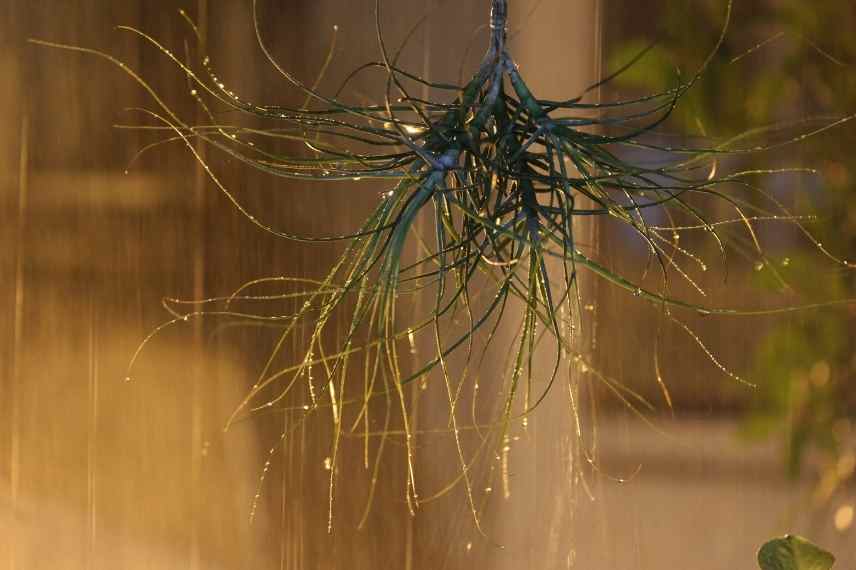
Always shake your Tillandsia upside down after watering
What is the solution? Unfortunately, once the centre is affected, the plant is often doomed. Prevention is key: always shake your Tillandsia upside down after watering to expel any standing water.
Base rot
Even though Tillandsia has no functional roots for nutrition, the base can rot if it remains in prolonged contact with a damp support such as moss, untreated wood or a water saucer…
What to do? Ensure the support dries quickly and that air circulates all around the plant.
Problems related to growing conditions
Often what is mistaken for a disease is simply a cultivation error. Tillandsia has not received proper care and lets you know!
Dehydration
What symptoms? Leaves curl excessively, tips become dry and brittle. Plant appears to close in on itself.
What remedy? If not too late, a prolonged soak for several hours, or even overnight, in room-temperature water will rehydrate tissues.
Sunburn
Although Tillandsia likes light, direct exposure behind glass in midsummer can burn tissues.
What symptoms? Dry white or brown patches appear on the most exposed areas.
What remedy? Move plant to bright, indirect light. Burnt leaves will not turn green again, but plant will survive if centre is intact.
Read also
The easiest indoor plants to growPrevention first and foremost!
As with most indoor plants, the best way to care for a Tillandsia is to prevent it from falling ill. Here are the three pillars of healthy cultivation :
- Good air circulation : the name “air plant” is not overstated. Air movement is more important than watering. A wet plant in stagnant conditions will rot within 48 hours.
- Good-quality water : avoid hard tap water that eventually clogs the trichomes. Use rainwater or spring water.
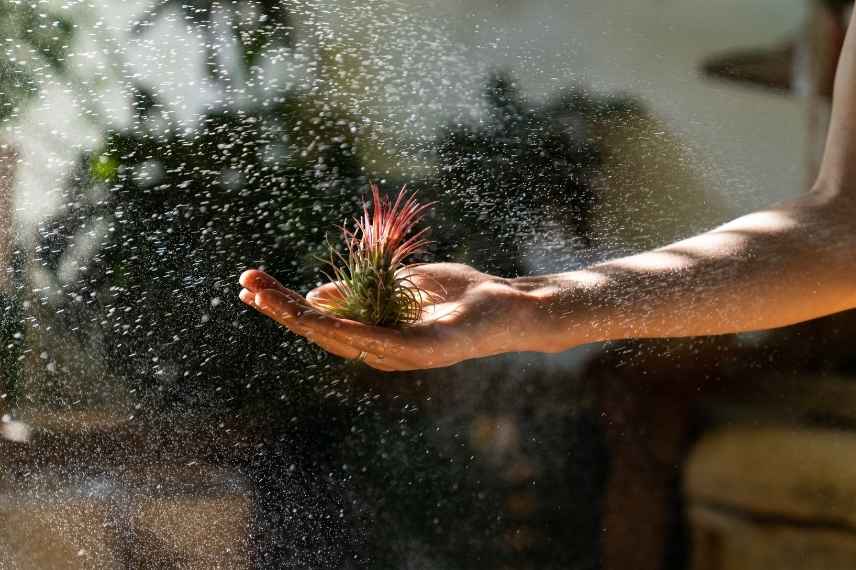
Tillandsia must be watered by misting
- Careful observation : Make a habit of inspecting underside of leaves and centre of the rosette once a week.
- Subscribe!
- Contents
This form is protected by reCAPTCHA - the Google Privacy Policy and Terms of Service apply.

































Comments