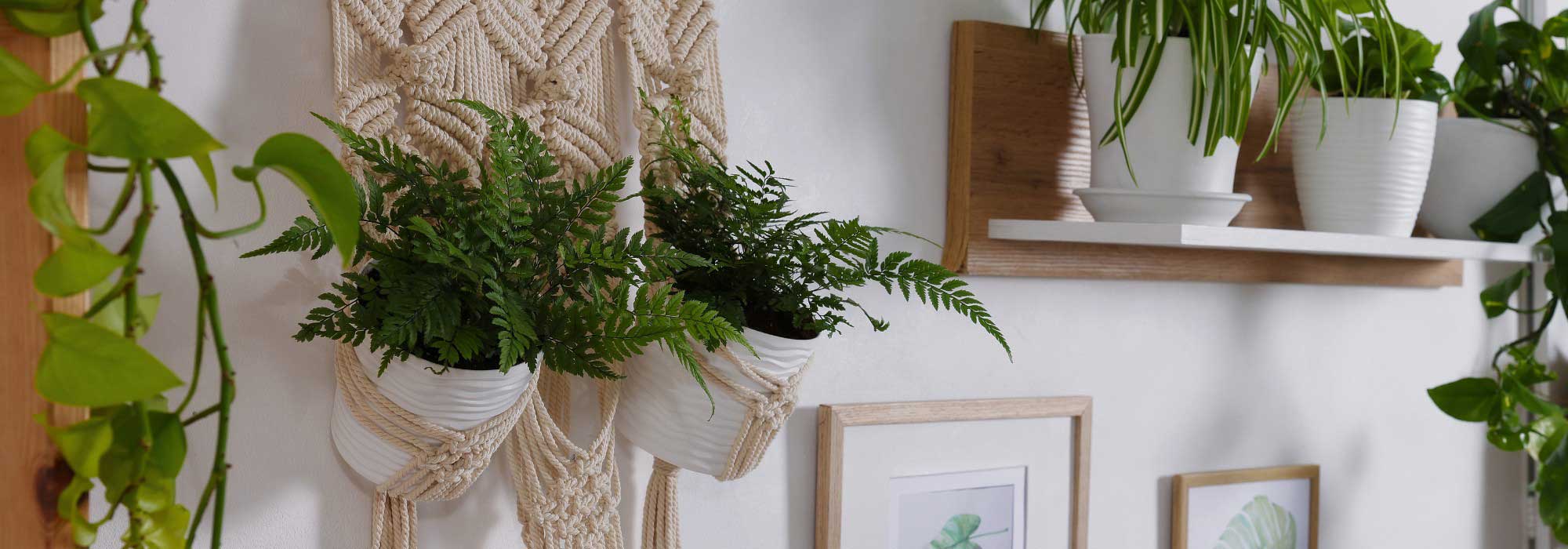
Indoor ferns: elegant plants to enhance your home décor
Discover the most beautiful varieties and how to incorporate them into your home.
Contents
Ferns charm with their delicate, elegant foliage, often finely divided, which adds a lovely decorative touch to any interior! Many exotic species adapt well to being grown in flats or houses: Nephrolepis, Asplenium nidus, Adiantum… Easy to incorporate into any décor style, they readily create a lush atmosphere, evoking the cool freshness of the woodland understorey.
Discover why you should adopt an indoor fern, which varieties to choose and how to care for it!

Why choose an indoor fern?
Ferns have many qualities that make them must-have indoor plants:
- A refined aesthetic: with their delicate, finely divided fronds, ferns bring movement and texture to your interior. They soften lines, enhance spaces and create a calming atmosphere.
- An ideal plant for zen ambience: their presence evokes understorey and damp forests. They are perfect for creating a natural, relaxing atmosphere, especially in a living room, bedroom or bathroom.
- An excellent choice for low-light areas: naturally growing in shade, many ferns tolerate indirect light and dim rooms, making them perfect allies for flats.
- A trendy plant: very present in ‘green’, bohemian or Scandinavian decor, they have become a key element of modern plant-focused design.
Most beautiful indoor ferns
Many species are suited to indoor growing. Here are the most popular:
Boston fern (Nephrolepis exaltata)
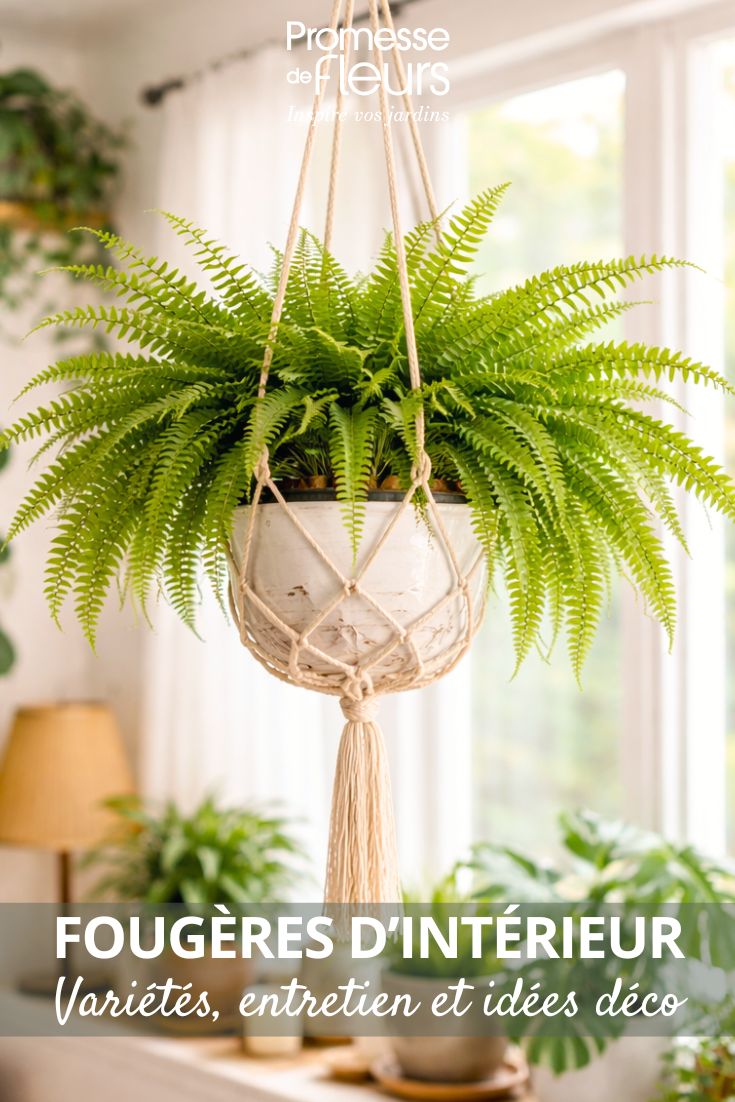
It is the best known, and with good reason: its dense, trailing foliage is spectacular. It instantly provides a lush, exotic feel. Its fronds are best showcased when placed up high, suspended or on a shelf.
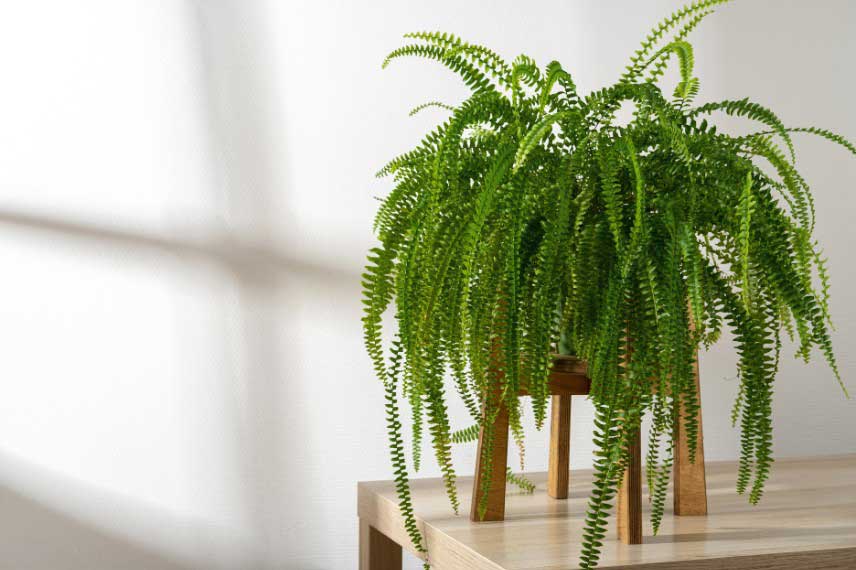
Nephrolepis exaltata
Bird’s nest fern (Asplenium nidus)
With its broad, entire, glossy leaves arranged in a rosette, it offers a totally different look from classic ferns. Very striking, it fits perfectly in contemporary interiors. It easily creates an exotic atmosphere.
Capillary fern (Adiantum capillus-veneris)
Extremely delicate, with its fine small leaves borne on dark stems, it is incredibly elegant. It requires a little more attention (especially regarding humidity), but the result is well worth it.
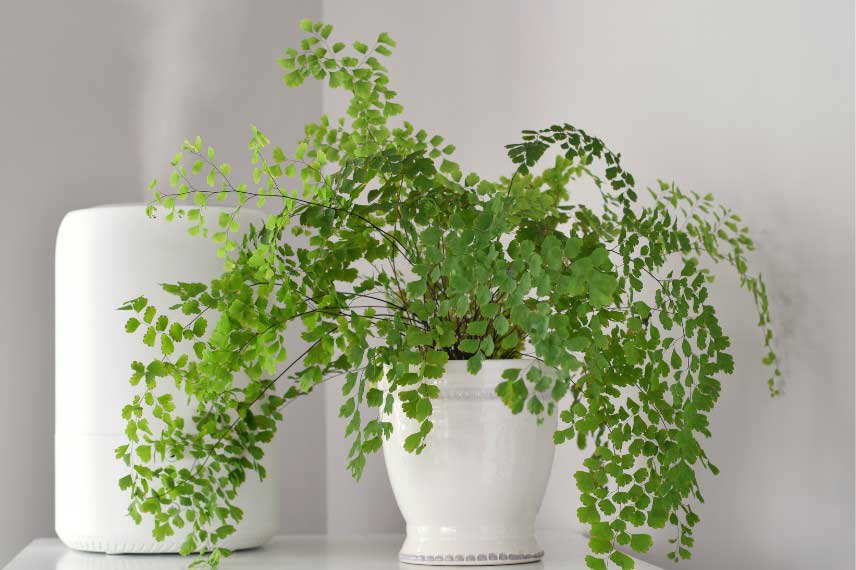
Adiantum capillus-veneris
Staghorn fern (Platycerium)
This very unusual fern is often grown mounted on a wall because it is an epiphyte: in the wild it grows attached to trees. It is perfect for creating a dramatic effect.
Blue fern (Phlebodium aureum)
Very on-trend, it stands out for its bluish tinge and undulate foliage. It adds a modern, original touch to a plant collection.
How to incorporate ferns into your décor and which plants to pair them with?
Ferns are very versatile and can fit into almost any style.
- Bohemian ambience : hang them in macramé with driftwood for a very natural look. Choose ferns with trailing fronds, such as Nephrolepis, and pair them with Pothos, Chlorophytum, Ceropegia, etc.
- Contemporary style : choose sleek pots (white or black) and opt for very graphic ferns, such as Asplenium nidus. This will particularly highlight the shape of its fronds. To complement it, consider Zamioculcas or Alocasia.
- Urban jungle décor : choose Platycerium, Nephrolepis or Asplenium nidus, and pair them with lush tropical plants such as calatheas and monsteras.
- Plant-filled bathroom : it’s an ideal room for ferns, notably Adiantum capillus-veneris, which is more demanding than others when it comes to ambient humidity.
Decor tip :
Consider playing with heights: hanging plants, shelves, low furniture… This helps create a true plant landscape and add depth to your room.
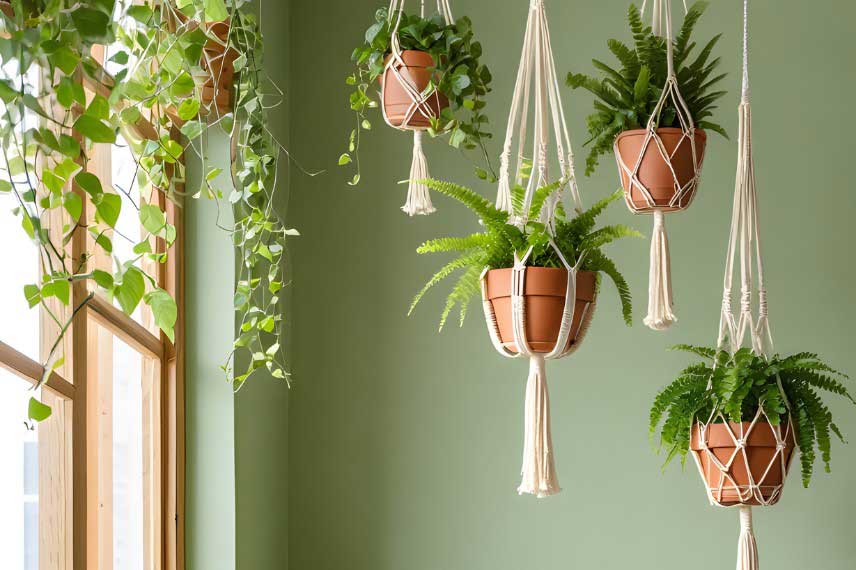
Ferns are ideal for hanging
Read also
Misting indoor plantsHow to grow and care for them?
Substrate
Ferns appreciate a light, organic-rich substrate. You can plant them in an even mix of potting compost, turf or sphagnum, and perlite for drainage.
Luminosity and temperature
As shade plants, ferns prefer soft, filtered light. Avoid direct sun, which can scorch foliage. A bright room without direct exposure is ideal.
Ferns like temperate conditions, between 15 and 22°C. Avoid draughts, sudden temperature changes and proximity to radiators.
Watering and misting
Substrate should remain slightly moist, without being waterlogged. In spring and summer, water once or twice a week, then reduce waterings in autumn and winter. Allow the surface of the substrate to dry briefly between waterings.
Ferns appreciate a humid atmosphere. To achieve this, either mist foliage regularly, place the pot on a tray of clay pebbles with a little water, or position a humidifier nearby. Another option is to keep them in a humid room, such as a bathroom.
Fertilisation
To encourage growth, apply a little liquid houseplant fertiliser, diluted in watering water, about once a month from spring to autumn.
Repotting
Repot ferns every one to two years in spring. This renews substrate and provides space for development. You can use the opportunity to propagate them.
Mistakes to avoid
To keep a fern healthy, avoid these common pitfalls:
- Exposure to direct sun: can cause leaf scorch ;
- Lack of humidity: fronds become dry and brittle ;
- Skipping waterings: ferns do not tolerate drought ;
- Dry air, especially in winter with heating ;
- Frequent changes of location.
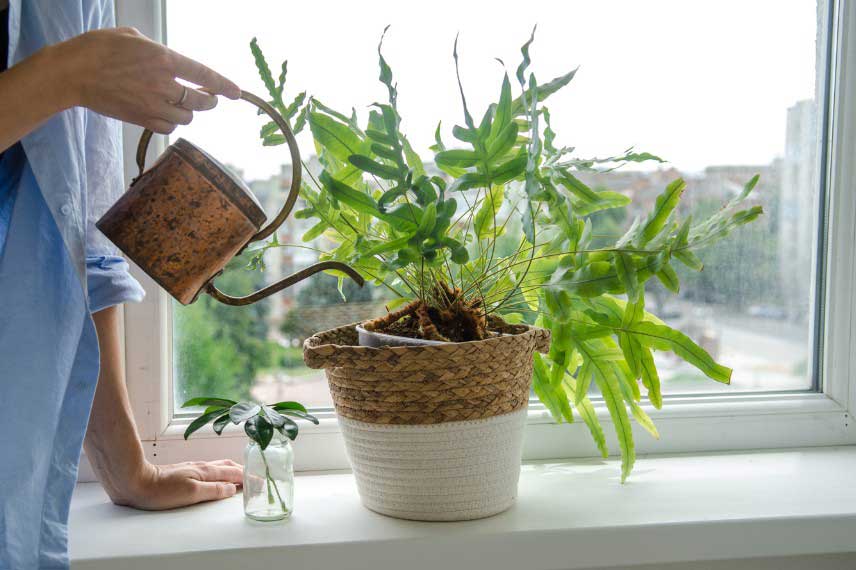
Remember to water your ferns regularly
- Subscribe!
- Contents
This form is protected by reCAPTCHA - the Google Privacy Policy and Terms of Service apply.

































Comments