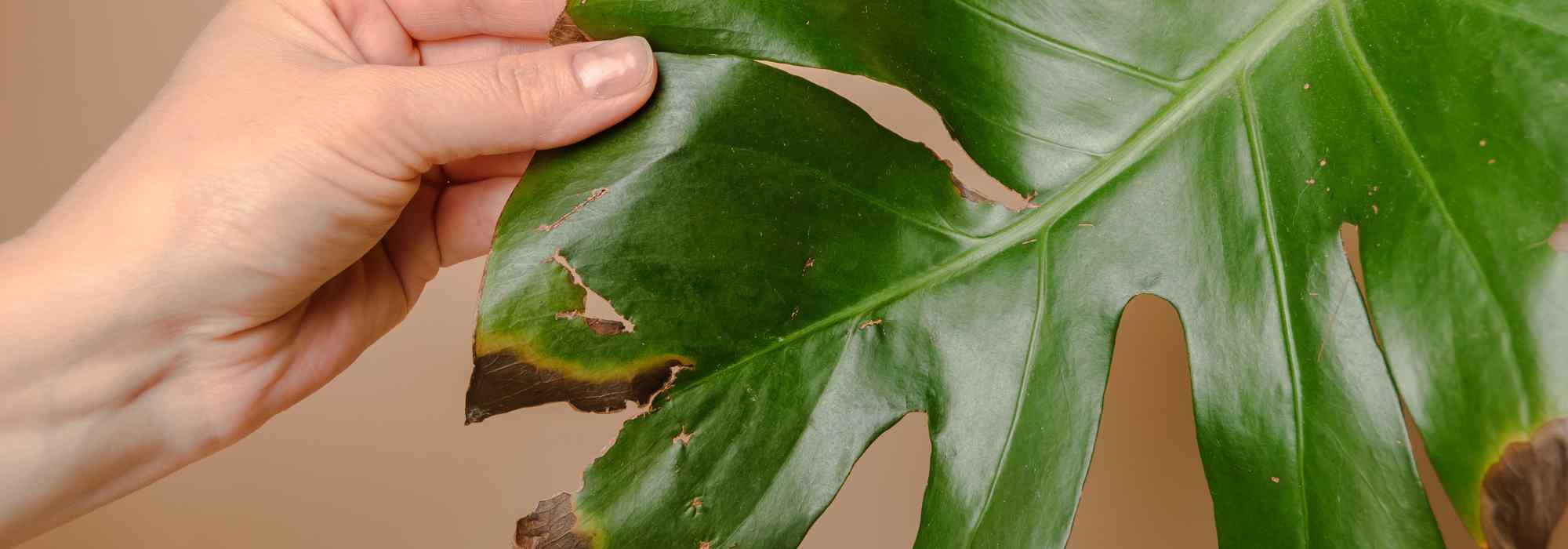
Diseases and pests of Monstera
Identification, prevention and natural solutions
Contents
Monsteras or false philodendrons are houseplants valued for the beauty of their leaves. The Monstera deliciosa, with its deeply cut, spectacularly large leaves, brings a truly tropical atmosphere and is among the most popular.
Easy to grow, they are perfect for beginners and will find a place in many rooms of the home. But like all plants, they can fall victim to diseases or pests. Let’s learn to identify symptoms and see how to treat a Monstera naturally to keep it healthy.
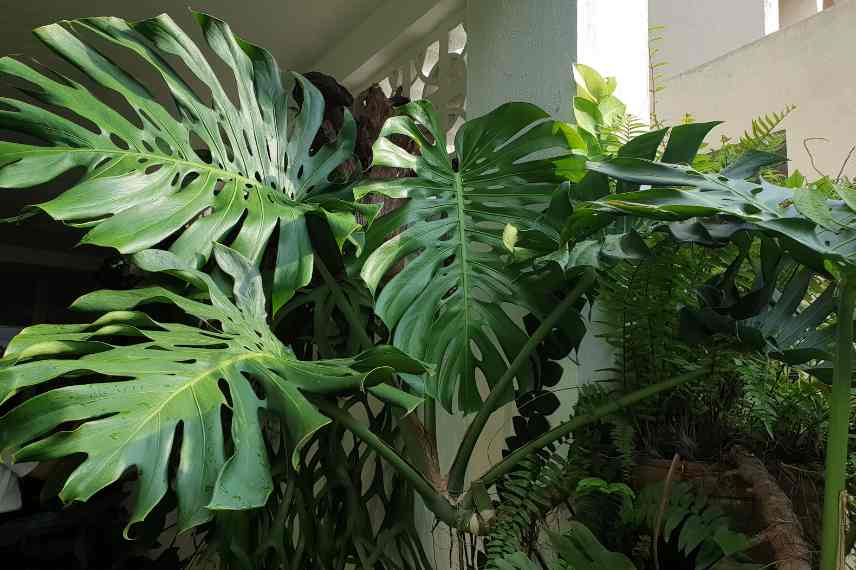
Monstera deliciosa, a spectacular indoor plant

Parasitic pests of Monstera
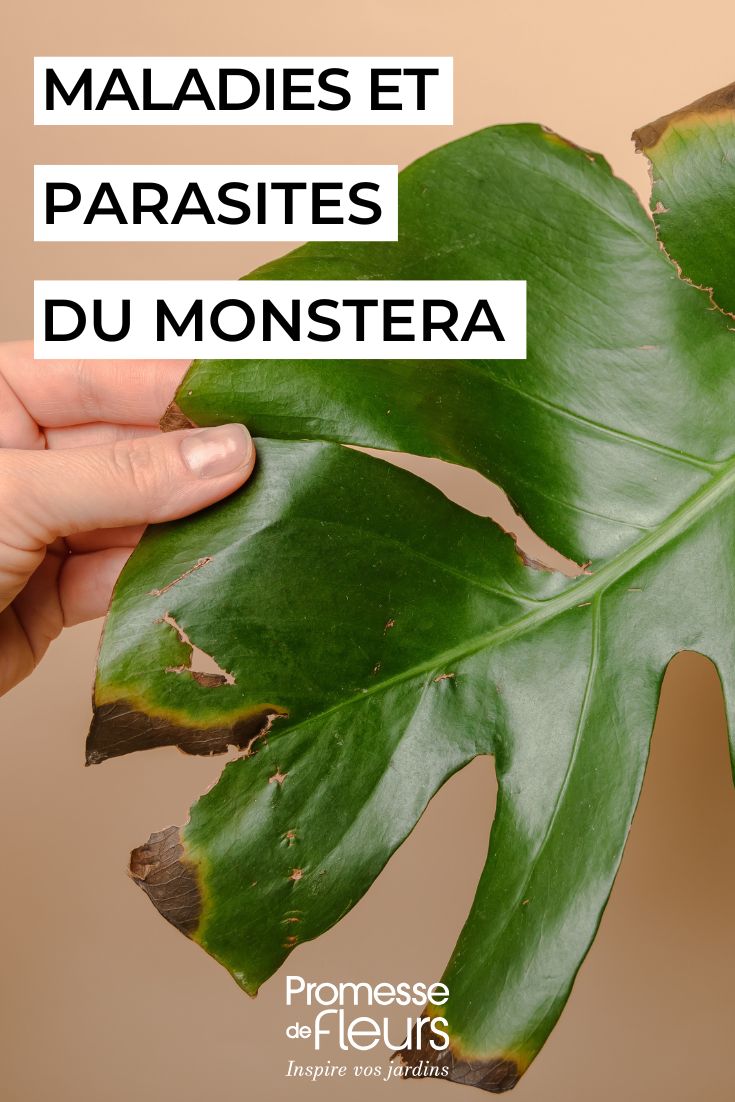
Monstera can be affected by various pests. These are mites or sap-sucking insects that feed on plant sap and weaken the plant. In cases of heavy infestation, Monstera growth can be halted: leaves cannot develop properly, the plant wilts, sometimes to the point of dying. Feeding punctures from these pests can also create entry points for other pathogens, bacteria or diseases.
Thrips
They are certainly the hardest to manage, since thrips are difficult to spot. Very small black or translucent insects, they often hide on the undersides of leaves or along stems. Their presence is often detected late, when Monstera foliage discolours, showing brown or silvery patches. Young leaves can no longer open properly.
Pour en savoir plus : Thrips: identification and natural treatment
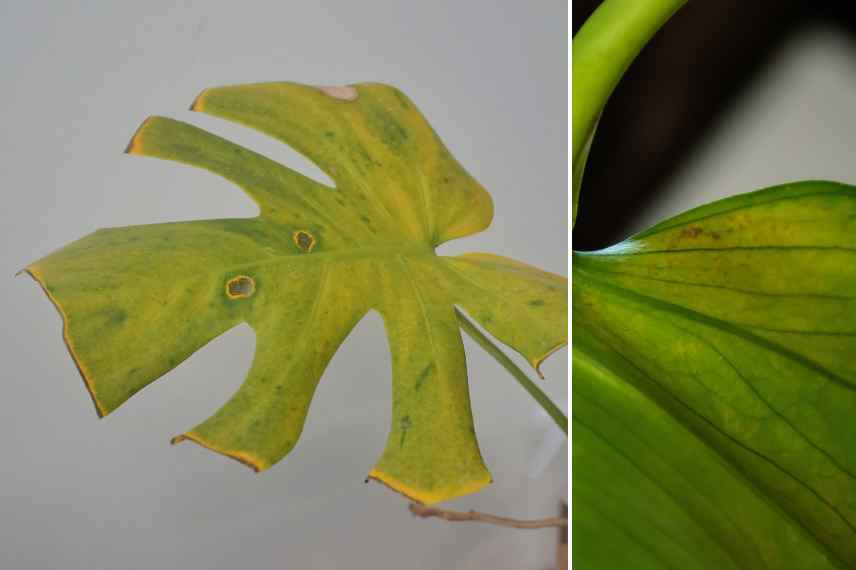
Thrips attack on a Monstera
Mealybugs
These are white insects, their name referring to their cottony texture. They also settle under leaves or along stems. The presence of white clumps and yellowing foliage are the first signs of infestation.
Mealybugs also produce honeydew, like aphids. This is a sticky substance that favours the development of a cryptogamous disease (caused by a fungus), called sooty mould. It forms dark, soot-like deposits on leaves and stems. This disease reduces photosynthetic output and therefore also impacts plant health.
Pour en savoir plus, découvrez notre article : Mealybug: identification and treatment
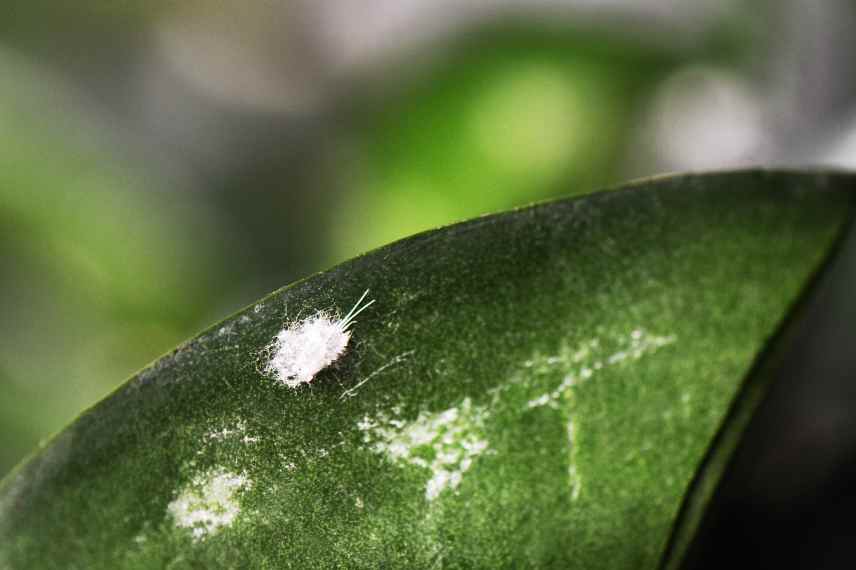
Mealybugs are recognised by their cottony appearance and the sooty mould they cause on foliage
Red spider mites
Equally hard to spot, red spider mites are tiny acarids. It is the fine webs, reminiscent of spider silk, that betray their presence. Leaves also discolour, turning yellow to brown.
Pour en savoir plus : Red spider mite: identification and treatment
Preventing Monstera pests
These pests have in common that they are hard to detect. Often the problem is only noticed once the plant is heavily infested. As prevention, it is therefore important to check indoor plants regularly: a pest attack detected early is easier to control. For example, use watering or cleaning sessions as an opportunity to check your Monstera for signs of pests.
Also, all these pests favour warm, dry indoor conditions. As further prevention, you can therefore regularly mist foliage with room-temperature water. You can also apply a mulch at the base of the plant, using plant husks or clay pebbles for example, to help retain moisture in the substrate (the soil the plant grows in).
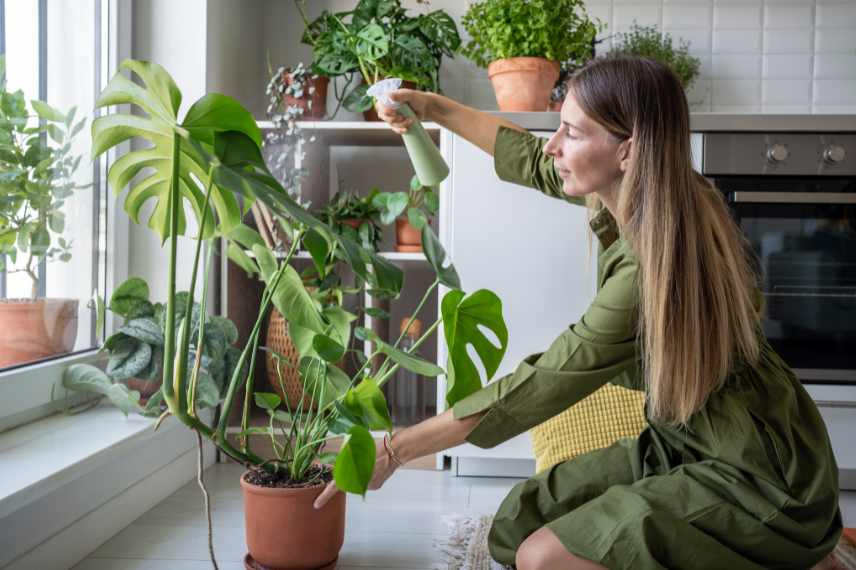
Also make sure to tend to your Monstera’s growing conditions: a plant whose needs are met will naturally be more resistant to pest attacks, and to diseases. As a reminder, Monsteras prefer bright positions without direct sun that could scorch their attractive leaves. As tropical plants native to Central and South America, they like warm, humid conditions. Water when the surface of the soil is dry. Grow them in a well-draining potting mix so irrigation water can drain away without pooling. Consider fitting a stake wrapped in moss or coconut fibre so this naturally climbing plant can develop more effectively vertically.
Natural solutions in case of pest attack
If it is too late and you already notice pests, start by showering your Monstera’s foliage. Place the plant in the shower tray or bath and gently wet the foliage with room-temperature water. This will remove part of the pest population.
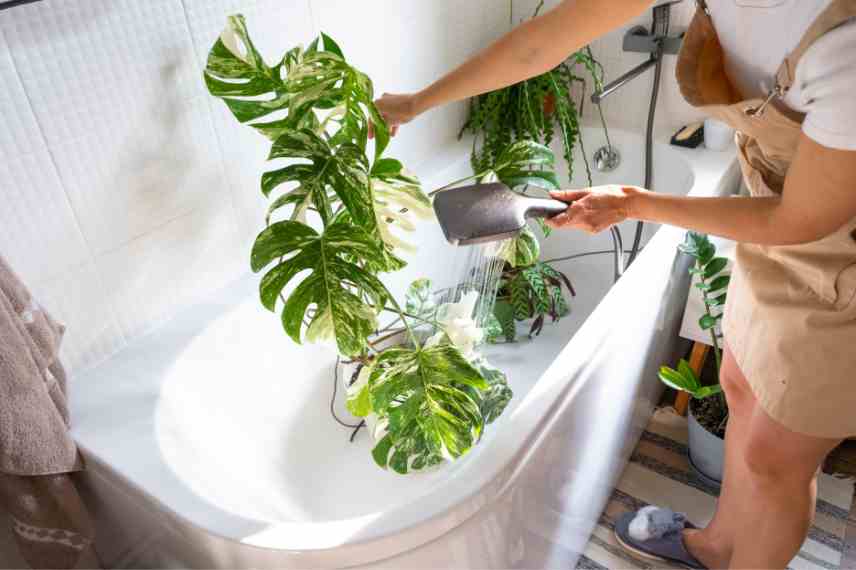
Treating an infested Monstera
If necessary, then prepare a natural insecticidal treatment using black soap. To do this, mix 1–2 tablespoons of pure black soap in 1 litre of lukewarm water. Stir, then wait for the mixture to cool. Pour into a spray bottle and spray this mixture over the foliage, taking care to treat the undersides of leaves and the stems as well. Generally, a repeat application will be necessary after 7 days.
Read also
Monstera: growing and caringCryptogamous diseases of Monstera
Monsteras can also be affected by cryptogamous or fungal diseases caused by fungi. They appear in overly damp conditions, especially when watering is excessive.
Root rot
It develops when there is too much water, but also in heavy soil. It is hard to notice at first since it attacks the roots, causing them to blacken and soften. An unpleasant odour may also emanate from the soil. Then Monstera leaves will yellow and drop.
In this case, it is imperative to take the plant out of its pot, in order to cut away affected parts, then repot it in a new container with fresh potting compost.
Leaf spots
These are brown or black spots that appear on the foliage and can then cause leaf drop. Plant growth is also slowed.
In this case, cut off affected leaves immediately, to limit spread of the disease. Space out mistings of the foliage or avoid splashing the foliage when watering.
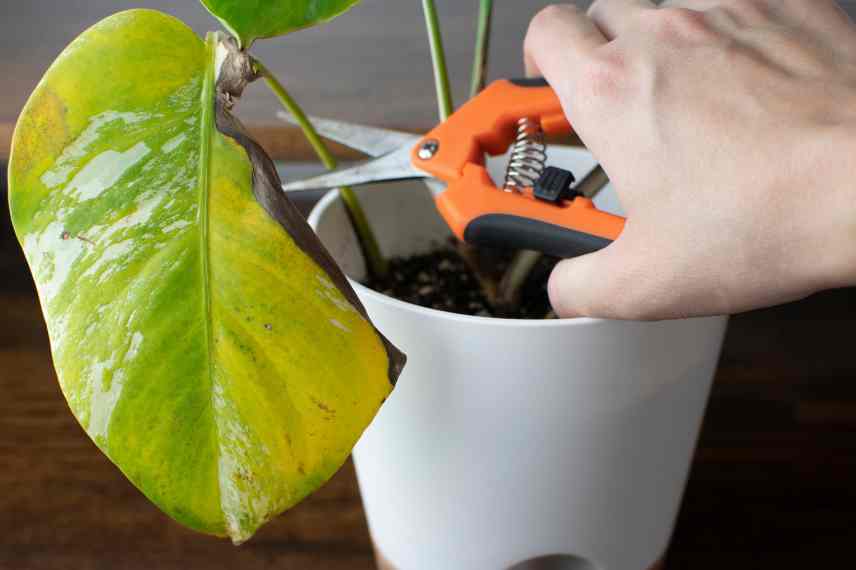
Prevention against cryptogamous diseases
As a preventive measure, as with pests, maintain good growing conditions. After watering, empty any saucers and cache-pots after 15 minutes. Choose a well-draining substrate and place a drainage layer about 3 to 5 cm deep at the bottom of the pot. For this, use clay pebbles, gravel or terracotta shards. Prefer terracotta pots, especially if you tend to over-water. Their porous material allows the soil to breathe better than plastic pots.
If you need to prune the plant to remove damaged leaves or cut stems to rebalance the Monstera’s shape, clean your cutting tools with 70% alcohol beforehand. This reduces the risk of spreading disease between plants.
Every two to three years, depending on plant growth, repot. In other years, don’t hesitate to carry out a top-dressing (replacement of the top few centimetres of soil with fresh potting compost) or to add fertilisers suitable for indoor plants.
Finally, nettle manure is a natural product renowned for its fungicidal properties. It can be used both preventively and curatively. Ready-to-use spray products for the foliage are available commercially, but you can also make it yourself by following our tutorial: How to make nettle manure.
- Subscribe!
- Contents
This form is protected by reCAPTCHA - the Google Privacy Policy and Terms of Service apply.

































Comments