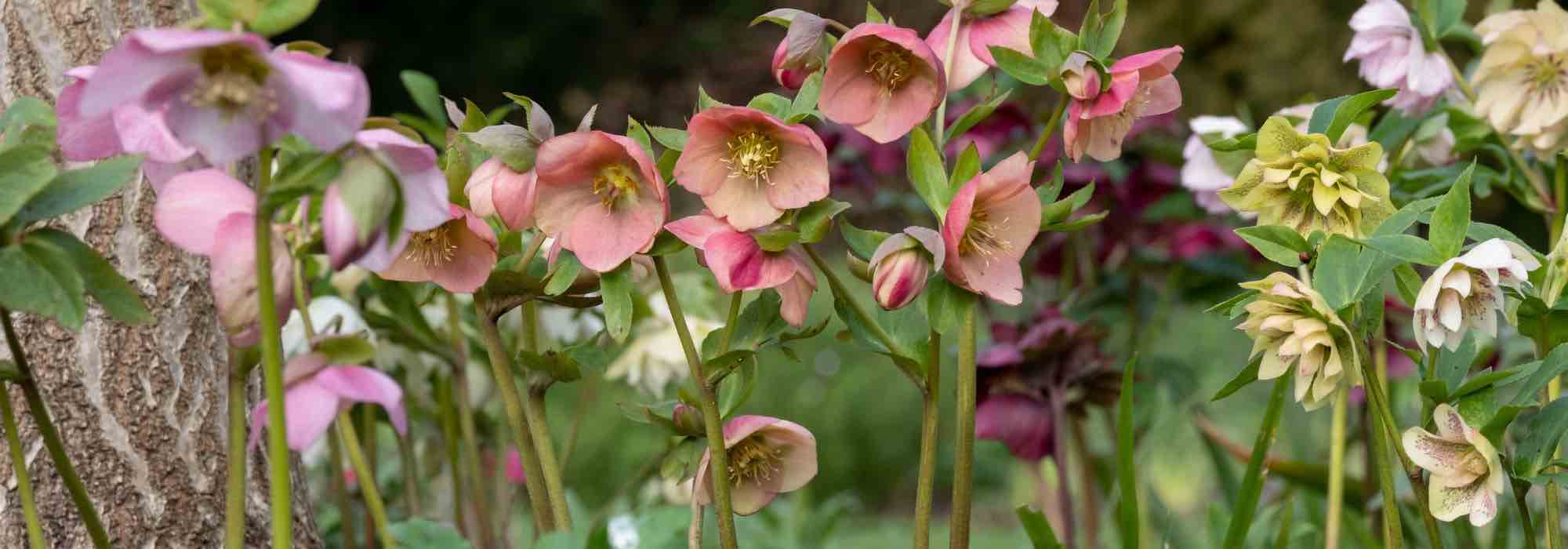
Hellebore diseases and pests
Identification, prevention and natural remedies to care for your Christmas roses
Contents
We love Hellebores or Christmas roses for their winter flowering. Their attractive range of colours and forms brightens the cold season, adding a touch of light. Although fairly easy to grow, these plants can nevertheless be susceptible to certain diseases or pest attacks.
This article aims to inform gardeners of all levels about common problems that can affect hellebores. We will also provide possible natural remedies, so you do not need to use harmful chemicals.
For more information: Hellebores: planting and growing
Aphids
Description and symptoms
These are the pests gardeners know best. These sap-sucking insects attack both leaves, stems and flower buds. By feeding on hellebores’ sap, they gradually weaken plants. Visible symptoms include leaf curling and reduced growth.
Above all, aphids secrete honeydew, a sticky substance that promotes the development of a cryptogamous disease (fungus): sooty mould. This disease is easily identified by the black, soot-like deposit often seen on Christmas roses. It affects photosynthesis and can eventually cause plant decline.
Prevention
To prevent infestation, inspect hellebores regularly so you can intervene as soon as the first aphids appear. The presence of ants, which feed on the honeydew secreted by the pests, is also an indicator.
Encourage biodiversity in the garden to attract natural aphid predators, such as ladybirds or lacewings. To do this, there are many options: provide water sources, create insect hotels, leave fallow areas, grow wild plants, put up bird boxes and feeders, etc.
Natural treatments
At the start of an infestation, it is perfectly possible to remove invaders manually.
If colonies are larger, you can use a homemade natural insecticide based on black soap.
To do this :
- dilute 1 tablespoon of black soap in 1 litre of lukewarm water;
- add 1 tablespoon of vegetable oil (rapeseed oil);
- place the mixture in a spray bottle;
- wait for this insecticide to cool before spraying onto affected areas.
Apply this treatment early in the morning or in the evening, out of direct sunlight.
For more information : « Aphids: identification and treatment »
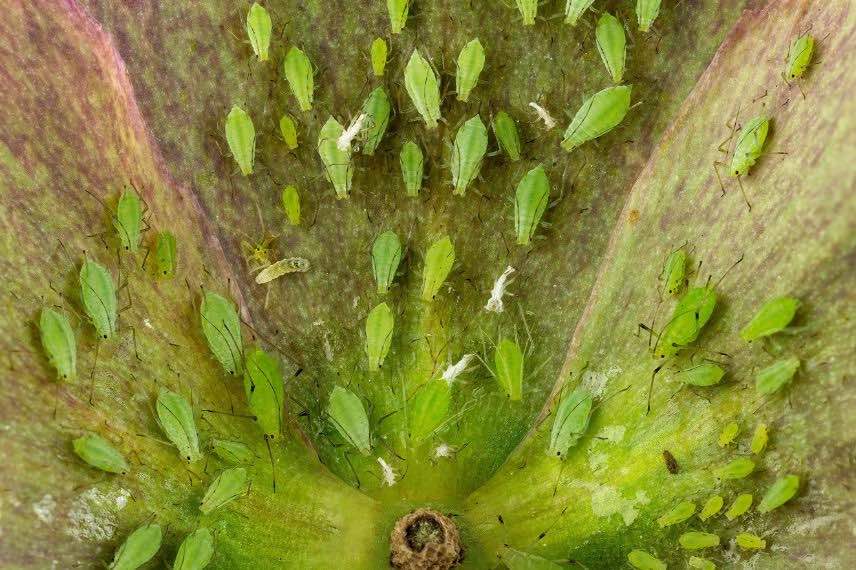
Green aphids on a hellebore flower
Read also
Growing a hellebore in a potBlack spot disease
Description and symptoms
This cryptogamous disease is caused by a fungus (Coniothyrium hellebori). It can be recognised, as its name suggests, by the black or brown spots it leaves on hellebore leaves. These spots are circular and first appear on the leaf margins before spreading. Usually the oldest leaves are affected first. But if the disease spreads, for example in a plant already weakened or in an especially humid environment, all aerial parts may dry out. Unfortunately the hellebore will eventually perish.
Prevention
Many simple measures can limit the development of cryptogamous diseases.
- Care for growing conditions of your Helleborus: naturally healthy plants will be less prone to disease. Provide partial shade, soil that is cool and rich in organic matter, yet well drained (so water does not stagnate).
- Keep appropriate planting distances between plants to allow natural air circulation.
- Do not plant Christmas roses in an area previously infected by a cryptogamous disease.
- Always clean your cutting tools (pruning shear, scissors) before use, to avoid transmitting diseases between plants.
- Avoid watering hellebore foliage. Moisture encourages fungal growth.
- Quickly remove any plant debris that favours spore development (dead leaves, damaged stems, spent flowers, etc.). When flower buds appear, remove old leaves.
Natural fungicidal treatments
If you observe the first symptoms of black spot, remove affected parts immediately. Use a pruning shear which you clean thoroughly after use (for example with alcohol). Do not put this plant debris in the compost; dispose of it at a waste facility instead.
Against cryptogamous diseases, you can use natural fungicides based on copper sulphate. The best known is the Bordeaux mixture. It is suitable for organic farming. However its use is not without consequences: in large quantities and with regular application it can unbalance soils and encourage disease emergence. Use it sparingly.
If you prefer even more natural treatments, choose plant manures. Their efficacy is not scientifically proven, but many gardeners report beneficial effects both as preventive and curative. Turn to nettle manure and horsetail decoction, dilute in water (ideally rainwater). Spray affected parts out of direct sunlight.
For more information: « All you need to know about cryptogamous diseases » and « Bordeaux mixture and other copper-based treatments in the garden ».
Gastropods
Description and symptoms
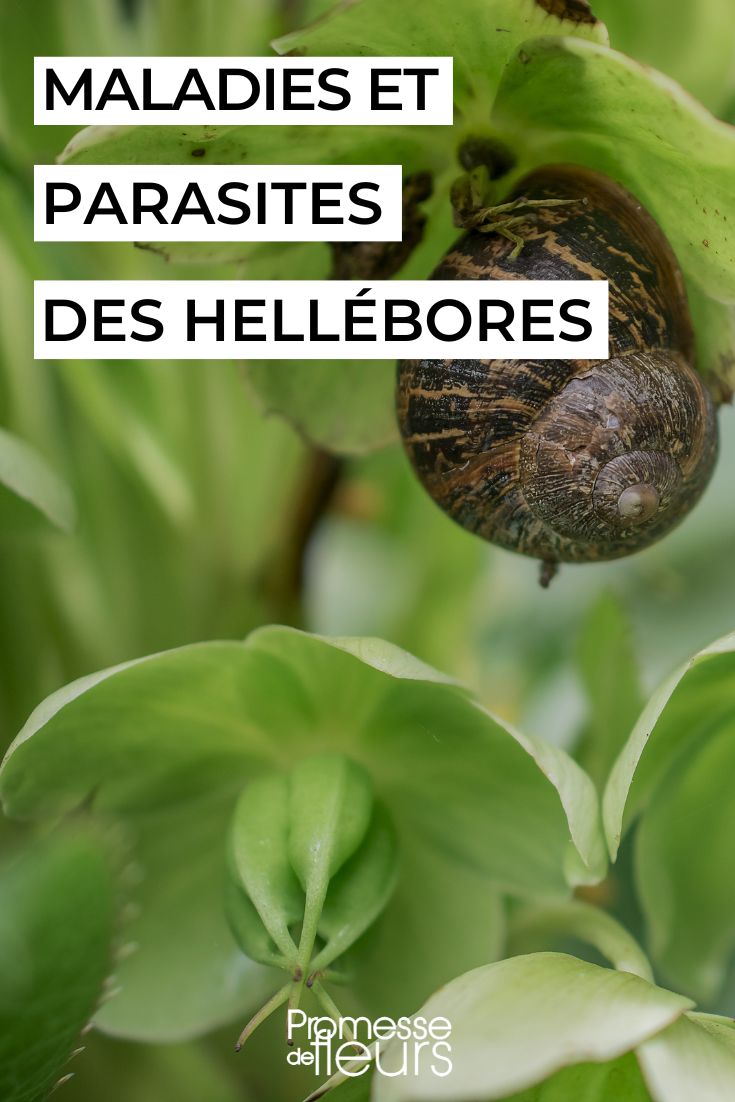
We all know these little slimy gluttons, which can cause serious damage in the garden. Snails and slugs feed on young shoots of hellebores, but also sometimes on flower buds. They can quickly devastate a young plant.
Prevention
There are many preventive solutions to stop gastropods from feasting on your Christmas roses. Some gardeners use beer traps, while others prefer mechanical natural barriers made from ash, eggshells or diatomaceous earth.
Natural treatments
You can find in shops or online ferramol-based products, usable in organic farming to combat snails and slugs. The pellets consumed by gastropods act as an appetite suppressant and cause them to perish.
Collecting unwanted animals at dusk can also prove effective. It’s a 100% natural and free solution, but time-consuming.
For more information: « Slugs: 7 ways to fight effectively and naturally ».
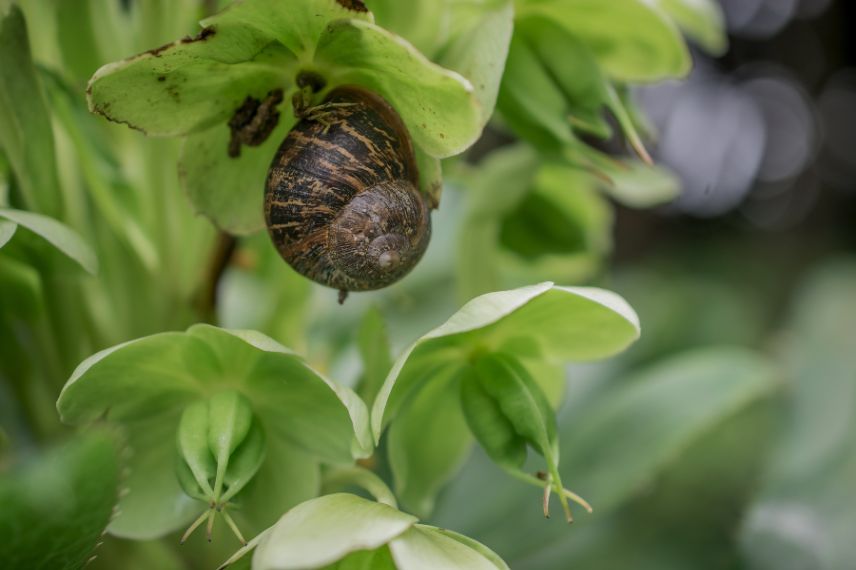
Gastropods are fond of hellebores
- Subscribe!
- Contents
This form is protected by reCAPTCHA - the Google Privacy Policy and Terms of Service apply.

































Comments