Diseases and parasitic organisms of Sedum
Identification, prevention and natural solutions
Contents
Sedum or stonecrops are among those plants that are really easy to care for, particularly adaptable. These are succulent plants of the family Crassulaceae, which come in many varieties. They have tough, fleshy foliage, often late autumn flowering, and a wide diversity of colours and forms.
They are plants for dry gardens, gravel gardens or containers that require no watering. This resistance to heat and lack of water does not prevent them from being very hardy.
But like all plants, they can fall victim to diseases or become targets for pests. Let’s see how to identify them, prevent risks and apply natural treatments if necessary to keep Sedum healthy and attractive.

Slugs and snails
Identification
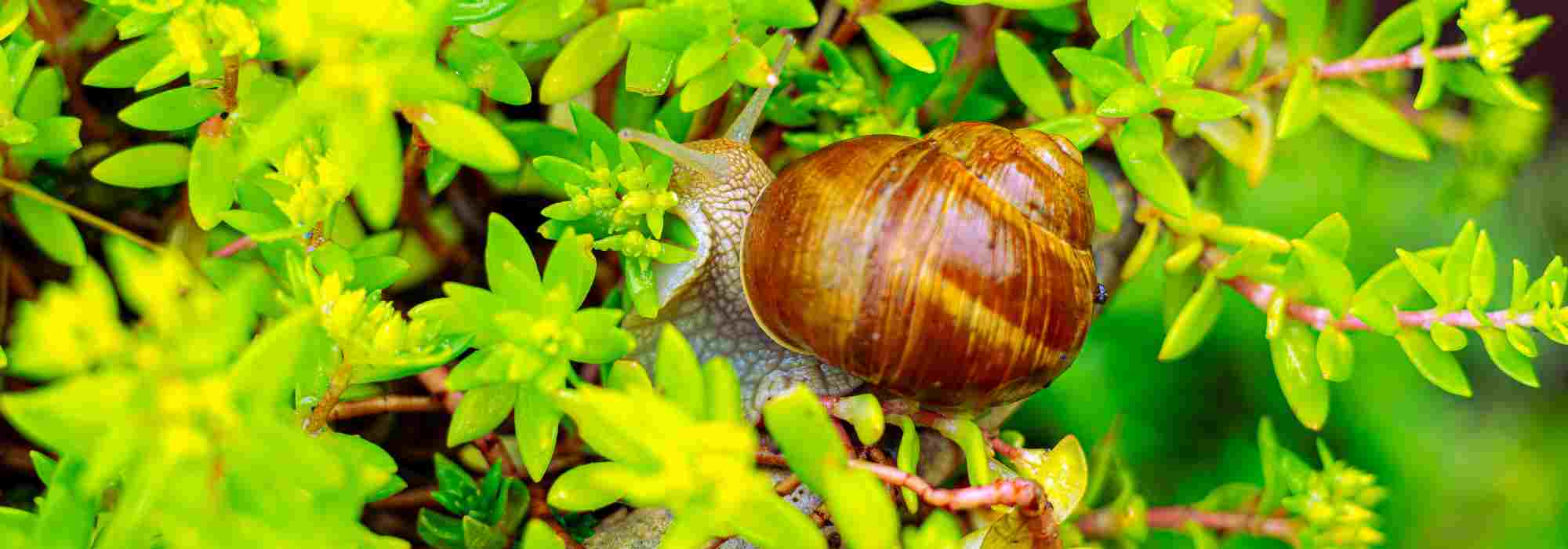
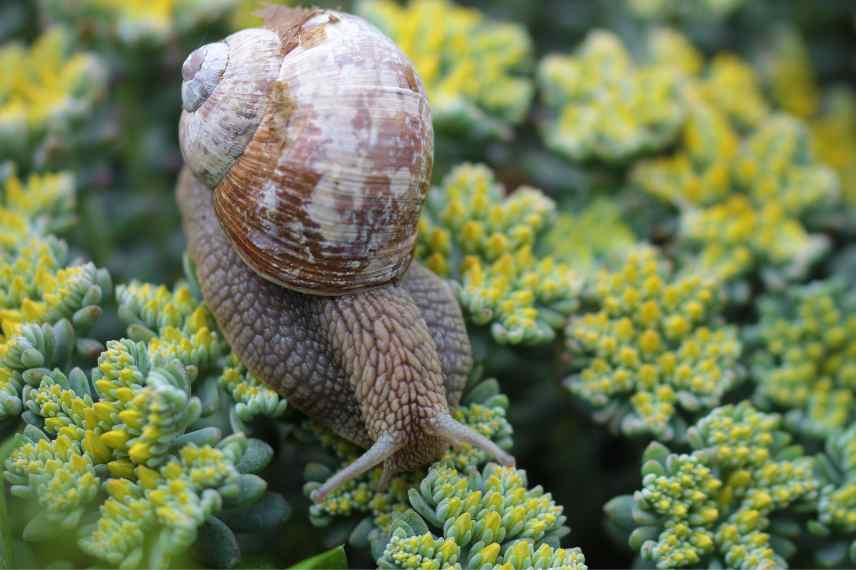
No need to introduce these gluttonous gastropods: you will certainly know them. Slugs and snails tend to feast on Sedum leaves when still young and tender. Some caterpillars may also attack Sedum. Damage is often worst in early spring, when gastropods emerge from winter dormancy. You will then notice chewed leaves and slime trails near your Sedum.
Prevention and natural solutions
There are many ways to control slugs and snails in the garden. Remember gastropods are part of the food chain and therefore part of natural balance. Better to limit their impact rather than try to eradicate them completely.
For prevention, several options are available.
- Grow Sedum in pots, tubs or window boxes. This growing method makes them less accessible.
- Place Sedum in a border surrounded by plants less attractive to gastropods. In a dry garden, Yuccas, houseleeks or Aloe vera make good companions, their foliage being much less palatable due to its texture.
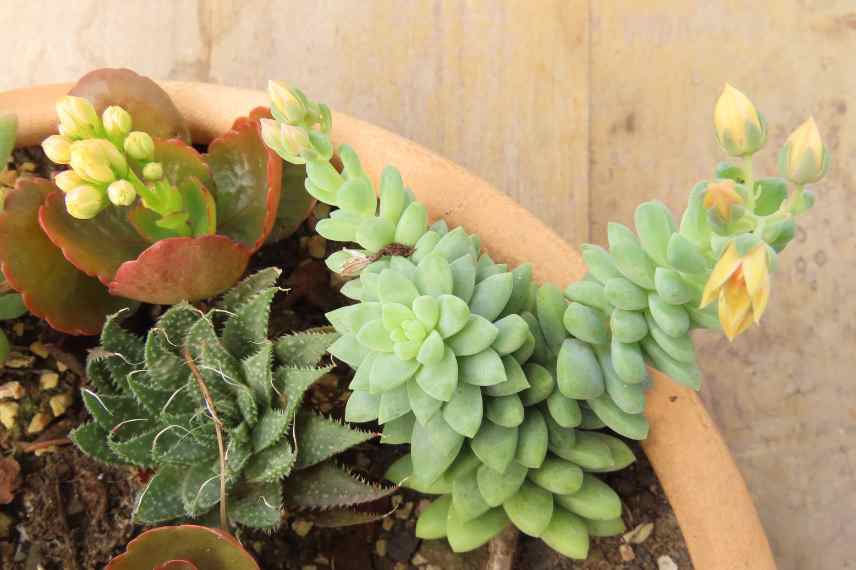
Plant some rough-leaved succulents near your Sedum
- Put unpleasant materials around Sedum plants to restrict movement (pumice, crushed eggshells, coffee grounds…). These need frequent renewal, especially in wet weather, and effectiveness varies greatly between gardens.
- Distract them by offering plant waste or a dedicated crop (such as mustard) in a corner away from main garden.
If you prefer more decisive methods, you can set up beer traps, into which gastropods will crawl and drown. Make sure opening is narrow enough so other animals do not become trapped. Use of ferramol-based pellets is also an option. They can be used in organic farming and pose no risk to other animals, pets or predators of gastropods. They act as appetite suppressants, leading to decline of slugs and snails. And if you have patience, hand-picking early in the morning or at dusk is also an effective method.
For more, see our article: Slugs: 7 ways to tackle them effectively and naturally.
Vine weevils
Identification
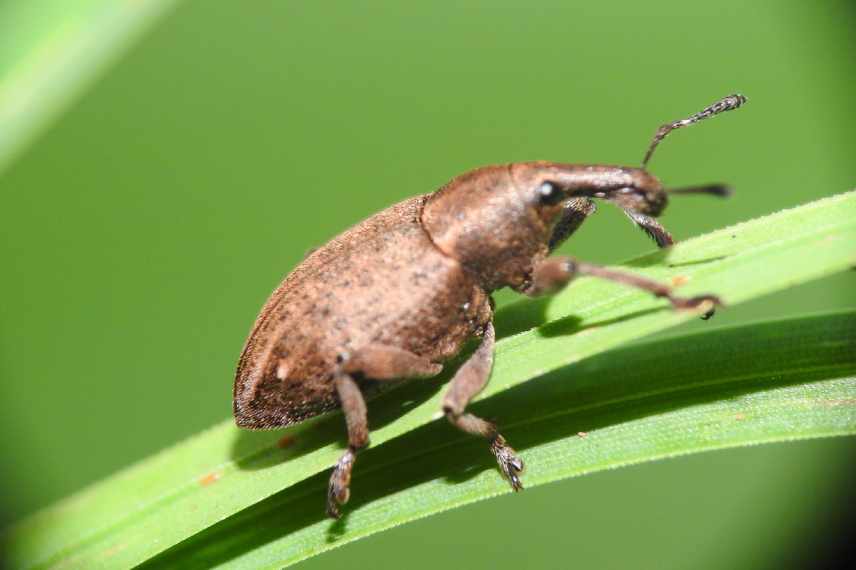
Vine weevils are pests of the weevil family, mainly encountered in container-grown or greenhouse cultivation. They particularly favour warm, dry summer conditions. They are small beetles measuring less than 10 mm. Adults can cause damage by feeding on leaves thanks to their rostrum, a kind of chewing beak. For their part, larvae feed on plant roots, which can affect plant development, especially in younger specimens. They are difficult to spot, as they are small, dark-coloured and mainly nocturnal.
Prevention and natural solutions
Older plants tend to be more frequent targets of vine weevils. Remember to divide your Sedum plants regularly and provide suitable growing conditions.
With light infestations, manually removing adults late in the day may be sufficient. Note that when they feel threatened, these beetles play dead — this behaviour is called thanatosis. For a more powerful natural treatment, consider biological control methods, using nematode-based vine weevil traps. These worms parasitise adults by consuming them from the inside, breaking the reproductive and developmental cycle. Proper use requires following product recommendations precisely (installation, maintaining moisture, etc.).
For further reading, see our article: « How to get rid of vine weevils? »
Aphids
Identification
Other pests well known to gardeners: aphids. Several species exist, which can be green, black or winged. These small piercing-sucking insects feed on plant sap. They particularly favour young leaves of Sedum and their presence within young rosettes can be harder to spot. If a few aphids won’t affect plant health, they can produce honeydew, a sticky substance that provides a fertile substrate for a fungal disease: sooty mould. It appears as black deposits resembling soot on stems and foliage. Over time, it can affect photosynthesis and lead to decline of Sedum.
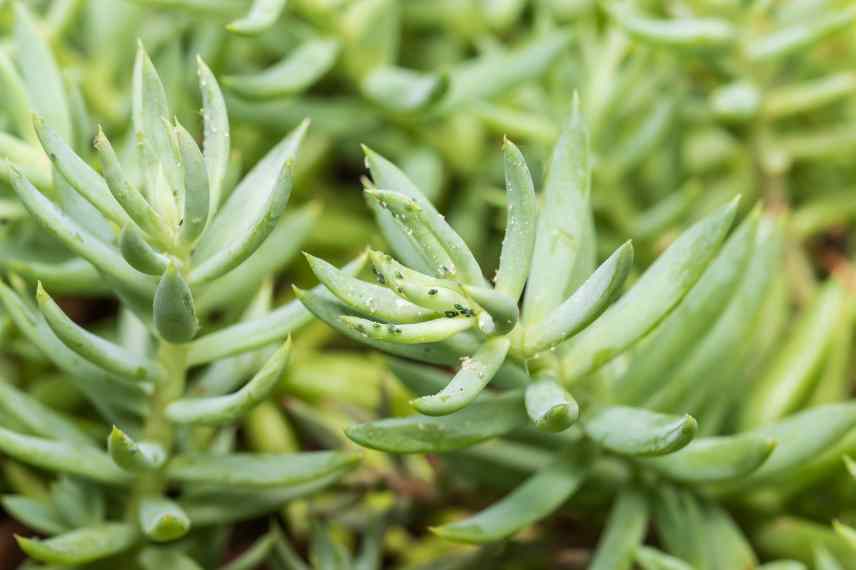
Tiny little pests on your Sedum: usually aphids
Prevention and natural solutions
As prevention, if you notice a few aphids, remove them by hand. A short blast of water can also help dislodge them, taking care, if possible, not to let water stagnate in the heart of developing rosettes, particularly in autumn stonecrops.
Sedum are plants of poor soils: no need therefore to apply nitrogen-rich fertiliser, which could instead weaken the plant and make its leaves softer and more appetising.
If aphids are present in large colonies, choose sprays of a natural insecticide made from pure black soap. Mix 1 to 2 tablespoons into 1 litre of warm water. Pour mixture into a spray bottle and spray affected areas, out of direct sunlight. Repeat after 7 to 10 days if necessary.
Finally, consider planting trap crops, such as the nasturtium, which tend to attract small pests, thus protecting other plants.
For more, see our article: « Aphid: identification and treatment ».
Read also
How to grow a Sedum in a pot?Root rot caused by excess water
Identification
Sedum are generally trouble-free, but excess water is one of the factors that can cause them to decline. It promotes root rot, caused by development of fungi or bacterium. In terms of symptoms, you will notice the plant losing vigour: it softens, leaves begin to blacken or yellow. Over time Sedum will stop growing altogether and die back. An unpleasant odour may also emanate from the growing medium and you may observe mould developing on the surface.
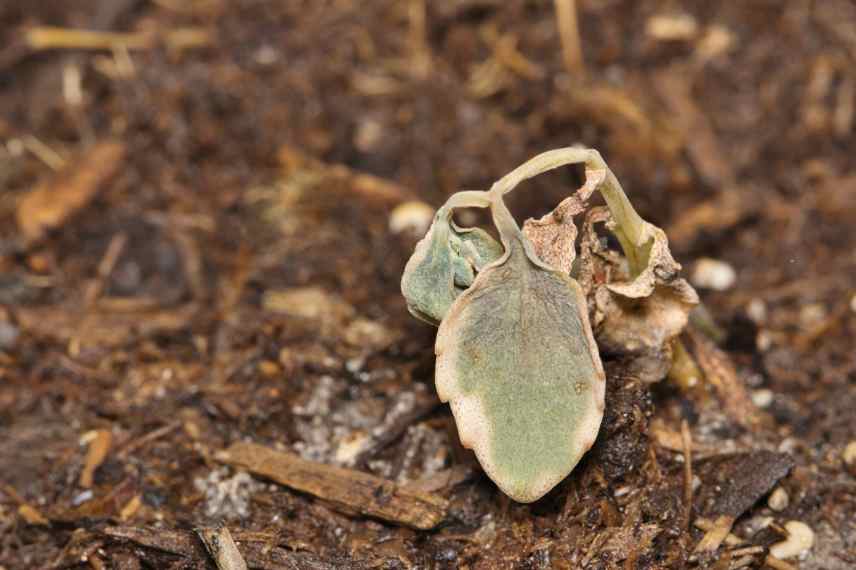
This Sedum has probably suffered from overwatering
Prevention and natural solutions
As a precaution, plant Sedum in well-drained, light soil that does not retain excess water. Mix soil with sand or use a potting compost for succulents and cacti, which is lighter and more free-draining than standard potting compost. In pots or in the ground, feel free to add drainage materials at planting time: gravel, clay pebbles, fragments of terracotta, etc.
Place Sedum in a well-exposed position, west- or south-facing, even in direct sun.
Regarding watering frequency, allow the growing medium to dry out thoroughly between waterings. A good tip is to touch the soil with your fingers: if it is dry in the top few centimetres you may water. If Sedum is grown in a container with a saucer or cachepot, remember to empty them about 20 minutes after watering or after heavy rain.
If the plant is already affected by rot, it may still be possible to save it. Begin by carefully removing it from the soil or its container. Inspect the roots and cut away all blackened, soft or foul-smelling parts. Thoroughly disinfect your cutting tool with alcohol to avoid spreading the disease to healthy tissue. Then, depending on chosen method of cultivation:
- return the plant to a previously disinfected pot, using fresh potting compost supplemented with drainage material if necessary;
- replant Sedum in a drier spot in the garden, adding drainage material to the bottom of the planting hole.
Space out waterings and wait for signs of recovery.
- Subscribe!
- Contents
This form is protected by reCAPTCHA - the Google Privacy Policy and Terms of Service apply.

































Comments