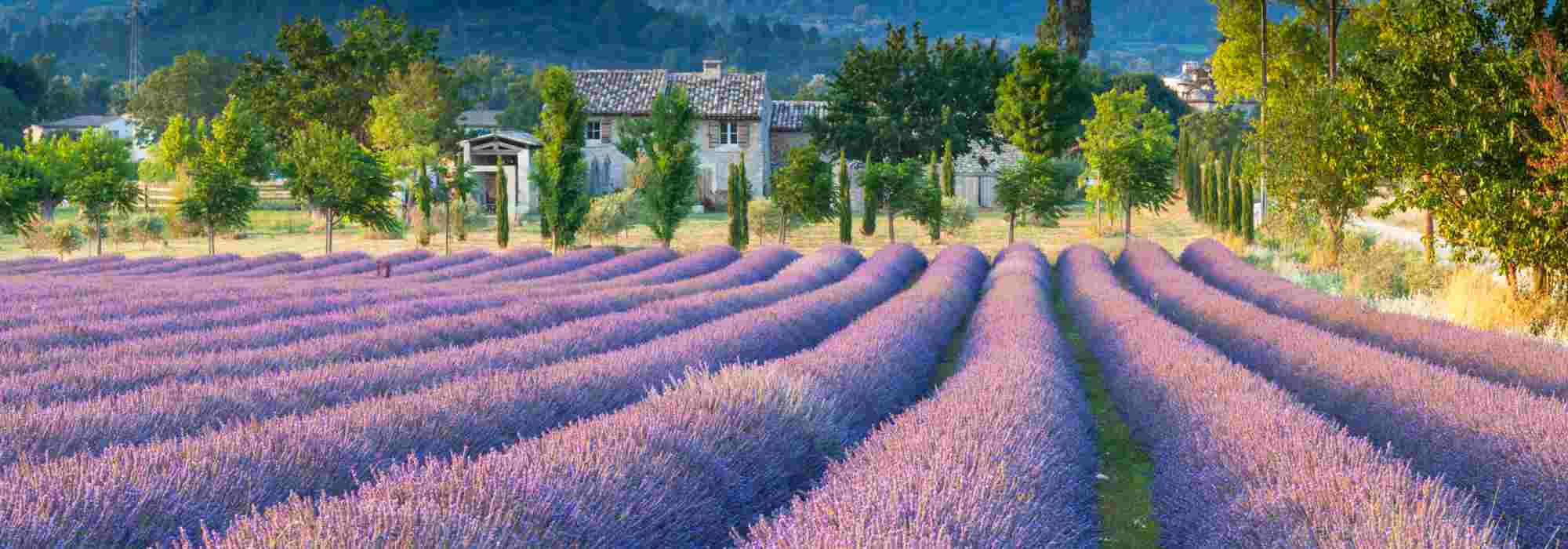
Lavender and lavandin: what are the differences?
How to recognise lavender and lavandin
Contents
The Toona sinensis in a few words
Lavender, lavandin, true lavender, fine lavender… the name of lavender often causes confusion.
This emblematic Provençal plant whisks us straight to the Mediterranean, even drawing tourists who travel to the south of France specifically to see with their own eyes the lavender fields stretching as far as the eye can see.
Gardeners wanting to grow it in their garden can be confused by the many lavender varieties. That’s normal: there are nearly thirty species.
Here, to make things clearer, are the differences between lavender and lavandin, two of the most widely grown species.
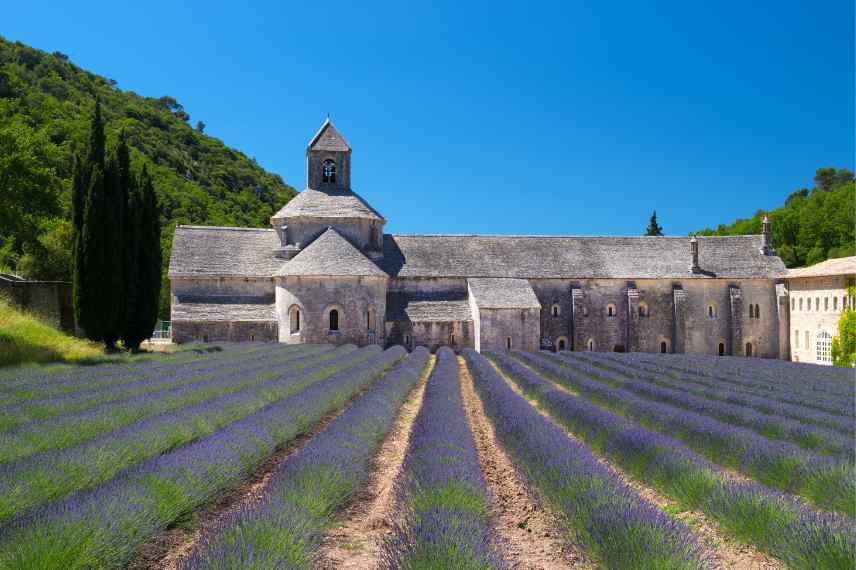
Sénanque Abbey: the postcard-perfect view and lavandin plantations
Mediterranean plants with similar needs
Even by looking at their Latin names alone, there are already many synonyms for true lavender and lavandin. Here are all their names to help identify them in books or online!
- The true lavender is known by the names Lavandula angustifolia, Lavandula officinalis or officinal lavender, but also Lavandula vera, true lavender, fine lavender, and sometimes population lavender (which reproduces by seed): it is the wild-type species found around the Mediterranean where it grows wild above 600 m and up to 1800 m. It is also the one used since the Middle Ages in physic gardens as a medicinal plant.
- The lavandin or Lavandula x intermedia, is a cross, as its Latin name indicates by the “x”: it is a natural hybrid originally between Lavandula angustifolia and Lavandula latifolia (current name of Lavandula spica), spike lavender. Follow me? It is also called clonal lavender, lavandin super (after one of its varieties), sweet lavandin or hybrid lavandin (Lavandula hybrida). It grows at lower altitudes, unlike true lavender.
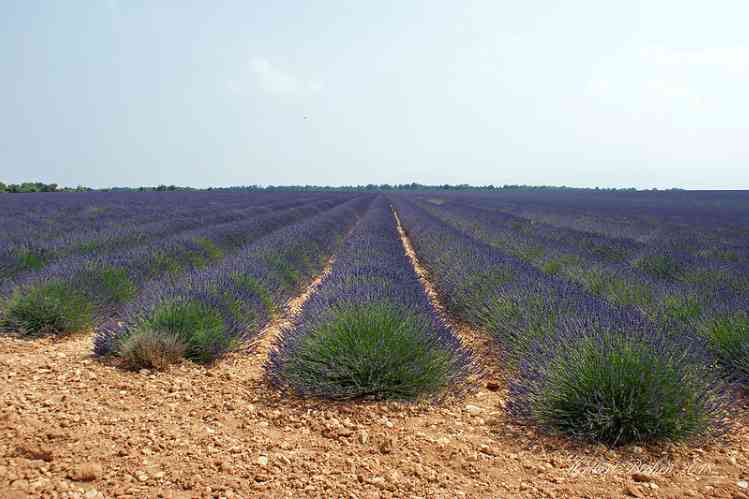
Lavandin cultivation in Provence (© Heribert Bechen)
What they have in common
Before looking at distinguishing features, let’s first consider what they have in common, because there are many similarities:
- Same botanical family, Lamiaceae
- Blue to violet flowers, tubular and bilabiate, grouped in terminal spikes
- Evergreen foliage, aromatic, very fine, simple and opposite, green to grey‑green and silvery, on woody base
- Same cultivation needs: sunny exposure, well‑drained soil (link), dry, poor or even stony soil, neutral to calcareous, limited watering
- Nectariferous flowering, favoured by bees, bumblebees and butterflies
- Flowering period: between June and August, harvest from late July to August
- Moderate hardiness
- Both are edible
- Each has given rise to very many varieties.
For convenience in this article I will call officinal lavender “true lavender”.
Read also
How to create a lavender garden?Their scent
Lavandin is often said to be more ‘camphorous’, while true lavender has a more delicate, powdery floral fragrance, sweeter and more subtle.
This olfactory difference stems from their distinct molecular composition: true lavender is rich in esters, notably linalyl acetate and linalool, the main components responsible for its scent, giving it a sweet, floral aroma widely used in aromatherapy. It also contains lavandulol and traces of camphor, providing soothing properties.
Lavandin has a higher content of camphor, cineole and eucalyptol, giving it a stronger, more camphorous scent. These components impart antiseptic and decongestant properties, useful for use in cleaning products.
Amount of essential oil contained in flowers varies depending on growing region (soils) and sun exposure (climate).
Their flowering: colour and size of inflorescences
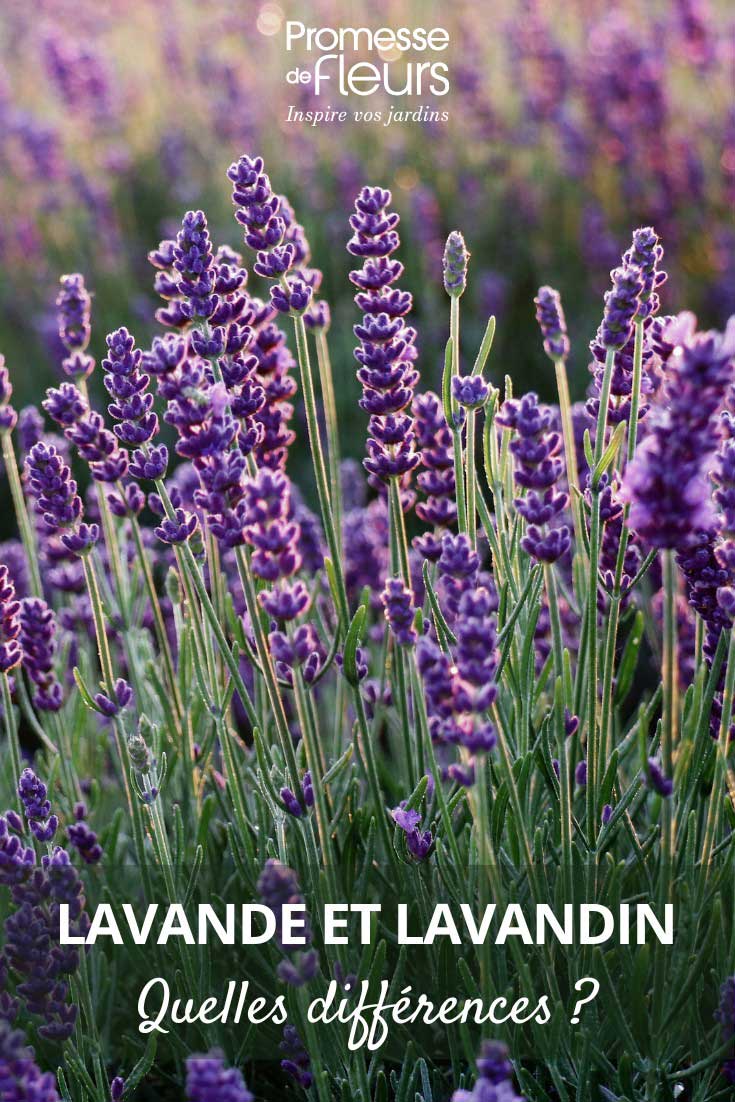
This is often where a novice can tell the difference, aside from fragrance: true lavender has paler flowers, ranging from blue to blue‑mauve and violet, while lavandin tends to flower in a rather deep violet. But beware, colour changes according to flowering stage, which can be misleading.
True lavender is also distinguished by a shorter flower spike. The flower stem is taller in lavandin (up to 80 cm high), and unlike true lavender, it produces secondary stems. Flowering is also denser in lavandin than in true lavender. Finally, number of flowers is also significantly greater in lavandin. As you will have understood, yield and production are therefore higher in lavandin than in true lavender. This explains its cultivation being better suited to industrial needs.
Of course, varieties derived from these two lavenders each display their own specific nuances.
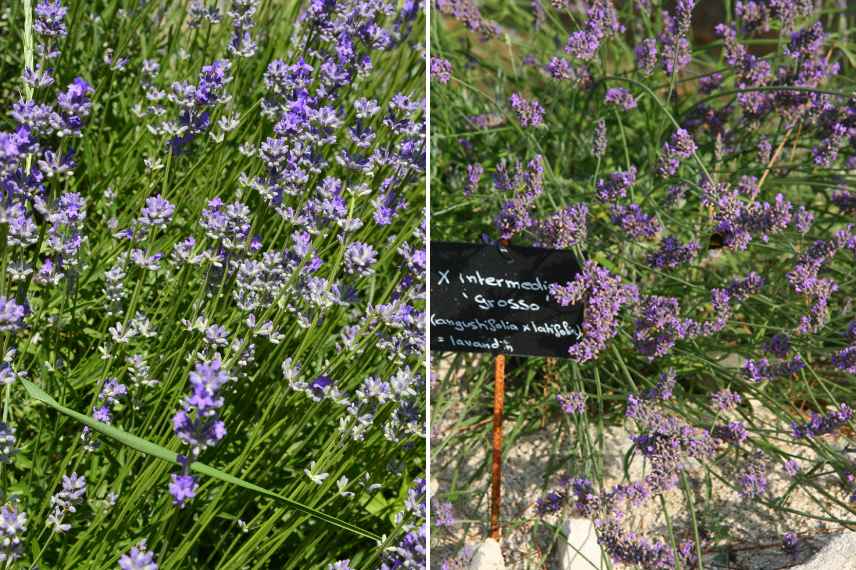
photo Lavender colour
Read also
Lavender: which one to choose?Their mode of reproduction
Lavandin, due to its original hybridization, is sterile: it therefore reproduces only by propagation by cuttings from stems. This is why, in large production fields in southern France, it is easily identified by the very regular shape of its rounded small cushions, arranged in very homogeneous rows.
True lavender reproduces by sowing its fertile seeds. It can thus be found growing wild in its preferred habitat. It can be propagated by cuttings in mid-summer, which is generally done, but multiplication by sowing is also possible. It is true lavender raised from sowing that is used by large French lavender producers.
Their silhouette and size
Other differing characteristics: their size. True lavender is smaller in size (about 50 cm tall), whereas lavandin grows taller, between 60 and 90 cm.
Lavandin also differs from true lavender in its foliage, which is broader, less silvery and less fragrant. Its broader, thicker and flatter leaves come from its parent, spike lavender.
True lavender is also more compact, with a less extensive root system than lavandin. For these reasons, true lavender is generally preferred for pot planting (read Alexandra’s advice in To grow lavender in a pot).
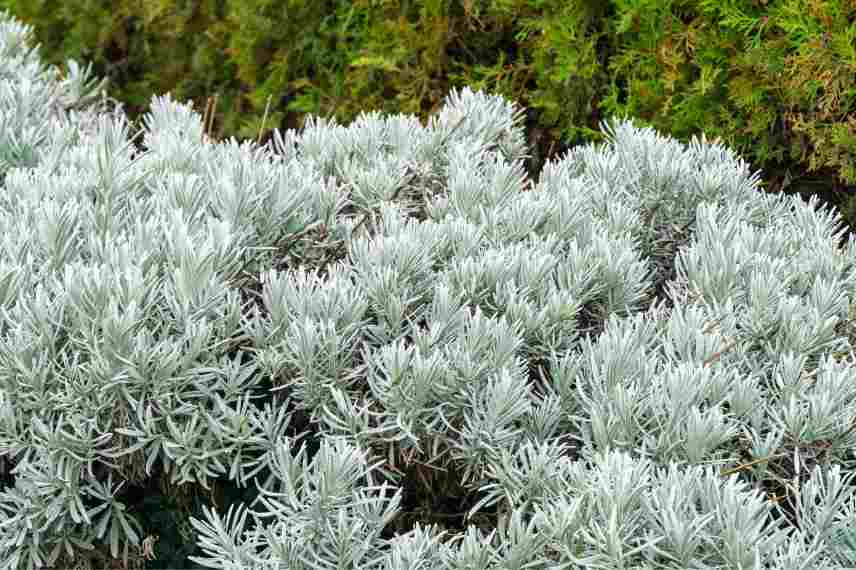
True lavender foliage, typically greyish
Hardiness
For those wondering, not living in a warm region, bear in mind lavender is hardier than its cousin, lavandin :
-
Lavandula angustifolia can withstand down to -20 °C in well-drained soil.
-
Lavandin is hardy to about -15 °C, sometimes less in heavy soils. It therefore copes slightly better with sub-zero temperatures in well-drained soil, bearing in mind that what these two lavenders (and others!) fear most is stagnant moisture around the roots. They are, indeed, garrigue plants, tolerating both cold and heat.
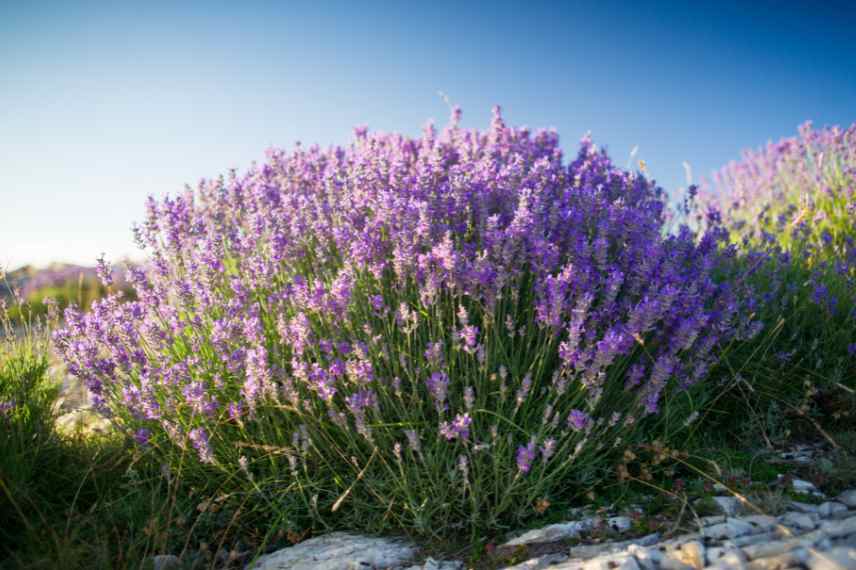
True lavender grows wild at altitude
Exposure
If lavandin needs at least eight hours’ sunlight, lavender needs sun but tolerates partial shade better and can be planted in east- or west-facing positions when they are very exposed.
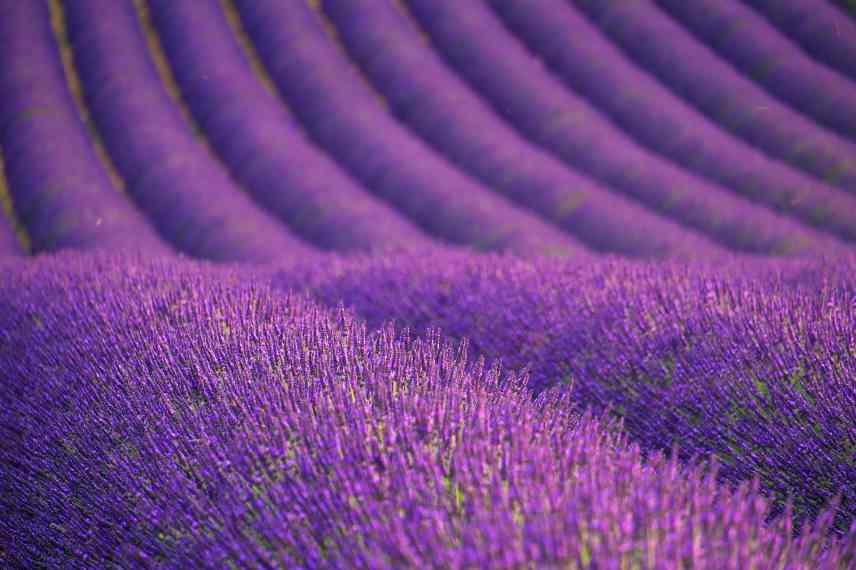
Lavandin requires a very sunny position
Different uses in garden, kitchen and cosmetics
For the gardener, not much difference, except for their slightly distinct colour! Both types of lavender are equally suitable for ornamental gardens. Lavender is used to create edging, line paths, or to integrate into mixed beds.
→ Read Ingrid’s tips in : Plant lavender along borders to give structure to your beds.
True lavender generally starts flowering a little before lavandin, from June to August, while lavandin flowers a little later, about two weeks afterwards, usually from July to September. Some lavandin cultivars, such as those of the Dutch group, are known for their very long flowering period, such as Lavandula x intermedia Dutch Group.
There is also a small difference with true lavender, which can be used in cooking, unlike lavandin, which has a strong camphor flavour. For flavouring syrups, sorbets, compotes, jams or crème brûlées, for example, true lavender is preferable, as is its essential oil. Its flowering tops are also used to decorate dishes or to make infusions and syrups, while the foliage can replace rosemary for grilling or marinades.
Beekeepers produce very fragrant lavender honey from true lavender, which is more aromatic.
But given the difference in yield and fragrance between the two, it is mainly in industry that their uses differ :
- Lavandin has a high yield (1 ha produces about 40 kg of EO compared with 15 kg for true lavender). It is therefore cheaper to buy and is mainly destined for industry (laundry, household products) and for essential oil production, and is valued for its antiseptic properties;
- True lavender, finer and with relaxing properties, is mainly used in haute parfumerie, for skincare and in aromatherapy. Note that its essential oil can be applied neat to skin, unlike lavandin.
N.B. : Both essential oils have been protected by the PDO (Protected Designation of Origin) « Huiles essentielles de Lavande de Haute‑Provence » since 2011, which replaced the AOC (Appellation d’Origine Contrôlée) established in 1981.
To go further...
Discover other rare trees and bushes from our collections in our online nursery. A fan of pink foliage? Explore our selection of trees and bushes with pink foliage. Please note: A tree resembling the Toona sinensis is the Ailanthus altissima or glandulous Ailanthus. The latter has an invasive character and threatens many ecosystems in Europe. This is why it is no longer available for sale. You can replace this invasive essential oil advantageously with a Toona, which is far less problematic.The word from our expert
Few trees fascinate me as much as the Toona sinensis, or Chinese Mahogany. This majestic tree, native to the temperate forests of Asia, is a true botanical treasure for any garden. The Toona sinensis, or Chinese Cedar, captivates with its natural elegance. Its pinnate leaves, which can grow up to a metre long, emit a pleasant and distinctive scent when crushed. Their colour ranges from soft green in spring to a vibrant red in autumn, offering a striking visual spectacle. Among the cultivars, the Toona 'Flamingo' stands out particularly. Its young leaves display shades of pink, cream, and green, adding a unique splash of colour to the garden. This cultivar, less imposing than the species type, adapts wonderfully to medium-sized gardens. To cultivate the Toona sinensis, I recommend a rich, well-drained soil. Although it enjoys the sun, light shade during the hottest hours promotes optimal growth. [caption id="attachment_244856" align="aligncenter" width="1172"]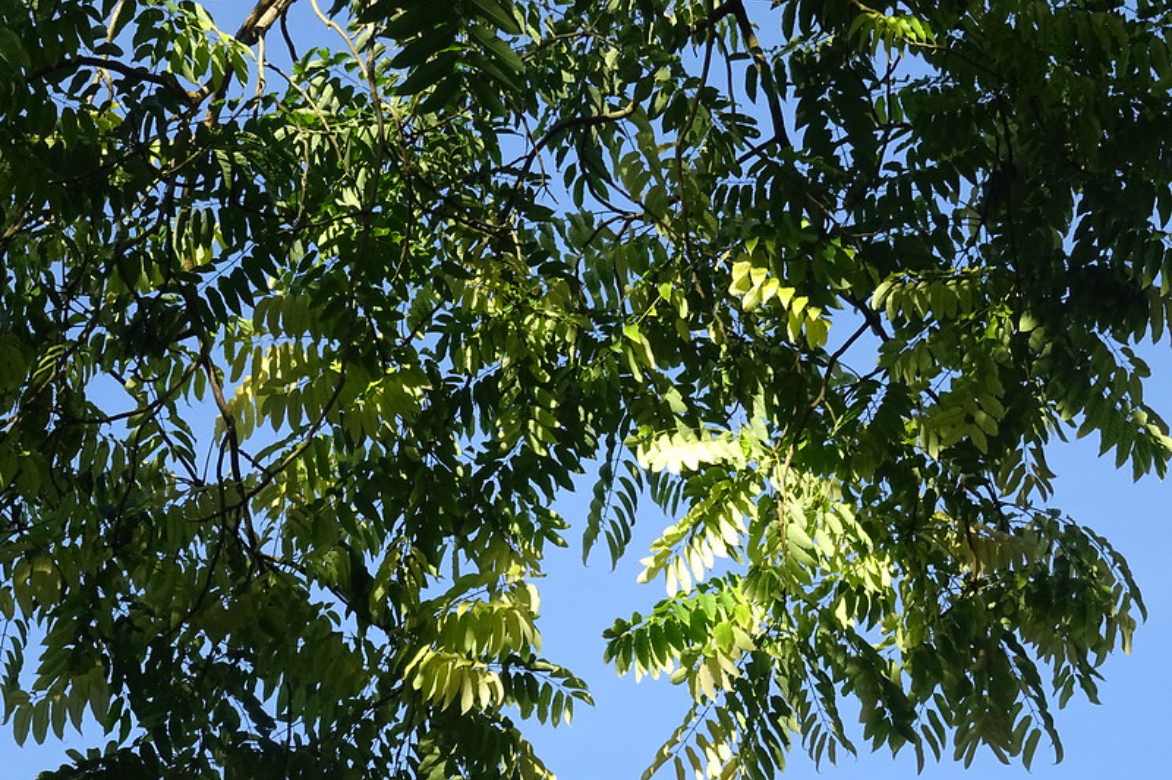 Toona sinensis (© Olive Titus)[/caption]
Did you know that the young leaves of the Toona sinensis are a prized ingredient in Asian cuisine? They add a unique flavour to dishes. Moreover, this tree has a rich history; it was considered a symbol of longevity and prosperity in ancient China.
In short, don’t wait any longer and welcome a Toona into your home, preferably the stunning 'Flamingo' cultivar.
Toona sinensis (© Olive Titus)[/caption]
Did you know that the young leaves of the Toona sinensis are a prized ingredient in Asian cuisine? They add a unique flavour to dishes. Moreover, this tree has a rich history; it was considered a symbol of longevity and prosperity in ancient China.
In short, don’t wait any longer and welcome a Toona into your home, preferably the stunning 'Flamingo' cultivar.
- Subscribe!
- Contents
This form is protected by reCAPTCHA - the Google Privacy Policy and Terms of Service apply.





























Comments