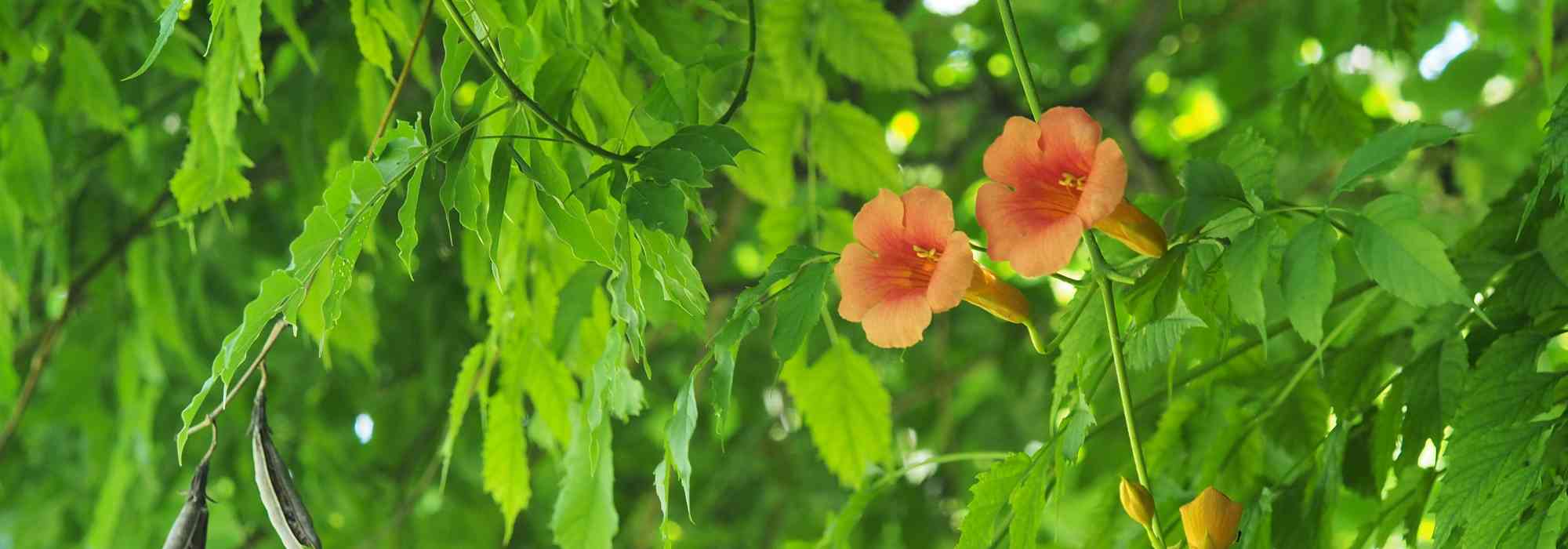
Why isn't my trumpet vine flowering?
Understanding why a trumpet vine isn't flowering... and how to remedy it!
Contents
Trumpet creepers, also called “trumpets of Jericho”, or campsis in Latin, are exuberant climbing plants, with flowers most often orange, but also yellow to scarlet red. Very hardy, we love the exotic appeal of their trumpet-shaped flowers which usually bloom all summer. Sometimes, however, you may be left wanting, because the vigorous climber isn’t as floriferous as expected. Why is that? Was something missed when planting, or is it down to the plant itself?
Trumpet creeper cultivation specifics and practical tips: we tell you everything to help your climber become truly floriferous!
→ Also read: Trumpet creeper: plant, prune, propagate.
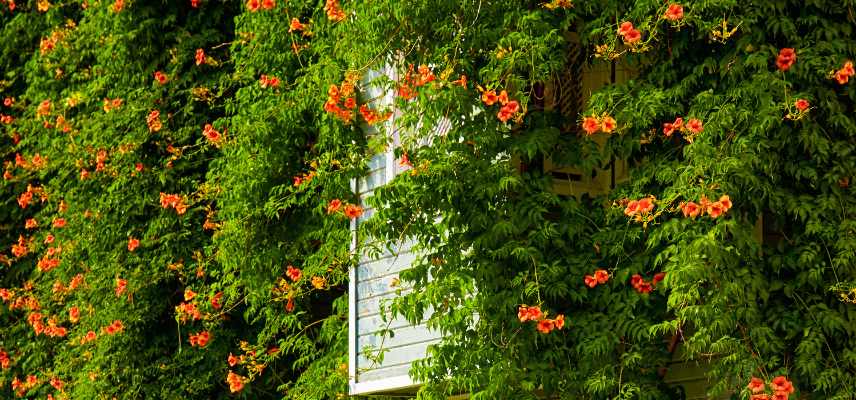
Trumpet creepers, spectacular and radiant in full summer sun!

Specific growing requirements for trumpet vine
Like wisteria, trumpet creepers are vigorous, prolific plants, drought-tolerant once established. Two main species are distinguished: the large-flowered trumpet creeper or Campsis grandiflora and the American trumpet creeper known as Virginia trumpet creeper or Campsis radicans in Latin. Both varieties look similar, flowering in large clusters at the ends of current-year shoots, but Campsis grandiflora, native to China, produces larger flowers and has a reduced climbing hold. Each has produced numerous cultivars in shades of orange, sometimes deep orange to red, and occasionally yellow.
To understand why a plant is not flowering, it is crucial to know its cultural requirements and whether they are being met to determine the appropriate response. Here are the main characteristics to remember for trumpet creepers :
- Soil: They need well-drained, fertile soil that stays cool. With shallow roots they require mulching at planting to ensure essential coolness and to protect them from excessive heat when young, as well as from winter cold. As they age they will tolerate drier soils and drought. Note that they dislike compact, heavy soils.
- Exposure: an essential factor for trumpet creepers, which always establish in full sun and in a sheltered position. Plant new trumpet creepers in a site protected from cold winds.
- Hardiness: These exotic-looking climbers have the advantage of being growable here, as they prove relatively hardy, tolerating short periods of frost, down to -15°C for Campsis radicans and down to -10°C for Campsis grandiflora. Cultivars from the hybrid Campsis x tagliabuana are fairly hardy, often to around -12°C. Overall, trumpet creepers perform well in regions with mild winters.
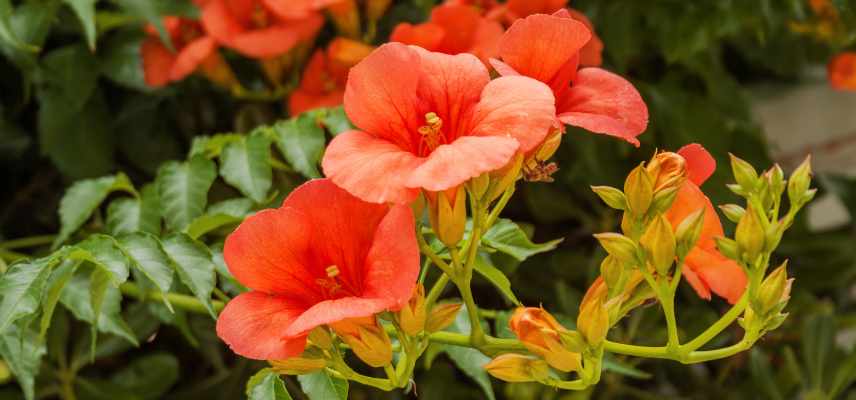
Campsis grandiflora
Read also
Choosing a trumpet vineMain reasons why a trumpet vine does not flower
Not enough sun
In most cases, a lack of sun is why a trumpet vine doesn’t flower well. These plants need warmth and plenty of sunlight to perform at their best. Check its siting to see if it receives at least 6 hours of sun per day. You can move a young specimen, but older plants will be harder to shift because of trumpet vine’s suckering habit. Only southern regions can plant it in partial shade.
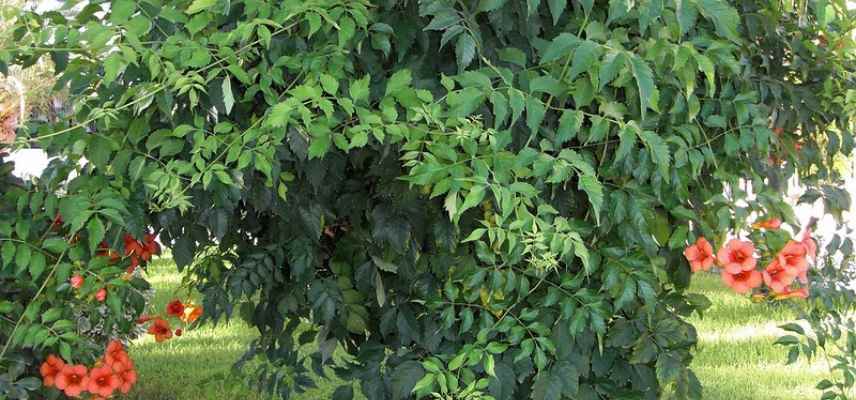
A trumpet vine, here Campsis radicans, not exposed to enough sun, flowers much less (© Maja Dumat)
It hasn’t been pruned
As is often the case, this is the second factor causing poor floral induction. Left unpruned, trumpet vine will produce only a limited number of flowers, because pruning encourages it to regenerate into flowering shoots. If pruned at the wrong time, that is in autumn, it will not produce flowers. For a spectacular, abundant display, prune in late winter or early spring.
→ Learn more in When and how to prune the trumpet vine?
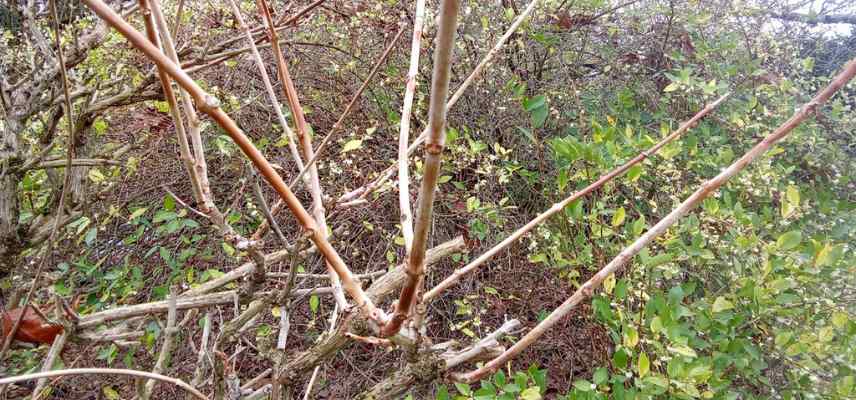
Dead trumpet vine shoots in winter (© Gwenaëlle Authier): they should be pruned in February to ensure a good floral display
Propagated by layering or cuttings
Only trumpet vines propagated by grafting flower quickly after planting. If yours was produced by layering or from a cutting, it will take several years before it flowers properly.
Soil too rich in nitrogen
Soil that’s too high in nitrogen, or that receives too much nitrogenous fertiliser, will encourage the climber to produce far more foliage at the expense of flowers.
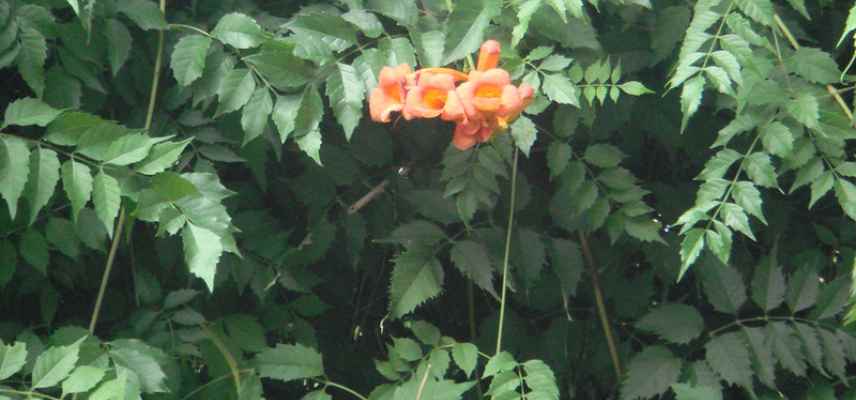
A trumpet vine that produces mainly leaves is often planted in soil that’s too rich in nitrogen
It didn’t like very low night-time temperatures
A trumpet vine exposed to very low night-time temperatures, or to prolonged drought early in the season, can lose its flower buds. This will reduce summer flowering accordingly. Again, choose the siting of your trumpet vine carefully (at the foot of a south-facing wall), and avoid planting it in regions that suffer repeated frosts.
Growing north of the Loire
If you live north of the Loire, trumpet vines generally flower a little later there, from August onwards. So don’t worry if buds haven’t yet opened in July in these regions. Note that mild climates are where trumpet vine will flower most profusely.
→ Learn more in our article: Which trumpet vine to plant according to your region?
You have a late-flowering or out-of-season trumpet vine
There are two main species of trumpet vine, bignone grandiflora (Chinese) and bignone radicans (American), the large-flowered trumpet vine (the Chinese one) being slightly less hardy than the American trumpet vine. Both flower from mid-summer, but a Campsis grandiflora will flower much more in mild climates and in sunny summers. As for Campsis radicans and its varieties, it can be planted a little further north, but without a sufficiently warm, sunny summer it will flower less profusely.
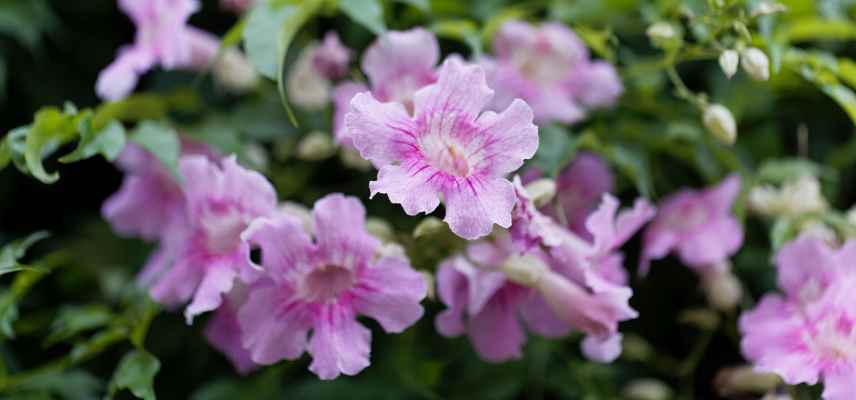
By contrast, there is another very beautiful climber with pink flowers (it is not a Campsis): Podranea ricasoliana: this one is much more tender and, above all, it flowers much later at the end of summer, and blooms mainly in autumn, as late as November in mild climates where it is mainly planted. So don’t be surprised if you don’t see it flowering in mid-summer like the others!
As for Campsis capreolata, with red-orange and yellow, fragrant flowers, it normally flowers much earlier, between April and May in mild climates.
It is diseased
Finally, less common than the other causes mentioned here, an aphid infestation at the time of flower bud formation can nevertheless greatly weaken a trumpet vine’s flowering.
Some tips to stimulate flowering on a trumpet vine
Here are some pruning tips, an essential action that will ensure sustained flowering for your trumpet vine:
- Cut back severely the long dry stems, shoots from the previous summer, to about twenty centimetres from their base in February or early March (to two or three buds). These shoots helped the plant withstand winter well, but they must be pruned to ensure good production of flower buds.
- Prune stems that have flowered to stimulate new shoots: as trumpet vine flowers for a long time, this is possible and is in fact the way to renew its flowers over an extended period. In addition, the new shoots will make trumpet vine even more prolific the following season. Prune regularly and lightly rather than drastically, which it will not tolerate. This summer pruning will also help contain its vigour.
- Finally, treat an infestation of red spider mites or aphids as soon as it appears (see our advice in Diseases and pests of the trumpet vine)
- Subscribe!
- Contents
This form is protected by reCAPTCHA - the Google Privacy Policy and Terms of Service apply.


































Comments