Using straw as mulch: good or bad idea?
Gardener's natural ally for living, productive soil
Contents
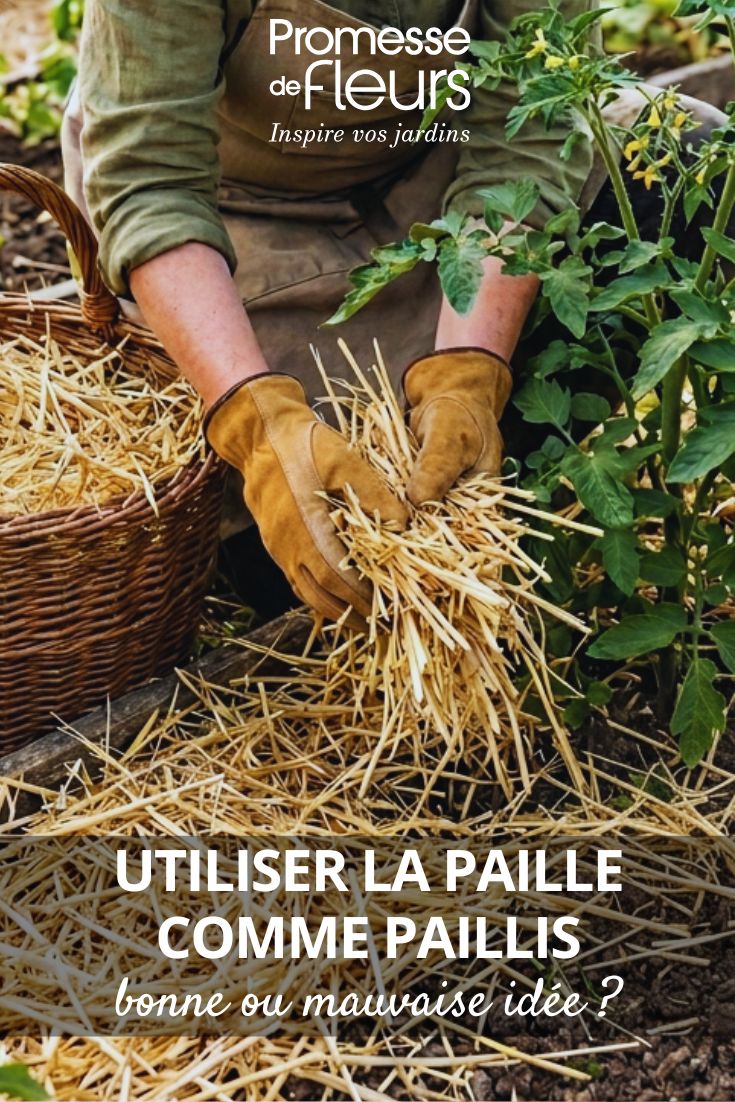
Mulching with straw consists of covering the soil with dried cereal stalks to mimic the natural protection of the forest understorey. This organic material, a permaculture favourite, is ideal for retaining soil moisture while limiting the growth of unwanted herbs. Unlike hay, straw is rich in carbon, which gives it excellent longevity in the vegetable garden. It is an economical and ecological solution to protect your crops from adverse weather while feeding the soil over the long term.
Advantages: why use straw as mulch?
-
Water saving: by acting as a natural cover, straw blocks evaporation caused by sun and wind. You reduce watering by up to 70%, because moisture remains trapped in soil for benefit of roots.
-
Temperature regulation: straw acts as an insulator. In summer, it keeps soil cool despite high temperatures; in spring it protects young plants from light morning frosts by retaining soil warmth.
-
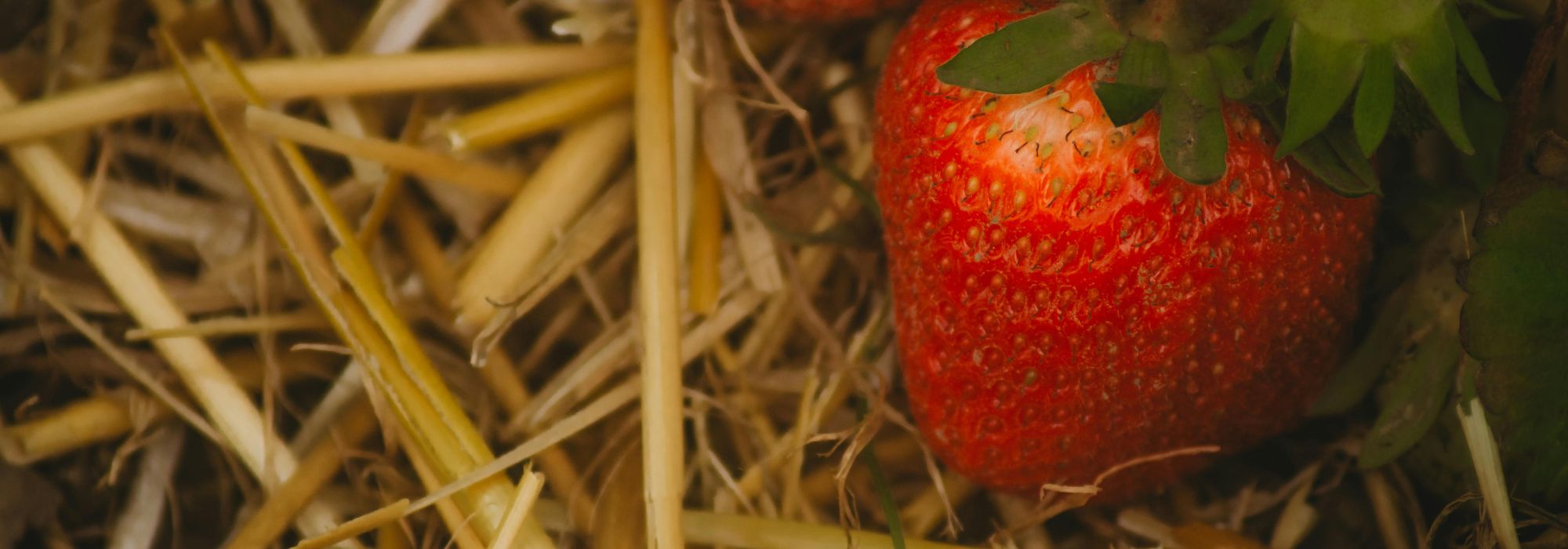
Fruit protection: it forms a clean layer that isolates creeping crops (strawberries, courgettes, melons) from direct contact with soil. This prevents soiling and greatly reduces rot caused by soil moisture.
-
Soil life: by slowly decomposing under action of fungi and earthworms, straw turns into humus. It thus improves structure of your soil over the long term, making it more friable and fertile.
-
Natural weed control: by creating an opaque barrier, straw deprives seeds of adventive plants (often wrongly called “weeds”) of the light they need to germinate. You therefore spend much less time weeding manually.
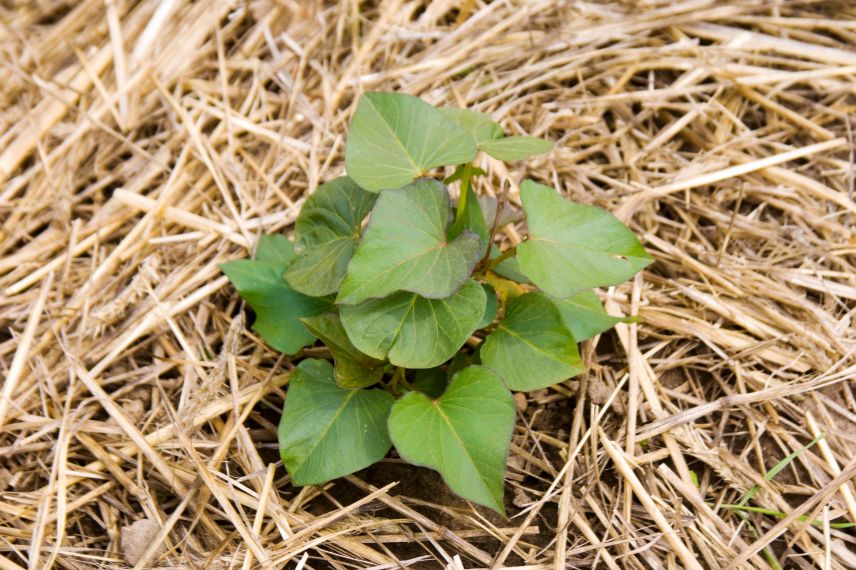
Straw, like all organic mulches, protects soil and improves it as it breaks down.
Read also
Mulching: Why? how?Drawbacks and points to watch out for
-
Beware of “nitrogen hunger”: to break down straw (very rich in carbon), soil microorganisms need to consume nitrogen. If they can’t find it in straw, they draw it from the soil, temporarily depriving your plants of this element essential for growth. Young plants may then turn yellow and stop growing.
-
Refuge for pests: the thickness of straw creates a cool, damp habitat, ideal for slugs that hide there by day before devouring your sowing at night. Similarly, voles and small rodents may settle there comfortably to nibble roots or plant collars.
-
Unwanted seeds: straw is never 100% pure. It often contains grain residues (wheat, barley) or wild grass seeds. If you don’t apply straw thickly enough, those seeds germinate, turning your vegetable patch into a miniature cereal field.
-
Vulnerability to wind: unlike heavier wood chippings, straw is very light. In dry, windy weather it can blow away and scatter across the garden. It is often necessary to water it lightly after laying or to weigh it down with a few branches so it “settles in”.
- Beware of fire: during intense heatwaves and prolonged drought, a very dry layer of straw near a house or barbecue area can pose a fire risk.
Oli’s note: to avoid nitrogen hunger, spread a thin layer of compost or grass clippings, dry or not too fresh (and rich in nitrogen), over soil before laying straw. This will give bacteria energy needed for decomposition without impoverishing your plants.
How to mulch properly?
-
Good timing : mulch at end of spring. Wait until soil is well warmed, because straw acts as an insulator that could trap deep-winter cold in soil.
-
Preparation : work on clean soil. Weed carefully and lightly rake surface to aerate before laying straw.
-
Correct thickness : spread a generous layer of 10 to 15 cm. It may seem bulky at first, but will quickly compact to about half its depth under rain and foot traffic.
Good to know : always favour organic straw or straw from sustainable farming without end-of-cycle treatment. Straw from conventionally grown cereals may contain growth regulators (to prevent stems lodging). These substances remain active and can stunt your vegetables.
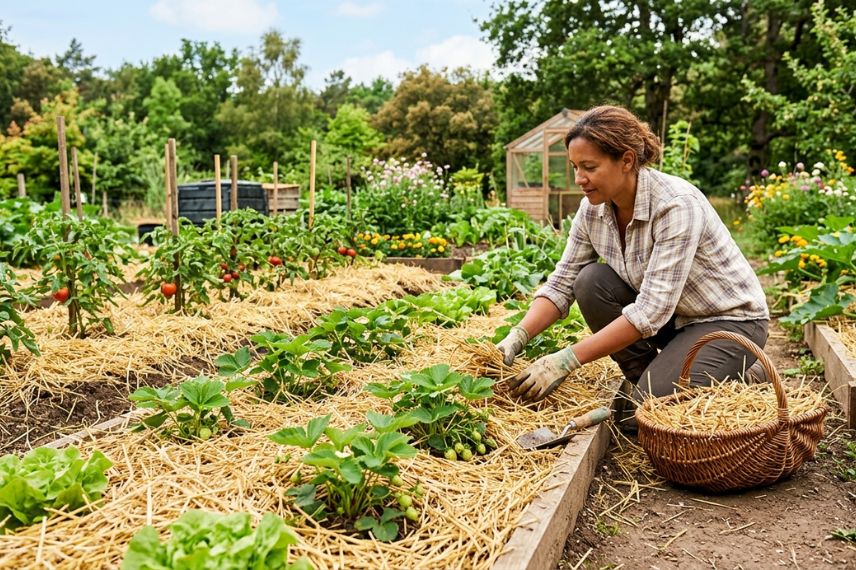
Best to source organic straw locally. (Image generated by AI)
Read also
How to mulch roses?Comparison table: straw compared with other mulches
| Criterion | Straw | Lawn clippings | Pine bark | RCW | Miscanthus |
|---|---|---|---|---|---|
| Lifespan | Medium (1 year) | Short (a few weeks) | Long (several years) | Long (2 to 3 years) | Medium (1 to 2 years) |
| Cost | Very low | Free | High | Medium / Free | High |
| Effect on soil | Improves soil structure | Provides rapid nitrogen input | Acidifies soil | Regenerates humus (fungal life) | Neutral (very stable) |
- Subscribe!
- Contents
This form is protected by reCAPTCHA - the Google Privacy Policy and Terms of Service apply.

































Comments