To grow a fig tree in a pot: where, when and how?
All our tips for growing beautiful figs on a balcony, terrace or patio
Contents
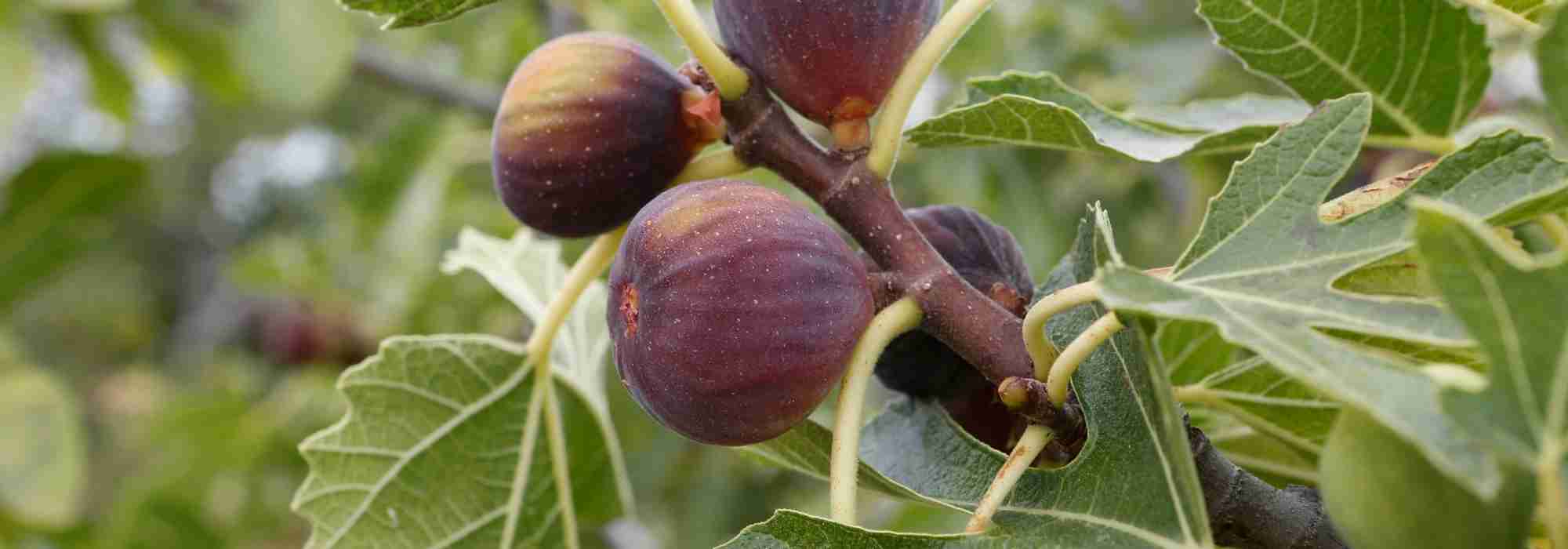
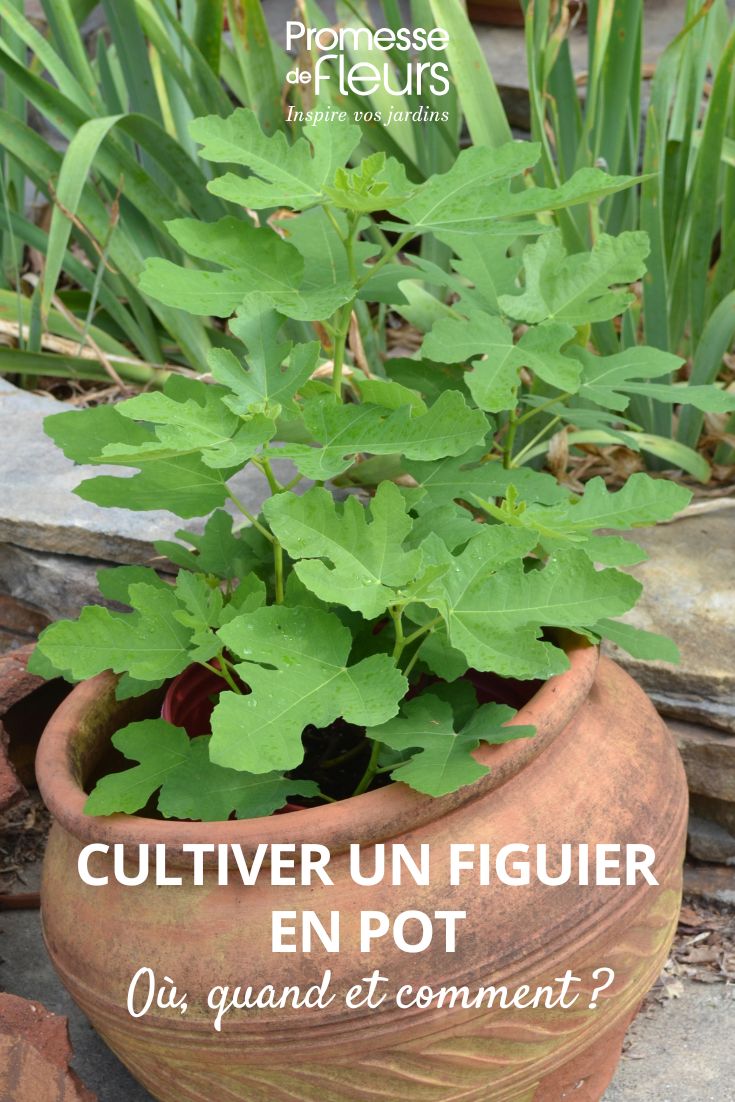
Fancy tasting fleshy figs even if you don’t have an orchard or a large garden? It’s possible, because the fig tree (Ficus carica), a fruit tree of Mediterranean origin, adapts perfectly to growing in a large pot or container. Provided a few cultivation rules are followed, and the right varieties are chosen — ideal for above-ground planting — as well as the appropriate planting time and best location. As for maintenance, it must also be adapted, because a fig tree in a pot will be more demanding than one grown in the ground.
Discover all our tips for planting and growing a fig tree in a pot, from choosing the growing medium to regular maintenance, to achieve abundant fruiting and a healthy tree.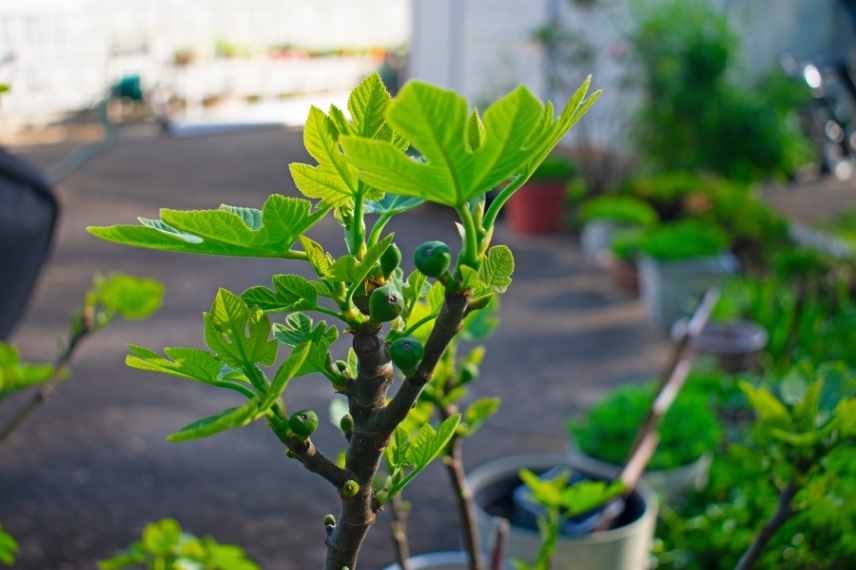

Which fig tree varieties are best suited to growing in pots?
For growing in a pot or container, on a balcony or terrace, or in a small garden, courtyard or patio, choosing the right fig variety is the first step towards success. You will need to select the best variety according to several criteria. Logically, choose varieties with a naturally compact habit or those easily controlled by pruning. These fig varieties should have good vigour and optimal productivity. Finally, choose varieties that are particularly hardy or cold-tolerant, since roots suffer more from frost when grown in a pot. You can even consider providing winter protection.
One last criterion to consider when space is limited: favour self-fertile varieties that do not require another plant to fruit.
Discover our selection of fig varieties, perfectly suited to container growing :
- Variety ‘Figality’ : a dwarf fig with a very compact habit, not exceeding 1.5 m in height and 1 m in width. It produces in August beautiful figs with red flesh, particularly sweet and fragrant. It is a self-fertile variety.
- Variety ‘Icecrystal’ : a reduced-growth variety reaching at most 2 m in any direction. As a biferous variety, this fig tree offers two harvests, early July and late August. Figs are notable for their dark red skin and slightly tangy flesh.
- Variety ‘Lucky Berry’ : a dwarf variety not exceeding 1 m in any direction. Despite its size, it produces dense, compact and highly ornamental growth. Figs are purple with very sweet dark red flesh.
- Variety ‘Gustis Ficcolini’ : at 1.8 m tall and 1.5 m wide, this fig adapts to pot culture. It has a very compact, rather unusual habit. Very productive, this fig tree produces small figs with yellow-green epidermis and dark red flesh.
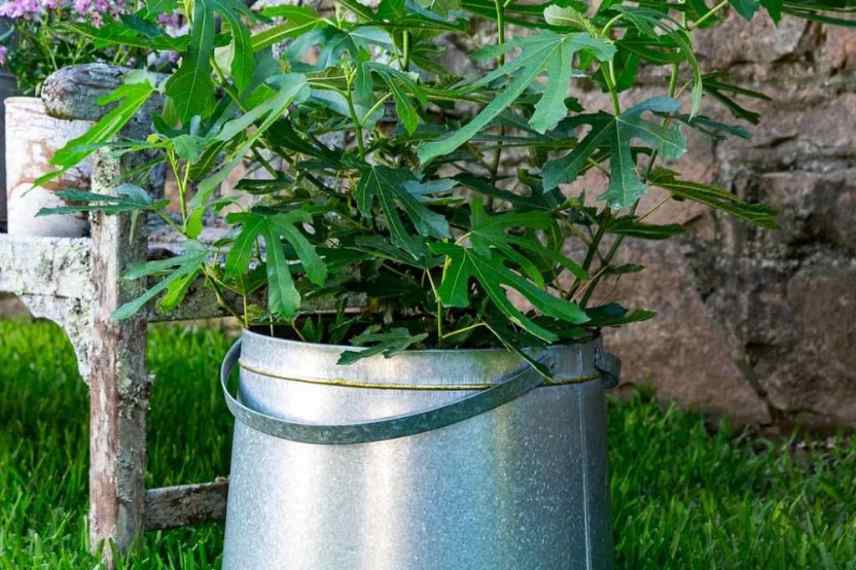
Fig tree ‘Figality’ is perfectly suited to pot cultivation
When to plant a fig tree in a pot?
Timing for planting a fig tree in a pot is crucial. Avoid periods of severe frost or extreme heat and aim for an active growth phase to encourage rooting. Planting is therefore best in early spring, between March and April, as the fig tree will have a whole summer to develop before winter. This is also the peak period for roots and foliage development.
However, planting between late summer and early autumn is still possible, mainly in regions with a mild winter climate. Care must be taken to provide plenty of water and to guard against early, sudden cold snaps. In regions with cold winters, autumn planting is not recommended.
Planting in mid-winter must be avoided because of risk of frost, and planting in mid-summer should also be avoided (water stress, high temperatures, low root vigour…).
Planting a fig tree in a pot
Planting a fig tree in a pot presents no particular difficulties, but a few essential cultural conditions must be respected.
Choosing the container
The pot or trough determines a fig tree’s health and optimal development, so choose container carefully :
- A minimum volume of 30 to 50 litres is required for a young tree. Later, with successive repottings, you can offer the fig tree a pot of up to 80 to 100 litres.
- Pot material also matters: terracotta is breathable and attractive but heavier, plastic is light and economical but non-porous, wood is insulating.
- Drainage is essential, so pot must have a hole. It is also possible to drill the pot base if necessary. Adding a drainage layer improves drainage.
Also consider pot mobility, especially during winter.
Choosing the substrate
Substrate is crucial for fig tree nutrition, water retention and root aeration. It should be made up of 50% good garden soil or quality neutral potting soil, 25% well-rotted compost and 25% coarse sand. Of course, do not forget drainage layer made of expanded clay balls, gravel or pumice. Substrate should have neutral to slightly alkaline pH, fig tree tolerating slight alkalinity.
Best location
Originating from the Mediterranean, fig trees prefer warm, sunny positions, which ensure good fruiting. Place in full sun or a location receiving at least 6 to 8 hours of sun per day. It must also be protected from winds and cold draughts. For this reason, in winter a south- or east-facing exposure should be favoured.
In regions with harsh winters, consider moving the pot to a sheltered spot or bringing it indoors to a frost-free room.
Planting technique
- Place a layer of expanded clay balls, gravel or pumice in the bottom of the chosen pot
- Fill half the pot with substrate
- Soak fig tree pot in a bucket of water for 15 minutes to make removing the plant easier
- Gently take the rootball out of its pot and loosen the outer roots slightly
- Place the rootball in the pot or trough, ensuring the collar is level with the rim
- Fill the pot with the remaining substrate and firm down to avoid air pockets
- Water thoroughly and apply an organic mulch to the surface to help retain moisture and keep soil cool.
How to care for a potted fig tree?
Whether grown in a pot or in the ground, good care of a fig tree contributes to good fruiting. Fig trees in pots need even more attention, as the volume of soil is much smaller.
Watering
- Regular watering, especially during the first weeks after planting to encourage rooting
- During the growth period (spring–summer), keep the substrate slightly moist, without excess
- In autumn, gradually reduce watering and, in winter, water only if the substrate dries out completely.
Never leave standing water in the saucer or cache-pot. Prefer rainwater at room temperature.
Feeding
In pots, nutrient supply is limited. That is why it is essential to feed the fig tree and watch for deficiency signs such as chlorosis. In spring, apply a balanced slow-release organic fertiliser, ideally at the start of growth, around March or April. In summer, add a potassium-rich fertiliser to promote fruit ripening. One application is sufficient. In autumn–winter, stop feeding gradually to allow the fig tree to enter dormancy.
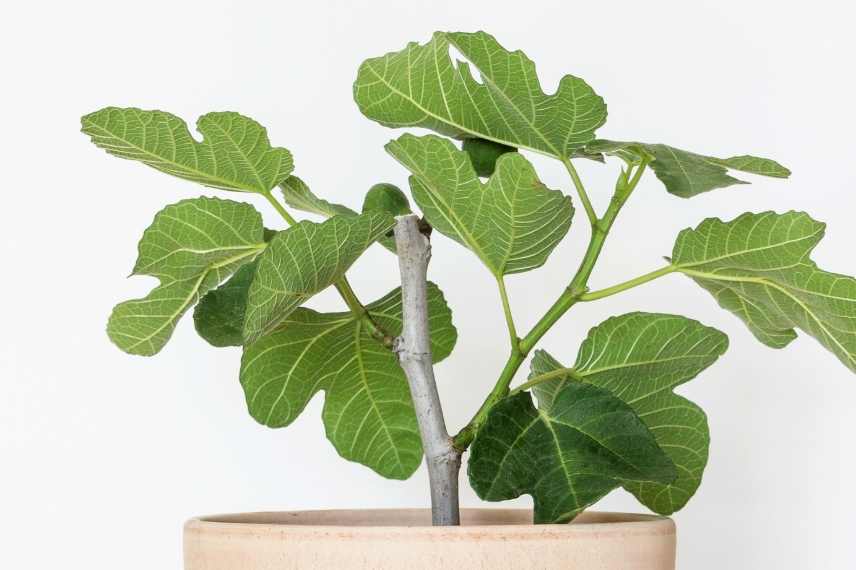
In pots, watering and fertilisation of the fig tree must be done carefully
Pruning
After the autumn harvest or in late winter depending on the climate, carry out light pruning to remove dead wood, suckers at the base and spindly shoots. Also control the height and habit of your potted fig tree by cutting back overly long branches. Finally, to improve air circulation in the canopy, remove obstructive branches to thin the centre of the foliage and stimulate fruiting.
Repotting
Repotting should be done every 2 to 3 years. Renew at least 50% of the substrate. If the fig tree is too large, simply top-dress by replacing substrate to a depth of 10 cm.
Winter protection
In regions where winters can be severe, protect potted fig trees from the cold:
- Insulate the pot from the cold ground by placing it on insulating material such as wood or polystyrene…
- Add extra mulch to the substrate
- Use a winter fleece to protect the branches, especially those of young plants
- Place less hardy varieties in a frost-free location.
Monitoring pests and diseases
Fig trees are not very susceptible to severe pests, but in pots it is necessary to monitor for the appearance of mealybugs and aphids. A black soap solution is enough to eliminate aphids. For tougher mealybugs, add vegetable oil and 90% alcohol.
In poorly drained substrate, fungal diseases can develop, including on the roots. Avoid waterlogging at all costs and, if necessary, replace the substrate.
- Subscribe!
- Contents
This form is protected by reCAPTCHA - the Google Privacy Policy and Terms of Service apply.

































Comments