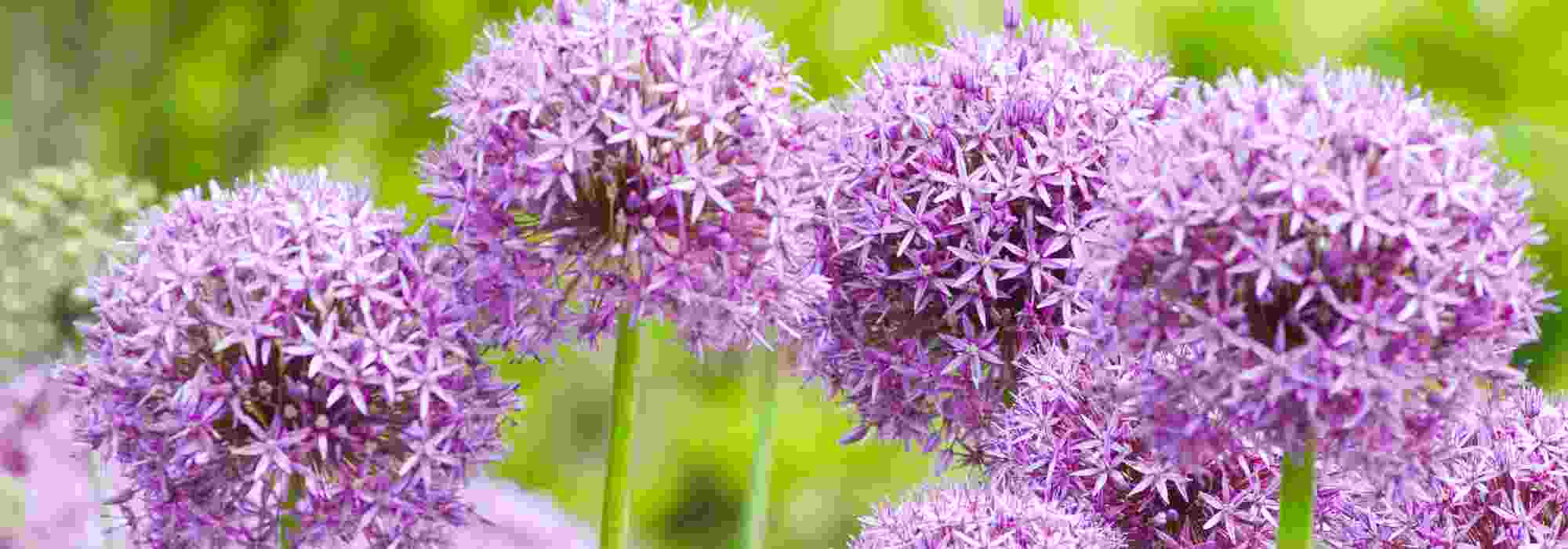
How to protect Allium bulbs from rodents and diseases?
Simple, natural tips to keep garlic looking great in the garden or in pots
Contents
Mangaves in a nutshell
Allium, or ornamental onions, provide a magnificent spherical flowering in spring, architectural and colourful. But we also know edible Allium from vegetable plots, such as onions, garlic and chives.
Superb especially in borders as well as in bouquets, ornamental onions are easy-to-grow bulbous plants that return generously each year. But to keep them in good health, a few care measures will help protect them against pests and diseases. Let’s look at how to prevent risks, identify growing problems and, where necessary, apply appropriate natural treatments.

Tackling rodents that feast on Allium bulbs
Identification
Rodents are main pests of Allium bulbs. These can be wood mice, voles or mice, which feast on plant’s underground parts. This stops development and prevents emergence.
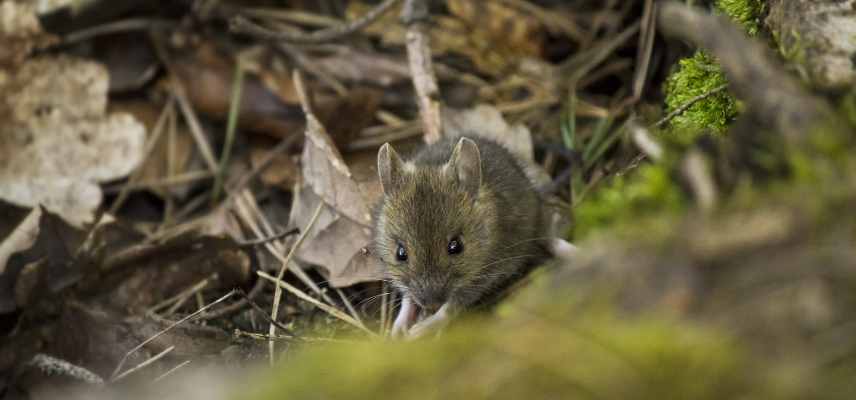
Wood mouse can damage Allium bulbs
Prevention and solutions
To prevent bulbs being nibbled by hungry rodents, prevention consists in stopping them gaining access. You have several options.
- Grow Alliums in pots. Rodents find it harder to reach underground parts when plants are grown in containers, especially if placed off the ground.
- Surround bulbs with fine mesh. You can either protect each plant individually with this type of barrier or provide a more general solution that encloses a whole group of bulbous plants.
- Install a rodent-proof basket or a bulb cage, available from garden centres.
In addition, you can also grow among beds or in vegetable patch plants known to be naturally repellent to rodents. They give off a strong smell that would put off would-be nibblers. Examples include Fritillaria imperialis or Incarvillea. Euphorbia contains an irritating latex that therefore keeps rodents away. There are also plants shunned by rodents because they are toxic, which you can plant around Allium: daffodils or jonquils, amaryllis, and snowdrops.
Overall, try not to make garden too attractive to rodents. Ensure good management of compost bin (well balanced, turned regularly…). Also avoid leaving pet food scraps lying around (pet kibble, poultry feed, etc.).
There are also options to trap rodents and then move them well away from garden (cage). If you do not object to lethal and more radical solutions, snap traps can also be effective. However, we do not recommend using poisoned baits (anticoagulants), which can contaminate soils and pose a risk to many other garden animals, such as natural predators of rodents.
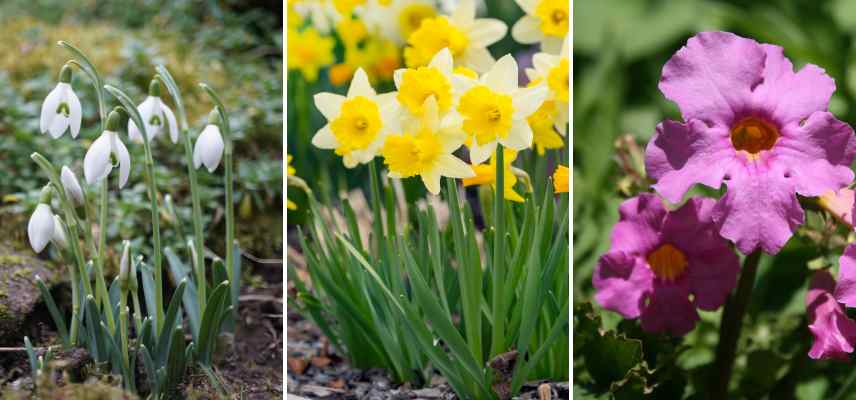
Snowdrops, daffodils and Incarvillea are options not to be overlooked
Prevent risks of cryptogamous diseases
Identification
Cryptogamic or fungal diseases are the most widespread in the garden. They are caused by fungi, often when environment is warm and humid.
In Allium, downy mildew in particular can cause damage. Symptoms consist of irregular yellow or brown spots on underside of leaves, which then lead to tissue necrosis. Leaves will then fall and plant growth will stop. Downy mildew develops at temperatures between 15 and 25 °C, associated with high humidity. Frequent spring or summer rain therefore favours its development.
For more information, discover our dedicated article: Downy mildew: identification, treatment, prevention
White rot can also affect Allium. It is identified by yellowish to whitish spots that colonise foliage. Plant growth is halted. When plants are pulled up, white filaments (mycelium) are found colonising root system, along with small black masses. Garlic and grey shallot are particularly susceptible.
Prevention and solutions
There are no truly effective treatments for cryptogamic diseases, especially once well established. Prevention is therefore all the more essential to combat these ailments.
First, look after cultivation conditions for Allium. A plant whose needs are met will naturally be less prone to disease and more resilient. For this, grow your bulbs in sun, in well-drained soil that avoids any waterlogging. If soil is heavy, add drainage material or opt for growing in raised beds. For container growing, choose pots with a drained base and add a drainage layer of gravel, river sand or clay pebbles at bottom. Also remember to empty saucers about twenty minutes after watering.
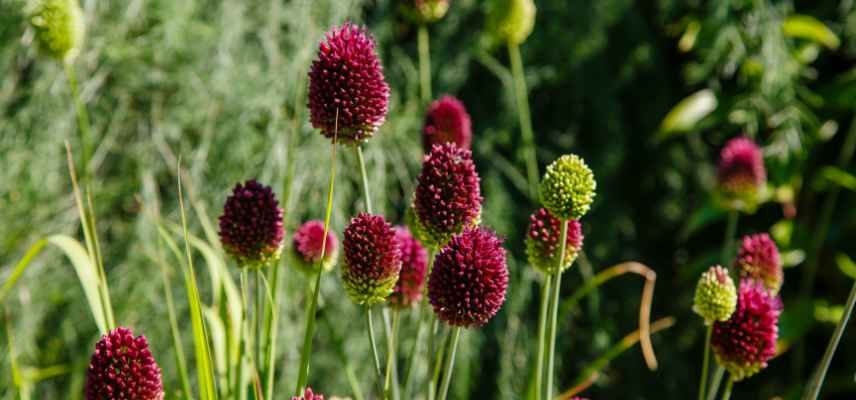
Like Allium sphaerocephalon, ornamental alliums need poor, very well-drained soils
Next, do not plant ornamental garlic in an area previously contaminated by a cryptogamic disease: spores can survive long in soil. In vegetable garden, practice crop rotation. Also respect planting distances to encourage natural aeration: at least 5 cm between each small bulb and at least 15 cm between each large bulb.
Also, pay attention to watering. Alliums are Mediterranean bulbous plants that dislike excess moisture (except wild garlic). Soil should therefore dry on surface between waterings. Also take care to water at base of plants, avoiding splashing foliage.
Be sparing with fertiliser applications. They can encourage flowering, but plants can perfectly adapt to poor soil.
Finally, regularly clear plant debris that accumulates on soil.
If disease is already established, remove affected parts as quickly as possible and dispose of them at a recycling centre (or in compost if it reaches sufficient temperature). Remember to disinfect cutting tools with alcohol to limit risk of disease spread between plants.
At same time, consider using plant manures or decoctions. Although their efficacy is not scientifically proven, they are reputed for antifungal virtues and for stimulating plant immune system. Opt for horsetail decoction or nettle manure. You can buy ready-made products or make them yourself.
Discover our complementary articles:
Use of Bordeaux mixture is also possible, but use should be reasoned and for short periods (risk of copper pollution of soils).
If bulbs are unfortunately too badly affected, there is no other solution than pulling them up to limit spread.
How to control onion fly
Identification
Last pest that can attack Alliums: the onion fly. The adult resembles a common housefly. It is actually the white larva that causes the damage. Adults patrol vegetable patch and flowerbeds in mid-spring to choose host plants on which to lay eggs. When they hatch, larvae bore into bulbs and feed on their contents. Symptoms include yellowing foliage that eventually withers, followed by bulb rot.
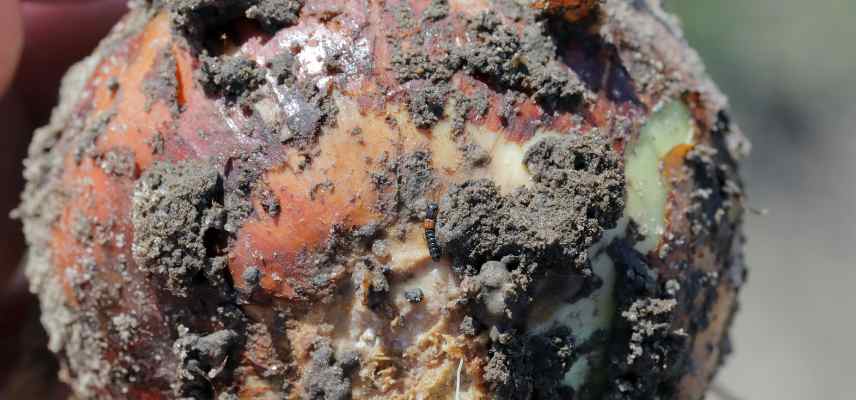
Attack on a Delia antiqua bulb, the onion fly
Prevention and solutions
As a preventive measure, avoid using fresh manure or nettle manure, whose strong smell would attract adult flies. Companion planting Alliums with carrots in the vegetable patch may disrupt olfactory cues of the adult insect. Finally, remember to practise crop rotation for onions and shallots.
Additionally, install fine-mesh insect nets in spring, during the most vulnerable period.
Again, ensure good soil drainage.
Finally, promptly remove infected bulbs to prevent spread of the pest.
Useful resources
- An article by Alain Delavie on the Mangave ‘Pineapple Express’
- Our sheet “Cacti and Outdoor Succulents: Planting, Growing and Maintaining”
- To pair with Mangaves, discover our entire range of cacti and succulents
- Our advice sheet Choosing a Mangave.
A word from our expert
Mangaves are original and rare succulent plants. They result from a cross-breeding between a Manfreda and an Agave, and are still relatively unknown. They have inherited the spotted and purplish patterns of Manfreda, as well as the evergreen and imposing character of agaves. Mangaves offer great diversity in terms of their patterns, colours, and leaf shapes. Their leaves appear to be injected with pigments in quite an irregular manner! They look like true works of art. Discover, for example, the Mangave ‘Pineapple Express' with dark green leaves punctuated with purple, the variety ‘Lavender Lady', which has solid leaves of a beautiful bluish-violet hue, or ‘Mission to Mars’, with beautifully purplish-red leaves. Mangaves grow a bit faster than agaves, thanks to their relationship with Manfreda. Unlike agaves, they don’t really have thorns! The leaves are slightly dentate, but with quite soft and non-spiky teeth. Mangaves require a rather dry substrate, very well-drained, even sandy or gravelly. Generally, they do not tolerate temperatures dropping below -5 °C. If you live in a frost-free region, you can plant Mangaves in a dry garden alongside cacti, opuntias, and other xerophytes. However, in cooler regions, we recommend growing them in pots on the terrace or balcony, bringing them indoors for the winter.- Subscribe!
- Contents
This form is protected by reCAPTCHA - the Google Privacy Policy and Terms of Service apply.

































Comments