How to get rid of scale insects on citrus trees?
Our natural tips and treatments
Contents
Scale insects on a citrus tree often appear without warning, transforming a healthy lemon tree, orange tree or kumquat into a weakened plant with sticky, dull leaves within weeks. Often, when faced with a scale insect infestation, it’s common to feel helpless. Yet, there are natural solutions, readily available and particularly effective at eliminating these pests while preserving the health of your citrus trees. Discover how to quickly recognise scale insects, apply a suitable black-soap-based treatment and restore your tree to health and vigour.

How to recognise scale insects on a citrus tree?
Before considering treatment for scale insects, start by identifying them correctly. Scale insects on citrus trees often go unnoticed at first, because they generally hide on the undersides of foliage, on stems or in leaf veins.
Armoured scale insects
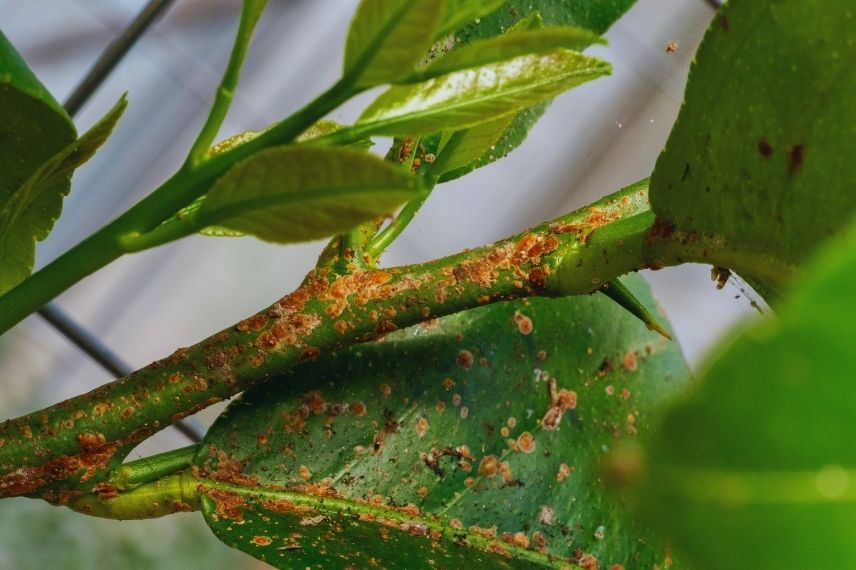
Armoured scale insects, also called shield scales, include several species such as California red scale, the comma scale (Lepidosaphes beckii) and black citrus scale (Parlatoria ziziphi). They form small hard, brown to dark plates and resemble tiny immobile shells or pustules. They are deeply embedded on leaves, shoots or fruit and difficult to remove.
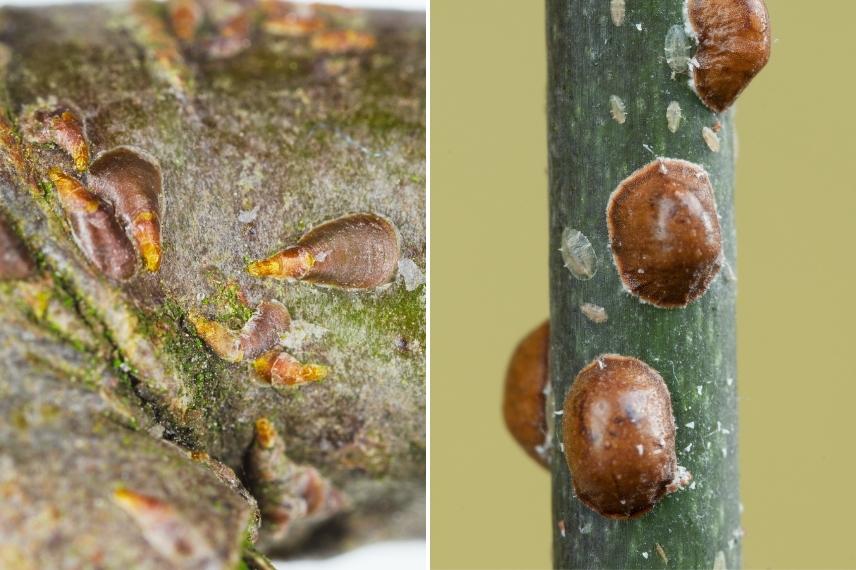
Comma scales and shield scales
Mealybugs
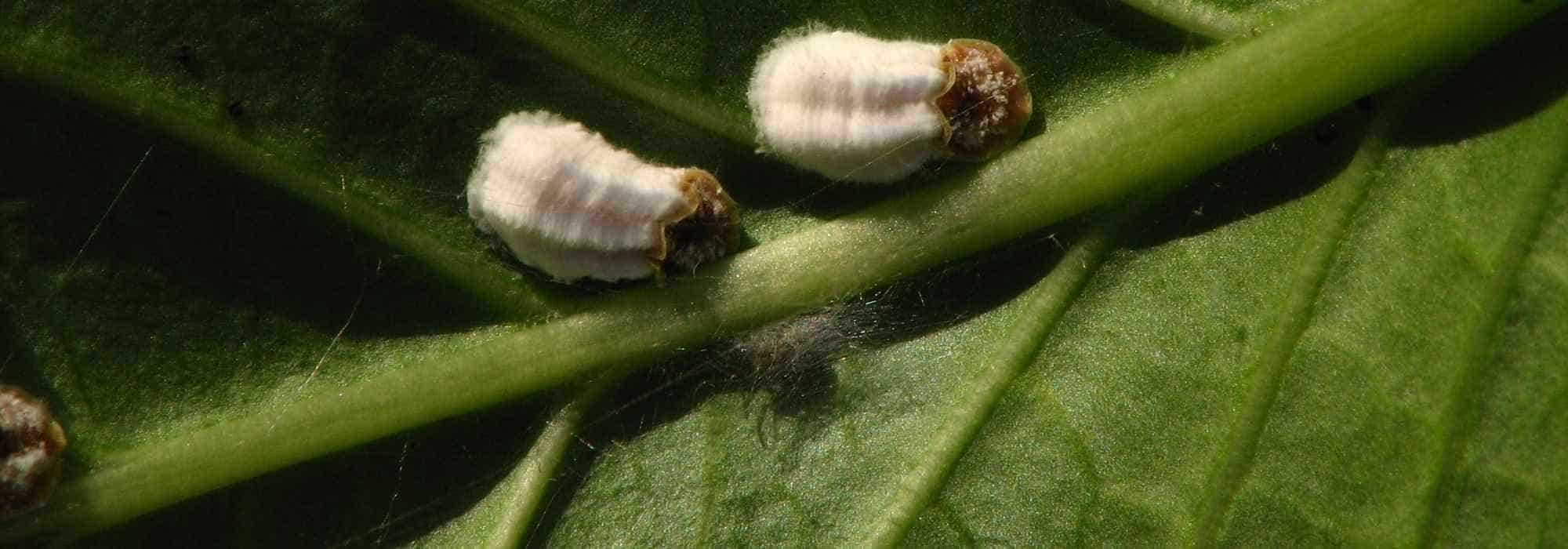
Mealybugs on citrus trees (Planococcus citri), easier to spot, produce a white cottony substance visible in leaf axils, on young shoots or along veins, sometimes even on fruit. They are particularly common on citrus trees grown indoors or under cover.
Soft scale of citrus trees
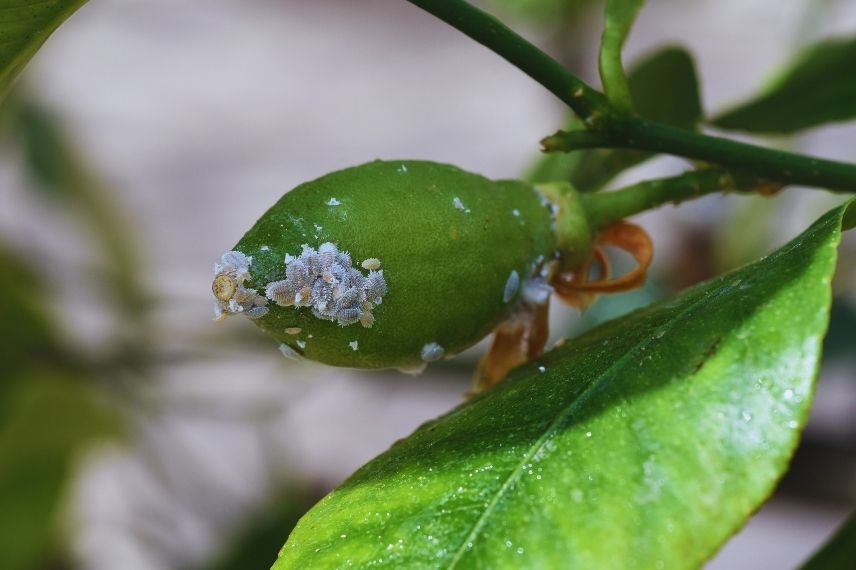
Soft scale of citrus trees (Coccus hesperidum) has a domed, smooth body, light brown to yellowish, sometimes with spots, and is distinguished by heavy honeydew production, often causing sticky leaves.
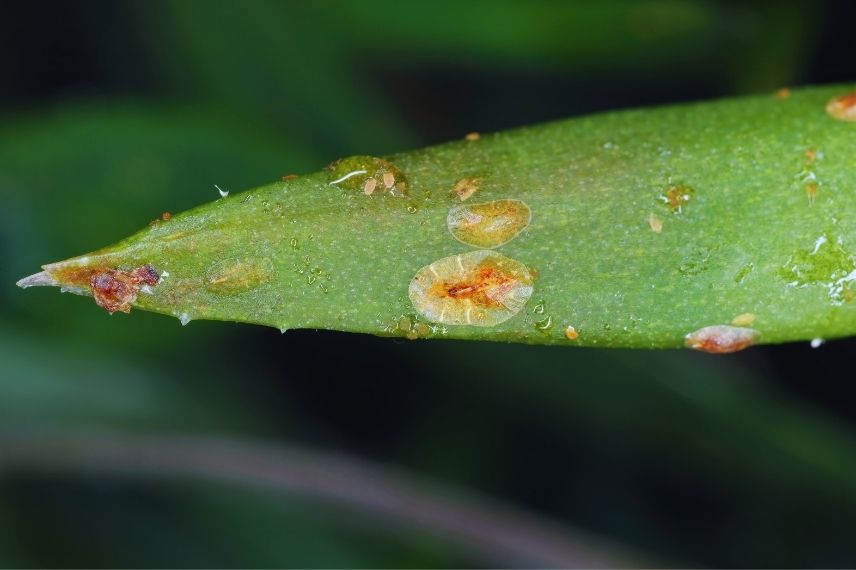
Symptoms of a scale insect infestation on a citrus tree
Scale insects on a citrus tree cause several characteristic signs. Leaves become sticky because of the honeydew secreted by the scale insects, which then favours the appearance of sooty mould, a black deposit that hinders photosynthesis.
An infested lemon tree often shows yellowing foliage and sometimes premature dropping of leaves or fruit. Young shoots become deformed, as sap is continuously taken, disrupting their development.
Over time, growth slows noticeably and flowering may be reduced, even compromised during a heavy infestation. The citrus tree gradually becomes exhausted, becoming more susceptible to other stresses and diseases.
These signs should alert you promptly, because the larger a colony of these pests becomes, the longer and more demanding treatment will be.
How to get rid of scale insects on my citrus tree?
Black soap, a simple and effective natural remedy against scale insects
To eliminate scale insects on a citrus tree effectively, black soap remains a simple, natural and highly effective solution. Used for a long time as a grandmother’s remedy against scale insects, it works on contact by dissolving insects’ waxy coating and asphyxiating them.
Required ingredients
- 1 litre of water (preferably lukewarm, to mix more easily).
- 3 tablespoons of liquid black soap: it cleans honeydew and softens the insect’s protective covering.
- 1 tablespoon of 70% alcohol: it helps dissolve the shell of armored scale insects and improves effectiveness.
- 1 teaspoon of vegetable oil: it asphyxiates scale insects by blocking their respiratory pores.
Application
-
- Mix the ingredients thoroughly until a homogeneous solution is obtained.
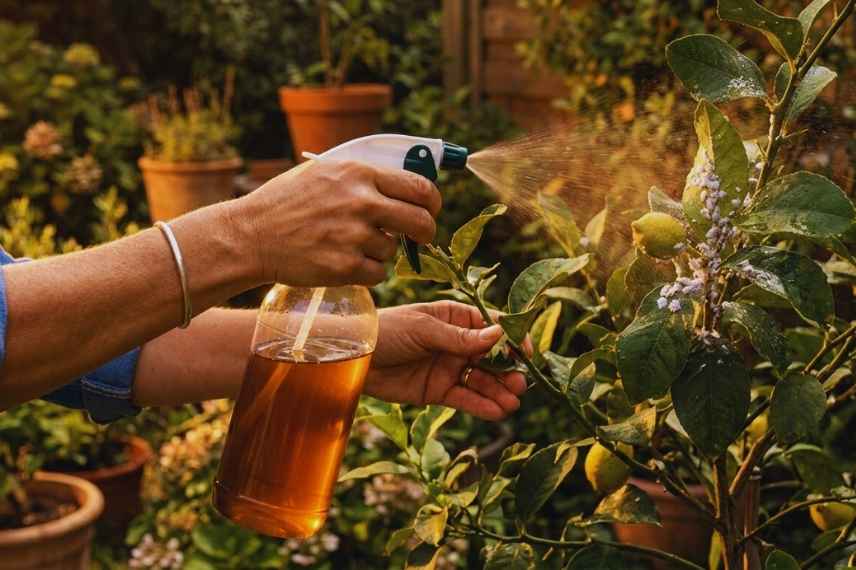
- Spray over the entire citrus tree, concentrating on infested areas, the undersides of leaves and young shoots.
- Preferably apply in the evening or in overcast conditions; never in full sun. Sun combined with oil can scorch leaves of your citrus tree.
- About 2 to 3 hours after treatment (or the next morning), rinse the tree with a jet of water to remove soap residues and dead insects.
Treatment frequency
- Repeat scale insect treatment every 7 to 10 days.
- Repeat at least 2 to 3 times, as eggs are not destroyed by the first application.
Tips
- Always test the solution on a small part of the foliage.
- Monitor progress regularly, as some scale insects on lemon trees may require several applications.
- If infestation is localised, use a cotton bud soaked in alcohol to remove scale insects.
Encouraging natural allies in the garden
If your citrus tree is outdoors, in the garden or in a pot on a terrace, it can also benefit from helpful insects that naturally limit pest populations.
Ladybirds, especially their larvae, consume large numbers of scale insects. The lacewings, often less well known, also play a valuable role, particularly against young colonies of scale insects.
To attract them, simply create a favourable environment: varied plantings, some melliferous flowers, and, above all, limit aggressive treatments. In a balanced garden, it is not uncommon to see a scale infestation on a lemon tree regulate itself naturally over the seasons.
When infestation is already well established, it is perfectly possible to give nature a helping hand by buying and introducing ladybird or lacewing larvae. This solution acts quickly on scale insects on lemon tree while remaining gentle and respectful of the garden.
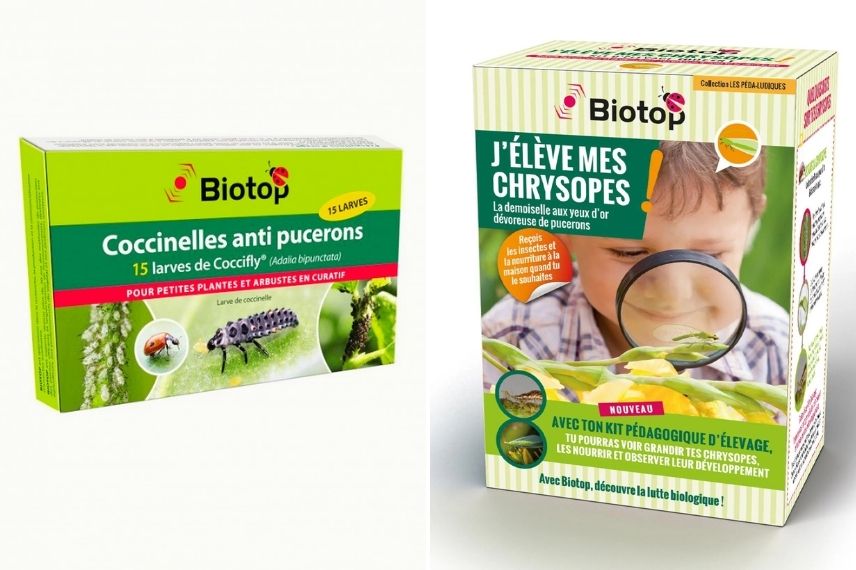
Larvae available to buy to combat scale insects
Help your citrus tree recover after a scale insect attack
After a scale insect outbreak on a citrus tree, the tree needs appropriate care to regain vigour. A weakened citrus tree becomes more vulnerable to further attacks.
- Cleaning leaves with plain water removes honeydew and sooty mould residues. This improves photosynthesis and restores shine to foliage.
- We recommend applying a fertiliser specific to citrus trees, rich in nitrogen, potassium and trace elements. This type of fertilisation stimulates growth and strengthens the plant’s natural defences.
- Pay particular attention to watering. Water stress, whether due to overwatering or underwatering, encourages scale insect infestations.
- Finally, light pruning can be considered to remove the most affected parts. This helps limit spread and focus the tree’s energy on healthy areas.
- Subscribe!
- Contents
This form is protected by reCAPTCHA - the Google Privacy Policy and Terms of Service apply.

































Comments