Diseases and pests of Japanese cherry trees
Identification, prevention and natural solutions
Contents
White mustard in a nutshell
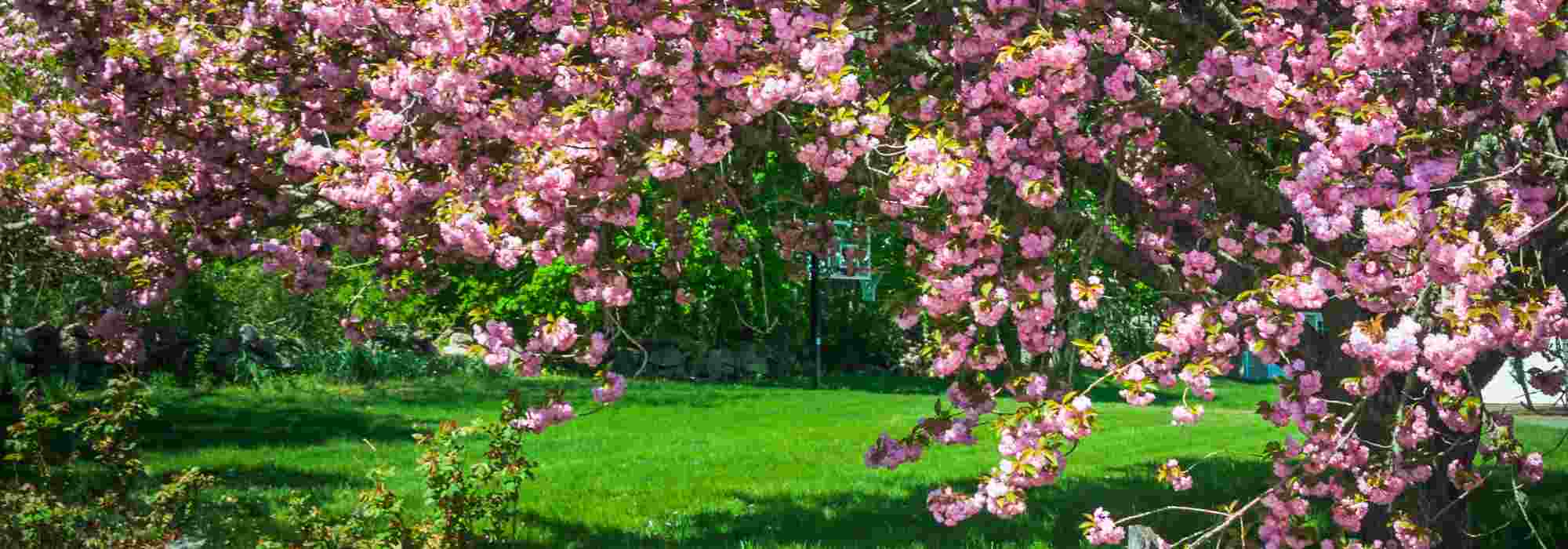
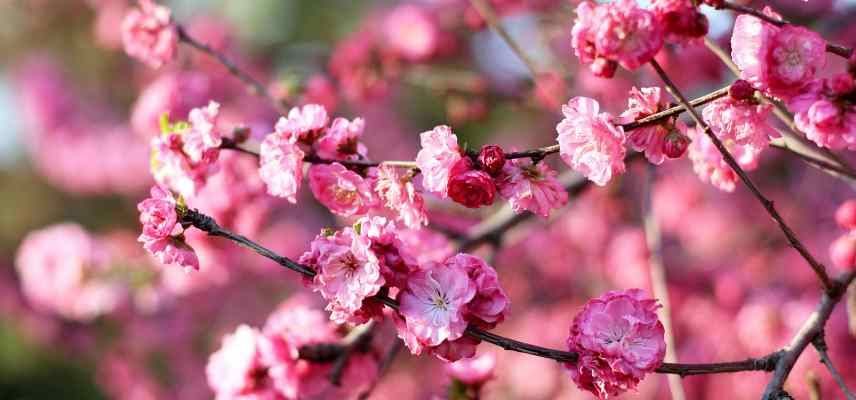
Japanese cherry trees are valued for their beautiful early-spring flowering, which awakens the garden with delicacy and poetry. It has the particularity of occurring on branches that are still leafless. These ornamental shrubs are also prized for their foliage that changes colour through the seasons, for their varied silhouettes and for their decorative bark.
Hardy and undemanding, these deciduous shrubs are not difficult to grow.But, like many plants, they can be subject to certain pests or to certain diseases.Let’s see how to identify symptoms, prevent risks and apply suitable natural treatments to keep Prunus healthy.

Cryptogamous diseases
These are the most common diseases in the garden. They are also called fungal diseases and are caused by fungi. The problem with these diseases? They are often highly contagious and their spores can survive for a long time in soil. Japanese cherry trees are susceptible to the same diseases as fruiting cherry trees and fruit trees in general.
Brown rot
Brown rot of blossoms, also called fruit rot, is caused by a fungus that often develops in spring, when temperatures warm but humidity is still high. It will affect flower production and the shrub’s growth.
Among the symptoms, you will notice wilting of flowers and also of young shoots, which turn brown, as if scorched. Withering flowers remain attached to the twigs and become what are called “mummies”.
For more information, see our article: Brown rot of fruit trees.
Armillaria
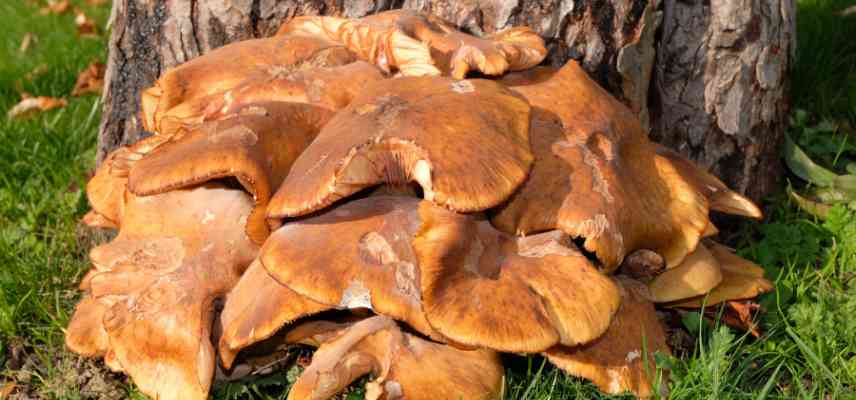
Armillaria is hard to spot: symptoms usually become visible only when it is well established, since this disease attacks the roots and the base of the trunk first. Then the foliage will start to yellow and gradually wilt. Clusters of cap-shaped fungi may also appear at the base of the trunk.
Unfortunately, there is no cure for this disease.
For more information, see our article: Armillaria or Honey fungus: recognise and control this tree fungus.
Coryneum or shot hole disease
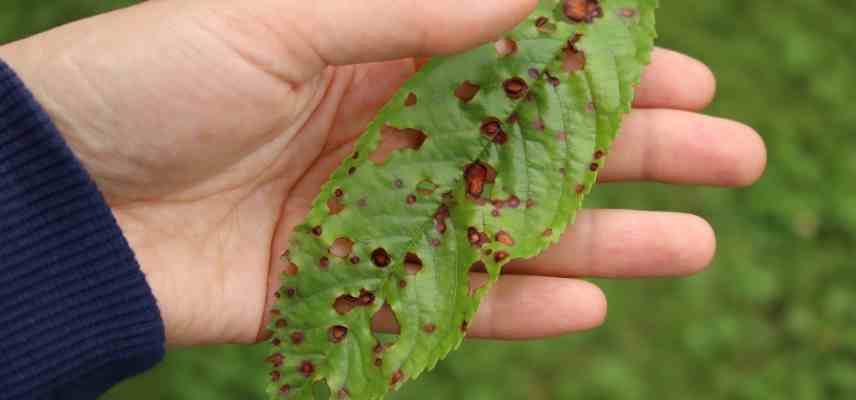
This fungus is identified by small holes surrounded by brown spots on the foliage, as if riddled with bullets. It affects the plant’s appearance and growth.
Prevention and natural solutions
Against cryptogamic diseases, prevention is essential: many cannot really be treated once the infection is well established.
To do this, start by tending the growing conditions of your Japanese cherry. A plant whose needs are met is naturally more resistant to pathogens.
To that end:
- grow Prunus in sunlight, but avoid scorching sun (semi-shade at midday in hot regions);
- plant it in well-drained soil that prevents stagnant moisture (add draining materials such as sand, gravel or clay pebbles at planting if needed, or opt for raised-bed culture);
- avoid planting your ornamental cherry in soil already contaminated by fungi;
- choose a location sheltered from strong winds;
- ensure good natural air circulation between plants by avoiding overcrowding;
- water regularly (ornamental cherries prefer cool soils that never completely dry out), avoiding wetting the foliage;
- mulch the soil with straw, dead leaves, hay, RCW or wood chips;
- stake your plant during its early years to ensure straight growth.
Then, it is preferable not to prune Japanese cherry. Any pruning can create wounds that become real entry points for pathogens. If necessary, perform light pruning at the end of summer or in autumn. Shorten only the branch tips and remove those that are damaged or poorly placed. Maintain good hygiene of your cutting tools by disinfecting them with 70% alcohol before and after pruning. If needed, apply wound-sealing mastic.
If diseases are already present, start by rapidly removing all infected parts. Dispose of them at the waste centre or in the compost heap if you are sure the temperature rise is high enough, but do not leave them on the ground. Disinfect cutting tools well with 70% alcohol after pruning, always to limit the risk of disease spread between plants.
Treatments based on Bordeaux mixture, this powder diluted in water and sprayed onto affected parts, are possible. However, take care to use this treatment sparingly (dosage and treatment duration). This limits the risk of soil imbalances due to non-biodegradable copper, which can create real vicious circles in the garden. For more, see our article: Bordeaux mixture and other copper-based treatments in the garden.
Other natural preventive and curative treatments: plant manures. Even if their effectiveness is not scientifically proven, they are the allies of many gardeners. Against fungal diseases, nettle manure or horsetail manure are particularly recommended. They are used diluted in water, either for watering or spraying. Feel free to watch our tutorials for making nettle manure or for making horsetail manure.
Bacterial canker
Description and symptoms
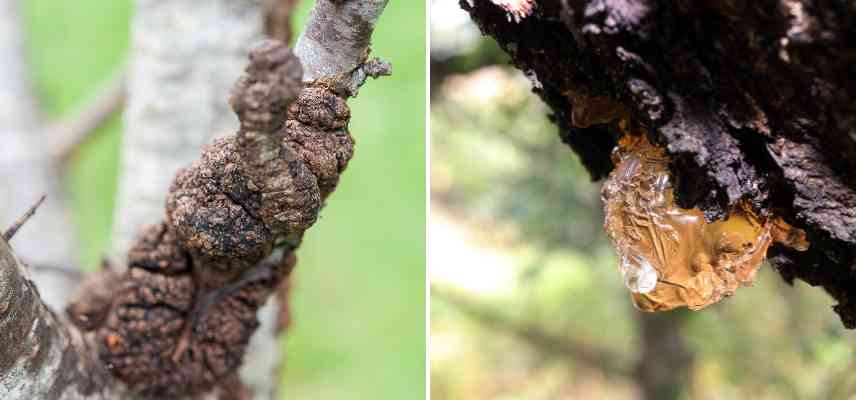
Bacterial canker is a disease caused by a bacterium of the genus Pseudomonas. Symptoms include sunken bark that becomes deformed and oozes liquid gum. These wounds develop into black ulcers over time. Young shoots and foliage develop black lesions and become deformed. If it spreads, it can cause tree dieback.
Prevention and natural solutions
To prevent infection, apply lime-based tree whitewash to the trunk in winter and maintain good growing conditions, as with control of fungal diseases.
Quickly remove infected parts during a dry period and then apply a wound sealant.
Unfortunately, no effective curative treatment exists, so preventive measures are essential.
For more information, read our article: Canker of trees and fruit trees.
Scale insects and aphids
Description et symptômes
These small pests are the most widespread and best-known to gardeners. These piercing-sucking insects feed on plant sap, weakening plants and creating entry points for pathogens.
There are different species of scale insects and aphids. Mealybugs are recognised by their white, powdery appearance, as if covered in cotton. By contrast, shield-scale or armoured scale insects have a soft protective shell on their back, usually dark in colour. Aphids can be black, yellow or green, winged or wingless.
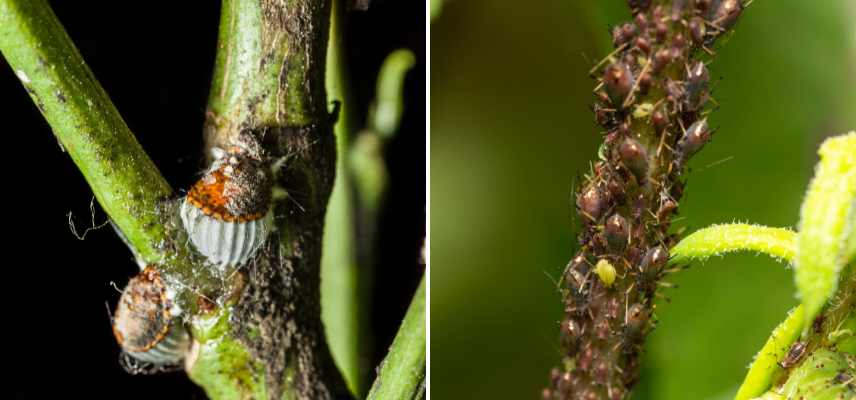
Besides being visible to the naked eye, you will notice curling of foliage that eventually dries out.
By secreting honeydew, these pests can also encourage transmission of another disease: sooty mould. It affects photosynthesis and overall health of Japanese cherry.
Prévention et solutions naturelles
As a preventive measure, inspect trees regularly. This allows you to act as soon as an infestation begins. If pest numbers are low, a quick spray of water or wiping with a damp cloth can be enough to dislodge them.
Then, as with cryptogamic diseases, ensure good growing conditions for Japanese cherry.
Avoid using overly nitrogen-rich fertilisers, which make plants more attractive to pests. A dressing of well-rotted household compost in autumn is often enough to feed the plant and encourage flowering.
If infestation is heavier, turn to natural insecticides, for example pure black soap. You can easily make some yourself by mixing 1–2 tablespoons of black soap in 1 litre of lukewarm water. Pour into a sprayer and spray affected parts out of direct sunlight (preferably early morning or late evening).
The tansy manure is also reputed to have repellent properties against aphids.
For more information, see our articles :
Useful resources
- Find all the information you've always wanted to know about green manures
- Follow our tips to learn about and use green manures
- Also learn how to nourish the soil naturally
- Finally, discover our various mustard seeds to sow
A word from our expert
Cultivated in France since the 14th century, white mustard, Sinapis alba, is an annual herbaceous plant that produces large pale yellow seeds used in the making of strong mustard. While their taste is bitter, it is less pungent than that of black or brown mustard. Grown as a green manure, Sinapis alba transforms into organic matter once destroyed by frost or by crushing, which naturally enriches the soil. White mustard covers the ground with its dense clumps, and leaves no room for weeds that it smothers. Its root system also allows water and air to penetrate the soil well, and effectively retains nitrates. This helps prevent pollution of groundwater. The roots of mustard have properties similar to garlic. They are thus a very effective and natural bactericide and nematicide. The plant therefore allows for the disinfection and sanitisation of the soil for a future vegetable garden. Mustard in general includes species from the genus Sinapis, as is the case with white mustard, and species from the genus Brassica. The Sinapis alba (white mustard) is the most suitable as a condiment, although Brassica nigra (black mustard) is also used for this purpose. Prepared mustard is generally made using a mixture of white mustard seeds and black mustard seeds, which are mixed with vinegar, must, or verjuice. [caption id="attachment_86417" align="aligncenter" width="1172"] Mixture of white mustard seeds and black mustard seeds.[/caption]
With a melliferous flowering, white mustard is also effective in repelling aphids in the garden. It is grown in open ground in sunny or semi-shaded conditions.
Easy to grow, Sinapis alba requires very little maintenance, limited to light watering to keep the soil moist.
Here are all our tips on this perfect green manure to improve the quality of your soils.
Mixture of white mustard seeds and black mustard seeds.[/caption]
With a melliferous flowering, white mustard is also effective in repelling aphids in the garden. It is grown in open ground in sunny or semi-shaded conditions.
Easy to grow, Sinapis alba requires very little maintenance, limited to light watering to keep the soil moist.
Here are all our tips on this perfect green manure to improve the quality of your soils.
- Subscribe!
- Contents
This form is protected by reCAPTCHA - the Google Privacy Policy and Terms of Service apply.

































Comments