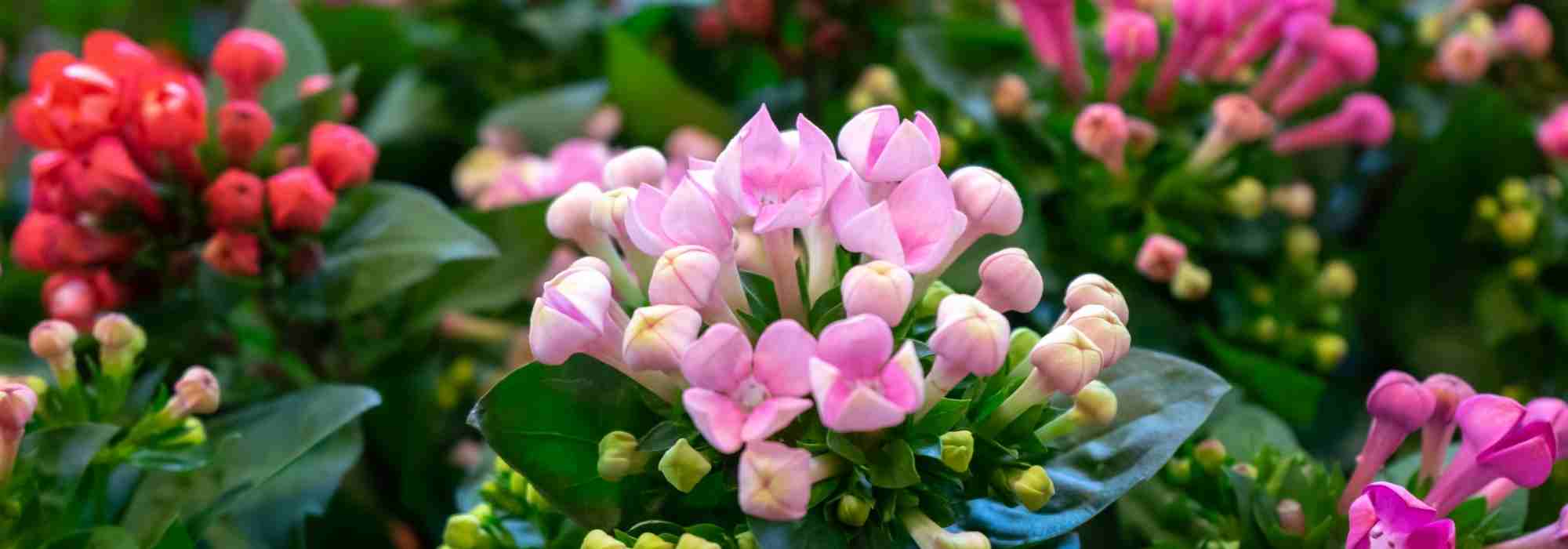
Common diseases and pests of Kalanchoe
Prevention and treatment of diseases and parasitic infestations of Kalanchoe
Contents
Flax in a nutshell
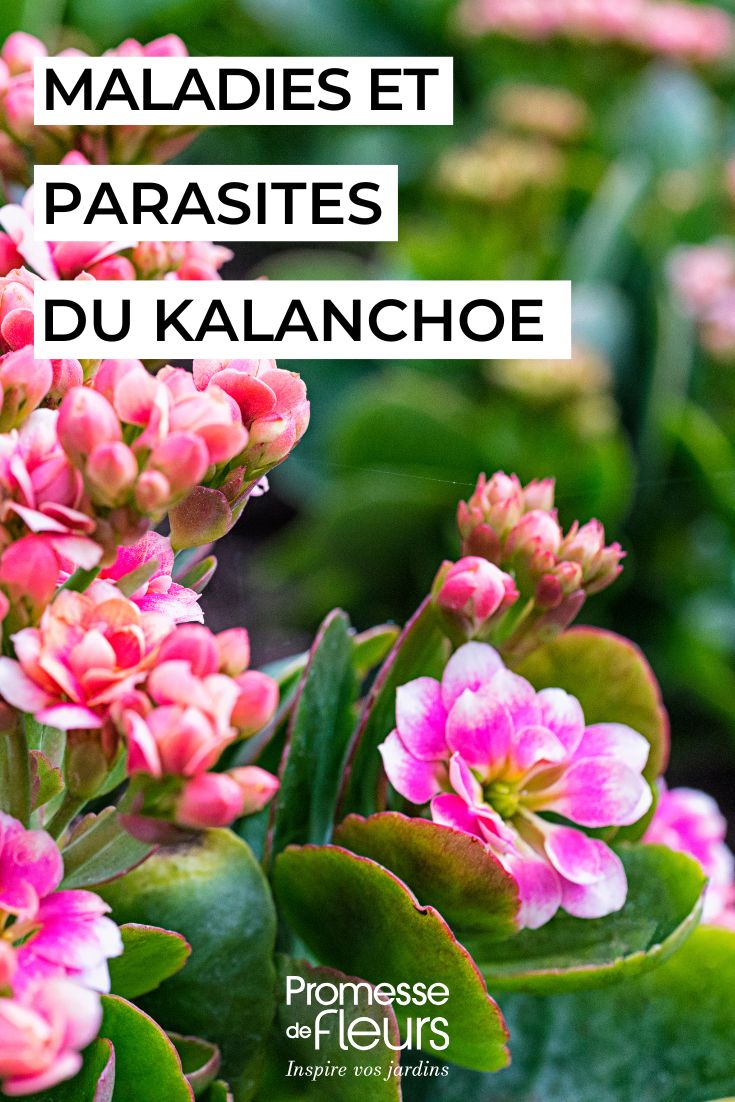
With its fleshy leaves and colourful flowering that can last for weeks in some species, kalanchoe has all the qualities of a perfect houseplant, such as Kalanchoe blossfeldiana. Easy to grow and undemanding, it takes pride of place indoors. But behind this robust appearance lies a plant that can be rather sensitive if its growing requirements are not met: kalanchoe downy mildew, kalanchoe white mould, fungal diseases, invisible pests, intolerance of excess water… Kalanchoe can quickly decline if some details are neglected.
Discover how to prevent indoor kalanchoe diseases to keep your plant in top condition.

Kalanchoe: varieties and species
Obviously, when the term “kalanchoé” is mentioned, the image that comes to mind is the small succulent plant, with particularly generous and long-lasting flowering. It is Kalanchoe Blossfeldiana (Kalanchoe blossfeldiana), which flowers in white, pink, red, yellow, orange, violet… A flowering indoor star, easy to find everywhere. It likes bright light, a well-draining substrate, and cannot tolerate excess water or stagnant humidity. Regarding watering, Kalanchoe requires particular attention.
But the genus Kalanchoe offers other gems with varied shapes, sizes and needs, thanks to numerous cultivars :
- Kalanchoe tomentosa : also known as the “panda plant”, recognisable by its soft, downy leaves. Very drought-tolerant but its hairs can retain moisture and encourage certain fungal diseases
- Kalanchoe thyrsiflora or “desert rose” : striking with flat, smooth leaves like rose petals. In sun, leaves develop red edges. Prefers dry indoor conditions
- Kalanchoe beharensis with its large, triangular, velvety leaves. A very architectural plant, but requires a bright, airy space
- Kalanchoe marmorata draws the eye with large, flat leaves marbled with purple. Particularly sensitive to excess moisture, especially in winter, and can develop fungal spots if poorly ventilated
- Kalanchoe farinacea, more discreet, has a powdery, slightly bluish foliage. Shows some drought resistance but dislikes overly humid environments
- Kalanchoe daigremontiana, nicknamed “mother of thousands”, produces a multitude of plantlets along the edges of its leaves. Spectacular and easy to propagate, but its young tender tissues can be vulnerable to fungi or overwatering.
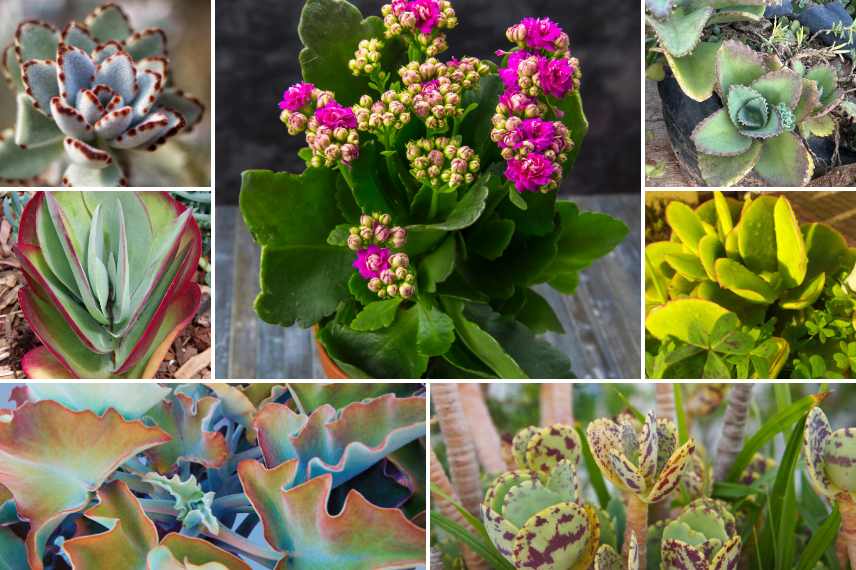
The different species of Kalanchoe: around Kalanchoe Blossfeldiana, Kalenchose tomenstosa, thyrsiflora, beharensis, marmorata, farinacea and daigremontiana (counter-clockwise)
Read also
Kalanchoe : cultivation and careKalanchoe: minor and major problems
Even though Kalanchoe is a hardy plant, it can suffer from various diseases. Identifying symptoms early allows quick action and prevents spread to other plants.
Fungal diseases
- powdery mildew is one of the most common problems, especially indoors or in a greenhouse. It appears as a white, powdery film on leaf surfaces. Leaves then yellow, become necrotic and drop. To treat, start by removing the most affected leaves and improve ventilation. Sprays based on bicarbonate of soda can limit spread.
- grey mould, caused by Botrytis. It attacks spent flowers, wounded stems or leaves, and is recognised by a grey mould covering softened tissues. Again, cut away and dispose of all affected parts. Also ensure pots are well spaced to reduce stagnant moisture.
- La root and collar rot usually occurs due to overwatering or a compact potting mix. Kalanchoe wilts despite the mix being wet, and roots turn black and mushy. In that case, remove the plant from its pot, trim away all affected roots, allow the root system to dry, then repot into a light, very free-draining mix.
Bacterial diseases
Less common but serious, bacterial diseases often develop after an injury, excess moisture or poor ventilation. They cause rapid wilting of stems, dark spots and sometimes foul odours.
When these signs are noticed, promptly cut away all diseased parts and disinfect tools. If infection is too advanced, it is best to dispose of the Kalanchoe.
Kalanchoe pests, often hard to spot
Kalanchoes can also be targeted by various insects and mites, often inconspicuous but potentially devastating.
Mealybugs
They are particularly feared. Mealybugs on Kalanchoe form small white, cottony clusters on leaves or in stem axils. Others, the shielded type, appear as small brown, shell‑like coverings attached to Kalanchoe. They feed on sap, weaken Kalanchoe and favour the development of sooty mould, a black fungus linked to the honeydew they excrete.
What to do? Treatment starts with manual cleaning using a cotton bud soaked in 70% alcohol. Then, sprays made from one teaspoon of black soap, 70% alcohol and vegetable oil, diluted in water, help to asphyxiate them. Regular monitoring is essential, as they tend to return if conditions remain favourable.
Aphids
Especially present in spring, aphids settle on young shoots, causing deformities and slowed growth. Their feeding also promotes the development of sooty mould and viruses.
What to do? To remove them, a simple stream of water can be enough at the start of an infestation. Otherwise, black soap mixed with water or a garlic decoction can be used.
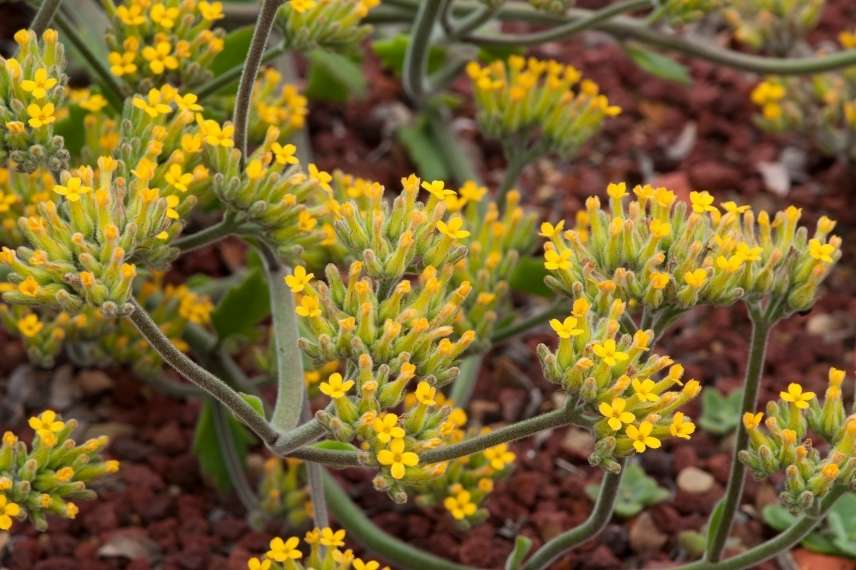
Kalanchoe longiflora is covered in canary‑yellow flowers in late spring
Thrips
Hard to spot, thrips cause silvery spots, streaks or holes in Kalanchoe leaves, and sometimes altered flowering. They are often detected too late.
What to do? Act quickly using sticky blue colour traps to capture them. Good ambient humidity can also limit their development.
Red spider mites
Often called “red spider mites“, these mites appear mainly when air is too dry. They cause gradual yellowing of leaves, which eventually dry out. Very fine webs may appear between leaves.
What to do? A simple mister often keeps them at bay. You can also place your Kalanchoe outside in the rain, if temperatures are not too low.
Read also
Kalanchoe as a houseplant: our care tipsGood practices to prevent pests and diseases
Prevention remains best defence against all these problems that can threaten Kalanchoe. Here are habits to adopt to keep Kalanchoe in good health :
- Use good substrate, light and well-drained. Mixes for cacti or succulents, enriched with perlite or coarse sand, prevent water retention, main cause of rot
- Choose a suitable pot, always with a drainage hole. Empty saucers and cache-pots after watering, residual water being harmful to root system
- Water sparingly, only when top of soil is thoroughly dry. In winter, needs are greatly reduced. Better slightly too dry than slightly too wet. Water every 15 days in spring, every 10 days in summer (or more in very hot weather), and once a month in winter is sufficient
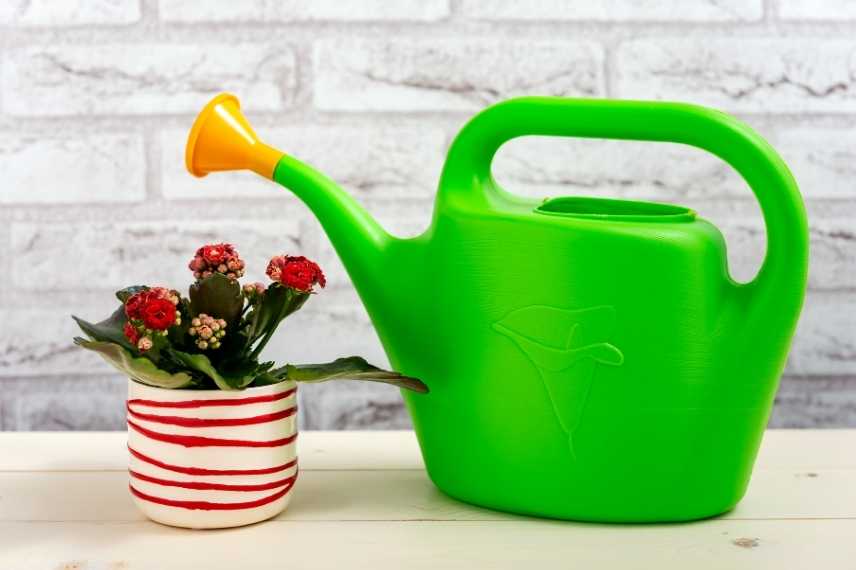
Kalanchoe needs moderate watering
- Provide good light. Kalanchoe likes bright light, but some species need protection from direct sun in summer
- Ensure good ventilation, especially indoors. A confined or overly humid room favours development of fungi and pests. It is therefore essential to ventilate, even in heart of winter
- Space plants, to avoid rapid spread in case of infestation
- Check regularly foliage, stems and even roots when repotting. Early detection of a problem increases chances of recovery
- Isolate new plants for two to three weeks after purchase or arrival in home. This helps spot any pests or diseases before they spread to others
- Clean and disinfect tools after each use, especially when cutting a diseased plant
- Avoid excess fertiliser, especially nitrogen-rich types that make tissues softer and therefore more attractive to insects. A light application of liquid fertiliser for flowering plants for Kalanchoe blossfeldiana, and a special fertiliser for succulents for other species once a month is sufficient. It is even preferable to halve recommended doses.
Useful resources
- Discover our range of flax seeds: it features the best varieties!
- Browse our article: Companion planting flax
- To get it right, check out our tutorial: Sow flax seeds
- Find the most beautiful annuals in our nursery!
A word from our expert
Cultivated flax, Linum usitatissimum, is a plant grown mainly for its fibres, from which textile is made, and for its seeds and oil with many benefits. As for the flax flower, it is also edible and attractive as a salad garnish! Flax cultivation in France is widespread and it is not uncommon to see flax fields in flower stretching as far as the eye can see, lighting up the countryside in summer with their sky-blue colour!
But flax is also a lovely, valuable flower for creating flowering cushions in gardens! There are other species of flax, plant cousins of the wild flax of our meadows, offering flowering displays of an equally intense blue, as well as red, pink or white. Flax is an essential flower in natural and wild gardens and in dry gardens, where its bucolic charm helps lighten summer flower beds, abundant mixed-borders, dry rockeries and naturalistic meadows.
It also has many ecological advantages; undemanding in fertiliser, flax is a very useful plant in the vegetable garden: sowing flax with potatoes repels Colorado potato beetles!
Easy and undemanding, flax grows in sun in all well-drained soils, even calcareous and stony ones.
From annual flax to perennial flax, discover among our collections the different species of flax we offer and our advice for flax cultivation, on how to sow flax successfully in the garden, harvest flax seeds or its many uses.
- Subscribe!
- Contents
This form is protected by reCAPTCHA - the Google Privacy Policy and Terms of Service apply.

































Comments