Roses have always been the undisputed stars of gardens, symbolising both love and beauty. However, for these queens of the garden to bloom their petals splendidly, planting requires special care. One of the most common and effective methods is planting bare root roses, a technique that promises vigorous growth and abundant flowering. In this article, we will detail the crucial steps to successfully plant your bare root rose supplied in a pot of substrate, from soaking methods to the secrets of perfect watering. Follow our guide to transform your garden into a haven of resplendent roses!
Bare root rose or potted? It’s all Greek to me
" Don't you order your roses bare root? - Well, yes. Look! - Oh no, these are potted. - Yes, but they are still bare root... just potted. - Oh. Well, if I were you, I would have bought bare root plants in pots. - Oh, very funny! That's clever...."
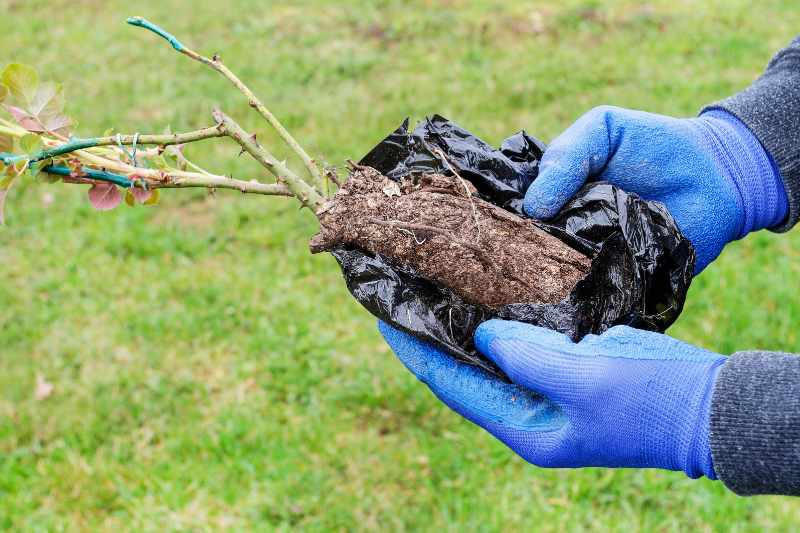
Bare root roses delivered with a pot of substrate surrounding them represent an excellent option for all gardeners. This proposal combines the advantages of the two most commonly used plant delivery types: bare root and containerised.
When a rose (or another plant) is delivered bare root, it means it is shipped without soil around the roots. This process has several advantages, including reduced transport costs and better recovery of the plant once planted. However, it requires that the plant be planted quickly after receipt to minimise stress and the risk of root desiccation.
The addition of a pot of potting soil around the roots during transport offers a clever compromise. This pot hydrates the roots during transit, thereby reducing transport-related stress and increasing the chances of successful recovery. It also allows gardeners to gain a little time (but don’t take too long!) before needing to plant their new rose.
When to order? When to plant?
Bare root roses are generally available for purchase between November and March, which coincides with their dormancy period. This helps to minimise stress on the plant and increases the chances of successful recovery once planted. The best time to plant these roses is also during their dormancy, when the plant is less likely to suffer from thermal shock or water stress.
How to plant a bare root rose bush?
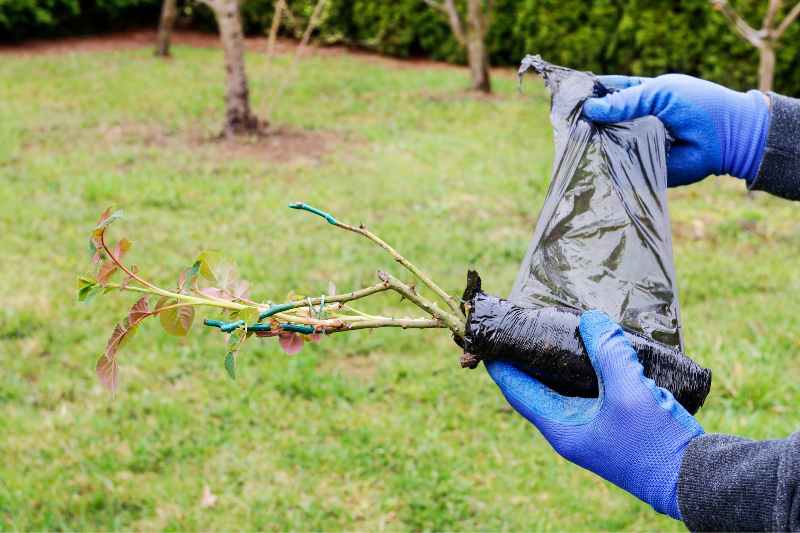
First, unpack the pot by removing the plastic that holds it in place. When you do this, you may take some substrate on your feet or even in your boots: this is perfectly normal (it happens to me every time too!) and in any case, you don’t really need it anymore. However, you can keep it to bring to the planting if your soil is very heavy.
- Choosing the location: Select a well-sunny spot with well-drained soil. Roses prefer at least six hours of direct sunlight each day.
- Inspecting the roots: First, carefully inspect the roots of your rose. Remove any damaged or rotten parts with sharp, disinfected pruning shears. Healthy roots are essential for good recovery of the plant.
- Hydration and soaking: Soak the roots of the rose in a bucket of water for a few hours to hydrate them. You can also proceed with soaking the roots. This operation involves soaking the roots in a mixture of soil, preferably clay, compost or manure, and water, all forming a thick mud. This step promotes recovery and root growth by improving contact between the roots and the soil.
- Preparing the planting hole: Dig a hole large enough to accommodate the spreading roots of the plant, generally 50 cm deep and 60 cm wide is sufficient.

- Soil amendment: Mix the removed soil with well-decomposed compost to improve the soil, providing essential nutrients to the plant.
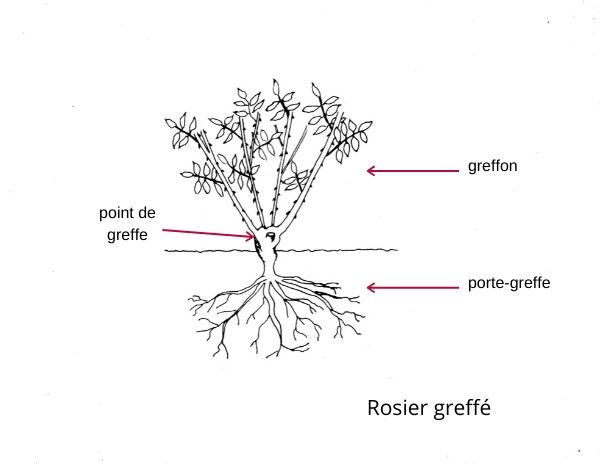
- Placing the rose: Position your rose in the middle of the hole, ensuring the roots are well spread out. The grafting point, identifiable as a swelling at the base of the stem, should be level with the soil or slightly above (see picture below).

- Backfilling and tamping: Fill the hole with the enriched soil and compost mixture, lightly tamping down by hand to eliminate air pockets.
- Watering: Water thoroughly immediately after planting to establish good contact between the roots and the soil.
- Mulching: Apply a layer of mulch such as straw or wood chips to retain moisture and limit weed growth.
- Post-planting care: Keep the soil moist but not waterlogged during the first few weeks, and consider applying a rose-specific fertiliser when the first signs of growth appear.
Roses have always been the undisputed stars of gardens, symbolising both love and beauty. However, for these queens of the garden to bloom their petals splendidly, planting requires special care. One of the most common and effective methods is planting bare root roses, a technique that promises vigorous growth and abundant flowering. In this article, […]
With climate change, dry spells are becoming longer and earlier. Roses are not spared and sometimes suffer from this lack of water over an extended period, which can gradually lead to their decline if timely intervention is not made. It is therefore important to manage watering well and implement certain techniques to protect roses. Discover how to recognise a thirsty rose and how to save it!
1 - What are the symptoms of water stress?
Not all plants react the same way to drought. Certain physiological reactions indicate that the plant is suffering from a lack of water. It is important to know how to recognise when a rose is thirsty, so you can respond quickly:
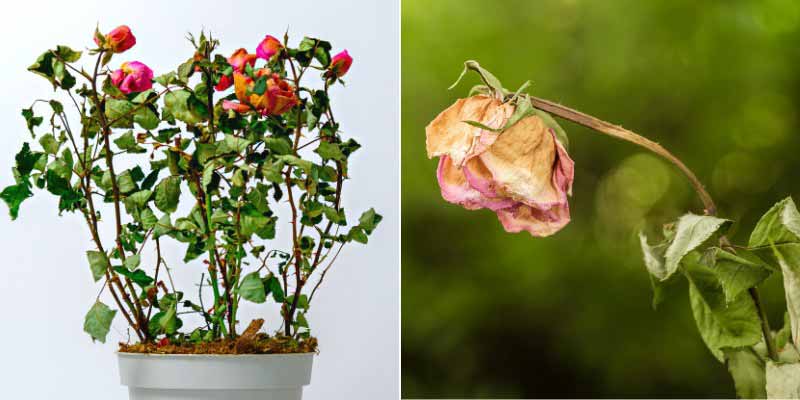
- Leaves wilt, droop towards the ground, and begin to yellow. They dry out then detach and fall. If nothing is done, the branches will gradually become bare.
- Young shoots also wilt. They may turn brown and stop growing.
- Flowers and flower buds will also dry out and turn brown. The flowers and the tops of the stems become soft and droop towards the ground.
- If nothing is done, the rose will gradually dry out, starting from the tips of the shoots: no longer supplied with water, they become brown and brittle.
Lack of water can sometimes be confused with chlorosis: the foliage yellows, but between the veins, whereas in the case of drought, the foliage yellows uniformly. Similarly, the rose may be affected by root rot (a fungal disease), in which case it will dry out suddenly. However, it is clear that if your region is experiencing a heatwave or a dry spell, and other plants are showing signs of water stress, your rose is also suffering from this drought.
2 - Anticipating risk situations
Some situations make your rose more susceptible to drought. Here are a few of these risk situations:
- Heatwave: a prolonged period of intense heat can quickly dry out the soil and deprive your rose of the water it needs to survive.
- Container cultivation: potted roses are also at risk as the substrate dries out much more quickly than for roses in the ground.
- Recent planting: roses that have been recently planted have a less developed root system, making them more vulnerable to drought. It is therefore important to be vigilant and water regularly during the first year.
The best approach is to anticipate dry spells, by monitoring the weather and watering the garden accordingly. If you plan to be away, ask a neighbour to water your plants, or set up automatic watering or oyas. Also, consider adding a layer of mulch around your plants, and shade the roses that are in full sun if possible. If your rose is in a pot, repotting it into a larger plastic pot rather than a terracotta one will help it withstand drought better.
Be aware that some roses are particularly well-suited to heat and drought. This is the case, for example, with the Banks rose, 'Old Blush' rose, chinensis 'Mutabilis' rose, as well as rugosa roses (Rosa rugosa).
3 - How to save a rose bush suffering from drought?
Now that you have identified the problem, let's move on to the solutions. To protect your rose from heat and drought, here are some measures you can take:
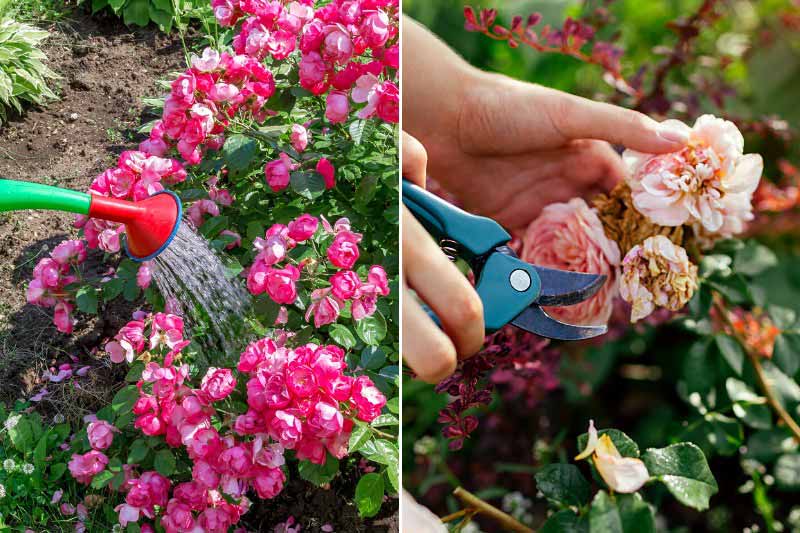
- Water generously: Obviously, the most important thing is to water as soon as you realise your rose is thirsty! During periods of intense heat, increase the frequency of watering. We recommend watering early in the morning or late in the evening to minimise evaporation. Direct the stream at the base of the plant, avoiding wetting the foliage. Indeed, water droplets on the leaves create a "magnifying glass" effect, which can burn the plant by amplifying solar radiation. Additionally, this promotes fungal diseases.
Better to water generously than to water several times superficially. This way, the water penetrates deeper into the soil, encouraging the plant to develop deep roots, whereas with superficial watering, the water remains near the surface, and the soil dries out more quickly.
- Mulch: Mulching is an excellent way to retain soil moisture. Apply a good layer of organic mulch (at least 6 cm thick) around your roses. You can use, for example, dead leaves, straw, wood chips, bark, or RCW (ramial chipped wood). Mulching also limits water runoff in case of heavy rains or if the ground is sloped.
- Prune: Light pruning can help your rose manage drought better. Remove scorched stems and dry or damaged leaves. This will allow the plant to conserve its energy.
- Remove faded flowers: Indeed, flowering, followed by fruit formation (hips), requires a lot of energy from the rose. Removing them allows it to focus on survival. For fully bloomed flowers that are not yet faded, in case of severe water stress, you can remove every other one. It is indeed better to sacrifice part of the flowering to preserve the rose! This will help it recover.
- Shade: Prolonged exposure to sunlight during a heatwave can be particularly damaging to roses. You can protect them by installing shade cloths. The idea is to shelter them from direct sunlight at least during the hottest hours of the afternoon. If your roses are grown in pots or containers, simply move them to the shade.
Further reading
- Feel free to check out our articles: "Heatwave: 10 tips to protect your plants" and "Watering a garden during a heatwave"
- Our advice sheet: "Watering plants during or after a drought"
- "How to save garden plants after a drought?"
With climate change, dry spells are becoming longer and earlier. Roses are not spared and sometimes suffer from this lack of water over an extended period, which can gradually lead to their decline if timely intervention is not made. It is therefore important to manage watering well and implement certain techniques to protect roses. Discover […]
The Cutie Pie rose is a brand new miniature rose with generous flowering reminiscent of the delicacy of apple blossom. Initially carmine pink with a white centre at the start of flowering, its petals lighten to pale pink in summer. Highly appreciated by pollinators, its flowers continuously renew until the first autumn frosts. Requiring little maintenance, it has a very healthy compact foliage and thornless branches.
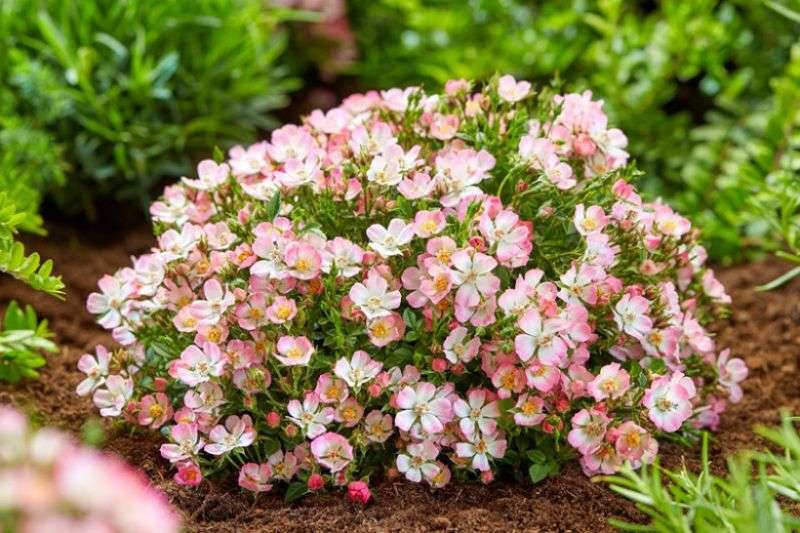
Whatever the style of your garden or terrace, this miniature rose is very easy to grow if you give it a lovely spot in the sun. Like a perennial plant, its small size, 15-20 cm high and 30 cm wide, allows you to tuck it in anywhere. At the edge of a path or to fill a space in the foreground of a border. Used as groundcover, three plants spaced 30 cm apart create a beautiful dense and flowering cushion in my rockery, accompanied by hardy geraniums, carnations, phlox, or nepeta.
On your terrace, it will thrive in a pot (30-40 cm) in dark grey tones that will enhance its beauty. By the second year, it will form an incredible dome of flowers.
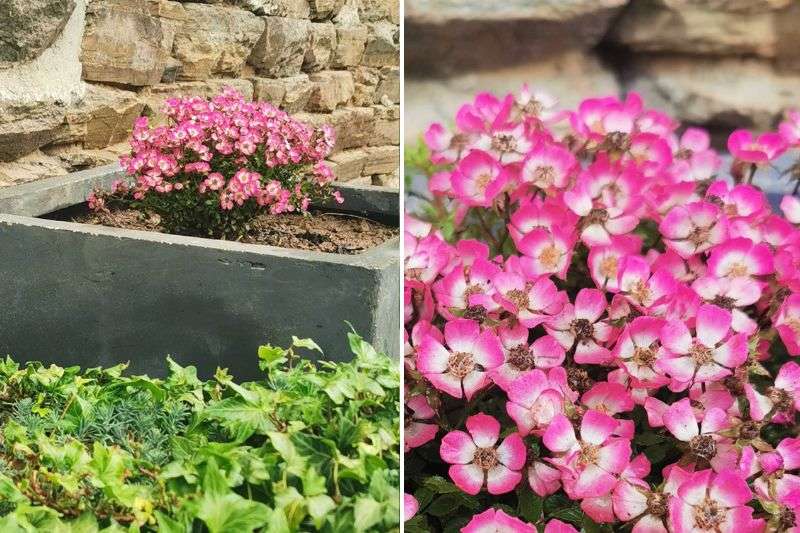
In terms of maintenance, regularly remove faded roses to encourage it to produce even more new flowering shoots. In the ground, it shows itself to be perfectly resistant to cold and drought. Water it once a week during the first year after planting, and it will manage very well on its own thereafter. In pots, protect it in regions with very harsh winters and ensure proper watering and fertilisation.
Don't miss out on this little gem; it will undoubtedly become a must-have!
The Cutie Pie rose is a brand new miniature rose with generous flowering reminiscent of the delicacy of apple blossom. Initially carmine pink with a white centre at the start of flowering, its petals lighten to pale pink in summer. Highly appreciated by pollinators, its flowers continuously renew until the first autumn frosts. Requiring little […]
Your red-flowered rose is blooming white or pink, and you think it’s degenerating? Let’s investigate this mystery together and find the origin of this strange phenomenon! With a bit of observation, we’ll see that it’s actually a story of rootstock, “suckers,” and a simple pruning should resolve the issue.
Why these strange flowers?
Which types of roses degenerate?
Only grafted roses are affected by degeneration!
Indeed, we graft when necessary, a well-known and appreciated variety of rose (the scion) onto a botanical rose, valued for its vigour, disease resistance, or soil adaptation (the rootstock). Rose growers who propagate these roses use different rootstocks: Rosa multiflora, Rosa laxa, and Rosa canina are the most common. It’s the hawthorn flowers of the rootstock, white or slightly pink, that you mistake for degeneration.
How to identify this degenerated part?
At the base of your rose, just above the soil if it hasn’t been buried, is the grafting point, which looks like a swelling on the stem. This is where the first branches of your beautiful red-flowered rose emerged! But since you haven’t watched it grow every day, the rascal has ended up producing shoots below the grafting point...
They are called “suckers” because they are sap-hungry, drawing it from the source, the roots. Thus, it’s the shoots of the wild rootstock that have developed vigorously! You’ll notice that the colour of the stems is different from that of your beloved rose variety, usually a lighter green. The same goes for its leaves, and let’s not even mention its flowers...
The emergence of these suckers is encouraged by deep digging, which, by injuring the roots of the rootstock, prompts it to activate its dormant buds. That’s why it’s better not to disturb the soil too much around your roses and to stick to superficial hoeing.
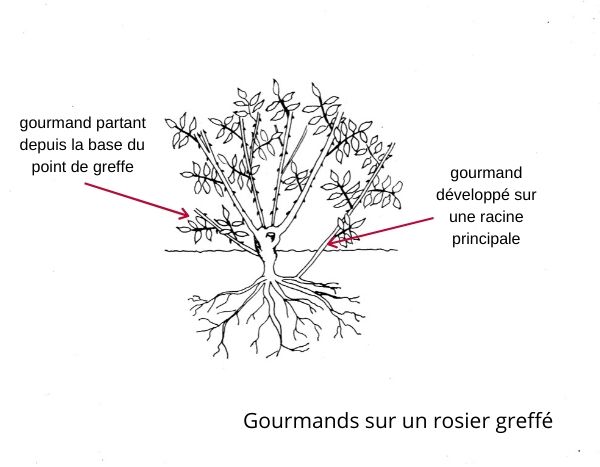
Be careful, in the case of a grafted rose, we talk about "suckers" and not "drageons"! Indeed, the latter results from a natural phenomenon that does not weaken the plant. A rose can produce suckers, of course, but in that case, it was not grafted, unless you buried the rootstock and the rose has freed itself from it.
How to restore my beautiful rose transformed into a hawthorn?
To eliminate this phenomenon, simply cut back the aerial shoots of this wildling, down to the swelling of the grafting point or dig up and remove at the base the sucker that has grown on a main root, to prevent it from re-emerging. If you only cut it, the sucker will strengthen and eventually smother the variety.
Let’s not forget the particular case of the standard or weeping rose, where suckers can also appear along the main stem, below the grafting point that is situated high up. These will also need to be removed.
If there are healthy branches of the correct variety above the rootstock, your rose will eventually regrow. You’ll need to stay vigilant and check that no sucker is poking its head out. Take advantage of pruning, weeding, or cutting flowers to observe all of this. With a bit of practice, you’ll quickly learn to spot the suckers, and you won’t be caught out again!
Your red-flowered rose is blooming white or pink, and you think it’s degenerating? Let’s investigate this mystery together and find the origin of this strange phenomenon! With a bit of observation, we’ll see that it’s actually a story of rootstock, “suckers,” and a simple pruning should resolve the issue. Why these strange flowers? Which types […]
The pruning of roses often raises questions. However, there is no need to be a highly experienced gardener to engage in it; it’s not rocket science. I am a proponent of letting go and gardening without stress—believe me, I know all about it!
First, let’s remember that the main pruning of roses is done at the end of winter or the beginning of spring. This is not what we are focusing on today. Instead, let’s talk about the small autumn pruning, which is not commonly practiced as it is not strictly necessary, but it does make the gardener's life easier in spring. Since that period is already quite busy, why not take advantage of it?
This autumn pruning simply involves a preliminary cleaning cut before the more severe spring pruning.
So, let me get straight to the point (of the rose!), this noble task is not recommended in very cold regions, and those with mild winters can perfectly do without it.
Also, know that enthusiasts are divided into two main camps: those who prune now, in November, just after the first autumn frosts when the roses have lost their last leaves and are entering dormancy, and those who prune at the beginning of winter.
-
THOSE WHO PRACTISE AUTUMN PRUNING
They don’t wait; they get straight to the point and recommend cutting one third of each branch in November.
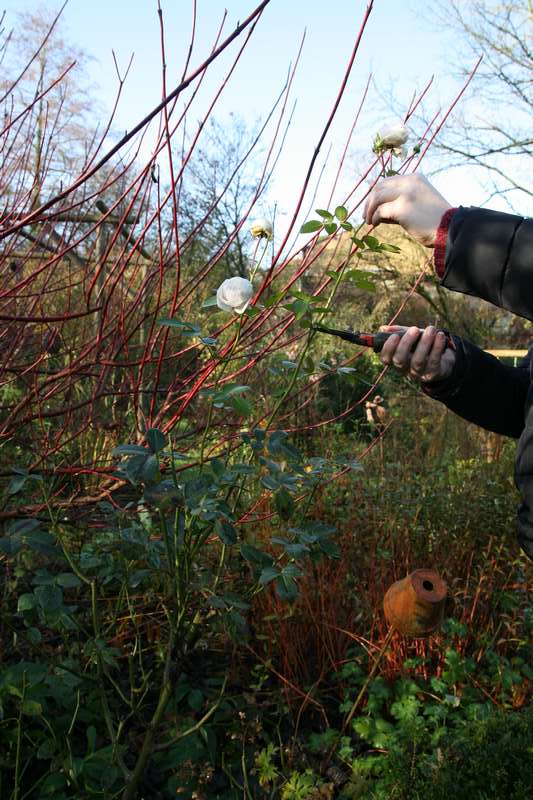
Cut 1/3 of all branches in autumn.
-
THOSE WHO PRACTISE CHRISTMAS PRUNING
These are the more tactical ones; they prefer to wait and enjoy the Christmas festivities before diving headfirst into their garden. This time, it is advisable to prune between Christmas and the end of January. As clever strategists, they plan to prune to 4 or 5 buds instead of 2 or 3, so that if a severe frost causes damage, they can cut back a bit more.
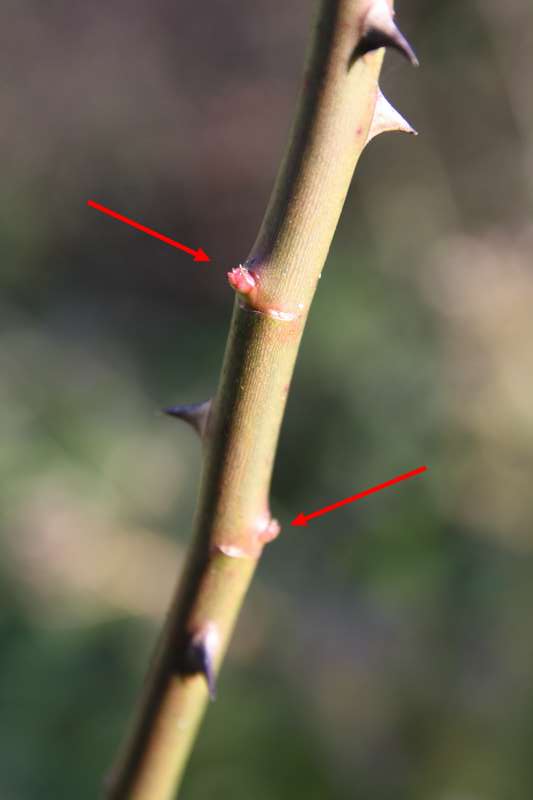
Count 4 or 5 buds and cut just above at an angle in winter.
-
IN BOTH CASES, HOW TO PROCEED?
Choose one of the two methods mentioned above, then take the opportunity to remove dead wood and broken branches damaged by the elements or friction, which are gateways to diseases. Cut as low as possible; this way, the rose is cleaner and more open.
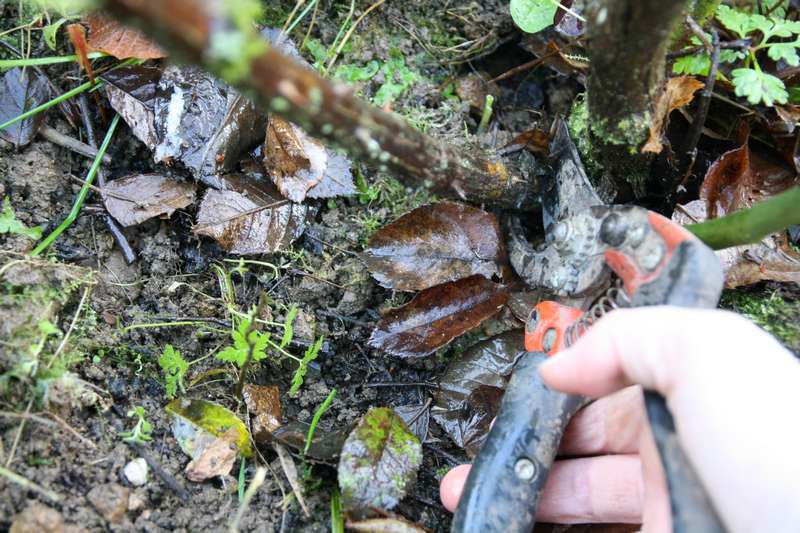
Cut dead branches as low as possible.
Don’t forget to collect fallen leaves as well, especially if they show black spots or powdery mildew.
Advantages:
- This helps prevent breakage in very windy or snowy gardens
- The spring pruning work is lightened
- Flowering is earlier
- There is less sap loss
Disadvantages:
- This approach should be avoided in very cold regions
Remember that cuts are always made a few millimetres above a bud. They are angled so that water does not pool on the cut (which encourages the onset of diseases) and slanted away from the bud, so that water does not run onto it.
Finally, in all cases, adjust the pruning period according to your climate!
-
THOSE WHO PRACTISE THE ART OF LETTING BE
Of course, you can also do nothing but do it well… It’s up to you!
-
THE CASE OF NON-REPEAT FLOWERING ROSES
This is the particular case of this old family of roses, namely the non-repeat flowering ones that are pruned just after their single flowering. For this, simply remove all the stems that have already bloomed, the old wood, and the dead wood. It couldn’t be simpler!
And you, which clan do you belong to?
For further reading, discover our advice sheet: pruning roses and Michael's video tips for pruning old roses as well as for pruning modern roses.
The pruning of roses often raises questions. However, there is no need to be a highly experienced gardener to engage in it; it’s not rocket science. I am a proponent of letting go and gardening without stress—believe me, I know all about it! First, let’s remember that the main pruning of roses is done at […]
It is still time to prune your shrubs, but you should not delay and carry out this essential operation for their good flowering in the coming days.
In any case, you must:
1- Cut back the stems in height
2- Remove dead wood and thin out the centre
3- Add manure or a rose fertiliser to nourish the bush
However, there is a crucial difference between old roses – varieties developed before the Second World War – and modern roses.
Modern roses, with long and often repeat flowering, bloom on the wood of the year; they should be pruned every year from November to March, outside of frost periods, to three buds.
Old roses bloom on aged wood; their flowering is shorter but very dense. They are pruned less frequently, every two to three years, at the end of winter.
If you want to find all our "garden advice" videos, don't wait any longer!
It is still time to prune your shrubs, but you should not delay and carry out this essential operation for their good flowering in the coming days. In any case, you must: 1- Cut back the stems in height 2- Remove dead wood and thin out the centre 3- Add manure or a rose fertiliser […]