Whether you are a beginner or experienced gardener, you cannot have failed to hear about the famous "Saints de Glace". When will they occur? Should you follow folk sayings and wait for them to pass before starting your vegetable garden and putting out planters? What should you fear during this period? We tell you everything!
You can also find this article in our podcast about the Saints de Glace :
What are the Saints de Glace?
The "Saints de Glace" refer to a period in May traditionally associated with the lune rousse, which occurs after Easter. In practice, it is a few rather tricky days in the garden during which late frosts can occur.
When are they? Dates of the Saints de Glace
There is no need to look for when the Saints de Glace will occur this year! They fall on the same dates every year: 11, 12 and 13 May. These three dates correspond respectively, in the old calendar, to Saint Mamert, Saint Pancrace and Saint Servais. In the cooler regions, one more companion is added: Saint Urbain, celebrated on 25 May.

Can you plant before the Saints de Glace or should you wait?
Of course, it is possible to plant all frost-resistant plants before this period: trees, shrubs and hardy perennials.
However, avoid planting frost-tender annual flowers (petunias, impatiens...) and all tender vegetables such as tomatoes, aubergines, courgettes and peppers. Another factor to take into account is, of course, the region where your garden is located. Risks of late frost are much lower in Nice than in Strasbourg, where you'll need to wait until the end of May to be completely out of the danger zone.
That said, in practice, statistically the risk of frost does not seem that high.
So, if you've been gardening in a T-shirt for 10 days and are eager to start your vegetable garden, nothing prevents you from planting a few tomato plants. Keep an eye on the weather forecast, but also on the sky because cloudless nights are conducive to frost. Make sure you have something to protect your seedlings and plants from the cold… just in case… and everything should be fine!
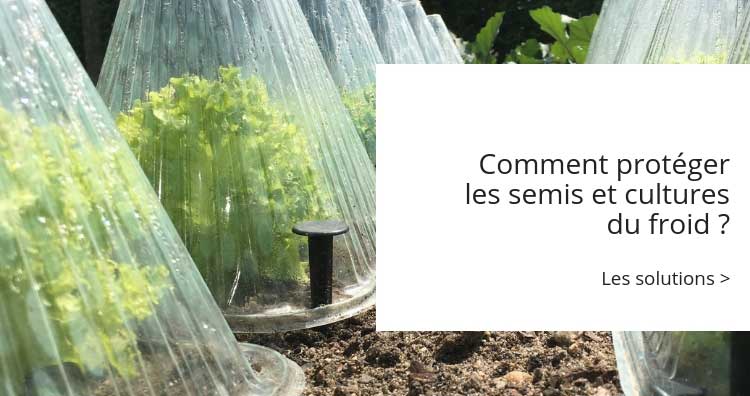
However, if you're the anxious, not-very-adventurous or absent-minded gardener: be patient! After all, everything in its own time… vegetables planted later, but into well-warmed soil, at the end of May or start of June will quickly catch up with those planted much earlier.
Whether you are a beginner or experienced gardener, you cannot have failed to hear about the famous “Saints de Glace”. When will they occur? Should you follow folk sayings and wait for them to pass before starting your vegetable garden and putting out planters? What should you fear during this period? We tell you everything! […]
February marks return to the vegetable patch. January's frost, combined with the marked thaw of recent days, has given the soil an ideal texture. Pure bliss! It almost feels like spring and first plantings can finally begin. For us, garlic, onion and shallot lead the way… planting them is so easy you simply choose varieties!
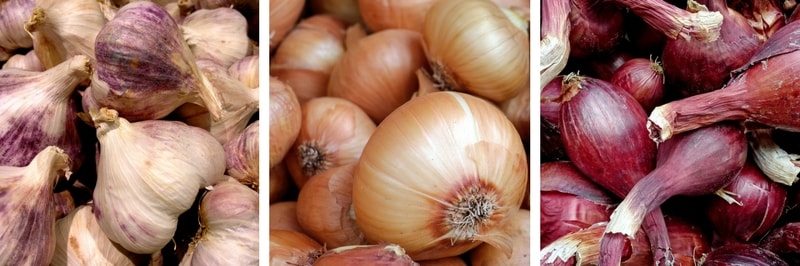
Garlic, onion, shallot
Garlic, onion, shallot: choose the right variety before ordering
These three bulb vegetables, all members of the Allium family, come in a very large number of varieties. Of various colours and shapes, they also differ in their planting period: autumn or spring. Choice is mainly based on this criterion.
So let's look at varieties that can be planted from today in mild climates and, elsewhere, up to March/April.
Garlic
In spring, favour pink garlic. Said to be slightly less productive than autumn varieties, it has the advantage of keeping longer. Flavor, Printanor, Gayant, Arno … all these varieties keep well, even very well!
Alongside common garlic (Allium sativum), mention also a very interesting perennial or "perpetual" species that establishes itself once and for all, or almost: bear's garlic (Allium ursinum). It grows in shade or partial shade and naturalises easily where conditions suit. It bears large narrow leaves and, from April to June, a charming display of white umbels. It's both a culinary and medicinal plant. Everything is edible: bulb, flower buds and leaves!
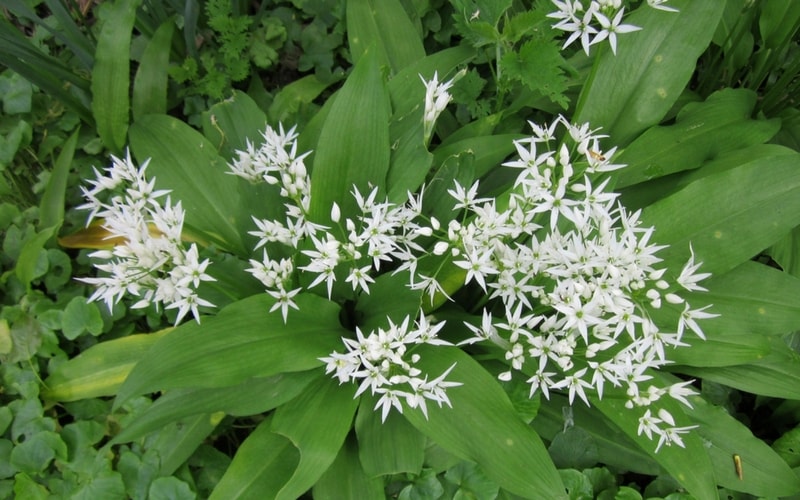
Bear's garlic: a perennial variety that naturalises
Onion: white, red or yellow
White, yellow, pink or red, onions come in a riot of colours…
Like garlic, onion can be planted in autumn. I never do, though, because in my heavy soil rot would be certain. And this year's sub-zero temperatures early in the year have confirmed my caution!
Here we grow three types:
- small white onions which, harvested early as baby onions, pair wonderfully with first late-spring salads,
- red onion Red Karmen to brighten summer salads,
- yellow onion Paille des Vertus, with white flesh, which we eat year-round because it keeps very well.
For a perennial option, why not try the rocambole onion (Allium cepa proliferum) ? It's a charming old-fashioned vegetable, a little bit eccentric, which bears pretty bulbils at the top of its flowering stem. Its leaves are also eaten.
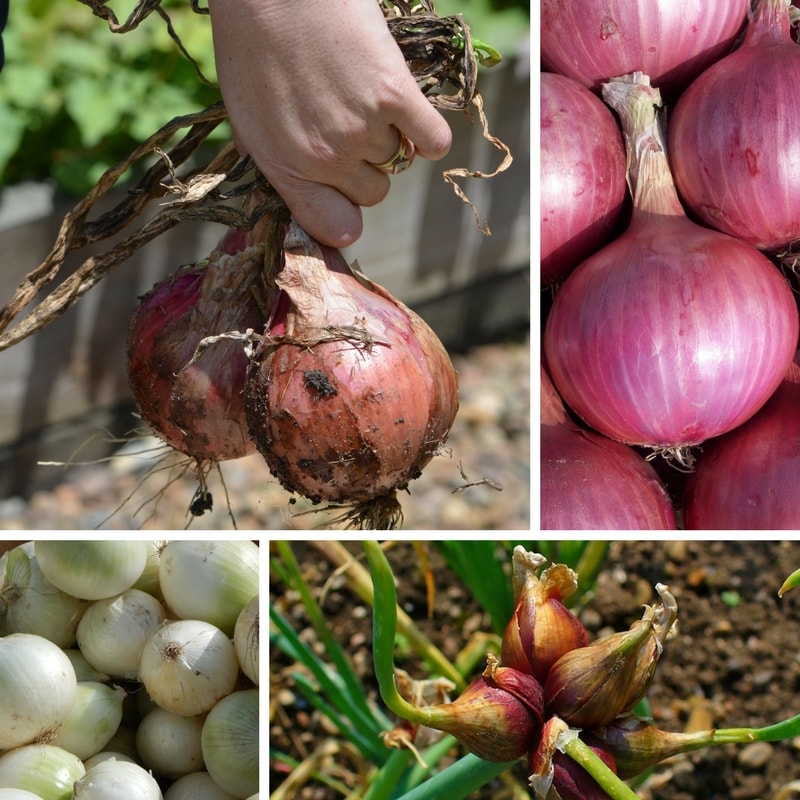
Red onions, white onion and rocambole onion
Shallot
Long, semi-long or round, once again choices are many! The grey shallot is for autumn planting while the pink shallot is planted in late winter/early spring. We like the late variety Jermor… but if you want an earlier variety, go for Longor. Both keep very well!
Where and how to plant them?
Garlic, onion and shallot are grown in the same way. They prefer full sun, in well-drained soil that is not too rich (do not add compost beforehand!), and that does not retain water. If drainage is poor, plant them on a raised bed to avoid any risk of rot that would affect storage. Finally, if you only have a balcony or terrace for your vegetable garden, these three vegetables can also be grown in planters or pots!
Planting is very easy; you will find all useful information in our Guide: "Planting garlic, shallot and onion".
But for us, no fuss — we plant them with our thumbs… after all, we're not going to deny ourselves the pleasure of getting our hands back in the soil!
February marks return to the vegetable patch. January’s frost, combined with the marked thaw of recent days, has given the soil an ideal texture. Pure bliss! It almost feels like spring and first plantings can finally begin. For us, garlic, onion and shallot lead the way… planting them is so easy you simply choose varieties! […]
Strawberries are one of the most popular garden fruits! Besides their delicious flavour, strawberry plants establish easily in the garden, propagate readily from runners, and often produce a generous harvest. Yet, have you noticed that it is always in spring, when there are a thousand jobs in the vegetable plot, that people think about planting strawberry plants? Late summer and autumn (from late August to October) are actually more favourable times for planting them — here’s why!
Encourage better root development
In late summer and autumn, the soil is still warm enough to promote root development. Good rooting is essential for strawberry plants to absorb water and nutrients from the soil efficiently. The stronger and deeper their roots, the better they will cope with droughts and adverse weather conditions, such as summer heatwaves.
Autumn planting aligns with the strawberry's life cycle, as at that time the plant will establish itself naturally in the garden if you have not removed the runners. This gives strawberry plants plenty of time to develop a robust root system before the cold arrives. Once winter has passed, they will already have a head start and will be ready to grow more vigorously in spring.
To maximise rooting of strawberry plants in autumn, make sure to prepare the soil well before planting. Ensure it is well drained and enriched with organic matter (don't hesitate to add compost or well-rotted manure). We also recommend planting strawberry plants with a spacing of 30 to 40 cm between each plant to give them enough room to develop properly.
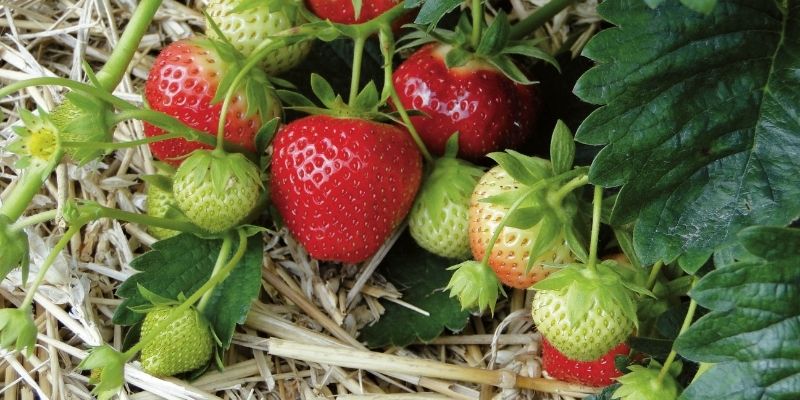
Reduce water stress
Strawberry plants can benefit from regular autumn and winter rainfall to take root. They will therefore need far less watering than if planted in spring. Indeed, a strawberry plant planted in spring is more quickly exposed to high temperatures, increasing its water needs. It then becomes vulnerable to water stress, which can slow growth and reduce strawberry production.
We recommend mulching the soil after planting your strawberry plants: this will limit weed growth while preserving soil moisture.
Enjoy an earlier and more abundant harvest
If you plant strawberry plants in autumn, they will bear fruit in their first year because they will have had time to root and will resume growth more quickly in spring. As soon as temperatures warm sufficiently, they can begin to produce flowers, then fruit. The harvest will also be more generous. Conversely, if you plant them in the garden in spring, you will have to accept a rather meagre first harvest. After all, strawberry plants can't do everything at once: root and fruit abundantly!
Because strawberry plants planted in autumn flower earlier, they often spread the harvest over a longer period. This gives you the chance to savour home-grown strawberries for several weeks, even several months, depending on the varieties you choose.
For everything you need to know about growing strawberries, feel free to consult our complete guide: "Strawberry: How to plant, grow and maintain"
Strawberries are one of the most popular garden fruits! Besides their delicious flavour, strawberry plants establish easily in the garden, propagate readily from runners, and often produce a generous harvest. Yet, have you noticed that it is always in spring, when there are a thousand jobs in the vegetable plot, that people think about planting […]
Squashes and courgettes are a real joy in the vegetable garden: easy to sow, almost maintenance-free, fast-growing and, above all, very productive.
Sowing squashes and courgettes: child’s play, virtually foolproof
Sowing can be done directly in the ground or in pots — for this, follow the instructions in our advice sheet. In our rural garden, a bona fide “place to be” (that is: the place to be for partying, especially if there’s beer) for gastropods and other little nibblers, we play it safe. Squash and courgette plants are raised out of reach of their appetites. In April/May I’m a bit overwhelmed, so my eight-year-old daughter takes care of it, and I’m not worried because getting it wrong is impossible — unless you do it on purpose!
For squashes, pumpkins and potimarrons, which are greedy, laziest gardeners can simply throw a few seeds on the compost heap — that works very well too; but only if field mice don’t eat them all before they have a chance to germinate. I don’t recommend keeping self-sown seedlings: squashes cross with one another — we’re talking natural hybridization — with astonishing ease. You’ll end up with what I call the “Surprise” variety.
And true to the spirit of surprise, it might turn out well:
Yay, ten free squashes with no effort at all!
or badly:
Grrr, ten marauding squashes that took over the patch all summer and are completely inedible…
As for timing, try, where possible, to schedule your sowing around your holiday dates (if you’re away in July, sow later…) or hand harvesting over to a neighbour while you’re away: once the novelty wears off, nothing is more annoying than finding giant, seed-filled squashes dominating the garden instead of the fine, tender courgettes you were hoping for.
Growing courgettes, squashes, pumpkins and potimarrons? Easy: sun, air and rich soil
Courgettes and squashes grow in full sun on all soils, provided they are rich and fairly moist. If you didn’t add plenty of compost in autumn, it’s not too late: at planting time dig large holes and mix in compost — even if not fully mature — with garden soil.
Courgettes and squashes don’t have many pests (apart from slugs at the seedling stage) but, like good cucurbits, are often affected by powdery mildew. This cryptogamic disease, caused by a fungus, develops in warm (27 °C is its favourite temperature) and humid weather. It appears as white, powdery patches. Infected by the “white” and left untreated, leaves eventually dry out, yield collapses and the plant dies.
This disease is not inevitable; as prevention you can:
- space plants well at planting: 80 cm for non-vining varieties and at least one metre for others, as they need good air flow to dry quickly after rain,
- avoid nitrogen-rich fertilisers — they boost leaf growth but make foliage more fragile,
- use recent varieties, F1 hybrids, which are often more resistant.
Cucurbits: a multitude of varieties
If there is one group offering huge variety, it’s the cucurbits.
Every year I have to use reason to limit myself, especially on number of courgette plants. It’s hard, because I want them all: green, yellow, long, round… They produce so abundantly that, by mid-summer, neighbours barely open their doors when they see me arrive with a full basket, determined to distribute my surplus!
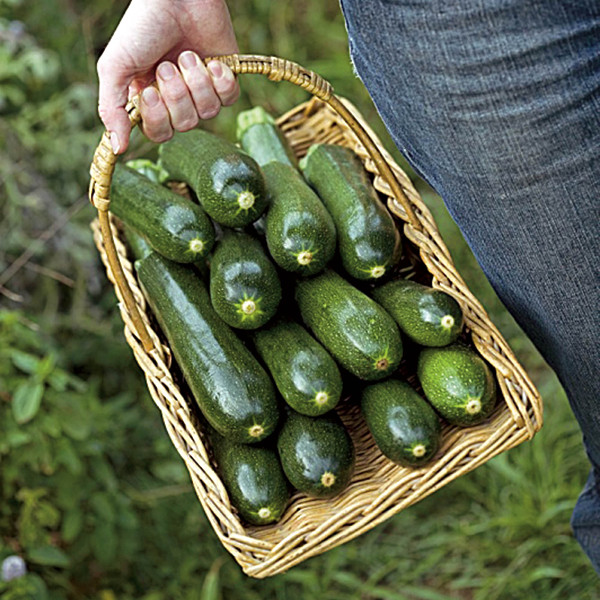
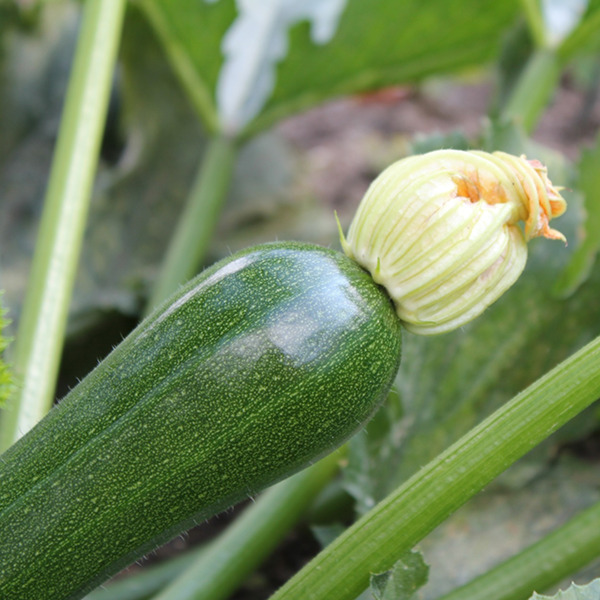
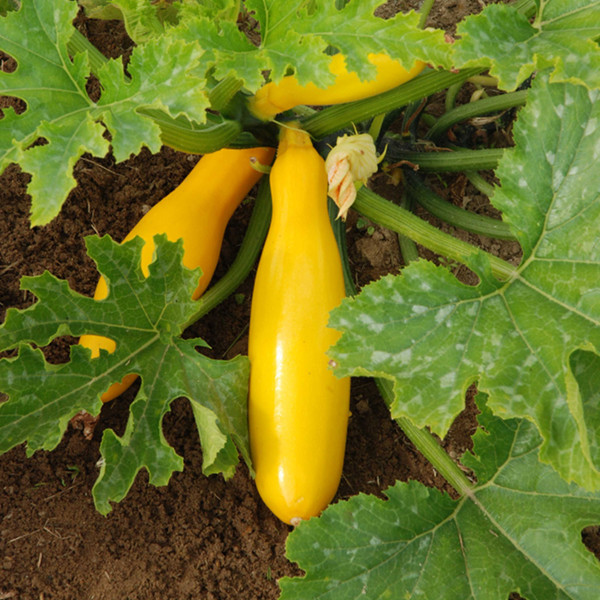
I particularly like:
- Précoce Maraîchère, because it produces early in the season and so prematurely satisfies our cravings for summer veg,
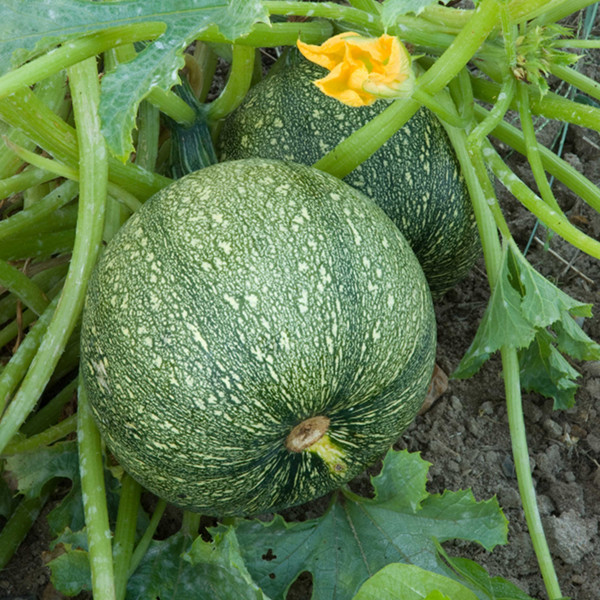
- Ronde de Nice and Tondo di Toscana, two round varieties ideal for stuffing,
- Gold Rush, for its flavour and its yellow skin (children are less put off by yellow than by green…),
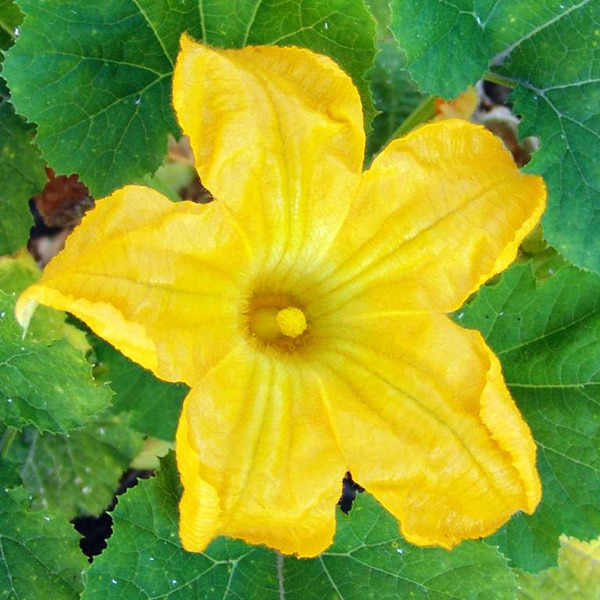
- Belor F1, such a productive variety that I have no qualms about picking its flowers to make tasty fritters,
On the other hand, there are no restrictions for squashes, apart from available space, because they store superbly and are eaten well into early spring.
In our top 5 you’ll find:
- the Pumpkin Jack O'lantern — I donate the biggest specimens to the nursery school for their traditional Halloween lanterns and annual cookery workshop,
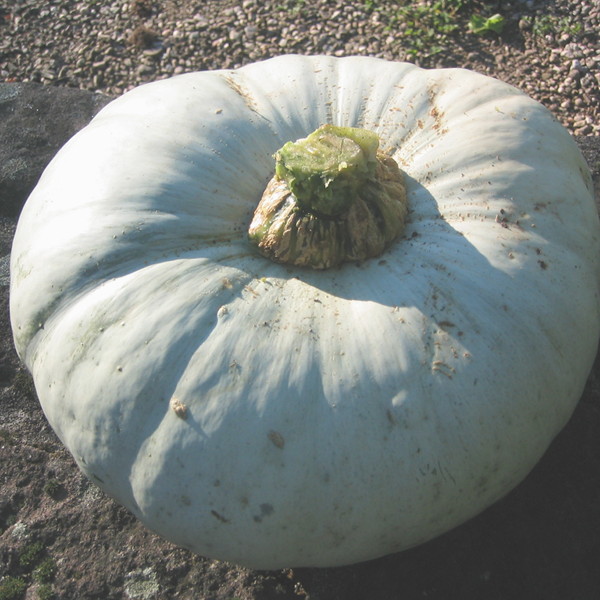
- the Pumpkin Bleu de Hongrie and its superb, very distinctive colour,
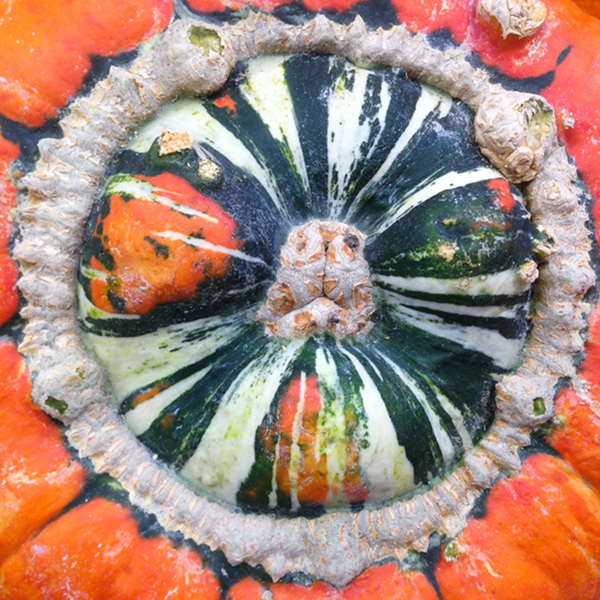
- the Pumpkin Giraumon Turban, as decorative as it is tasty,
- the Potimarron Uchiki Kuri — partly for its name, which sounds like “the archduchess’s socks…”, but mainly for its small size, which avoids waste: one fruit = one pot of soup,
- the Butternut Butternut for its characteristic, delicate flavour.

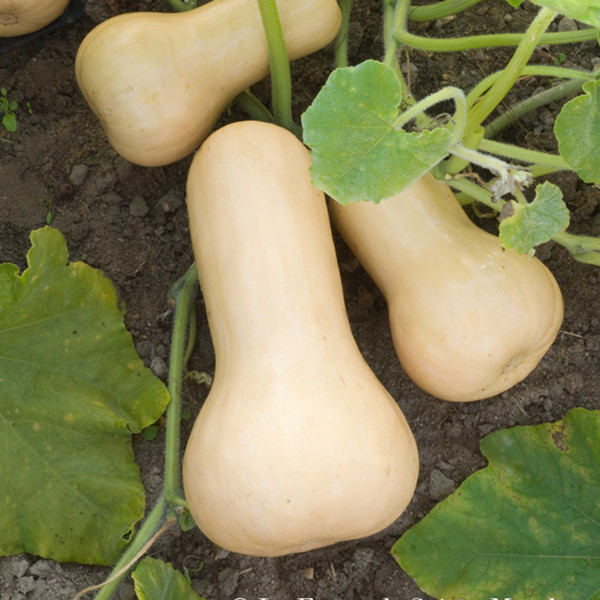
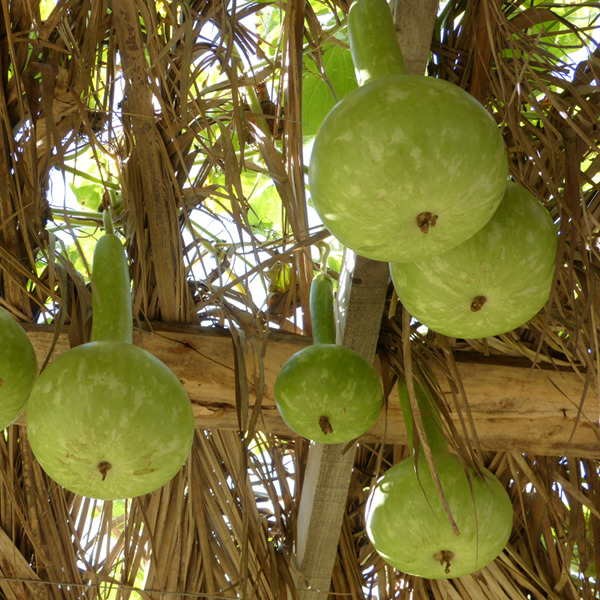
This year there will also be bottle gourds. They are not edible but that doesn’t matter, as I plan to use them for ornamental purposes. First, I’d like them to climb a frame made from rebar. Yes, squashes can be grown vertically! Next spring, once dried and perhaps painted (I can picture them bright red), they will be strung like beads on a large stake and decorate the garden. Apparently you can also carve them, cut them to make bowls and all sorts of objects… Plenty to keep us busy all winter!
Further reading :
- our full guide: "Courgette: sow, plant and grow in the vegetable garden"
- Sophie’s article: "Giant pumpkins: get sowing!"
- our tutorial: How to trellis squashes?
Squashes and courgettes are a real joy in the vegetable garden: easy to sow, almost maintenance-free, fast-growing and, above all, very productive. Sowing squashes and courgettes: child’s play, virtually foolproof Sowing can be done directly in the ground or in pots — for this, follow the instructions in our advice sheet. In our rural garden, […]