Have you heard of the cucamelon? I hadn't either… well, until I came across it among the new additions to our wide range of vegetable seeds.
Cucamelon: what is it?
The cucamelon (Melothria scabra) is a climbing plant belonging to the cucurbit family. Also known as the pickling cucumber or "Mouse Melon" in North America. It originates from Central America and Mexico, where it is grown as a perennial plant.
Curious by nature, I sowed my first cucamelon at the end of March to plant out in June. After a rather disastrous start (heatwave + forgotten watering rarely produce good results), it soon recovered and lived up to its reputation as an easy-to-grow plant.
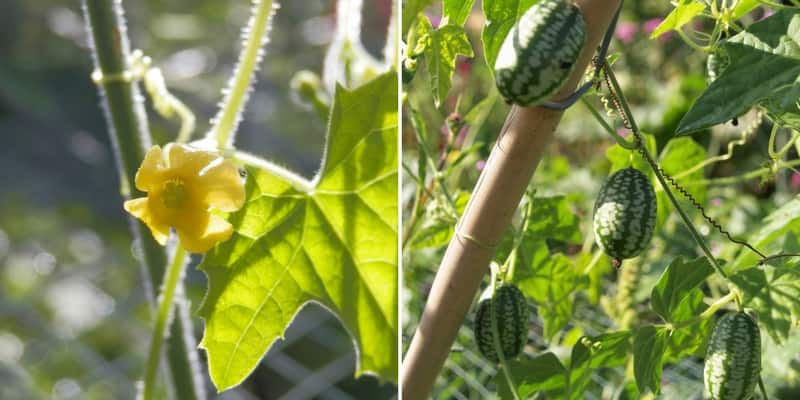
Cucamelon: tiny flower followed by an adorable little fruit
Quickly, its thin, tendril-bearing stems grabbed the wire mesh to form a pretty tangle of lobed leaves. Thanks to a relatively rainy summer, my cucamelon plant developed without any care (nor any sign of powdery mildew!) and is giving me a very respectable harvest this late summer!
In terms of flavour, it was a pleasant surprise: this adorable mini-watermelon has, as promised, a cucumber taste with a slight tang that is far from unpleasant. It is eaten with the skin on, which adds an equally pleasing crunch.
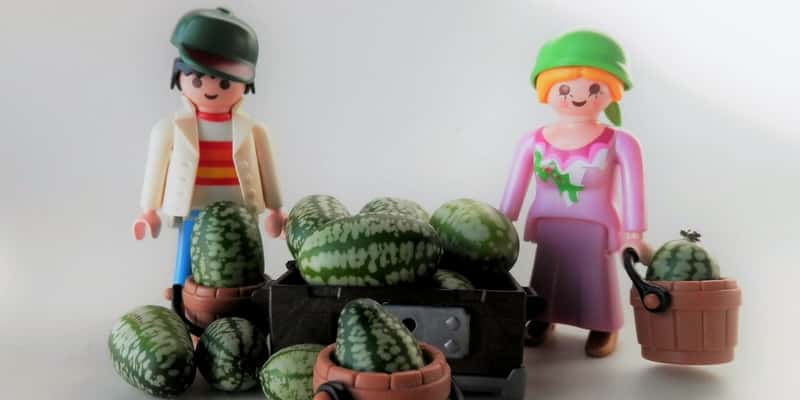
... needless to say, cucamelon is a vegetable children love!
What can you do with cucamelons?
Don't be mistaken, cucamelons are not only there to feed an army of hungry Playmobil figures... They can be eaten and prepared in various ways.
Quite simply, cucamelons are best eaten raw with a pinch of salt, as an aperitif. They can also be used to garnish cocktails such as mojitos: your lemon slice will feel less lonely! A few cucamelons added to a salad of cherry tomatoes or served with radishes also make a lovely addition… Finally, they will delight pickle lovers as they keep very well pickled in vinegar, like gherkins.
For a large jar of 500 g of pickled cucamelons, here is my recipe:
- pick cucamelons just before full maturity (neither too thin nor too plump),
- wash them thoroughly,
- prepare white vinegar (400 ml) by adding 1 teaspoon of salt, 4 tablespoons of cane sugar, 1 tablespoon of mint leaves, 1 tablespoon of dill leaves (washed and chopped beforehand), coriander seeds,
- put the cucamelons in the jar, pour in the vinegar and close the lid,
- store in the fridge for one month then enjoy!
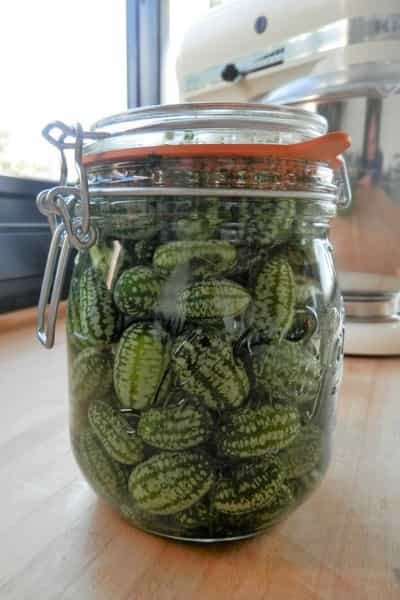
Storing cucamelons: quick and easy!
And you, have you ever grown cucamelons? How do you prepare them?
Have you heard of the cucamelon? I hadn’t either… well, until I came across it among the new additions to our wide range of vegetable seeds. Cucamelon: what is it? The cucamelon (Melothria scabra) is a climbing plant belonging to the cucurbit family. Also known as the pickling cucumber or “Mouse Melon” in North America. […]
Installing a balcony vegetable garden and growing vegetables and herbs, even in town, is perfectly possible. In previous articles, we saw that there are many solutions for urban gardening even without a garden: grow bags, and also raised beds.
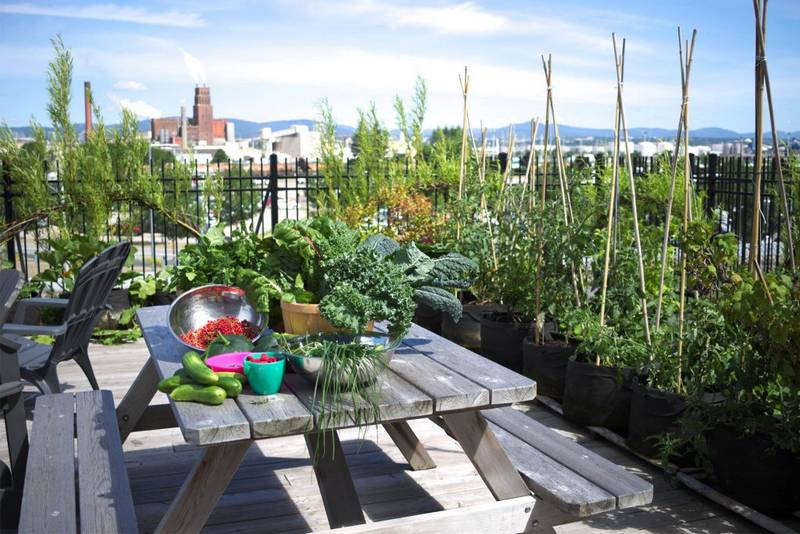
Still, you can’t make the walls any bigger! What other option is there? Choose vegetables and varieties suited to small spaces. These compact or dwarf vegetable plants are often productive. They yield full-size or small-scale vegetables, which is perfect when you don’t need to feed a large family or when you grow as much for enjoyment as for flavour!
To prevent you from restricting yourself to radishes, we have prepared on the site a wide selection of vegetables perfectly suited to small spaces and also ideal for mini vegetable gardens (including square beds); here is a sample:
1) Salads
Almost all lettuces can be grown in pots, but admit that a large heading lettuce, for example, takes up a lot of room. That’s why we recommend cut-and-come-again lettuces and mescluns. However, if you insist on harvesting neat heading lettuces, I recommend:
- Tom Thumb butterhead lettuce: a butterhead type that forms small heads about 15 cm across.
- Little Gem lettuce, the romaine cousin, produces small tender-headed lettuces with excellent flavour.
2) Tomatoes
Cherry tomato is queen of the balcony. If you have a large balcony, you can grow any variety. Otherwise, to avoid the plant taking over the space with its generosity, choose varieties that are productive but of moderate vigour. Some trailing types can even be grown in hanging pots.
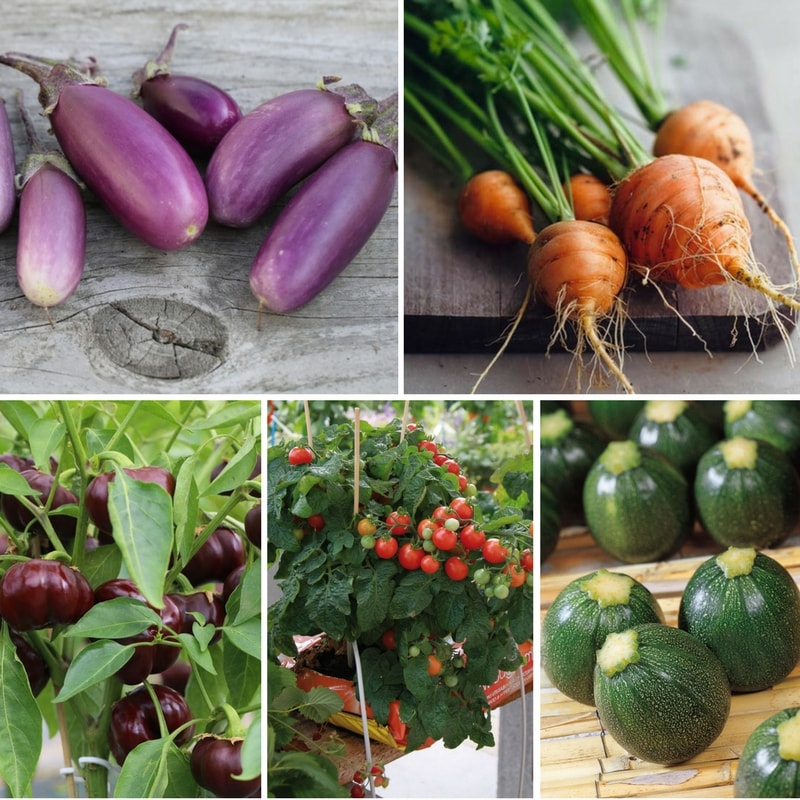
- Cherry tomatoes Balconi Red and Balconi Yellow are two F1 hybrids. They produce small ruby-red and golden-yellow fruits about 3 cm in diameter. Their advantage is an ultra-compact habit, with bushy plants that only reach about 30 cm high and as wide.
- Pendulina Red and Pendulina Yellow are similar. From Sweden, they are well suited to hanging pots and will form cascades of pretty cherry fruits weighing 15–30 g, red or yellow depending on the variety.
3) Courgettes
Non-vining courgettes are also available in miniature forms and are easy to grow, such as:
- Courgette 'Patio Star' F1. Ideal for pots, it forms plants about 45 cm high and 60 cm wide and yields delicious small cylindrical dark-green fruits.
- Round 'Eight Ball' courgette stands out for its round fruits: excellent quality and harvestable once about 5 cm in diameter. This variety is repeat-bearing and produces over a long period.
4) Peppers and chillies
Still in the "sun veg" category, peppers and chillies love sunny small spaces. Among miniature varieties, you will probably fall for:
- the Mini Chocolate Bell pepper: productive, producing small red-brown fruits 3–5 cm across.
As for chillies, I invite you to discover:
- Red Cherry chilli (small) produces round fruits the size of a cherry tomato, bright red. Beware, it is very hot!
5) Aubergines
Aubergines love heat and will be perfectly happy on a balcony or terrace sheltered from draughts. Lack of space is a great opportunity to discover surprising varieties.
- 'Patio Baby' aubergine is a very early and productive variety that produces compact plants with small fruits, ideal for container growing or confined spaces. Plant in April–May for harvest from July to October.
- Pusa Purple Cluster aubergine has much to recommend it: originating from India, it is productive and forms clusters of small purple fruits on plants of normal size, very decorative and tasty.
- White Round Egg aubergine is a dwarf variety, producing pretty white, round fruits the size of an egg on plants about 30 cm high.
- If you prefer classic types, the Ophelia aubergine is perfect: the plant stays under 35 cm and its dark-purple fruits reach about the size of a golf ball.
6) Carrots
Growing carrots on a balcony is not difficult, but you must choose a container deep enough for root development. Half-long carrots (such as Carotte de Luc) are therefore well suited, but in pots or standard window boxes, peg-top varieties give the best results. I particularly recommend:
- Carrot 'Marché de Paris': an early variety with round, reddish-orange roots, tender and flavoursome. These small carrots are great glazed or as a snack.
7) Cucumbers
Cucumbers are often seen as space-hungry, but they trellis easily. In small gardens or containers, snack-type cucumbers such as 'Rocky', 'Broumana F1' or 'Iznik F1' are popular. They are just as crisp as standard types, but fruit size does not exceed 15 cm.
8) Beans, peas, broad beans
Dwarf beans and dwarf peas are not necessarily the best answer to limited space… Prefer pole varieties of beans and peas that use vertical space by climbing trellises. Plants occupy less ground area and provide abundant harvests. If you like broad beans, I especially recommend the variety Robin Hood, which yields nice short pods with green seeds on plants about 30 cm high.
The list is not exhaustive and for other vegetables, such as cabbages, leeks, sweetcorn... please consult our collection of balcony vegetables on our site.
To conclude, allow me to remind you of key success factors for growing beautiful vegetables on a balcony or terrace:
- use quality potting compost (avoid the cheapest bags that dry out very quickly)
- remember to fertilise regularly
- monitor watering, as container-grown crops are more vulnerable to dry spells.
Installing a balcony vegetable garden and growing vegetables and herbs, even in town, is perfectly possible. In previous articles, we saw that there are many solutions for urban gardening even without a garden: grow bags, and also raised beds. Still, you can’t make the walls any bigger! What other option is there? Choose vegetables and […]
Whether you are a beginner or experienced gardener, you cannot have failed to hear about the famous "Saints de Glace". When will they occur? Should you follow folk sayings and wait for them to pass before starting your vegetable garden and putting out planters? What should you fear during this period? We tell you everything!
You can also find this article in our podcast about the Saints de Glace :
What are the Saints de Glace?
The "Saints de Glace" refer to a period in May traditionally associated with the lune rousse, which occurs after Easter. In practice, it is a few rather tricky days in the garden during which late frosts can occur.
When are they? Dates of the Saints de Glace
There is no need to look for when the Saints de Glace will occur this year! They fall on the same dates every year: 11, 12 and 13 May. These three dates correspond respectively, in the old calendar, to Saint Mamert, Saint Pancrace and Saint Servais. In the cooler regions, one more companion is added: Saint Urbain, celebrated on 25 May.

Can you plant before the Saints de Glace or should you wait?
Of course, it is possible to plant all frost-resistant plants before this period: trees, shrubs and hardy perennials.
However, avoid planting frost-tender annual flowers (petunias, impatiens...) and all tender vegetables such as tomatoes, aubergines, courgettes and peppers. Another factor to take into account is, of course, the region where your garden is located. Risks of late frost are much lower in Nice than in Strasbourg, where you'll need to wait until the end of May to be completely out of the danger zone.
That said, in practice, statistically the risk of frost does not seem that high.
So, if you've been gardening in a T-shirt for 10 days and are eager to start your vegetable garden, nothing prevents you from planting a few tomato plants. Keep an eye on the weather forecast, but also on the sky because cloudless nights are conducive to frost. Make sure you have something to protect your seedlings and plants from the cold… just in case… and everything should be fine!

However, if you're the anxious, not-very-adventurous or absent-minded gardener: be patient! After all, everything in its own time… vegetables planted later, but into well-warmed soil, at the end of May or start of June will quickly catch up with those planted much earlier.
Whether you are a beginner or experienced gardener, you cannot have failed to hear about the famous “Saints de Glace”. When will they occur? Should you follow folk sayings and wait for them to pass before starting your vegetable garden and putting out planters? What should you fear during this period? We tell you everything! […]