





























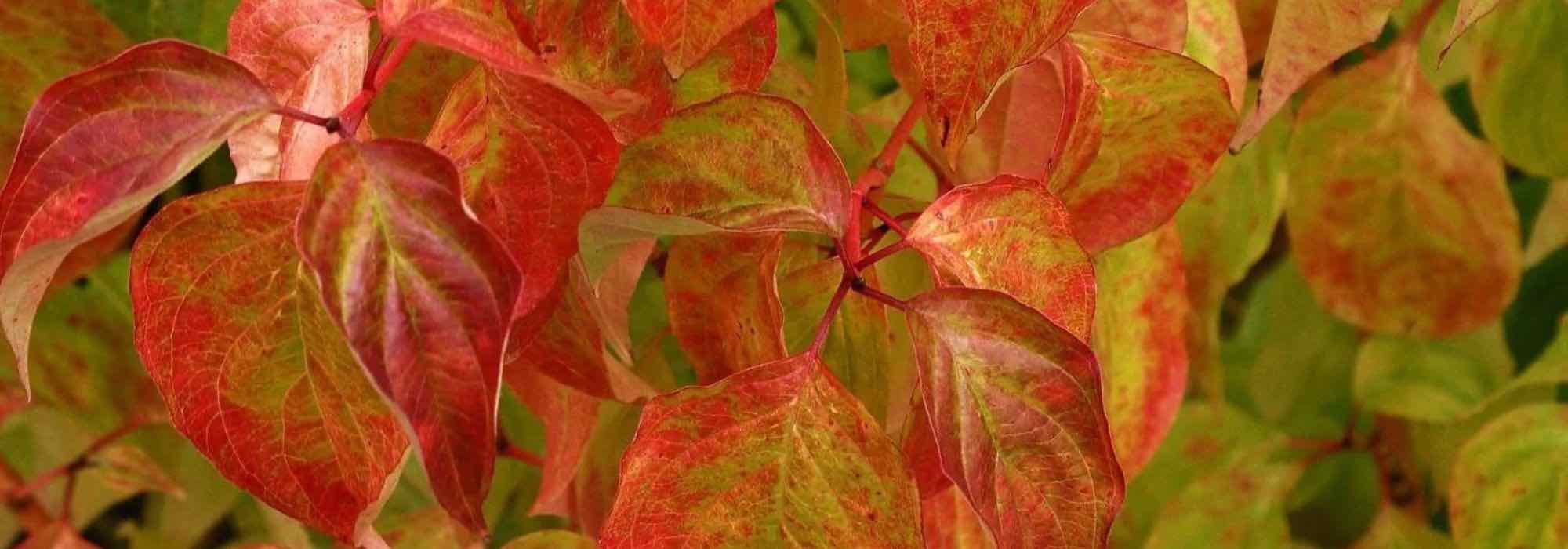
9 must-have plants to brighten up the garden in autumn
Flowering, coloured foliage or decorative fruiting to brighten autumn
Contents
If autumn marks the end of the richest and most productive periods, that doesn’t mean the garden will become dull. Many plants display striking ornamental attributes this season. Perennials or bushes with autumn flowering, plants with foliage that takes on magnificent colours before shedding, vegetation that rewards us with decorative fruits… There are so many ways to brighten up the garden from September to November.
Here is our selection (non-exhaustive) of various plants that will make you fall in love with autumn in the garden.

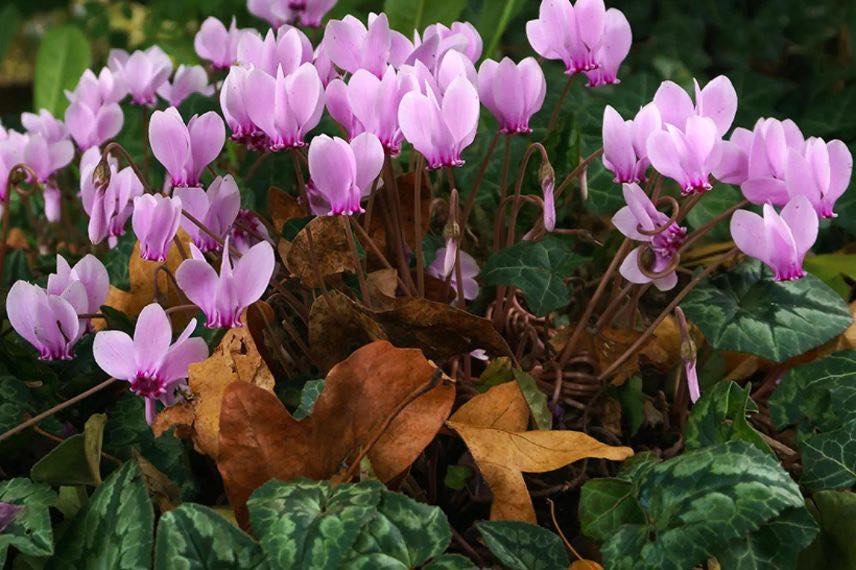
Pink Cyclamen hederifolium - Neapolitan cyclamen
Naples cyclamen is one of those small plants capable of delivering a display in autumn when planted in mass. This bulbous plant flowers in late summer, from August to October–November, revealing small pink reflexed flowers, whose petals resemble butterfly wings. The foliage is also interesting, with its heart-shaped leaves and dentate margins and its green, silver-marbled colouring that persists throughout the winter.
It is an excellent woodland plant, capable of forming impressive colour carpets and faithfully reflowering each year without human intervention. You can also plant it in a container to create a pretty autumn pot on the balcony, terrace or a simple windowsill. Provide it with a shaded or partly shaded position.
Hardy and accessible even to beginner gardeners, this plant will thrive in well-drained soil, even when dry in summer.
For more on its cultivation, discover our guide Cyclamen: plant, grow and maintain
Read also
Create a beautiful autumn gardenCallicarpa bodinieri ‘Profusion’ – beautyberry bush
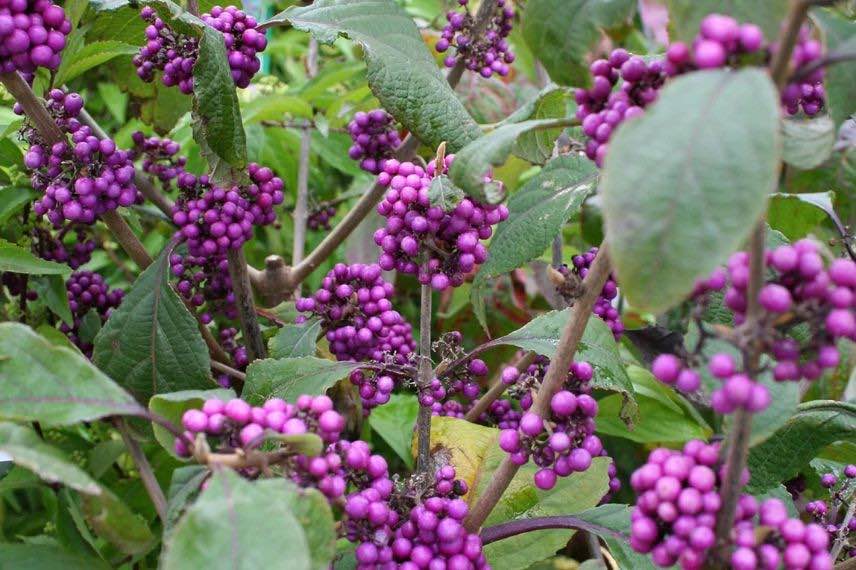
Callicarpa are these unusual bushes that produce colourful fruits that resemble real little sweets (note that they are not edible).
This decorative and distinctive fruiting is perfect for brightening autumn, and for much of the winter as well.
With ‘Profusion’, pink-violet berries appear after the summer flowering, like a string of tiny, gleaming beads. But that is not its only asset, as the foliage also takes on beautiful autumn colours, turning from orange to purple.
Easy to grow, Callicarpa requires little maintenance and is resistant to cold, diseases and pests. Plant it in full sun, in soil that isn’t too dry in summer. It will look marvellous in an informal hedge or at the back of a border.
For more on its cultivation, discover our guide Callicarpa: Plant, grow and maintain
Mahonia eurybracteata 'Soft Caress'
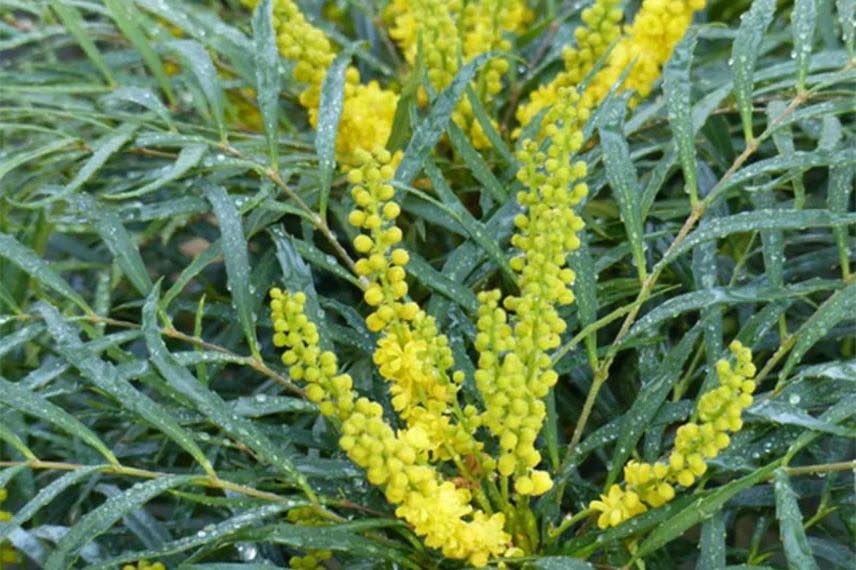
Do you need a sunny touch to herald autumn? Consider Mahonia ‘Soft Caress’, which produces generous clusters of yellow flowers from September to November. Fragrant, they emit a mimosa scent. After flowering, small black fruits with a silver sheen take over, for an extended display.
Unlike some of its sisters, this variety is thornless, which allows it to be grown even near walkways, to enjoy the colour and light it will bring to autumn. Mahonias are prized for their graphic, almost exotic charm. ‘Soft Caress’ features finer, more dissected foliage, just as ornamental, reminiscent of fern fronds. Evergreen, these blue-green leaves stay on the plant even in winter, adding further decorative interest.
Its modest size (around 1.5 m high and wide) makes it suitable for even compact spaces.
Plant it in moist soil and in a lightly shaded position, away from scorching sun. It will be perfect in borders or in containers.
For more on growing it, read our guide Mahonia: planting, pruning and care
Camellia sasanqua 'Yume' – Autumn Camellia
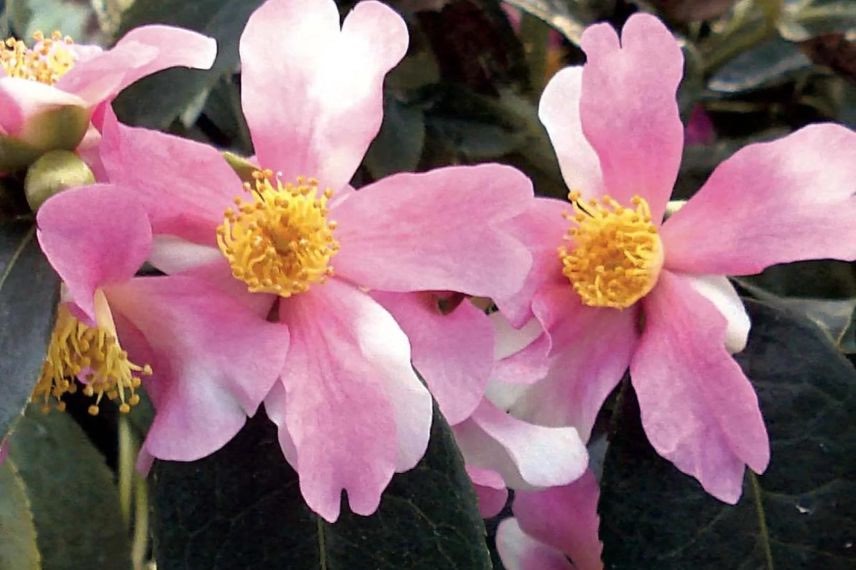
Camellia sasanqua announce autumn’s arrival with delicate grace. ‘Yume’ is no exception to the rule. From October to December–January, this variety treats us to an abundant bi-colour flowering, pink-tinged with white, illuminated by a centre of yellow stamens. Its star-shaped flowers range from 5 to 8 cm in diameter and are fragrant. They add a refined touch to borders, containers or as a specimen.
Another ornamental feature: its dark green elliptical foliage is evergreen, hence decorative all year round.
This variety reaches around 1 metre in height and spread.
Hardy to -12°C, this camellia will thrive in acidic, well-drained soil, but fairly fertile (rich in organic matter). Prefer a site sheltered from cold winds, in partial shade.
To learn more about growing it, see our guide Camellias: planting, pruning and care
New England aster 'Barrs Blue' - Autumn-flowering aster
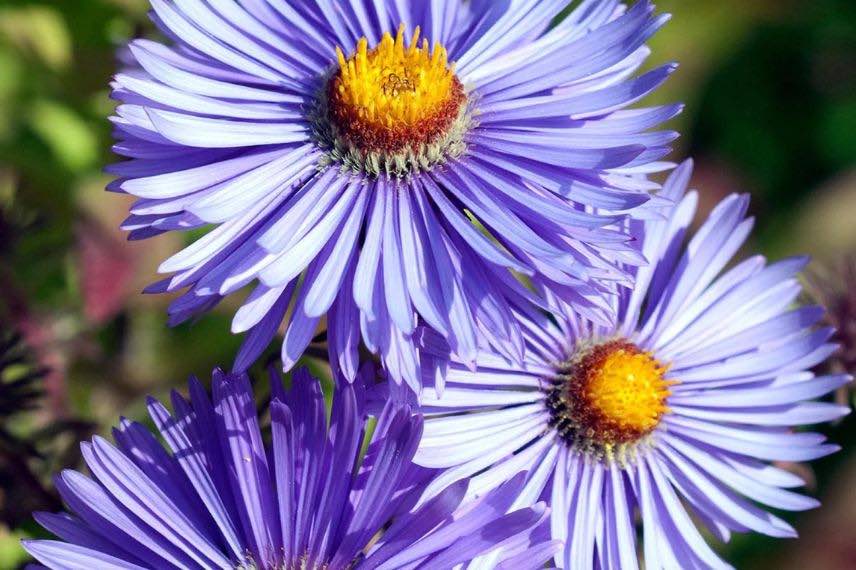
Asters are known for their beautiful, abundant flowering, which brings a real splash of colour to autumn. They feature daisy-like flowers, offering a wide range of colours. The cultivar Barrs Blue, a reliable garden favourite, is a blue-violet that takes centre stage, contrasting beautifully with the yellow centre. Flowering extends from August to November and is very attractive to pollinators.
Fairly tall, this Aster will reach 1.2 metres in height. It is a perfect choice for a naturalistic or wild-style border, but also for a mixed border or an autumn container.
Hardy, robust and easy to grow, this perennial is planted in well-drained soil in a sunny position, sheltered from strong winds.
To learn more about growing it, read our guide Asters: planting, growing and care.
Chrysanthemum indicum 'Citronella' - Garden chrysanthemum
Chrysanthemums have long been used to honour the dead, but they are gradually regaining a more positive and fresh image. In autumn, they are unrivalled for offering us a lavish display of warm, bright colours. They are also known as autumn marguerites.
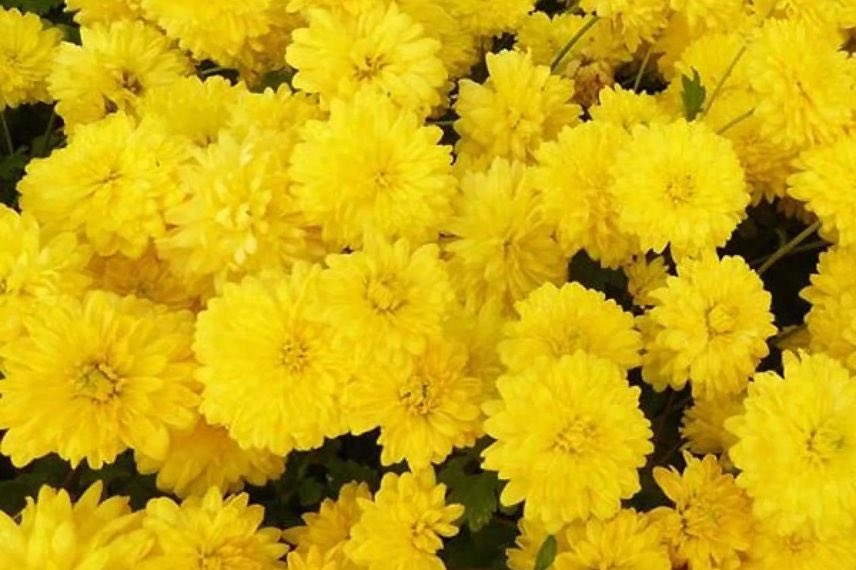
‘Citronella’ is no exception, with its long flowering period running from September to the first frosts. It produces round, fully double flowers, resembling tiny pom-poms. They display a bright, lemon-yellow that is vibrant and warm, which adds a sunny touch to the garden.
It grows to around 50 cm in all directions for this variety.
Fairly hardy, this chrysanthemum tolerates various soil types as long as it is well-drained, fertile and cool. It is a perennial to welcome wholeheartedly in the garden, on the terrace or balcony, to brighten the autumn season.
For more about its cultivation, discover our dossier Chrysanthemum: planting, maintenance, pruning and 5 chrysanthemums with pink flowers.
Euonymus europaeus ‘Red Cascade’ – European spindle
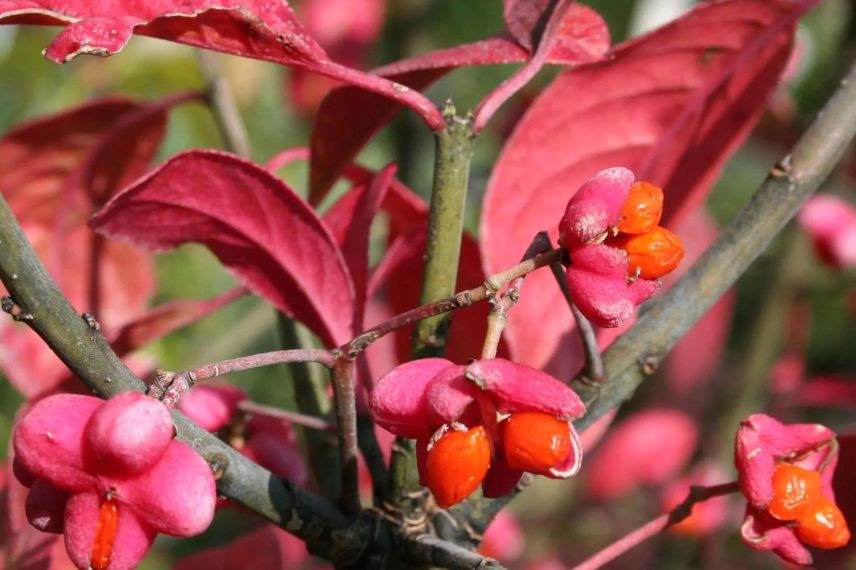
Euonymus ‘Red Cascade’ has several decorative features. It’s not really for its flowering, which is fairly discreet, that we cultivate it. However, it gives way to a generous fruiting of red-pink colour, so abundant that it bends the branches at the end of summer. It lasts until winter, providing a real splash of colour and ornamental appeal. It also proves popular with birds.
But this deciduous variety is also interesting for the colours of its foliage, which change in autumn. From the first frosts, the leaves take on colours to give us a spectacular display and effectively turn this shrub into a true red cascade.
In terms of size, expect 3 metres tall with a 2-metre spread.
This spindle can be grown as a free-standing hedge or as a specimen plant. It is one of the ideal plants for beginner gardeners, regarded as foolproof. Hardy and low-maintenance, ‘Red Cascade’ will thrive in any well-drained soil, in sun or partial shade.
To learn more about its cultivation, discover our dossier Euonymus: planting, pruning and maintenance
Viburnum plicatum ‘Mariesii’ - Chinese viburnum
Viburnums are among those bushes that offer a host of qualities and stay interesting in every season. ‘Mariesii’ appeals to us especially for its architectural, layered and flat-topped habit, which adds a graphic, Japanese-inspired touch to the garden. Wider than tall, it reaches 2 metres in height with a 3-metre spread.
This variety first rewards us with a beautiful flowering in late spring, consisting of large flat-topped corymbs bearing a very pure white. In autumn, its bright green foliage flames up to take on seasonal colours. Initially yellow, the leaves then become an intense red-purple, before turning purplish.
Plant it in full sun or in partial shade, in soil that stays fairly moist, without excessive lime. It will be perfect in a bed of ericaceous plants or in an informal hedge.
For more on its cultivation, discover our guide Viburnum, Viorne: planting, pruning and growing.
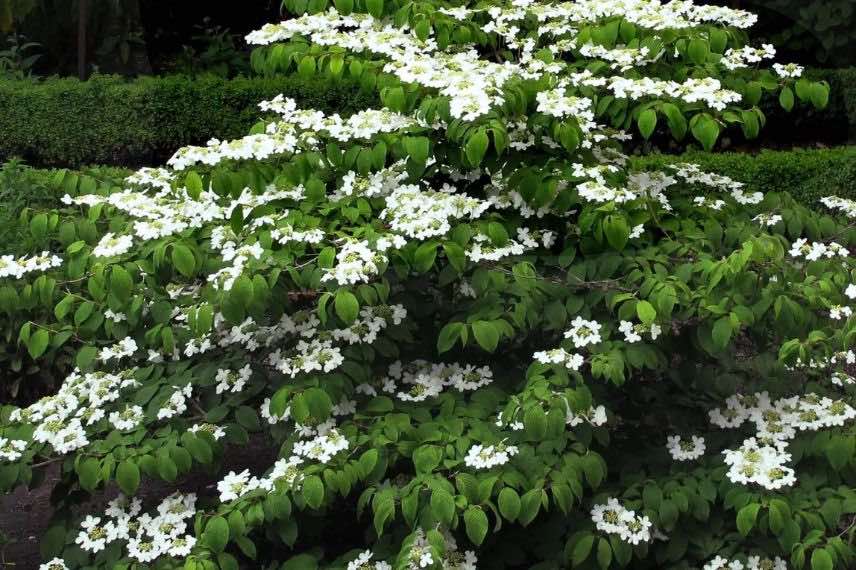
Cornus sanguinea 'Magic Flame' - bloodtwig dogwood
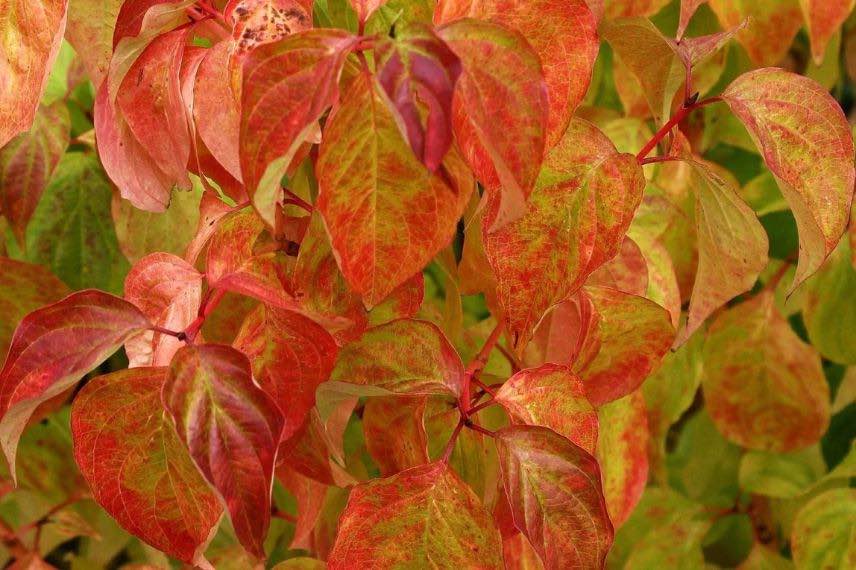
The dogwood ‘Magic Flame’ has no equal for brightening autumn and winter in the garden. First, it is thanks to its foliage that it brings colour. Green-yellow through to summer, it then takes on beautiful salmon-pink to orange hues. Its young shoots also bring a welcome splash of colour, displaying a gradient of yellow, red and bright orange from the base to the tops of the stems.
This dogwood is, of course, also interesting in late spring for its white flowering in cymes, which delight visiting pollinators.
In terms of size, it reaches around 2 metres tall and wide.
Plant it in full sun, in well-drained soil that can be calcareous, of low fertility and occasionally dry. A truly easy-to-grow bush that never disappoints.
For more on its cultivation, see our feature Flowering dogwoods: planting, pruning and care.
- Subscribe!
- Contents

Comments