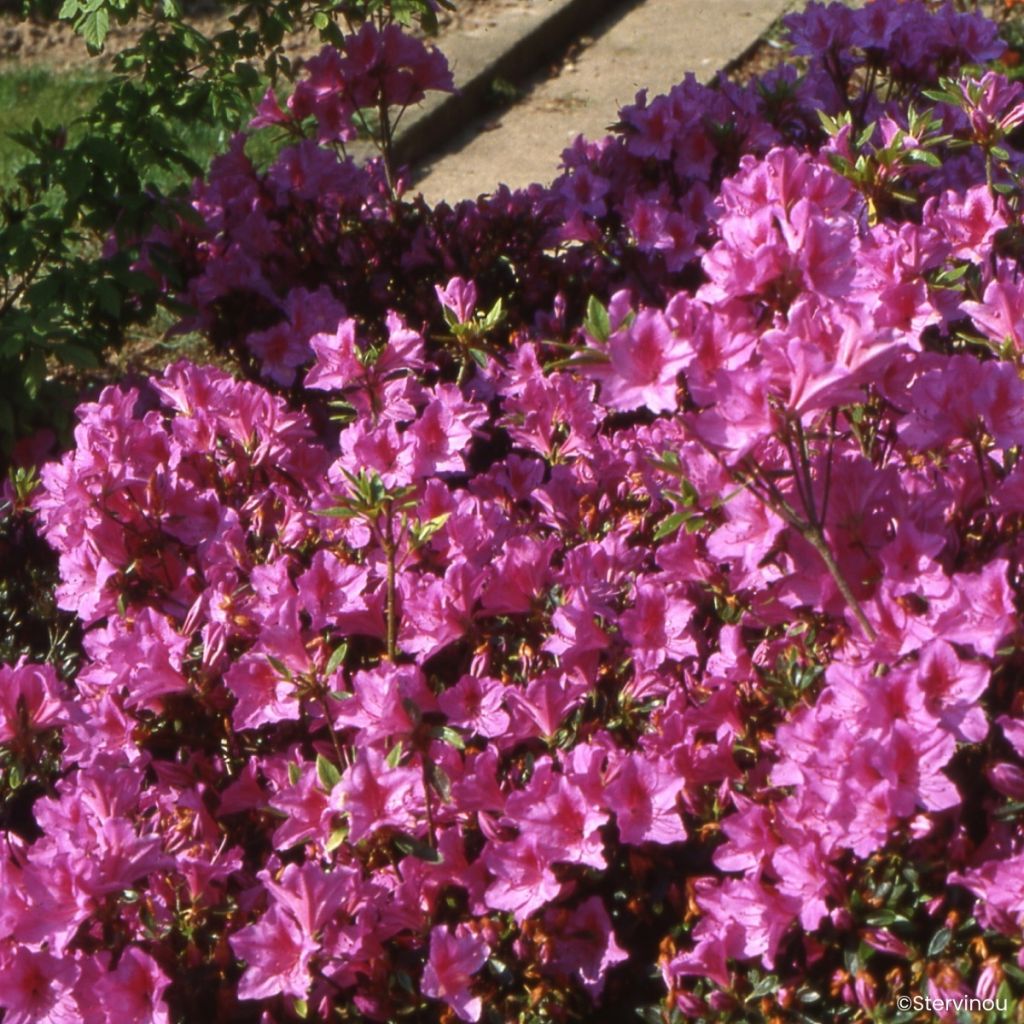
Rhododendron Beethoven
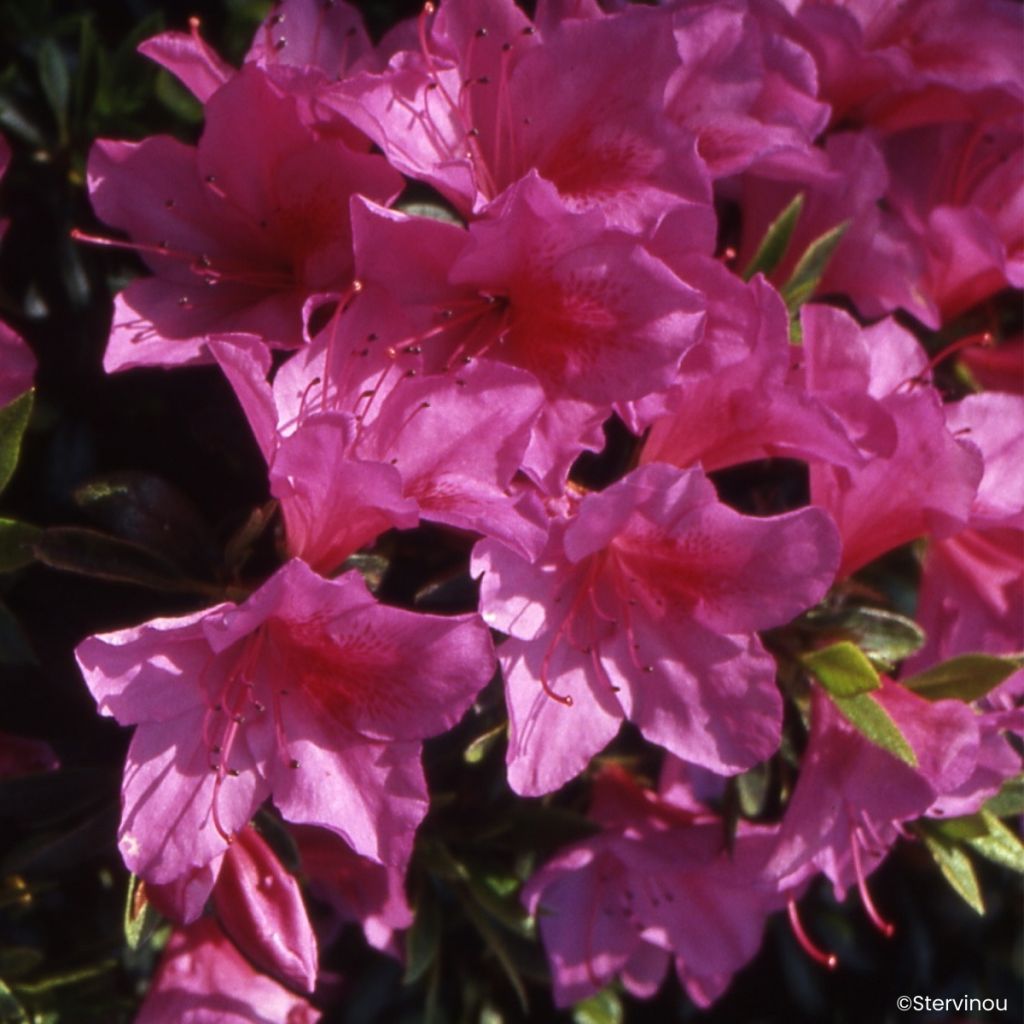
Rhododendron Beethoven
Rhododendron Beethoven
Rhododendron 'Beethoven '
Back-to-school special offer!
Get €10 off for every €50 you spend! And get up to €40 off on a single order.
How does it work?
1. Shop your favourites
Add your favourite plants to your basket. For every €50 you spend (excluding delivery charges, store credit and the plastic-free option), you’ll receive a €10 voucher.
€50 spent = €10 voucher
€100 spent = €20 voucher
€150 spent = €30 voucher
€200 spent = €40 voucher
2. Place your order
Once your basket reaches one of the spending thresholds, place your order. You can even choose your delivery date!
3. Receive your voucher
As soon as your order has been shipped, you’ll receive an email containing your personal voucher code and its value.
4. Use it on your next order
Your voucher is valid for 90 days from the date you receive it. It can be used once only, on a new order worth at least the value of the voucher, excluding delivery charges.
Please note: Vouchers can be combined with other offers, but cannot be split or refunded.
Home or relay delivery (depending on size and destination)
Important: You may be charged customs duties by your country’s customs authorities upon delivery.
Schedule delivery date,
and select date in basket
This plant carries a 24 months recovery warranty
More information
We guarantee the quality of our plants for a full growing cycle, and will replace at our expense any plant that fails to recover under normal climatic and planting conditions.
Does this plant fit my garden?
Set up your Plantfit profile →
Description
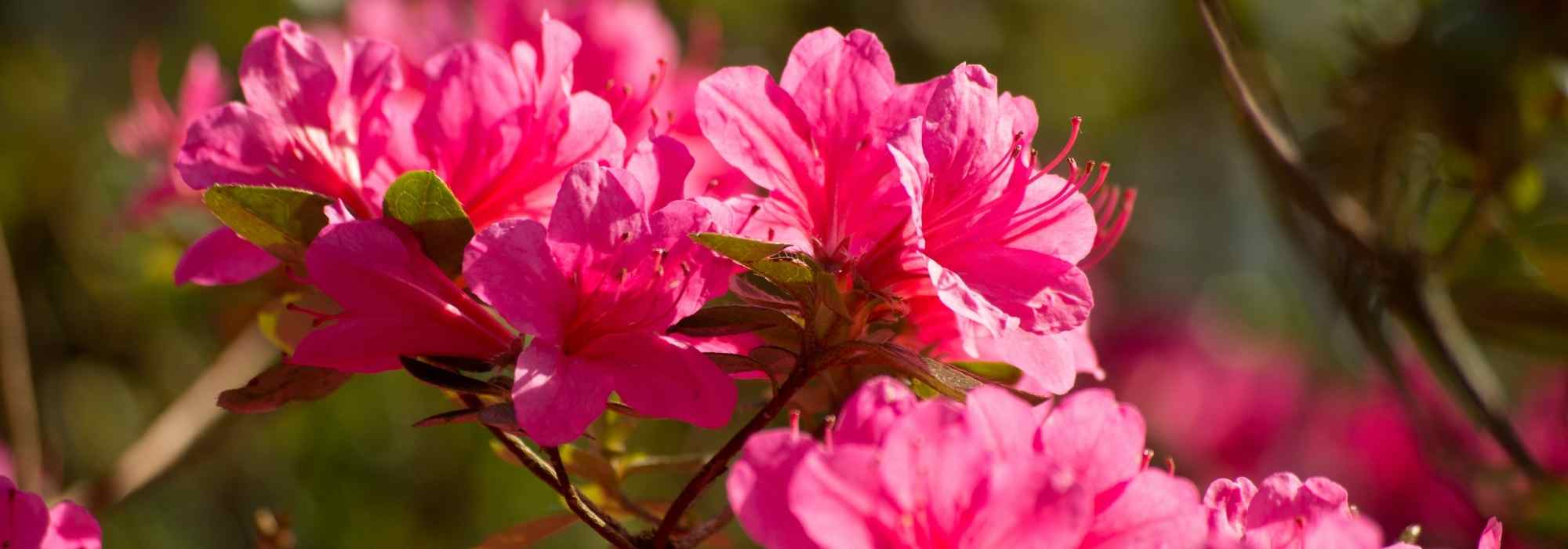
The Japanese Azalea Beethoven is a bush with a rather compact habit, slightly wider than tall, with dark green evergreen foliage. In April, it is laden with a multitude of intense light mauve flowers, creating a dazzling spectacle in the garden. With fairly slow growth, it can easily be grown in a container to adorn a shaded terrace. In a bed, it will thrive alongside ericaceous plants, in acidic, cool, humus-bearing soil, under the protective shade of larger plants. This variety, with its magnificent flowering, requires little maintenance and fully deserves its place in the garden, easily adapting to smaller spaces.
Azaleas, although designated by a distinct horticultural name, actually belong to the Rhododendron genus, according to botanical classification. This genus is part of the vast Ericaceae family, which brings together around a hundred other genera with remarkable ornamental qualities, such as the small Pernettya with its decorative fruits, the Leucothoe with its highly ornamental foliage, or the countless Heathers. Some of these plants also produce edible fruits, such as the Blueberry Bush, or, in more southern regions, the Strawberry Tree. The Rhododendron genus is notable for its richness and cosmopolitan distribution: it comprises over 1000 wild species, ranging from temperate zones to tropical regions. It includes deciduous, semi-evergreen, or evergreen forms, ranging from small shrubs to true trees reaching up to 15 metres in height. Some tropical species, such as the Vireya Rhododendrons, are even semi-epiphytic and grow on other plants, much like many orchids.
The Rhododendron 'Beethoven' is a hybrid variety, perhaps derived from R. x obtusum, itself the result of cross-breeding between three botanical species... While its origin is uncertain, its beauty is truly dazzling. With slow growth, the bush spreads as it grows, forming after 10 years of cultivation a clump 70 cm in height and 80 cm in spread. At ripeness, after 15 to 20 years, it can reach 1.50 m in all directions. It is clothed in evergreen vegetation, consisting of small lanceolate leaves 2 to 4 cm long, of a dark green colour. From April onwards, they serve as a setting for the flowering: thousands of single five-petalled flowers, of a brilliant light mauve, bloom in such profusion that they almost entirely conceal the foliage. The spectacle is truly magical when the corollas, about 5 cm in diameter, unfurl for several weeks until May, creating a powerful focal point in the garden. Few plants can rival a fully flowering Azalea in spring, and 'Beethoven' is no exception with its vibrant colours.
Plant the Japanese Azalea Beethoven in a shaded area of the garden, which it will illuminate magnificently in spring with its resplendent flowering. It will thrive in a heather soil bed alongside other plants of the same type. By choosing staggered flowering times, you can enjoy a floral display throughout the year. Thus, the Autumn Camellias (Camellia sasanqua) will take care of adorning autumn and winter with their graphic flowers of romantic beauty. The Star Magnolias (M. stellata) will then take over at the very beginning of spring with their large flowers with long, narrow petals. The Kalmias (Mountain Laurels) will bloom in May-June, succeeding your Azalea with their curious inflorescences reminiscent of English porcelain. And to elegantly occupy the summer period, nothing beats Hydrangeas, which come in countless shapes and colours depending on the species and varieties...
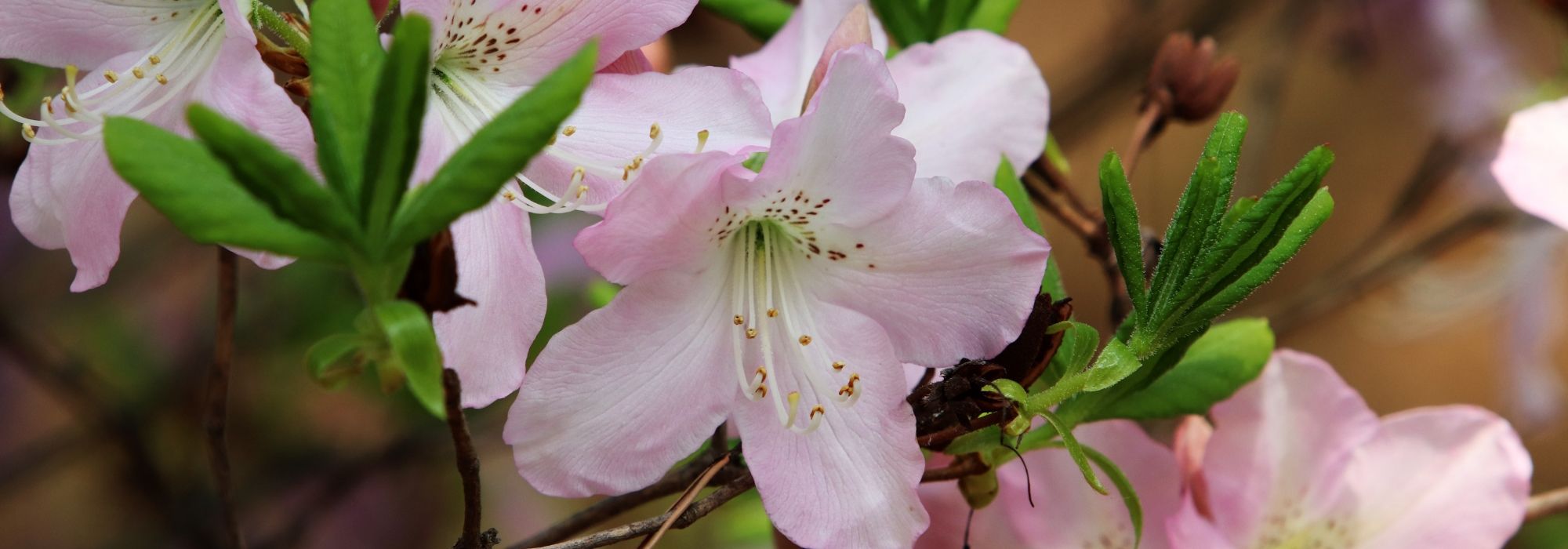
Rhododendron Beethoven in pictures
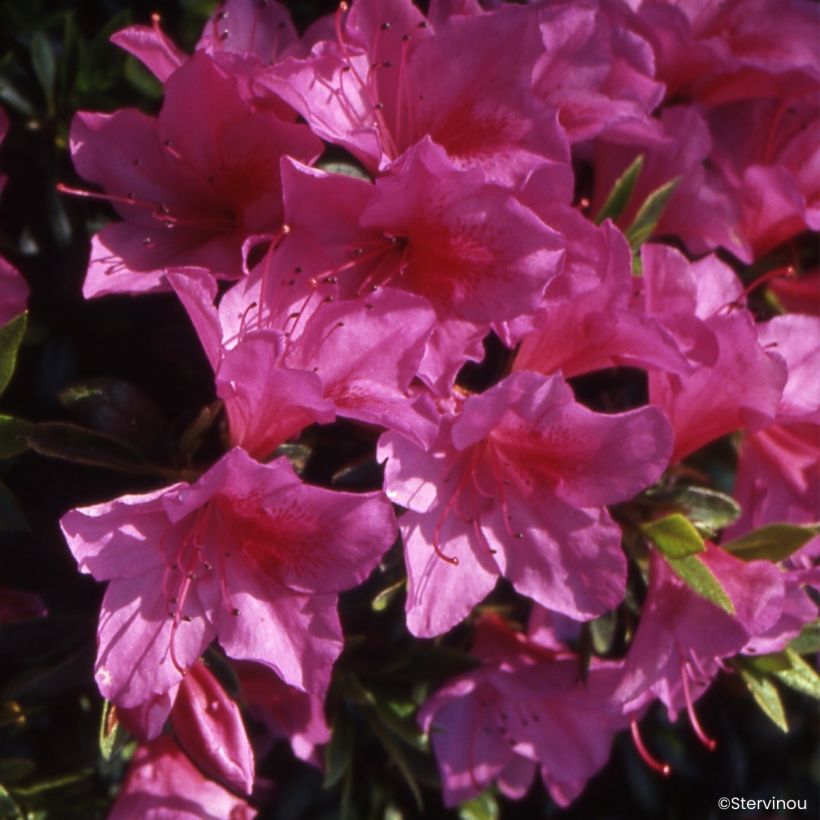
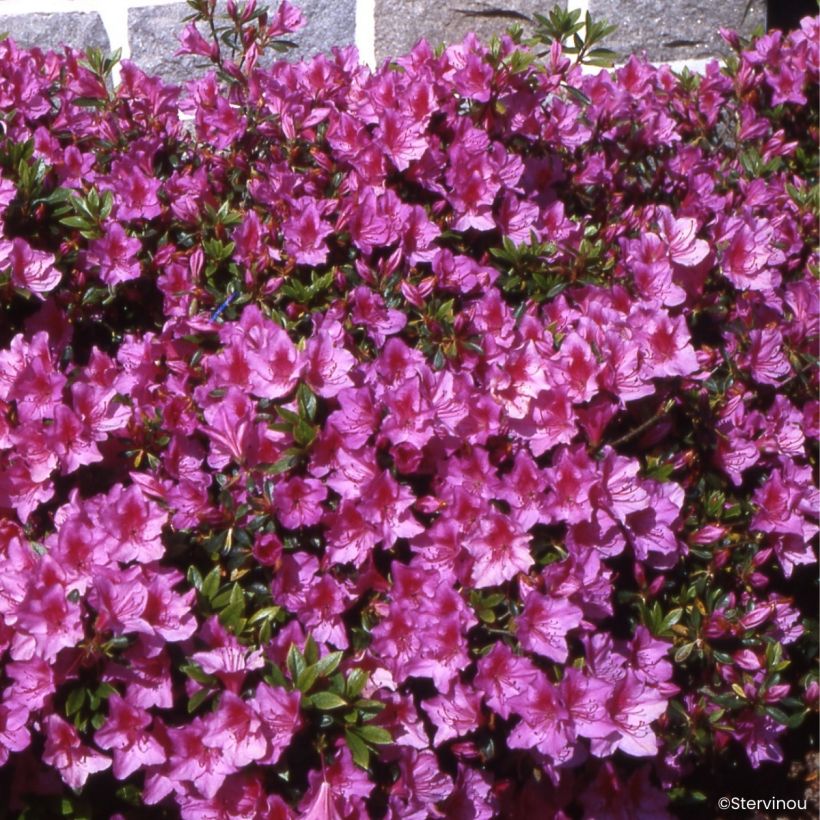
Plant habit
Flowering
Foliage
Planting and care
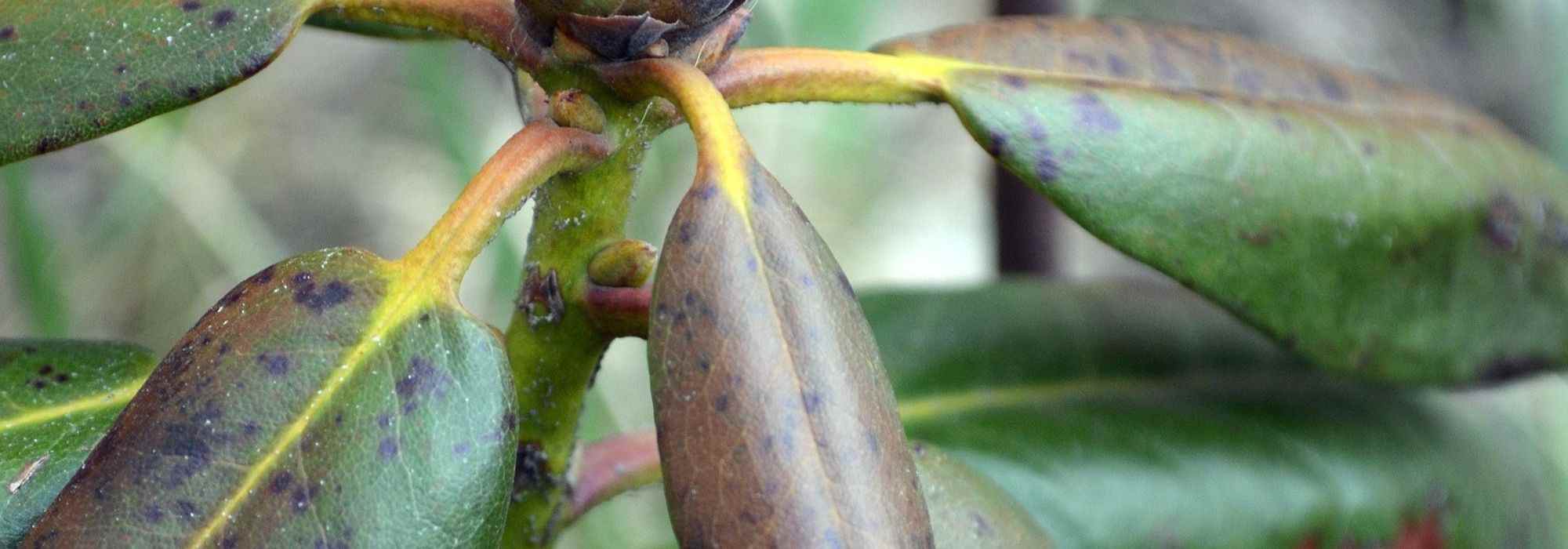
Plant the Japanese Azalea 'Beethoven' in partial shade, sheltered from cold, drying winds, in a cool, humus-bearing, light, and slightly acidic soil. Like all ericaceous plants, it does not tolerate chalky soils, nor heavy soils that are waterlogged in winter. Dig a hole three times the volume of the pot. Soak the root ball in water (non-chalky) and plant the bush at collar level in a mixture composed of 1/4 turf, leaf mould, gravel or pumice, and garden loam. Water generously and keep the soil cool in summer. Azaleas and Rhododendrons have a relatively shallow root system. As a result, they are susceptible to long periods of drought. This is why enriching the soil with humus and providing ample watering during dry spells is recommended. Furthermore, this root system is not very strong, which is why it is essential to lighten heavy soils with draining materials (gravel, pumice, clay pebbles) at planting time. Apply a mulch of crushed pine bark at the base of the bush every spring to keep the soil cool while maintaining an acidic pH. Maintenance simply involves removing spent flowers in summer and clearing away dead branches. Azaleas and Rhododendrons can sometimes be attacked by vine weevils, which eat the edges of the leaves and the rootlets, as well as by the notorious 'rhododendron leafhopper', which, however, does not often cause significant damage. Yellowing of the leaves (chlorosis) in Rhododendrons indicates poor assimilation of iron in the soil and leads to premature death of the plant. While chalk is often the cause, poorly drained soil or a root ball planted too deeply can also explain the phenomenon.
Planting period
Intended location
Care
Planting & care advice
-
-

-

-
-
-

-

-

This item has not been reviewed yet - be the first to leave a review about it.
Recently viewed products
Haven't found what you were looking for?
Hardiness is the lowest winter temperature a plant can endure without suffering serious damage or even dying. However, hardiness is affected by location (a sheltered area, such as a patio), protection (winter cover) and soil type (hardiness is improved by well-drained soil).
In temperate climates, pruning of spring-flowering shrubs (forsythia, spireas, etc.) should be done just after flowering.
Pruning of summer-flowering shrubs (Indian Lilac, Perovskia, etc.) can be done in winter or spring.
In cold regions as well as with frost-sensitive plants, avoid pruning too early when severe frosts may still occur.
The harvesting period indicated on our website applies to countries and regions in USDA zone 8 (France, England, Ireland, the Netherlands).
In colder areas (Scandinavia, Poland, Austria...) fruit and vegetable harvests are likely to be delayed by 3-4 weeks.
In warmer areas (Italy, Spain, Greece, etc.), harvesting will probably take place earlier, depending on weather conditions.
The sowing periods indicated on our website apply to countries and regions within USDA Zone 8 (France, UK, Ireland, Netherlands).
In colder areas (Scandinavia, Poland, Austria...), delay any outdoor sowing by 3-4 weeks, or sow under glass.
In warmer climes (Italy, Spain, Greece, etc.), bring outdoor sowing forward by a few weeks.
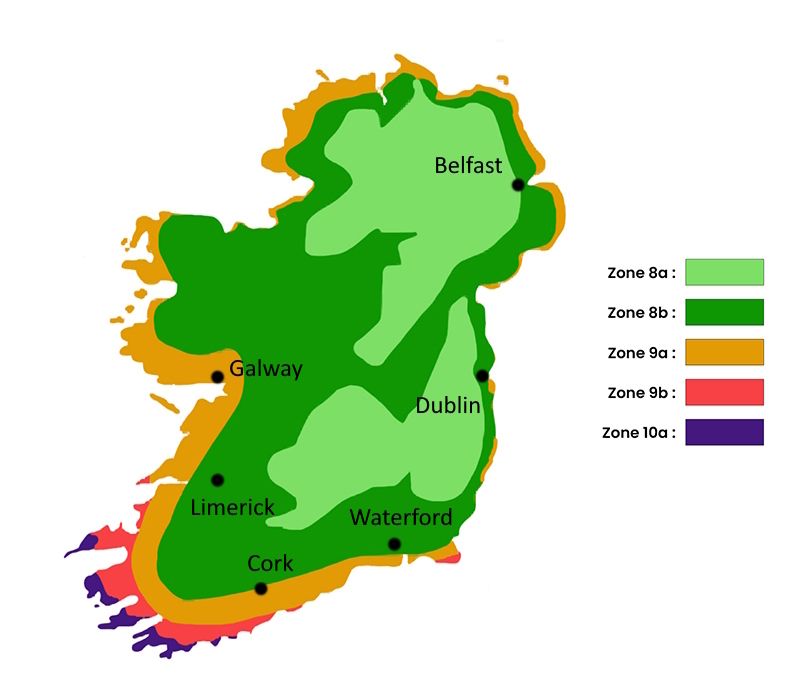
The planting period indicated on our website applies to regions in USDA Zone 9a (East Coast and Midlands: Dublin, Wexford, Waterford, Kilkenny, Portlaoise). It will vary depending on where you live:
- On the west coast and in the north-west (Galway, Limerick, Sligo, Donegal, Westport), delay planting by 1 to 2 weeks in spring and bring it forward by 1 to 2 weeks in autumn compared to the dates given, preferably choosing periods without strong winds.
- In the inland hills and plateaus (Wicklow Mountains, Macgillycuddy’s Reeks, Connemara, Killarney), it is best to plant in spring (April–May) or autumn (September–October), avoiding periods of waterlogged soil in winter and strong winds, which pose the main risk to newly planted trees in these areas.
The flowering period indicated on our website applies to regions in USDA Zone 9a, such as the East Coast and Midlands, including Dublin, Wexford, Waterford, Kilkenny and Portlaoise.
This will vary depending on where you live:
- On the west coast and in the northwest (Galway, Limerick, Sligo, Donegal and Westport), it will be delayed by one to two weeks compared to the given dates, due to stronger Atlantic winds and less spring sunshine.
- In the inland hills and plateaus (the Wicklow Mountains, the Macgillycuddy's Reeks, Connemara and Killarney), flowering will be delayed by two to three weeks. Flowering mainly occurs between May and July, with the limiting factors being less frost and more of the excessive humidity, strong winds and lack of sunshine that are characteristic of these areas.
Shipping country and language
Your country of residence may be:
Your country of residence is:
For a better user experience on our website, you can select:
Your shipping country:
-
 Austria
-
 Belgium
-
 Bosnia & Herzegovina
-
 Bulgaria
-
 Croatia
-
 Cyprus
-
 Czechia
-
 Denmark
-
 Estonia
-
 Finland
-
 France
-
 Germany
-
 Greece
-
 Hungary
-
 Iceland
-
 Ireland
-
 Italy
Italy
-
 Latvia
-
 Liechtenstein
-
 Lithuania
-
 Luxembourg
-
 Malta
Malta
-
 Netherlands
-
 Poland
-
 Portugal
-
 Romania
-
 Serbia
-
 Slovakia
-
 Slovenia
-
 Spain
Spain
-
 Sweden
-
 Switzerland
Language:
-
French
-
 English
-
Spanish
-
Italian
-
German
-
Portuguese
-
Dutch
-
Finnish
My Account
Hello
My wish lists
My cart
Log in / Register
Existing customer?
This form is protected by reCAPTCHA - the Google Privacy Policy and Terms of Service apply.
New customer?
Create an account to track your orders, access our customer service and, if you wish, make the most of our upcoming offers.