Get 10% off your first order with the code: FIRST-10
Share your pictures? Hide split images
I have read and agree the terms and conditions of service.
New arrival

Nerium oleander Mont Blanc

Nerium oleander Mont Blanc
Oleander, Rose Laurel, Rose Bay

Be the first to leave a review

Why not try an alternative variety in stock?

3
€68.00 -30%
18
From €16.50 2L/3L pot

Available in 4 sizes

42
From €16.50 2L/3L pot

Available in 4 sizes

29
€19.50 2L/3L pot

Available in 4 sizes

17
From €31.50 2L/3L pot

Available in 2 sizes

58
From €16.50 2L/3L pot

Available in 4 sizes

17
From €18.50 3L/4L pot
7
From €18.50 3L/4L pot
1
From €34.50 7.5L/10L pot

Available in 2 sizes

Out of stock
From €18.50 2L/3L pot

Available in 2 sizes

This plant carries a 24 months recovery warranty

More information

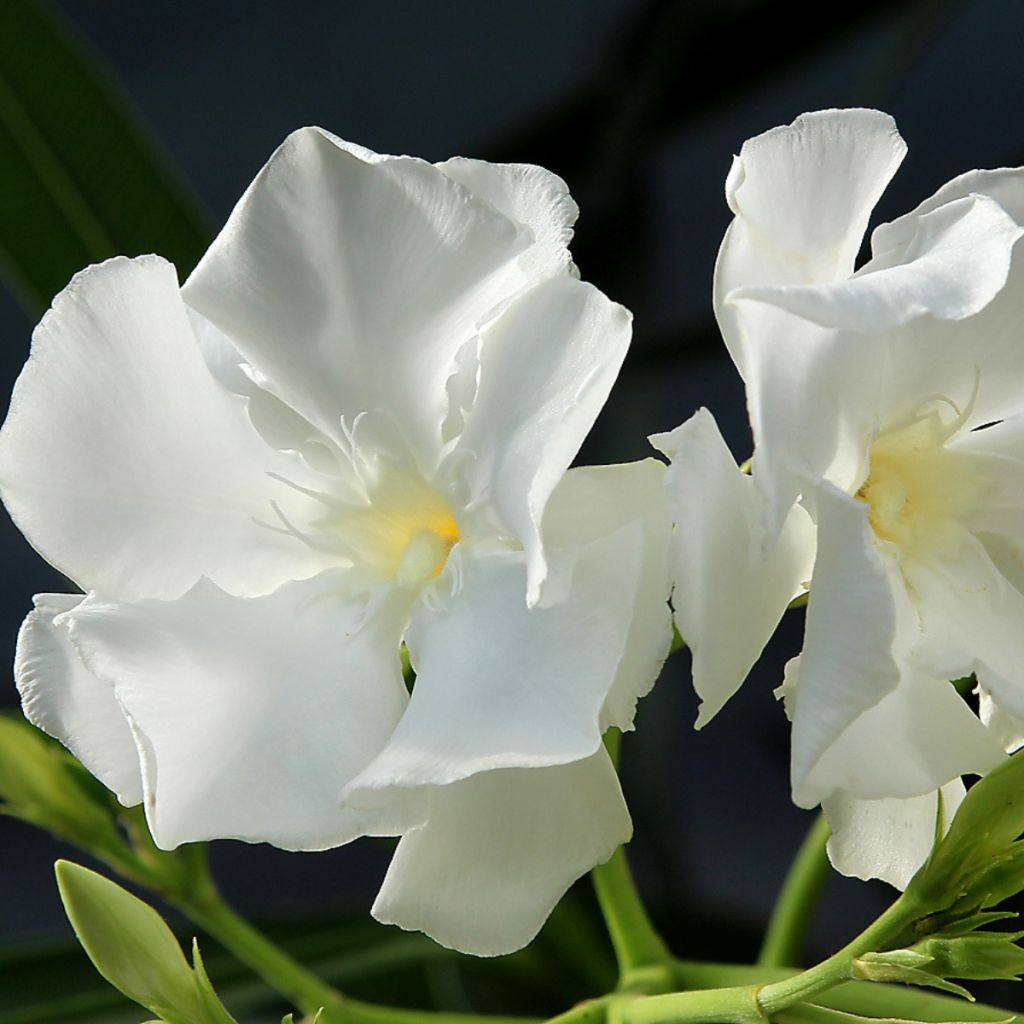
An old variety with large, double, creamy-white, highly fragrant flowers, borne in generous clusters from June until autumn. This evergreen shrub, with its tough, dark green foliage, forms a dense screen, ideal for an informal hedge, in a border, or in a large container on a sheltered terrace. It is suited to very mild climates and should be planted in well-drained soil, even lime-bearing and dry in summer. In colder regions, it is best grown in a pot and overwintered frost-free. Hardiness: down to approximately -5°C at its lowest.
Flower size
6 cm
Height at maturity
2.50 m
Spread at maturity
1.50 m
Exposure
Sun
Hardiness
Hardy down to -6.5°C
Soil moisture
Dry soil, Moist soil
plantfit-full

Does this plant fit my garden?

Set up your Plantfit profile →

Best planting time April to May
Recommended planting time February to May, September to October
J
F
M
A
M
J
J
A
S
O
N
D
Flowering time June to September
J
F
M
A
M
J
J
A
S
O
N
D

Description

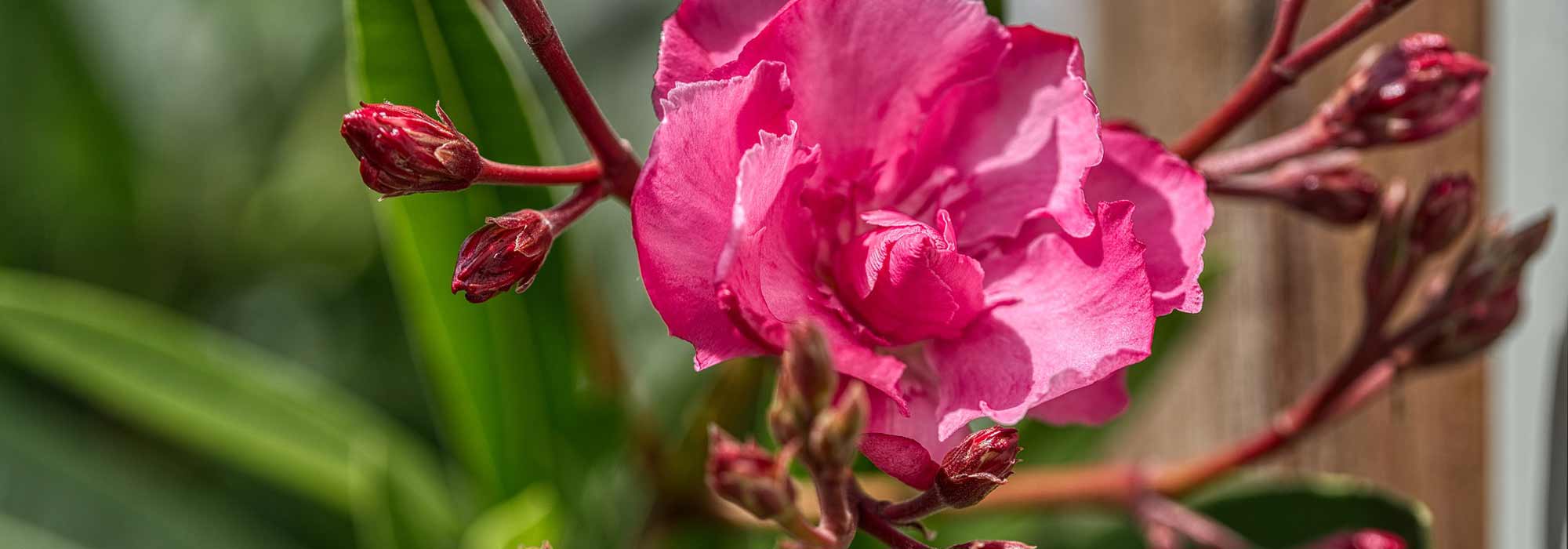
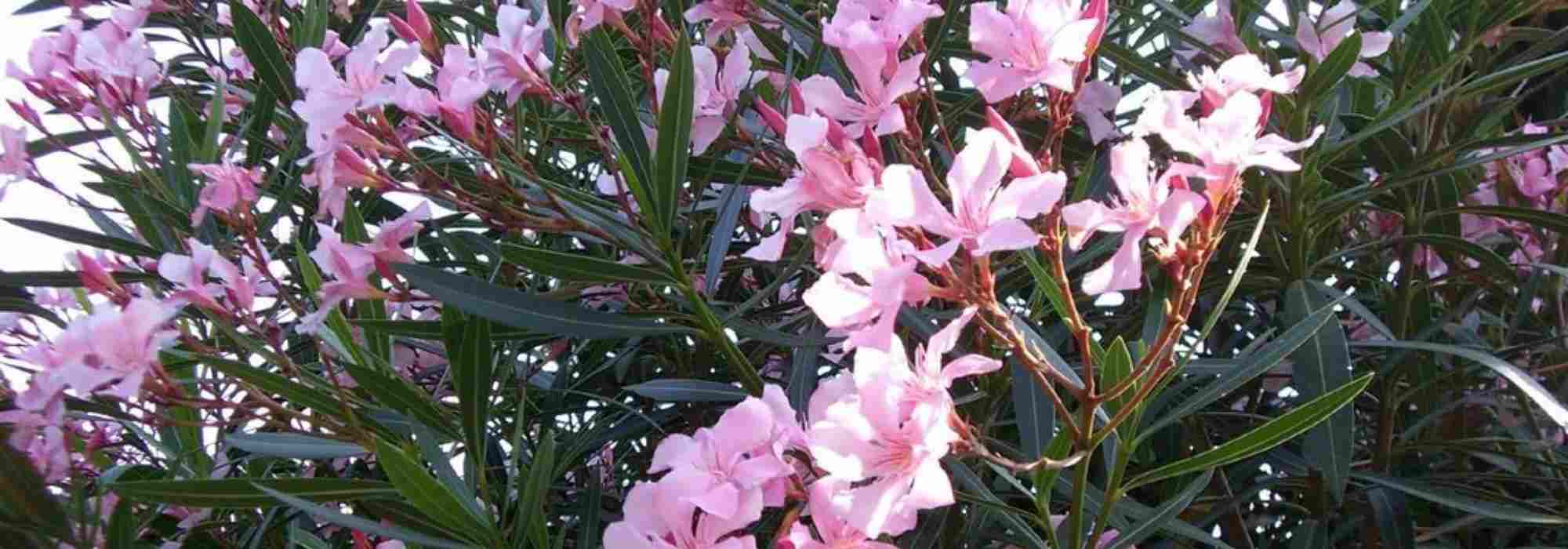
Nerium oleander ‘Mont Blanc’ is an oleander with a double, white, particularly fragrant flowering, with vanilla notes. This decidedly Mediterranean, slightly tender evergreen shrub forms a beautiful bush covered in flowers all summer. Suited to coastal gardens, it also grows very well in a large container, where it creates an exotic display. Besides its ornamental qualities, the plant is undemanding once well established. However, it does not tolerate cold well.

This cultivar belongs to the Apocynaceae family, like all oleanders. The botanical species Nerium oleander grows naturally along wadis, rivers and ravines in the warmest regions of the Mediterranean basin, North Africa and Western Asia, to the fringes of the Himalayas and southern Asia. It is an evergreen shrub with a very long lifespan.
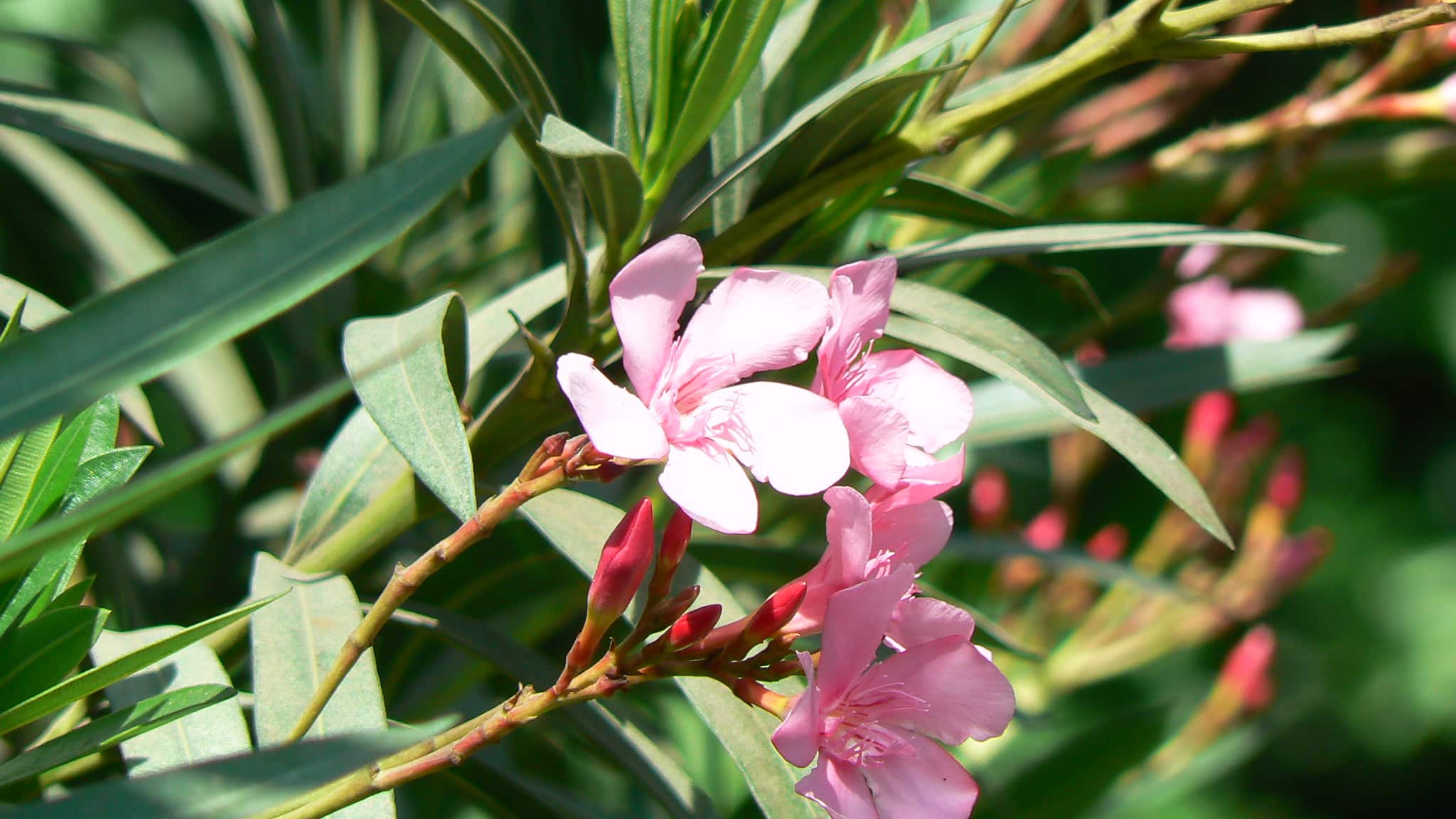
‘Mont Blanc’ is a horticultural selection with double white flowers, of old and fairly widespread origin. Some sources mention its distribution under the names ‘Magnolia Willis Sealy’ or ‘Album’ in Anglo-Saxon commerce, or 'Madonna' in Australia. The shrub has an upright, bushy habit, branched from the base, with erect stems that bend slightly under the weight of the inflorescences. Growth is moderately fast: in about ten years, you get a specimen 2 to 3 m in height and 1.50 m in width, up to 3–4 m in very mild regions. In a pot, it rarely exceeds 1.50 to 2 m in height. It does not produce suckers, but regrows from the base after hard pruning or frost. The evergreen leaves are simple, leathery, narrow and lanceolate, 8 to 15 cm long, dark green on top, lighter on the underside, arranged in pairs or in whorls of three. The double, 5 to 6 cm diameter flowers are gathered in tight clusters or corymbs at the ends of the branches. The numerous, slightly crumpled and wavy petals form a full corolla of a very pure white, sometimes creamy, with a very pale yellow throat. They follow one another from May-June to October, depending on the region. The hardiness of this cultivar is estimated at -5°C as a peak for a mature specimen grown in the ground.
All parts of the shrub are toxic if ingested, so keep it out of reach of young children.

In a coastal garden, Oleander ‘Mont Blanc’ finds its place at the back of a border or in an informal hedge, along a warm wall or a gravel path. It can be associated with generous, drought-tolerant shrubs such as Japanese rose 'Hansa' or the botanical rose Rosa chinensis 'Mutabilis', with shrubby germander Teucrium fruticans ‘Selection Erecta’, with Escallonia 'Dart's Rosy Red' and with Arbutus unedo 'Rubra', for example. On the terrace, surround it with a Plumbago 'Dark Blue' and an Abutilon ‘Souvenir de Bonn’.
Report an error about the product description

Oleander: planting, pruning and maintaining
Family sheet
by Eva 15 min.

Oleander: planting, pruning and maintaining
Read article

Plant habit

Height at maturity 2.50 m
Spread at maturity 1.50 m
Habit irregular, bushy
Growth rate normal

Flowering

Flower colour white
Flowering time June to September
Inflorescence Corymb, Double
Flower size 6 cm
Fragrance Very fragrant vanilla fragrance
Fruit colour green

Foliage

Foliage persistence Evergreen
Foliage colour dark green

Safety measures

Potential risks Plant may be toxic if swallowed

Botanical data

Genus

Nerium

Species

oleander

Cultivar

Mont Blanc

Family

Apocynaceae

Other common names

Oleander, Rose Laurel, Rose Bay

Botanical synonyms

Nerium oleander 'Madonna', Nerium oleander ‘Magnolia Willis Sealy’, Nerium oleander ‘Album’

Origin

Cultivar or hybrid

Product reference25836

Planting and care

We recommend planting the 'Mont Blanc' oleander in spring in cooler regions, once the risk of frost has passed, but preferably in early autumn in hot, dry climates. Position it in a sunny, sheltered location, in any deep, well-drained soil, even calcareous, and even where there is brackish water rising. While it will also grow in shade in Mediterranean climates, it will be much less floriferous there, and its habit will become more leggy and less bushy. Although it is very drought-tolerant and accommodates arid situations, it will only reach its full potential and flower abundantly in soil that remains sufficiently moist at depth. It is very resistant to salt spray. Monitor watering in summer for the first two years. It will appreciate an application of compost and a thick layer of dead leaves, especially for the first two winters in areas at the limit of its hardiness. Water at the base of the plant, never on the foliage.

Nerium is often prey to scale insects, leading to the appearance of sooty mould on the foliage. Thin out and aerate the branches. Treat if necessary with copper (Bordeaux mixture) in spring. If the scale insect infestation is truly severe, cut your oleander back to 10-20 cm from the ground: its ability to regenerate from the stump is significant, and the shrub will regain its beautiful appearance in a short time. Aphids can also settle on the flower buds: treat in the evening with an insecticide based on pyrethrins.

Oleander is also famous for the toxicity of its sap; however, it has a violently bitter and acrid taste, which discourages ingestion. Most accidents come from confusion between oleander and bay laurel in cooking (the aroma of bay laurel is nevertheless recognisable above all others), or from using the branches as skewers...

Planting period

Best planting time April to May
Recommended planting time February to May, September to October

Intended location

Suitable for Meadow
Type of use Border, Back of border, Container, Hedge, Greenhouse
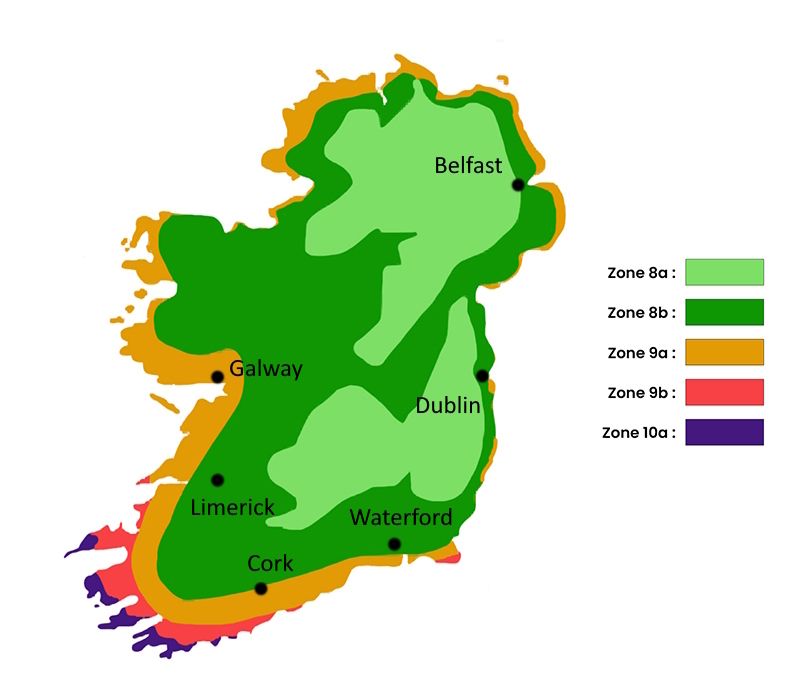
Hardiness Hardy down to -6.5°C (USDA zone 9a) Show map
Ease of cultivation Amateur
Planting spacing Every 100 cm
Exposure Sun
Soil pH Any
Soil type Chalky (poor, alkaline and well-drained), Clayey-chalky (heavy and alkaline), Silty-loamy (rich and light), Stony (poor and well-drained)
Soil moisture Dry soil, Moist soil well-drained, deep

Care

Pruning instructions Pruning oleander requires some precautions: as the shrub only flowers on young twigs that have reached a certain length (generally stems less than 1 year old, not too short), it is necessary not to cut back all the branches in the same year, as you risk being deprived of flowers for the entire season. When necessary, pruning should be carried out in early spring. To train the Nerium as a standard, select the most beautiful stem on the young plant, stake it, and remove all others at ground level. During the first years, all secondary branchlets that appear on this 'trunk' less than 1m or 1.50m from the soil must be systematically removed. The crown can then be treated according to the method described above.
Pruning Pruning recommended once a year
Pruning time March
Soil moisture Dry soil, Moist soil
Disease resistance Good
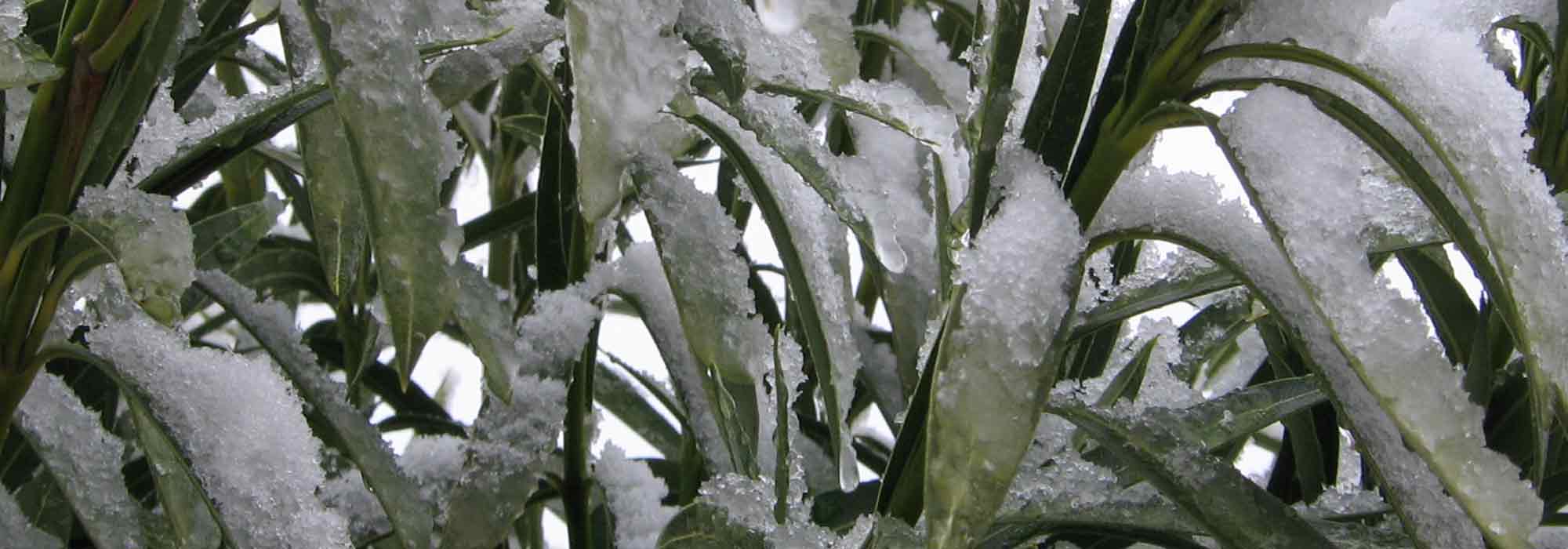
Overwinter Needs protection

This item has not been reviewed yet - be the first to leave a review about it.

Leave a review →

Similar products

60
From €6.90 8/9 cm pot
11
From €20.50 3L/4L pot
5
From €16.50 2L/3L pot
15
From €18.50 2L/3L pot
2
From €27.50 2L/3L pot
8
€19.50 2L/3L pot

Available in 2 sizes

3
From €20.50 2L/3L pot

Haven't found what you were looking for?