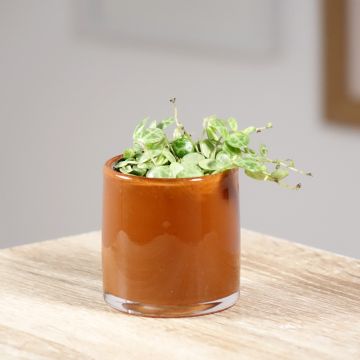
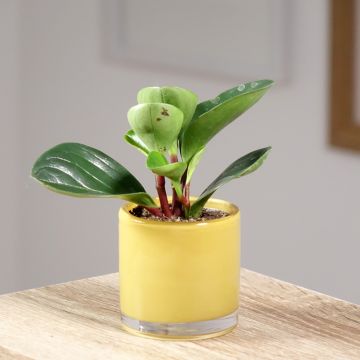
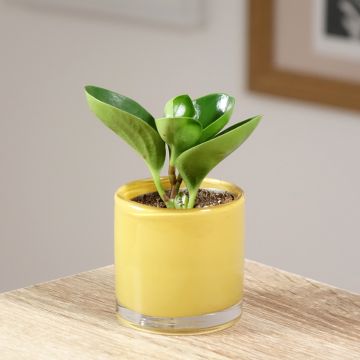
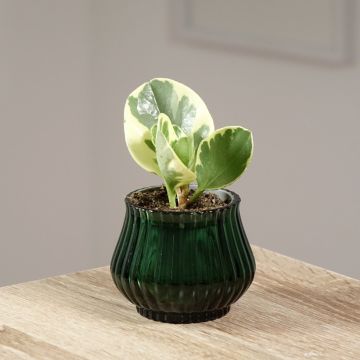
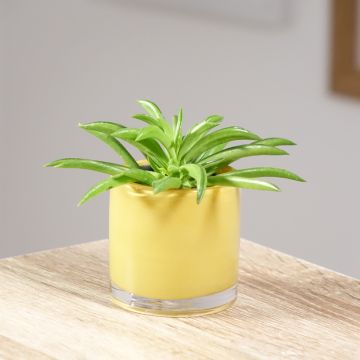
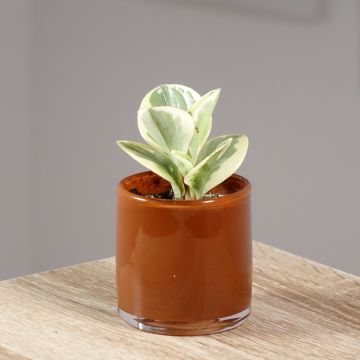
Peperomia 'Pepperspot' belongs to the Piperaceae family. It is an ornamental cultivar, linked according to sources to Peperomia prostrata or to Peperomia rotundifolia, two species native to the tropical forests of Central and South America. In the wild, many peperomias live in warm, shaded undergrowth, sometimes as small epiphytes on trunks or as groundcover in the leaf litter layer.
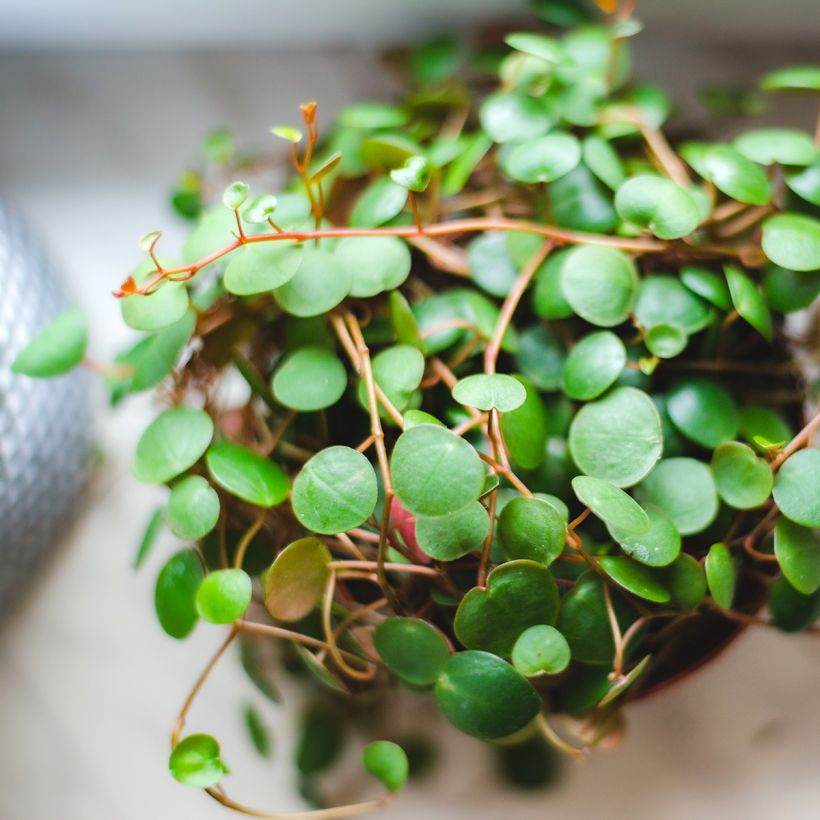
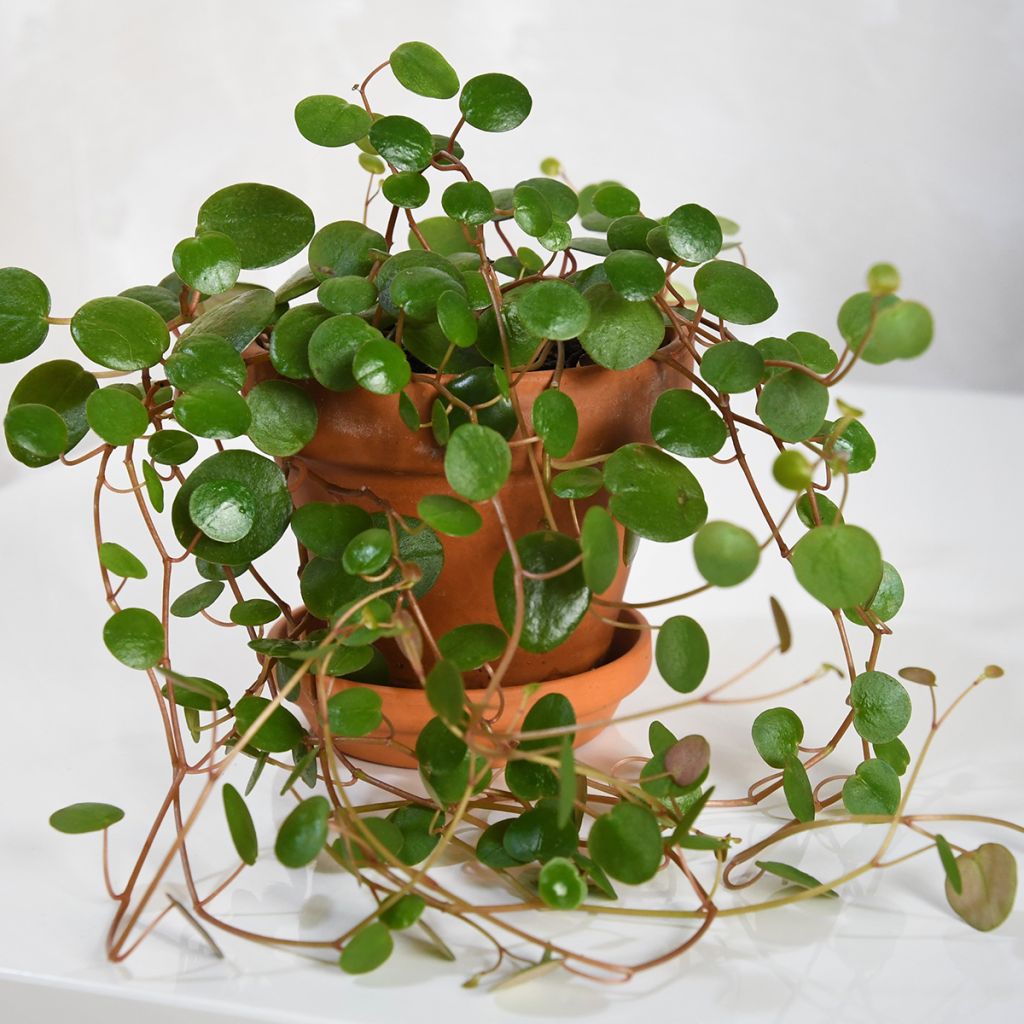
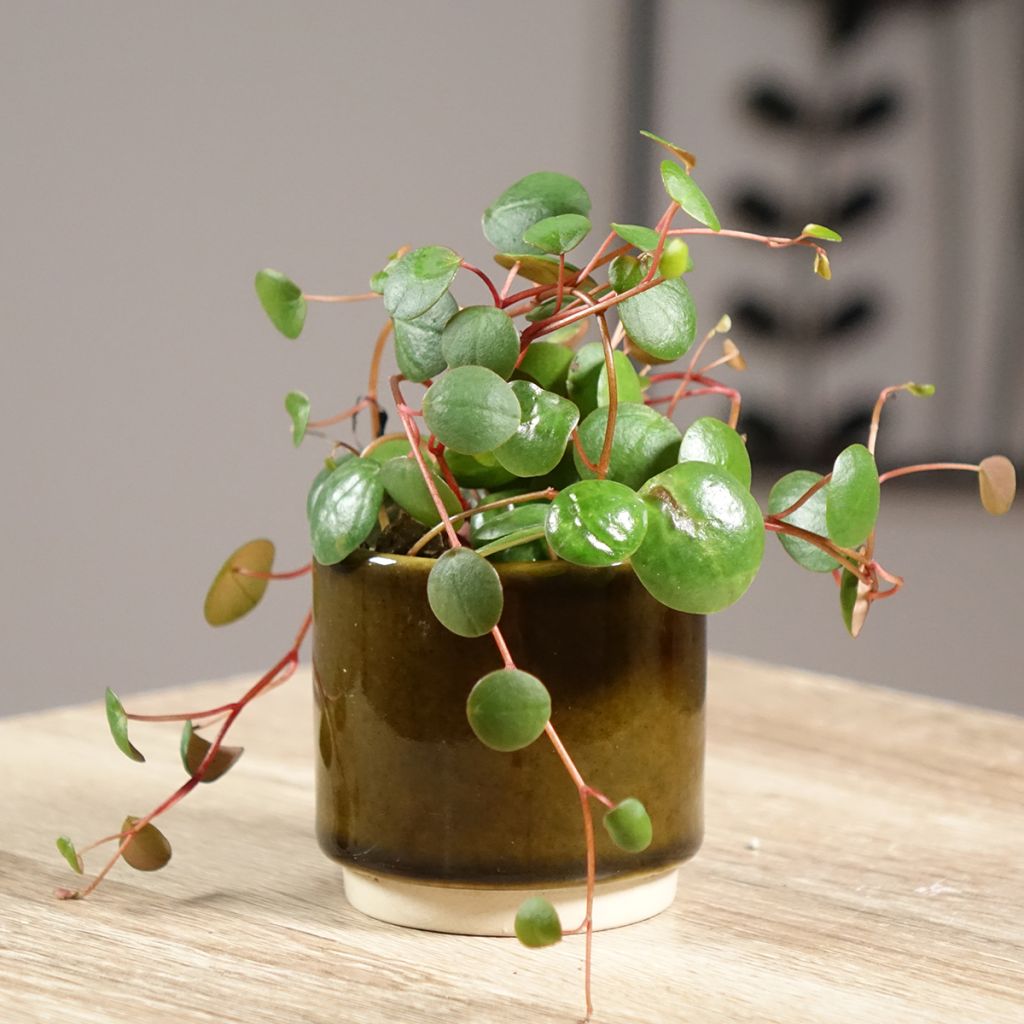
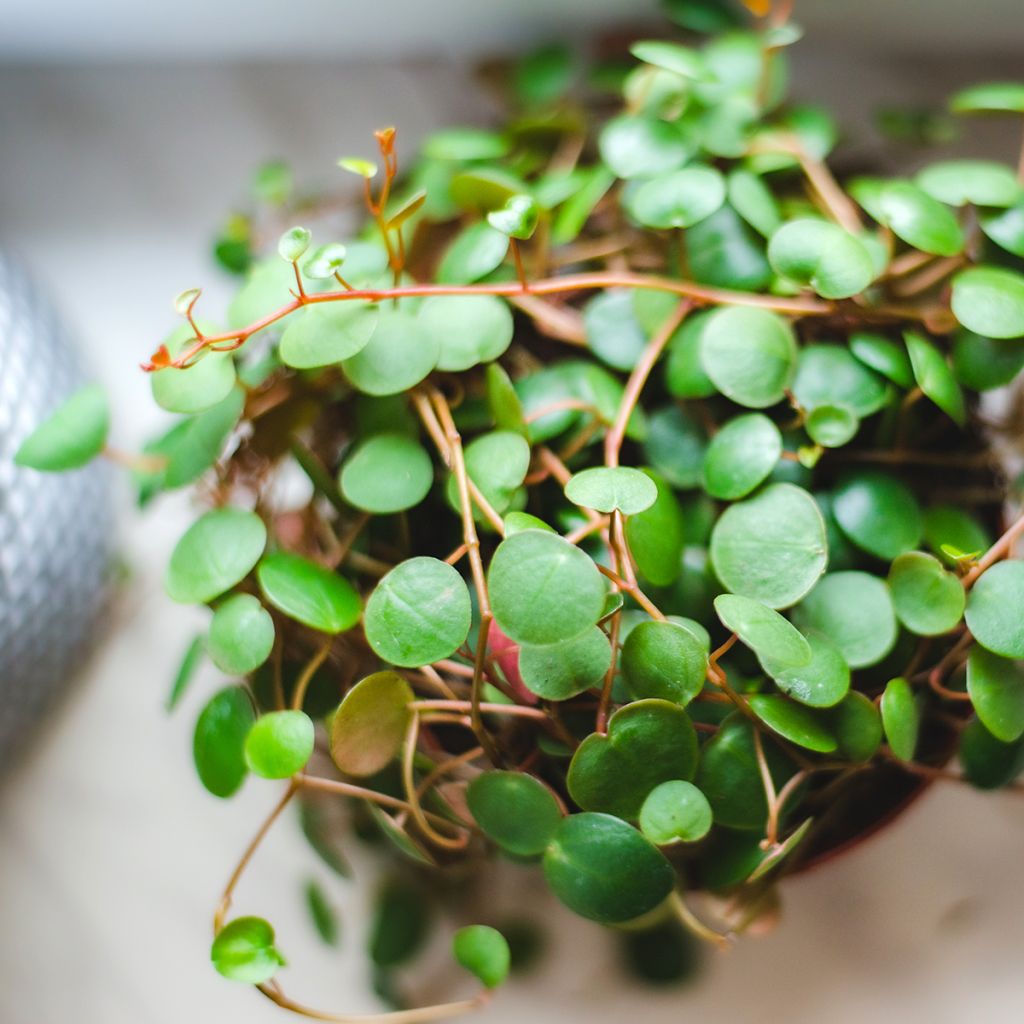
It is a perennial with evergreen foliage, of moderate growth, forming a clump from which long, flexible, slender, reddish-brown tinted stems emerge. The plant reaches 15 to 25 cm in height, while its 40 to 60 cm long stems trail from the pot. The leaves, alternate, almost round to slightly ovate, measure 0.8 to 1.5 cm in diameter. They are fleshy, smooth, with a dark glossy green upper surface and a reverse side tinted red to bronze reminiscent of the stem colour.
When the plant is well-established, it produces slender, upright inflorescences. These are small, narrow spikes, pale green to creamy white, appearing mainly in spring or summer. They remain discreet, as the plant is primarily grown for its decorative foliage. The stems root easily when in contact with a light, moist substrate, allowing you to fill out the pot or propagate the plant with a few segments.
This variety appreciates bright light without direct sun, a temperate environment between 18 and 24 °C, and air that is neither too dry nor saturated. Conditions that can be achieved in a living room, office, or bright kitchen. It is fairly simple to grow, provided you allow the surface of the substrate to dry out between waterings and avoid cold draughts.
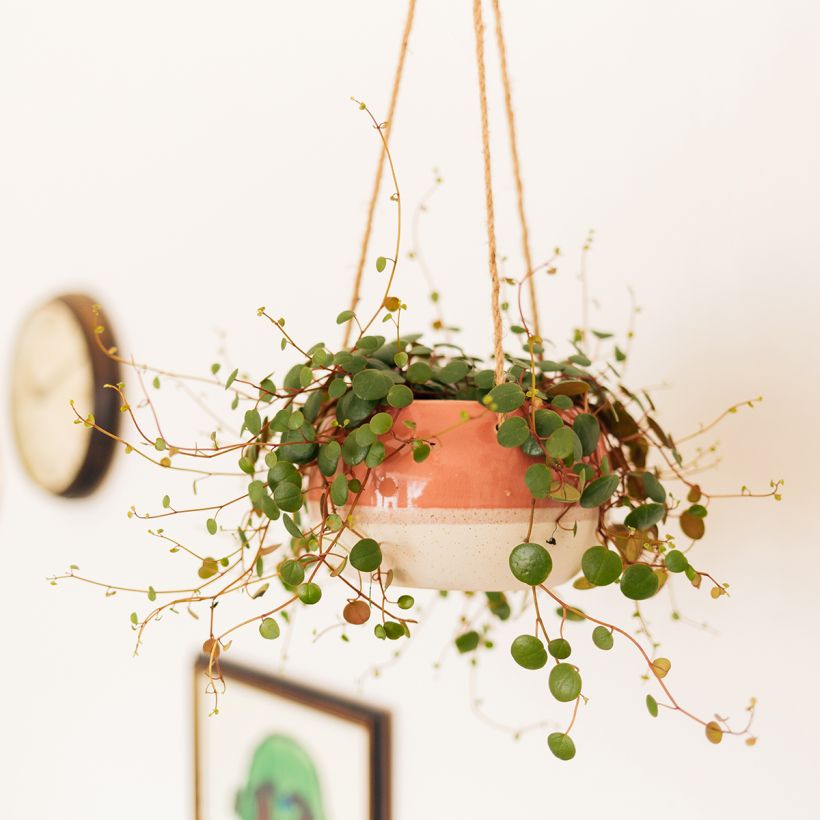
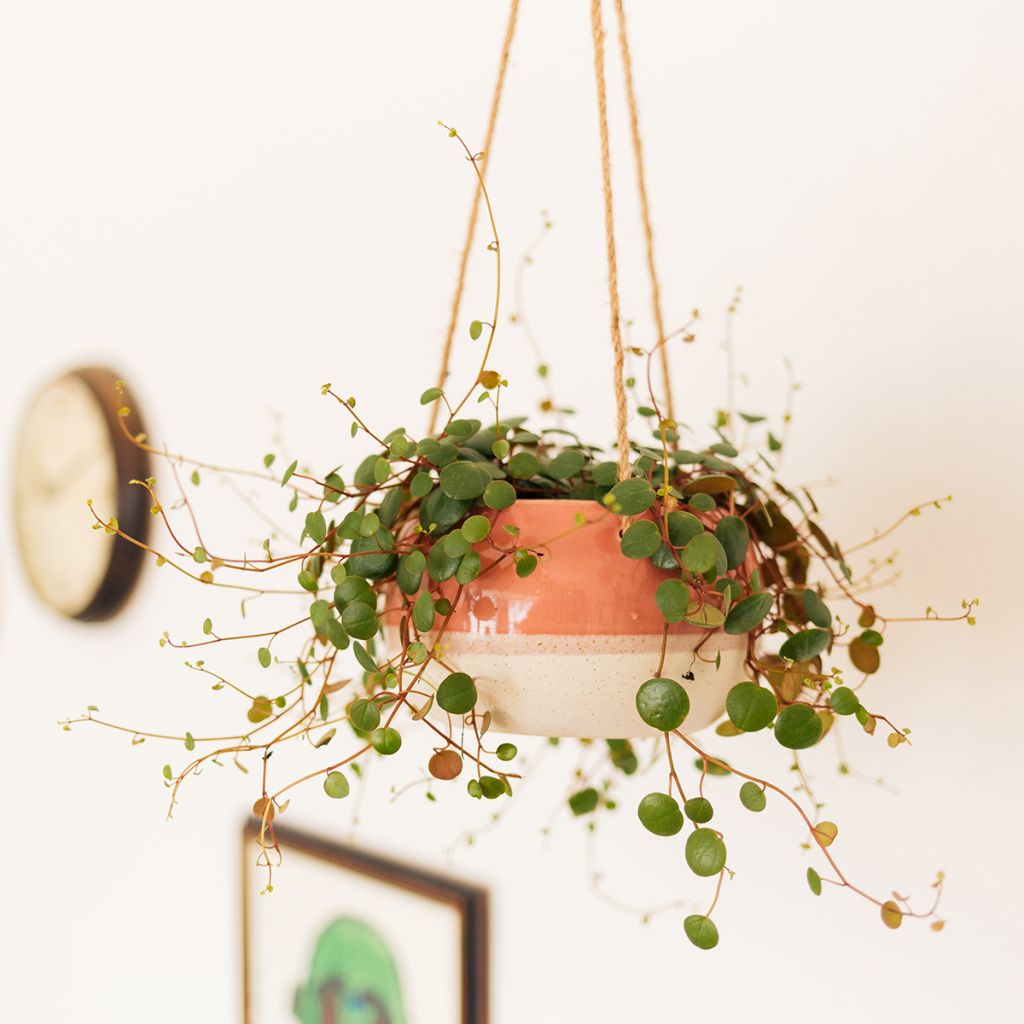
It thrives particularly well in a hanging basket, on a high shelf, near a well-lit window, or in a large terrarium where its stems can run and trail naturally.
With its light trailing habit and its very regular small round leaves, Peperomia 'Pepperspot' is perfect for dressing a wall shelf or a hanging basket. It pairs easily with other trailing plants like Ceropegia woodii or a Hoya carnosa 'Tricolor'. It can also be paired with a Rhipsalis or Pilea peperomioides.