





























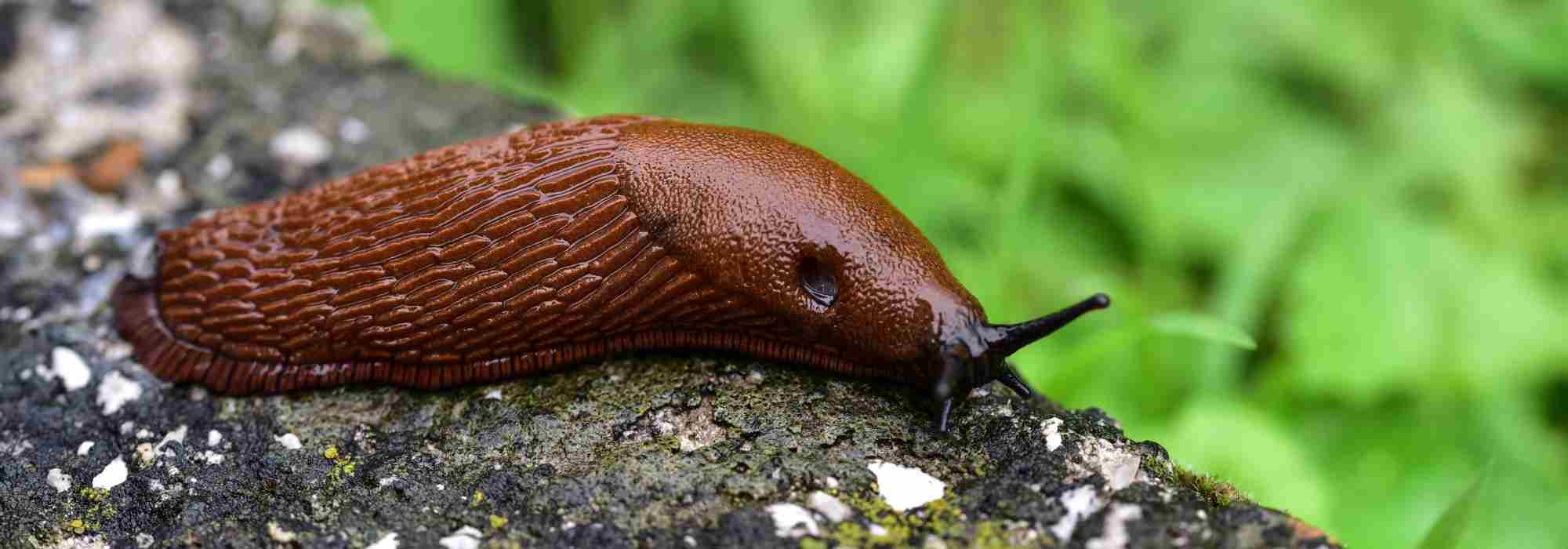
Slugs in the garden: understanding their life cycle to better control them
All you need to know about slug behaviour, reproduction and growth
Contents
Each spring, especially if it is wet, gardeners must contend with slugs that invade vegetable plots and ornamental gardens, wiping out the young shoots. Certainly, if their numbers are limited, the gardener will accept the presence of these gastropods. By contrast, when these slugs turn the vegetable plot into a battlefield, war is declared! However, to better organise the fight against these soft-bodied molluscs, perhaps it would be wise to understand their development, life cycle and biology?
Discover everything you need to know about the life of slugs, from egg-laying to hibernation, to anticipate their activity peaks and implement effective control measures.
What are the different species of garden slugs?
As you regularly walk through your garden or vegetable plot, you’ll soon notice that there are different slugs, varying in size, colour and appetite… Indeed, behind the vernacular name “slugs” are grouped different species of terrestrial gastropods, which belong to different families, among which one can cite the Agriolimacidae, Arionidae, Milacidae, Limacidae… Each family is divided into different genera, the most widespread being the slugs of the genus Limax, Deroceras, Lehmania and Arion.
In our gardens, the most common slugs are:
- The grey slug (Deroceras reticulatum): the most common in gardens. Size ranges from 25 to 30 mm.
- The red slug (Arion rufus): a medium-sized slug, about 15 mm, colour ranging from dark red to orange and black. It has a preference for tubers and roots.
- The garden slug (Arion hortensis): a very common slug as well, grey to black in colour. It measures 30 to 50 mm and likes to hide under stones, dead leaves…
- The southern slug or Spanish slug (Arion lusitanicus): a slug with dark colours, often dark brown, which tends to thrive.
- The leopard slug (Limax maximus): a slug that does not attack garden plants, but rather organic waste, or even other slugs. It is very recognisable by the spots that punctuate its mantle.
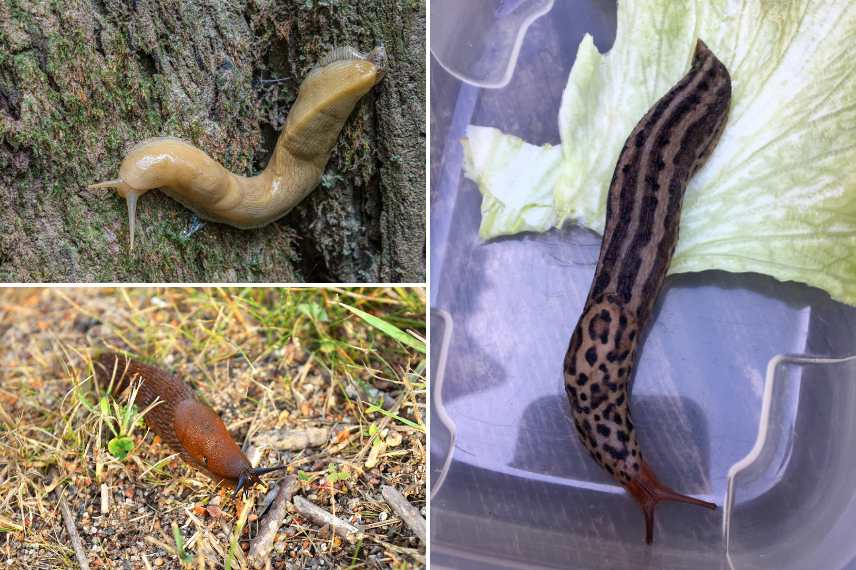
Clockwise from the grey slug, the leopard slug and the southern slug
If each species has its own ecological preferences and development characteristics, their life cycle shows constants, notably related to humidity and mild temperatures.
Most slugs that pose a problem in the garden are hermaphrodites, meaning that they possess both male and female reproductive organs. This allows them to mate with any adult individual, greatly increasing their reproductive potential and their spread!
A climate-related activity
The life cycle of slugs is dictated by weather conditions. Humidity is their main driver. Without mucus, they cannot move or feed. Their activity is therefore maximal during humid nights, after rain or in cloudy weather, especially in spring and autumn. Conversely, hot, dry weather or severe cold greatly limit their movements. During hot summers, they enter aestivation and bury themselves deeply in the soil or under stones. In winter, they slow their metabolism or overwinter, depending on their stage and species.
It should be noted that these periods of dormancy do not signify the total absence of slugs, but a temporary slowdown. Buried eggs remain protected and can hatch as soon as conditions become favourable again. Thus, rainfall in April or September can trigger mass emergence in a few days.
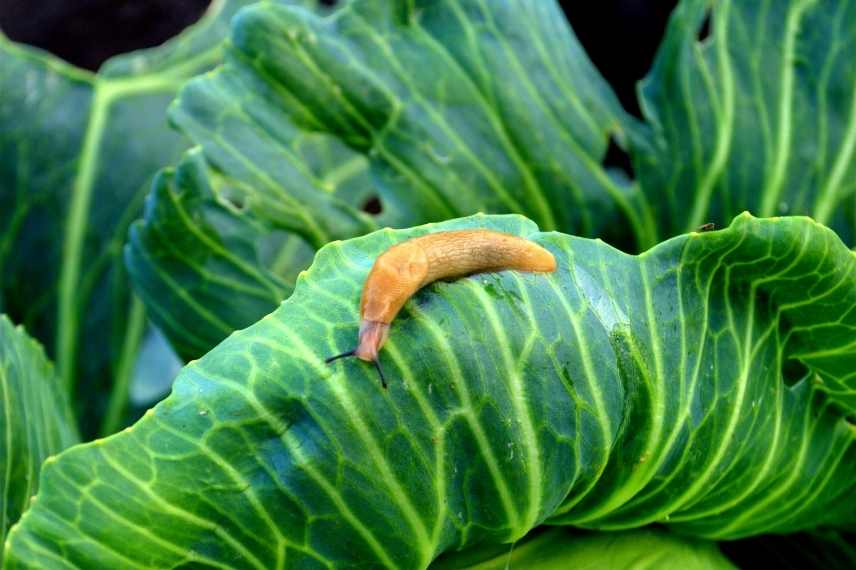
The life cycle of slugs is dictated by weather conditions
What is the life cycle of slugs?
The life cycle of slugs generally lasts a full year. It begins with egg-laying, which occurs at several times during the year depending on climate conditions, particularly in autumn and spring. Female slugs lay translucent spherical eggs, in small clusters of 10 to 50 eggs, hidden in cool, protected places: under boards, stones, dead leaves or in cracks in the soil. A single individual can produce between 200 and 400 eggs per year, or more in the most prolific species, such as slugs of the genus Arion.
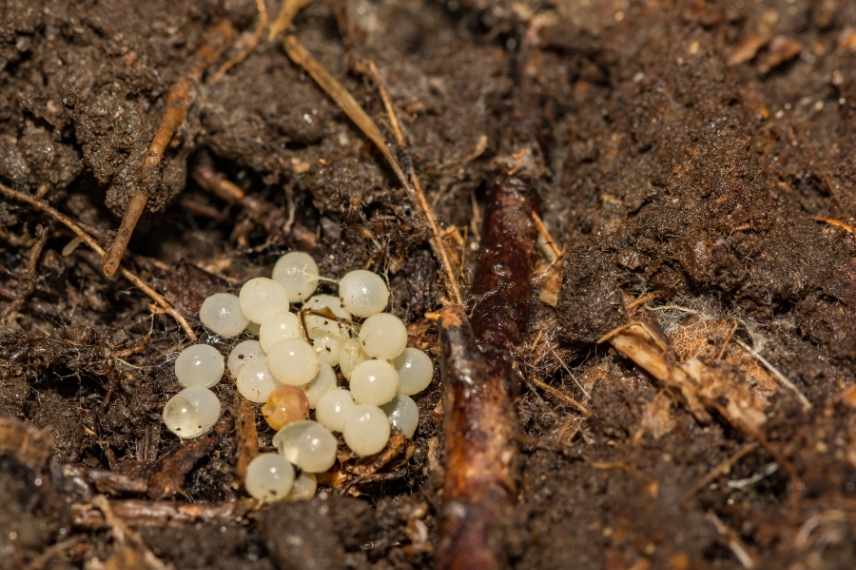
Slug eggs
Hatching occurs after 10 to 30 days, depending on temperature and humidity. Young slugs, independent from birth, are already voracious. However, at this juvenile stage, they are very sensitive to drying out and to predators. Their development is gradual: they moult, grow, and reach ripeness after 2 to 5 months.
Adults are particularly active during periods of high humidity and temperatures between 5 and 20°C. They usually mate at night or at dusk. In autumn, a second wave of egg-laying allows the species to overwinter. The eggs laid during this period can withstand temperatures near 0°C. Adults, for their part, seek deep shelters or die off according to conditions. Some species overwinter as juveniles or adults in dormancy.
A life cycle that makes their regulation difficult
Their biology makes slugs particularly resilient. On the one hand, their ability to lay eggs in inaccessible shelters makes detection difficult. On the other hand, cross-fertilisation or self-fertilisation allows rapid recolonisation, even from a small number of individuals. Moreover, their mucus enables them to move across temporarily dry surfaces, to climb pots or canes, and to overcome certain obstacles.
Their nocturnal lifestyle also makes their presence difficult to spot during the day. One can infer their activity from the traces of mucus shiny on the leaves or soil, or from damage to young plants: leaves chewed, stems snapped, cotyledons completely eaten. It is often in the morning that the damage is discovered, without seeing the culprits.
Finally, their hidden development in the soil, especially in the form of eggs or juveniles, allows populations to persist despite occasional interventions.
How to effectively deal with slugs?
Rather than intervening after the damage, a gardener will aim to anticipate the key moments in the slug cycle to limit slug pressure. Spring and autumn are critical periods, so act accordingly:
- Between March and April: at the start of spring, after the first rains, eggs hatch in large numbers. This is when preventive measures are essential. We can then install and lift boards, tiles and all refugia that serve as shelters and thus traps.
- Between May and June, slug activity slows with the warmer weather arriving. Nevertheless, we continue inspecting the beds and borders, or plots in the vegetable garden.
- At the end of summer, in September, it is essential to prevent egg laying and disrupt refugia in which eggs could overwinter. This is why it is absolutely necessary to remove all items that could retain moisture such as pots, tiles, fallen leaves… and limit overly dense vegetation.
- In winter, coarse mulching or tilling of the soil exposes the eggs to desiccation or to predators.
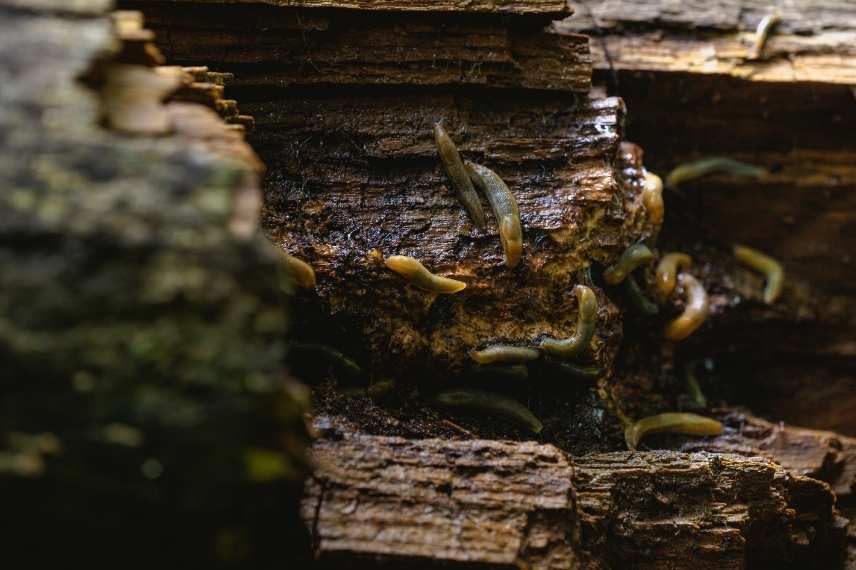
Juvenile slugs
Beyond these preventive methods, direct control measures should also be adopted. Eggs can be destroyed mechanically or by exposure to frost. Juveniles are sensitive to traps and natural barriers, to Ferramol or to natural predators. Adults, more resilient, can be eliminated manually or attracted by natural baits.
Biological control agents to be integrated into slug-control strategies
Many predators naturally help regulate slugs. Hedgehogs, slow-worms, ground beetles, rove beetles, toads and insectivorous birds eat eggs, juveniles and adults. By encouraging their presence in the garden through refuge areas such as piles of brushwood or stones, hedges, shelters or water sources, we introduce a complementary ecological regulation.
It is also possible to use a biological method: entomopathogenic nematodes (notably Phasmarhabditis hermaphrodita) target slugs in the soil, provided that moisture is sufficient. These microscopic worms penetrate the bodies of slugs and cause their death within a few days. They are particularly effective in spring or autumn, on young slugs.
For more information:
- Subscribe!
- Contents
Comments