





























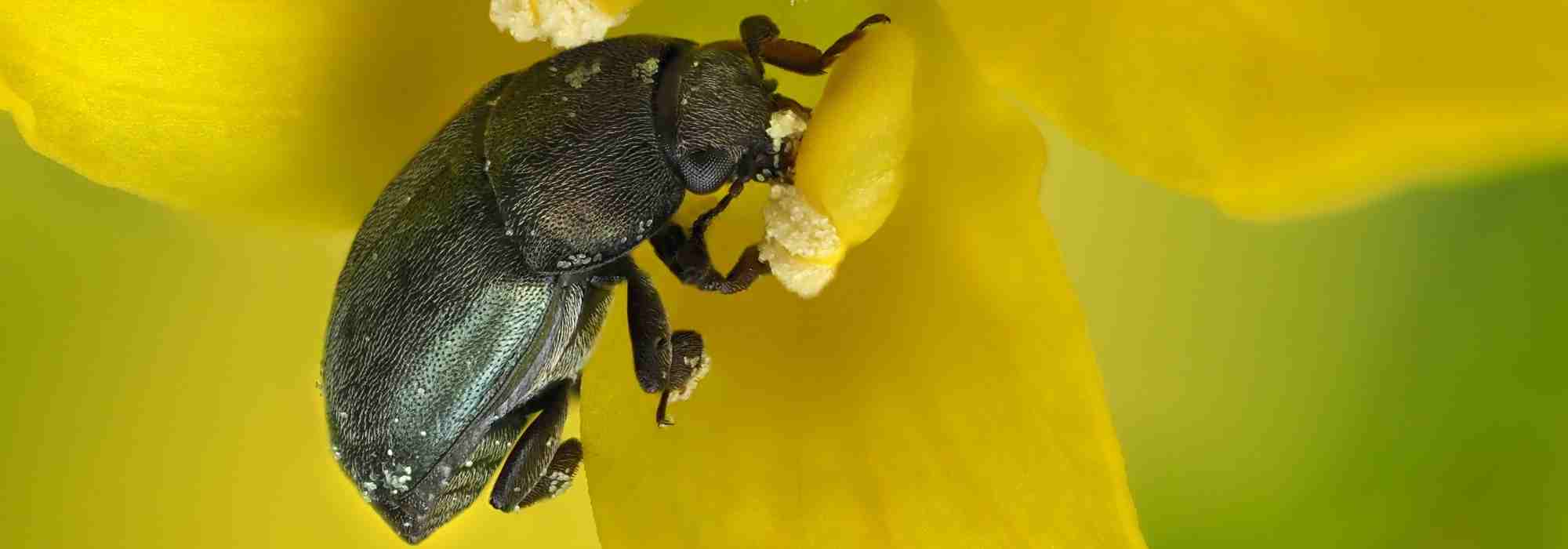
Rose pollen beetle: how to protect our roses from these pests?
Identification, prevention and treatment
Contents
Roses are among the plants that can be found in almost every garden. Among their great diversity of flower forms, colours, fragrances or silhouettes, you will surely find a variety that will make your heart skip a beat.
If most of them are easy to grow, they can however be susceptible to several fungal diseases (caused by fungi), but also victims of parasitic pests. The rose blossom beetle is one of them. Let’s see how to identify it, prevent it, and keep roses blooming throughout the season.
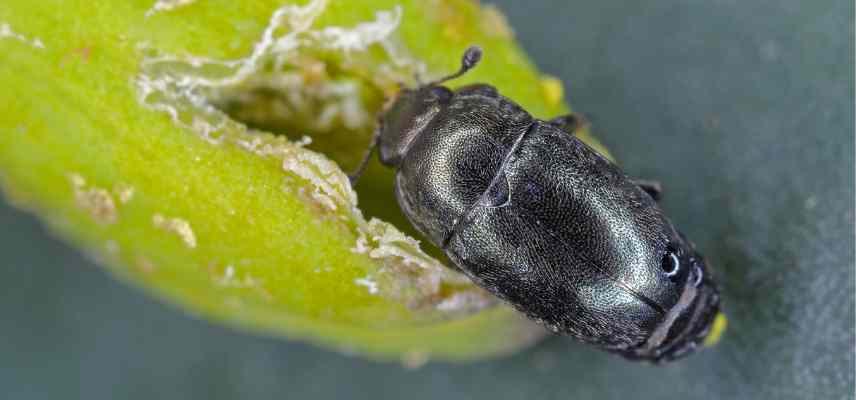
Meligethe aeneus

Identifying the rose pollen beetle
The first step to keeping beautiful roses is knowing how to identify the main pests. Aphids, scale insects, sawfly larvae, or other caterpillars are fairly easy to identify. But A small parasitic insect, formerly mainly associated with rapeseed flowers and Brassicaceae in general, is now appearing in our ornamental gardens: the Meligethe aeneus. It particularly targets our beautiful roses. It is the warm, pale colours—such as yellow or orange—that attract this little insect most.
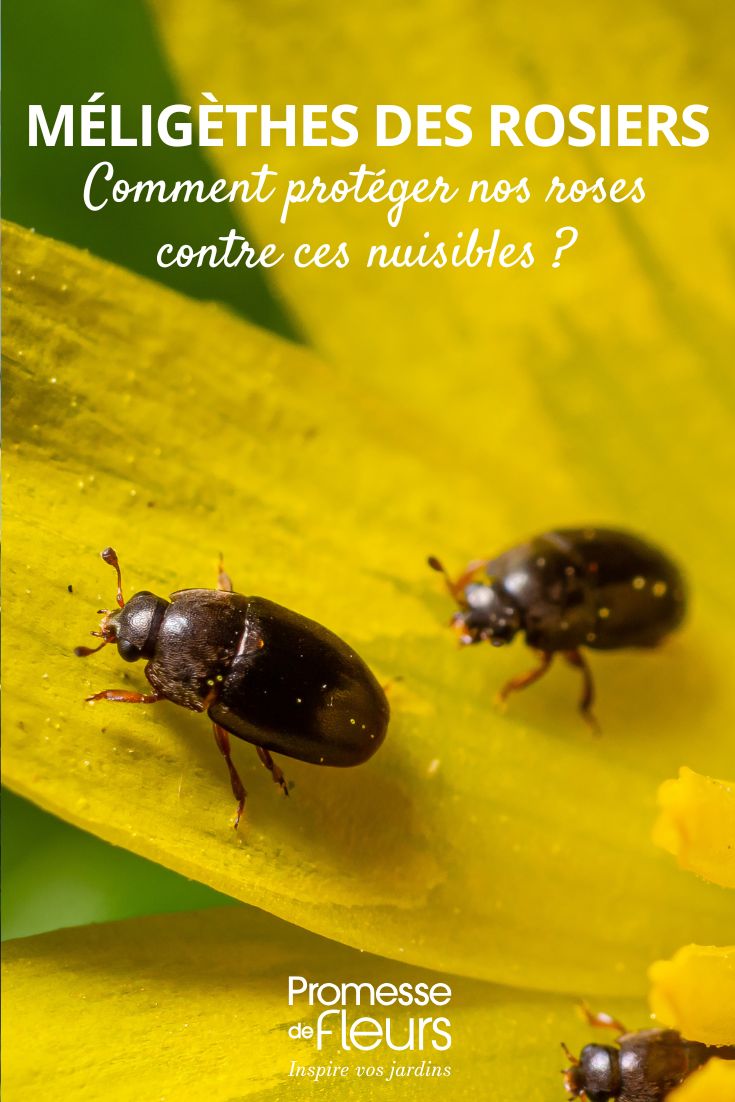
It is a small, shiny black beetle with blue-metallic reflections on its back, which bears club-shaped antennae. It measures less than 3 mm in length. The larvae, for their part, measure about 4 mm, with a black head, a flattened yellow body leaning towards white, punctuated by a few brown spots, and three pairs of dark legs.
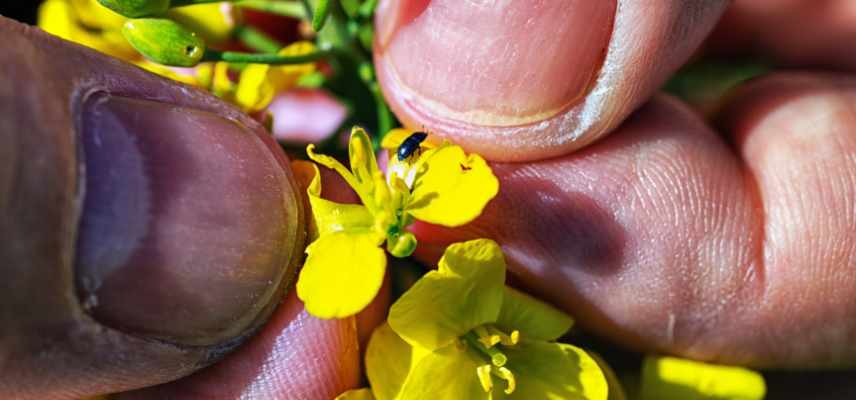
Meligethes is frequently found in rapeseed fields
As temperatures ease at the start of spring, Meligethes may appear. The female can lay more than 200 eggs in the flower buds of the plants. The larvae will then hatch within a few days, and will feed on pollen as well. By the end of spring, they drop to the ground to continue developing into adults, then carry on their life cycle through summer for a second generation. Meligethes activity then declines until the following spring.
Read also
Diseases of rosesSymptoms to look out for on roses
These pests are often present in numbers on the flowers on rose bushes. They feed on the pollen of roses, which they perforate from the bud stage to reach the precious pistil. They can also nibble the petals. All of this prevents the proper development of the flowers and can even cause them to fall off. Roses that are already open suffer far less damage than Meligethes can cause, since the pollen is more easily accessible.
If this little insect does not threaten the survival of a rose bush, it can therefore significantly affect its flowering. A small number of individuals may not necessarily pose problems, but an infestation can cause cosmetic damage.
How can you prevent infestations by these tiny pests?
To limit the risk of infestation, start by improving the growing conditions of your roses, whether in pots or in the ground. Healthy plants, whose needs are met, will be less susceptible to pest attacks or diseases. Therefore, give your roses a soil rich in organic matter, but well-drained (watering or rainwater should not pool). Most roses prefer fresh substrates, i.e., never completely dry. They should receive a few hours of sun each day, but avoid the strongest, most intense sun, especially in the south of France. Choose spots sheltered from prevailing winds. At the end of the season, prune according to the variety of rose, to remove damaged branches and give the plant a neat silhouette.
Next, encourage the presence of natural predators of Meligethes, such as spiders, ground beetles and rove beetles. Although it is obviously impossible to choose exactly which animal species to welcome in your garden, a few actions will help its biodiversity and overall balance.
- Ban all chemical products, soil pollutants and those harmful to biodiversity. Biological insecticides should also be used sparingly: they have an impact too and, in quantity, can contribute to disrupting the soil. Remember that the aim is always to reduce pest populations, but never to eradicate them completely. Every living being has a place in the food chain, and in the absence of food, predators cannot establish themselves sustainably in a garden.
- Install various shelters for wildlife: insect hotels, nesting boxes, piles of wood, piles of stones, bat boxes, etc.
- Provide water stations, especially in summer and winter. Remember to refresh the water regularly and place a smooth pebble at the bottom of the container to prevent drowning.
- Cultivate melliferous plants, but also leave space for wild and native plants if possible. Dandelions and buttercups, for example, can certainly serve as trap plants to attract pollen beetles, diverting them away from the roses.
- Also consider practising a carefully planned or differentiated mowing regime, to always provide a protected area for garden wildlife.
To learn more, discover our article “Biological control in the garden: attract beneficials to protect your crops naturally”.
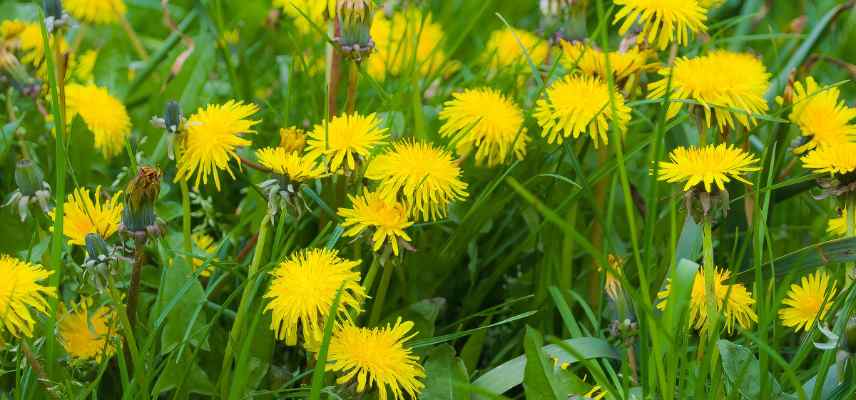
One of the strategies is to let a few yellow flowers grow, such as dandelions
In prevention, you can also favour dark-coloured roses, which would be less attractive to pollen beetles. Conversely, avoid yellow-flowered or light-coloured roses.
Read also
Roses: aphids and other pestsWhat natural treatments are there for rose spider mites?
As always, regular observation is the first port of call for quickly identifying the presence of a pest and for managing its development more effectively.
There is no effective insecticidal product against Meligethes. In case of an attack, you can set a basin of water beneath the rose bush. Then shake the plant to dislodge the pests, which will drown in the water.
There are also chromatic traps (yellow in colour in this case), which attract insects and trap them. But they are not selective, and many other tiny living beings can also end up trapped, such as precious pollinators, who are also attracted by the colour yellow. This type of solution is therefore best used indoors, in a conservatory or under glass.
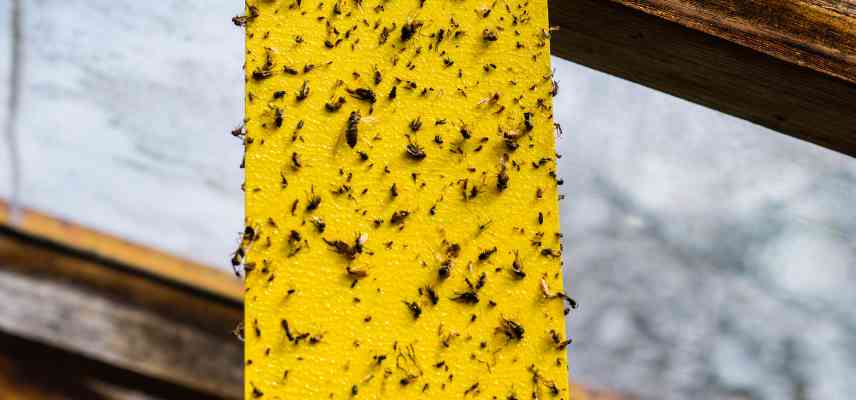
Chromatic traps should be used with great care
- Subscribe!
- Contents
Comments