





























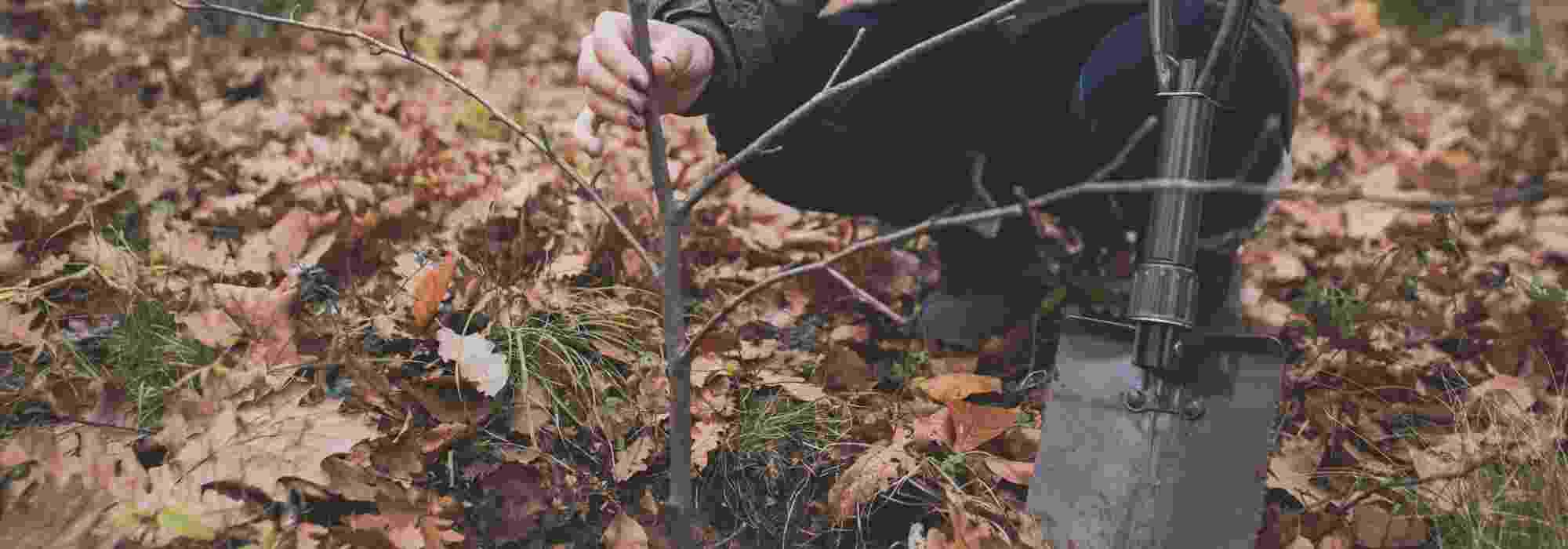
Planting on Saint Catherine's Day: Mistakes to avoid
How to plant successfully in autumn?
Contents
If there’s a French proverb known to all, and not only to gardeners, it’s certainly the one about St Catherine’s Day! “On St Catherine’s Day, all wood takes root”have we been told since the Middle Ages.” This means that the 25th of November would be the ideal date for planting. This proverb, while still true in its broad principle of autumn planting, is not without nuances, and the know-how involved in the act.
Let’s take a closer look at this gardening maxim to avoid getting it wrong!
 Leaves are falling! It’s time to plant…

Sacrosanct, the calendar?
First of all, if the proverb tells us this with such confidence for ages, let’s still be realistic! 25 November is only a reference date for gardeners.
End of November actually coincides with that time of year when nature takes a pause. In gardening, it’s more accurate to say that trees, shrubs (and perennials) go into dormancy. The sap descends, the leaves fall, the days shorten and the light dwindles… It’s the moment when a planting has every chance of a good start, with plants in conditions conducive to root growth (they have nothing else to do!) with soil not too cold and rain on the way. The approaching winter cold is also beneficial for the establishment of the root system of the plants and for future flowering.
The origin of this saying actually concerns the propagation by cuttings of bare wood, the twigs devoid of their leaves. We therefore agree on this late period, the end of November, for planting plants in bare roots, and in pots, including many roses, fruit trees and trees and shrubs.
This popular saying therefore indicates a planting period, and not a date to take literally. And many specialists even agree on this date as a hard deadline. In short, the period from October to March is the time to plant just about everything. Virginie gives you a few examples (and counter-examples) in On Saint Catherine’s Day, does all wood really take root?
If it freezes hard or if a wind blows strong enough to knock a bull’s horns off, we obviously put planting projects off until later. If torrential rain has fallen, we will wait as well. The gardening rule, whatever the type of planting (tree, shrub, fruit tree, conifer, perennial, bulb…) is not to plant during frost, nor during heatwaves, nor when the soils are waterlogged. Saint Catherine must watch out!
Read also
The best times to plantPlanting frost-tender plants
I explain it in more detail in The best times to plant: the autumn window is the ideal period for trees, shrubs and other hardy perennials with deciduous foliage. The Saint Catherine’s Day proverb is even more restrictive, inviting us to plant the “wood”, namely hardwood cuttings and all plants with bare roots.
Wait through winter, then early spring, to tackle planting all exotic or Mediterranean plants, often called mild-climate plants (many of which are evergreen) which would suffer too much from their first winter given their low hardiness.
Neglecting soil and plant preparation
Step 1, and the most important in gardening, is a bit like a painter who spends a long time preparing their undercoats before painting. For good results, it’s at planting that everything hinges… or almost!
Size of planting hole differs somewhat depending on the type of plant (acidophilous plants with shallow roots require a hole wider than deep), and of course on the size of the plant: a peony plant will be smaller than a conifer or a rose with a pivoting root system. But it is now recommended to not dig too deep. However, you should thoroughly loosen the area to accommodate the plant in a loose environment.
The important thing is to look at the plant’s roots and prepare them: cut away tangled, twisted or overly knotted roots: new roots and rootlets will appear, making anchorage much easier.
Finally, remove as much soil as possible from the pot around the roots: it is often not appropriate, being often very light. Replacing it with a good mix of garden soil + potting compost + compost will give the roots a better chance to explore the site easily and quickly.
Forgetting the pralinage coating
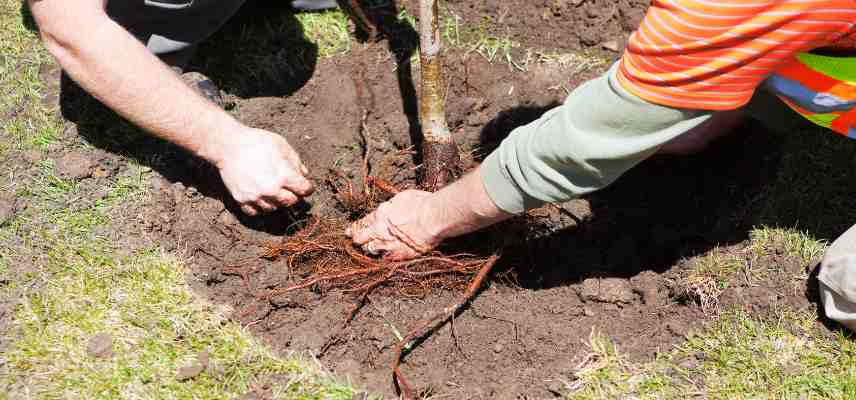
Yes, the soil is well suited to receiving bare roots… but that does not mean you should forget an important step when planting: the pralinage of bare-root plants. In practice, bare roots are coated with a muddy mixture that will adhere well to the roots, in order to rehydrate them and to help them establish.
This mixture can be either a mix of soil + manure + water or garden clay soil + water. Some brands sell ready-to-use pralinage coatings, usually enriched with compost and mycorrhizas.
This pralinage should be done just at planting, without waiting for the mixture to dry, and is essential if you have to wait a few days before planting due to unfavourable weather conditions.
→ For more information at: Coating the roots of trees and shrubs.

Burying the collar too deeply
A too common planting mistake! The collar, this hinge-like zone between the roots and the aerial part, should always remain visible, above soil level. To check its position, a large branch or the straight handle of a tool makes an ideal marker: the root ball should come up to soil level. If the collar is pressed too far down, add soil to free it. Neglecting this step often jeopardises the establishment of the tree, especially in heavy soils.
Note: for bushes and fruit trees, the graft point (this visible swelling at the base, or higher up for forms on a stem) must, indeed, always remain a few centimetres above the soil. Covering it with soil would risk provoking the appearance of wild shoots, identifiable by their colour or flowering that differs from that of the grafted plant. This should be taken into account in harsher climates.
Over-compacting the soil
Once the planting hole has been filled with the soil set aside, we sometimes tend to compact it too much around the base. No need to do this; a light firming by hand around the base of the tree, rose bush or fruit tree is effective and helps to anchor the plant securely. Too much compaction makes the soil denser, which is something to avoid after the soil has just been tilled.
Coating the roots and preparing the soil well before planting are simple steps that guarantee success. The elimination of air pockets will simply be achieved by a good watering (see next point).
Skipping watering
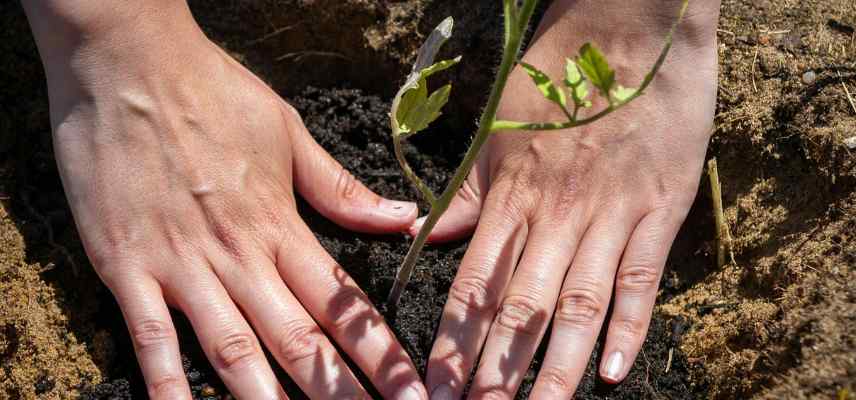
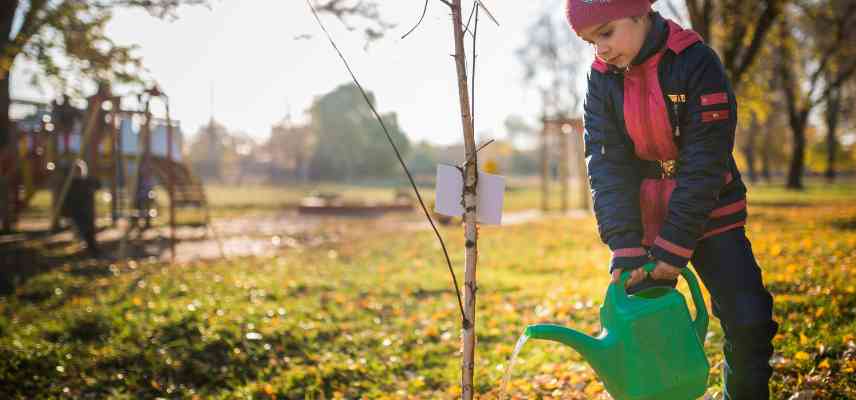
Just because it’s autumn, and rain is usually forecast, doesn’t mean you shouldn’t water during this season when you plant. Watering finalises the planting by enabling the roots to take a good hold in the soil, while it eliminates the last pockets of air.
Watering should be an automatic step as soon as the tree/bush/rose is planted in the ground, and, to reiterate, it should be done in any season. To this end, a small planting basin around it is created to allow the water to penetrate well. The amount varies with the volume of soil dug, but an average 10-litre watering can is recommended for healthy specimens. Water it in several applications, allowing time for the soil to absorb.
Forgetting to stake young trees
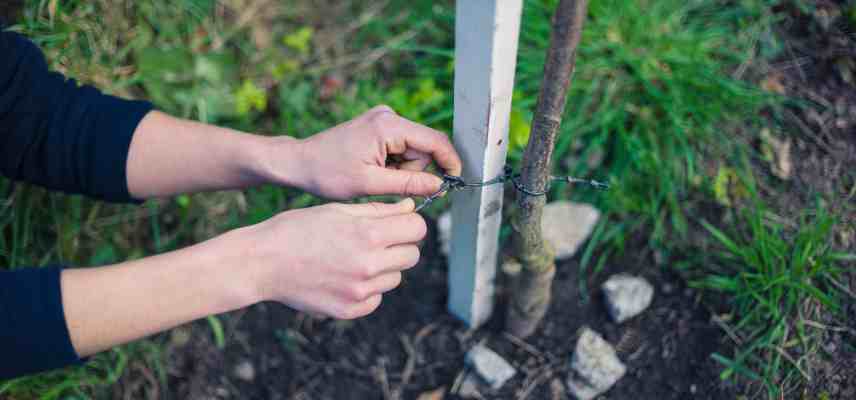
Everything depends on how windy your region is and on the location of a tree or bush in the garden, as staking isn’t necessarily standard practice. But we always recommend staking a young tree, tying the trunk to its stake at several points, without tightening. Place a protective layer (jute or moss) between the tie and the trunk to protect the bark.
My tip… or rather Didier Willery’s, who urges us not to stake too hard, for a tree that no longer moves won’t root properly! I also really like Stéphane Marie*’s technique of using old stockings (soft and sturdy enough) as ties.
→ See also: How to stake a fruit tree?
*He is the French most famous gardener on TV
Not protecting young plants from cold or wind
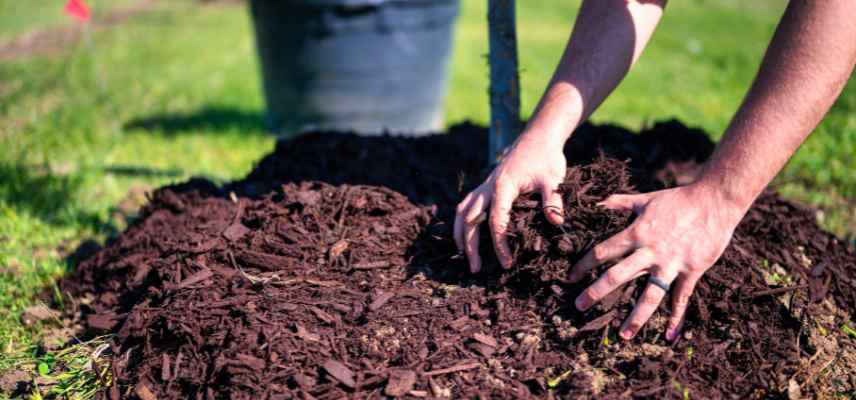
Once planted, mulching is another important step for the plant. This will help it withstand winds that can dry the soil, and the cold that follows. An organic mulch is recommended: it helps enrich the soil and improve its structure, while protecting the base of the tree or bush. This is especially important for plants at the edge of hardiness!
Find all the details on the best practices to follow in How to lay mulch properly?
Pruning or fertilising too early
One final tip, but an important one: planting, even when done to the letter, is, like pruning, a moment of stress for the tree or bush. Being placed in a new environment — soil, light and, a fortiori, winds — is a significant change.
Of course, at planting, one can tip-prune a few branches without compromising its good regrowth, and this is even advised for deciduous forms. But we give the young plant, whatever it may be, time to recover and we wait until spring to resume any fertilisation or substantial pruning.
- Subscribe!
- Contents
Comments