





























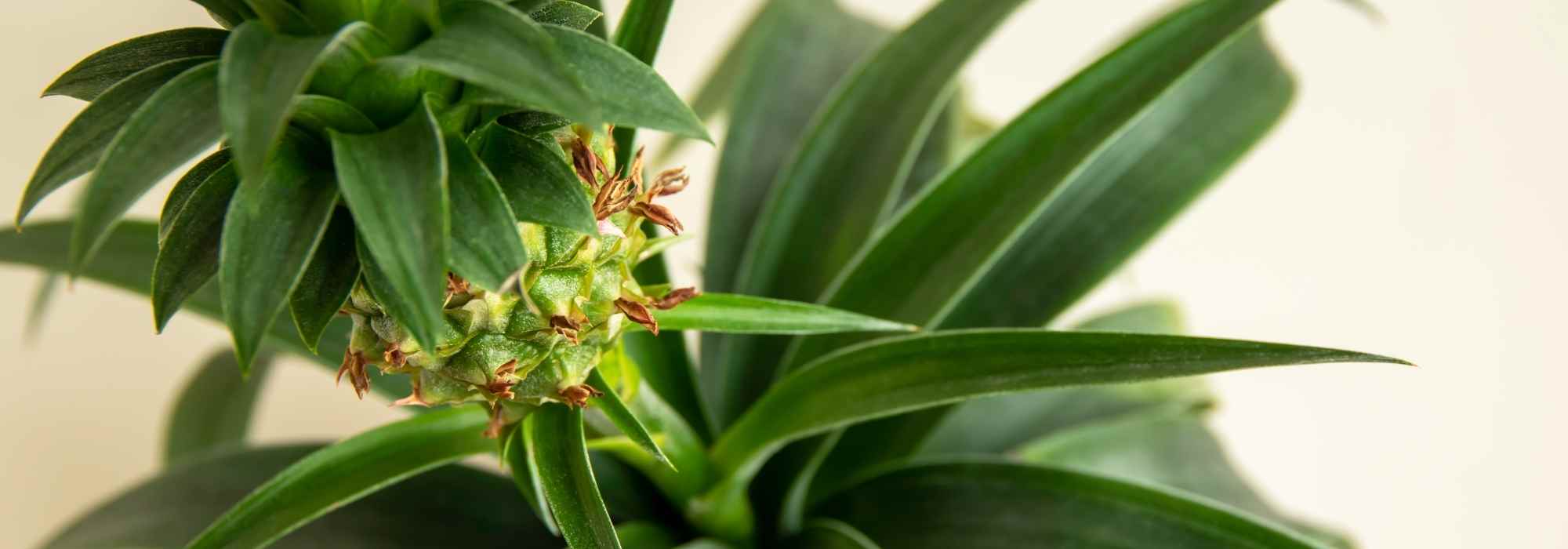
Pineapple diseases and parasites: how to identify and treat them?
Our tips to look after your pineapple plant
Contents
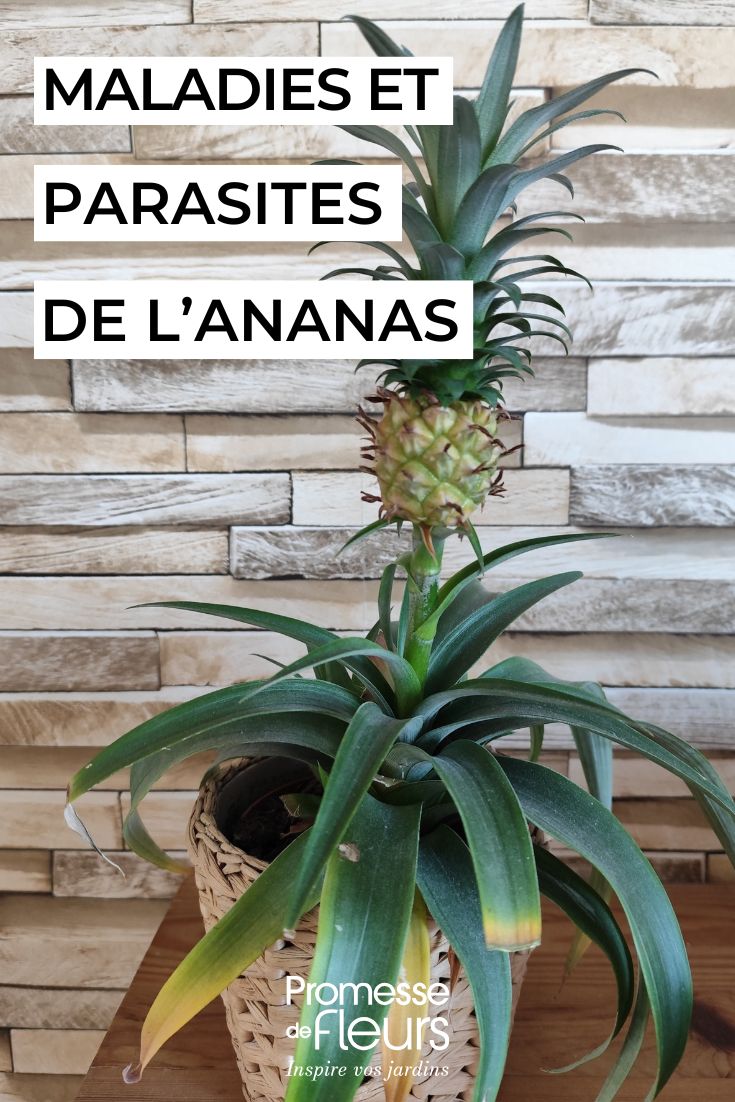
To bring a touch of exotica to your home, the pineapple (Ananas comosus) is the ideal potted plant. With its linear, thick and fleshy leaves, it is a robust indoor plant. However, certain environmental factors, cultivation errors and improper care can promote the appearance of various diseases and parasitic infestations.
Discover how to identify the main diseases and pests that can affect the pineapple in a pot, by their symptoms, and learn to treat them naturally to keep your plant healthy.
Further reading: Pineapple: planting, growing and propagating.

What diseases affect pineapple plants grown in pots?
The pineapple, like most indoor potted plants, is more prone to cultivation mistakes or vegetative accidents than to common diseases encountered in the garden. In fact, it is often poor growing conditions that cause root rot or discolouration of the leaves. These symptoms appear most often in winter, when growing conditions are most unfavourable for the plant.
Root rot and basal rot
Symptoms
Leaves yellow and then brown, the plant appears to wilt, and the roots become soft and brownish, almost black. This rot also manifests as necrosis on the leaves. In the most severe cases, a mouldy odour may be detected.
Causes
Overwatering is the main cause of this disease, associated with a poorly drained substrate. Likewise, water left in the saucer or pot tray frequently precipitates root rot. An atmosphere that is too humid can also favour the development of pathogenic fungi.
Solutions
- Reduce the watering frequency and ensure the pot has adequate drainage holes. Remove any standing water promptly.
- Re-pot the pineapple into a well-draining growing medium, formed of suitable compost, such as orchid potting mix, with sand or perlite. Prior to that, it is advisable to remove damaged, soft, and black roots with a disinfected pruning shear.
- Place your pineapple in a well-ventilated room, with a temperature between 18 and 24 °C.
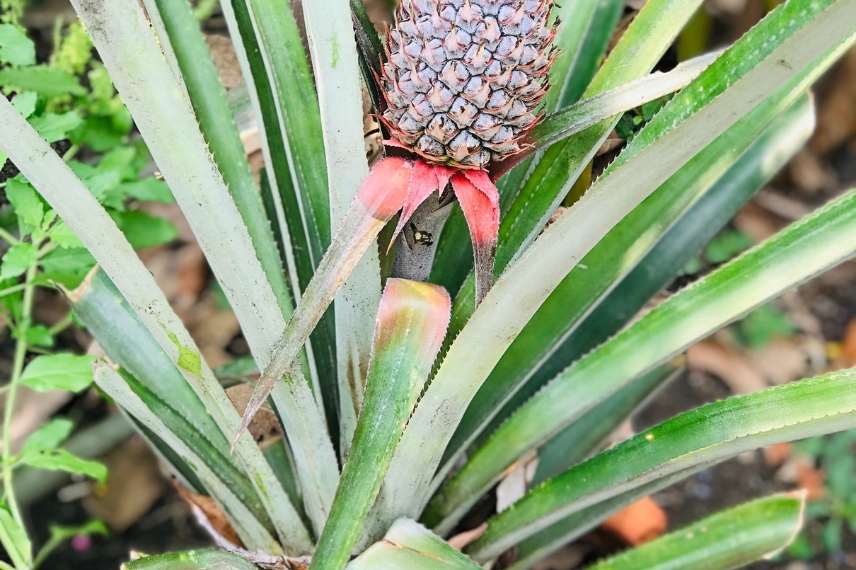 The foliage of the pineapple in a pot can be affected by various growing problems</caption]
Foliage that dries out
Symptoms
Foliage that gradually yellows and then dries out, starting at the edges is often a sign of excessive dry indoor air. This effect intensifies in winter, in heated interiors.
Causes
This condition is caused by air that is too dry and too warm, which results in humidity levels that are too low. This drying-out becomes more pronounced if watering is insufficient.
Solutions
- Place your pineapple plant away from any heat source (radiator, stove and fireplace) but in a bright location with a constant temperature between 18 and 24 °C, away from draughts.
- Place your plant on a bed of clay pebbles generously moistened to increase the humidity.
- Ventilate the room regularly where the pineapple is placed.
- In summer, move the pineapple outdoors, into the garden or onto a balcony, preferably in the morning sun. Day–night temperature differences, good air circulation, and even rain will help keep your plant healthy.
Brown spots on the foliage
Symptoms
Brown spots appear on the foliage, like scorch marks, the leaves lose their natural colour.
Causes
The foliage of your pineapple has certainly been burnt by direct sunlight behind the window. An excess of fertiliser can also cause this phenomenon.
Solutions
- Remove the affected leaves by cutting at the base with a well-disinfected pruning shear.
- Place your pineapple plant in a position with bright, but indirect light. You can also avoid direct sun with a sheer curtain.
- Fertilise with a bromeliad-specific fertiliser, or, if unavailable, an orchid fertiliser, only from March to October, at a rate of once every two to three weeks.
What pests attack pineapple plants?
Without dwelling on an apocalyptic scenario, be aware that a few insects can attack indoor plants, particularly the pineapple plant. These pests are common in winter when growing conditions are not optimal.
Red spider mites
Symptoms
The pineapple plant’s leaves become mottled and yellow. You can also notice the presence of fine webs between the leaves, but the sap-sucking mites that pierce the leaves are sometimes invisible to the naked eye. The leaves may be speckled with tiny white spots.
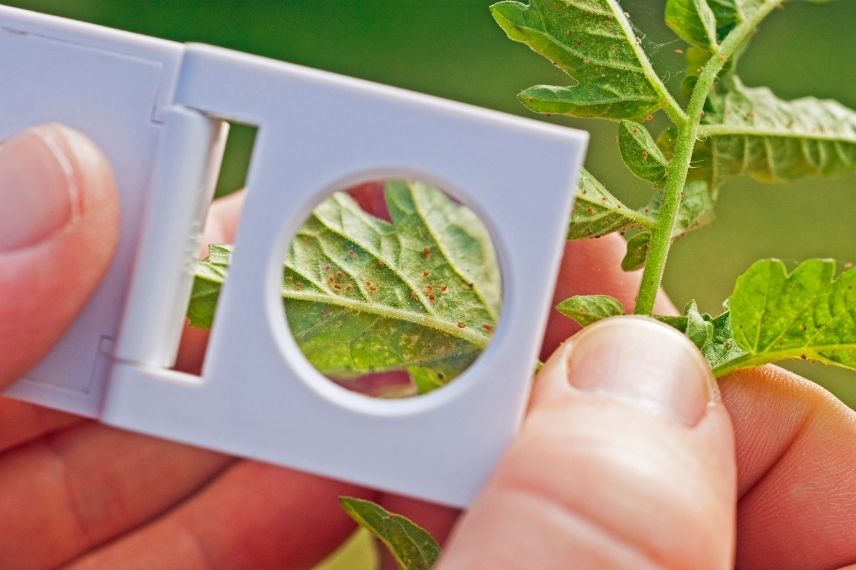
Red spider mites are difficult to see with the naked eye
Causes
An atmosphere that is too warm and dry encourages their proliferation. The mites thrive when the pineapple is kept in a room with a confined, poorly ventilated atmosphere.
Solutions
- Increase ambient humidity by misting the foliage with water and placing your plant on a bed of damp clay pellets.
- Apply a solution based on black soap if the infestation is more severe.
Mealybugs
Symptoms
Mealybugs appear as waxy, sticky and brownish pustules, usually on the underside of the leaves. They are insects enclosed in a shell that suck sap, weaken the plant and can promote the appearance of a black powder, sooty mould. Growth of the plant slows.
Causes
Warm, humid air and a lack of ventilation favour their appearance. A weak plant will be more susceptible to a mealybug infestation. Early action is essential for effective control.
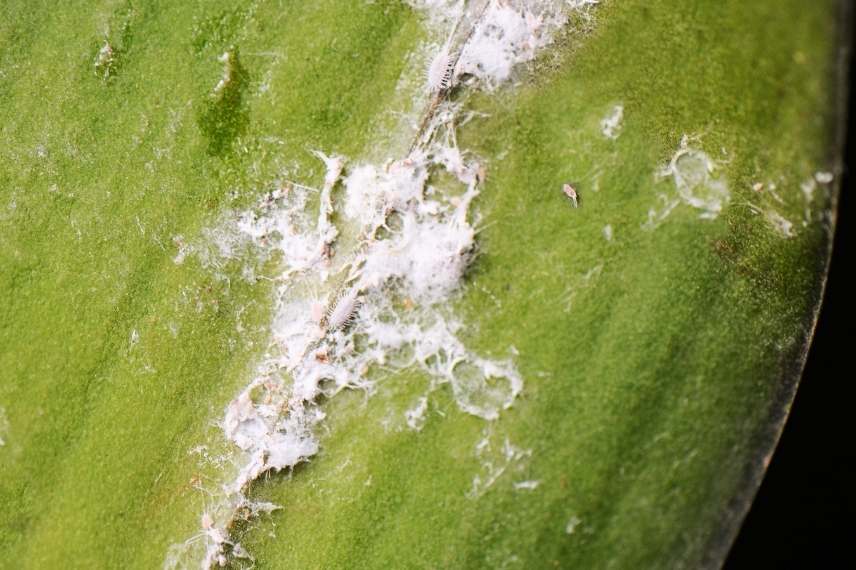
Powdery mealybugs
Solutions
- Clean the affected parts with a cotton swab moistened with 70% alcohol.
- Spray a mixture of water and black soap (one teaspoon per litre of water), with the addition of a vegetable oil and alcohol.
What are the best practices for preventing parasitic infections and diseases?
We have found that diseases and pests frequently appear when the pineapple’s cultivation needs are not met. To prevent damage, adopt the right steps to prevent any problems:
- Maintain good air circulation : Pineapple should be placed in a bright, well-ventilated spot, away from cold draughts.
- Adopt appropriate watering : Pineapple should be watered two to three times a week in summer, much less in autumn and winter. It is essential to place the pot on a bed of damp clay pebbles.
- Regularly monitor the foliage of your young pineapple plant to quickly detect any infestation or disease symptoms, enabling early intervention.
- Subscribe!
- Contents
Comments