





























Pairing Eucalyptus
6 successful pairing ideas!
Contents
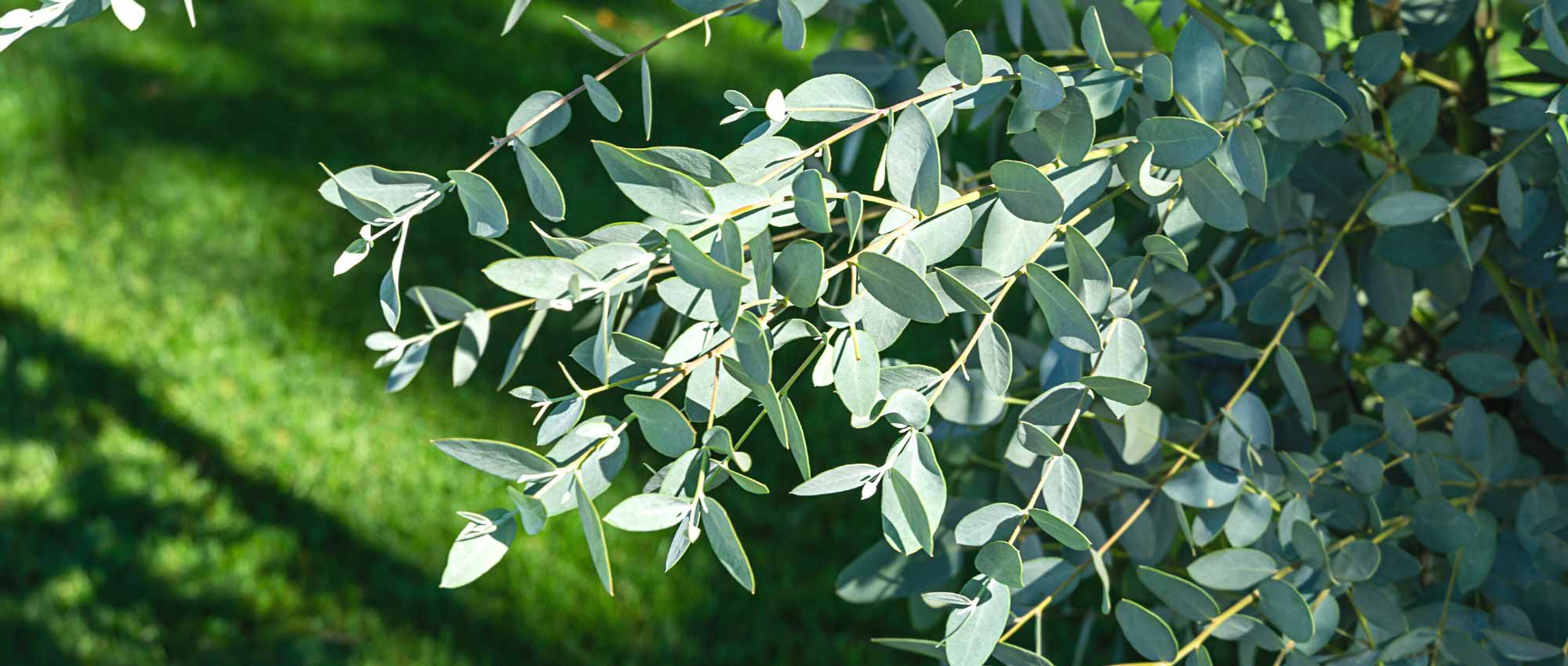
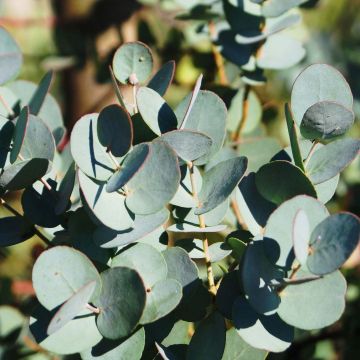
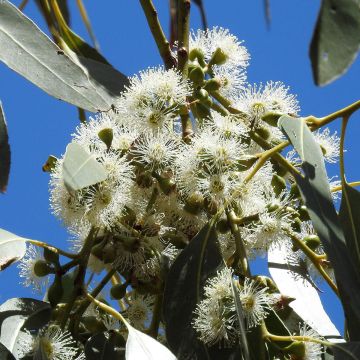
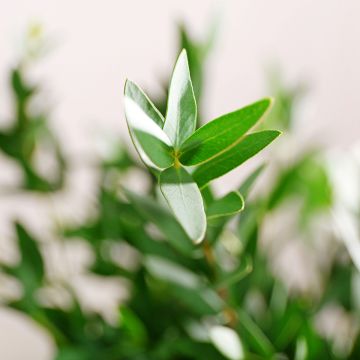
Eucalyptus are stunning trees or bushes native to Australia, distinguished by their blue-grey foliage, tough texture, and generally very decorative bark. Their height varies greatly: some, like Eucalyptus globulus, can reach up to 30 m tall at ripeness, while there are also bush varieties that do not exceed 2 m in height, making them suitable for pot cultivation (for example, Eucalyptus gunnii ‘Baby Blue’). Eucalyptus grow quickly and are very drought-resistant. They are easy to grow and thrive in poor soil. However, care should be taken regarding their hardiness: most are frost-sensitive (so their cultivation in open ground is reserved for regions along the Atlantic or Mediterranean coasts), although some species can withstand temperatures as low as -12 °C, or even -15 °C. Eucalyptus are perfect for bringing an exotic atmosphere to the garden, but you can also play with their blue-silver foliage to create contrasts or harmonious colour schemes. Discover our most beautiful ideas and inspirations for pairing Eucalyptus and creating successful combinations!

In a seaside garden
Eucalyptus is particularly suited to the mild climates of the Atlantic or Mediterranean coast. It will thrive in a seaside garden, creating a beautiful Mediterranean atmosphere alongside graphic and structural plants such as agaves, palms, and yuccas. The silver foliage of a variety like Eucalyptus cinerea ‘Silver Dollar’ or Eucalyptus gunnii ‘Silverana’ will be ideal to accompany the fan-shaped, blue-grey foliage of the palm Chamaerops humilis ‘Cerifera’. Plant alongside them some colourful flowering perennials, such as agapanthus, Armeria maritima, osteospermums, or helianthemums. Finally, you can incorporate typically Mediterranean bushes such as figs, olives, cistus, and oleanders.
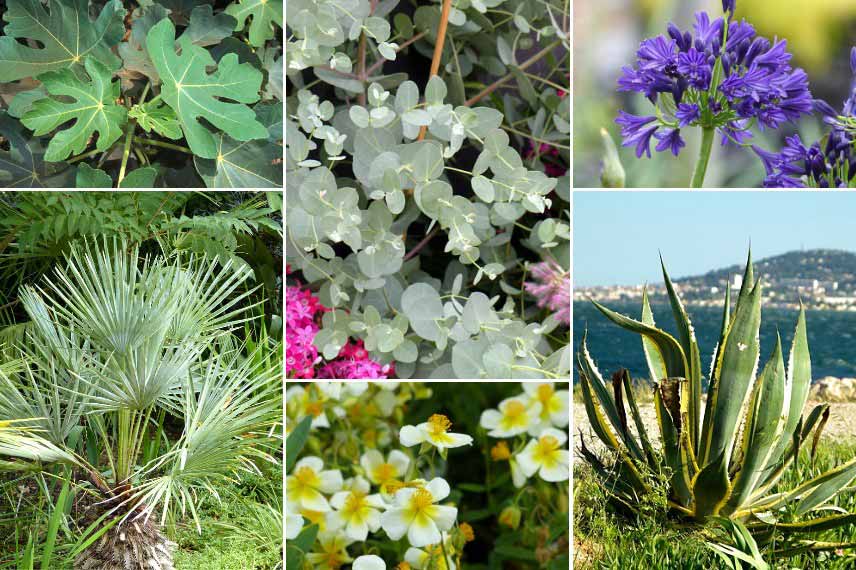
Ficus carica, Eucalyptus gunnii ‘Silver Drop’, Agapanthus ‘Royal Velvet’, Chamaerops humilis ‘Cerifera’, Helianthemum ‘Elfenbeinglanz’, and Agave americana ‘Variegata’
With southern plants
Eucalyptus, being primarily native to Australia, pairs wonderfully with other southern plants (from the Southern Hemisphere, particularly Australia, New Zealand, and South Africa). Adapted to warm and dry climates, these plants often feature thick, graphic, and colourful foliage, making them perfect for creating a very exotic scene! Cordylines, Yuccas, Dasylirions, and Phormiums will be perfect for adding volume and structuring the garden with their well-defined silhouettes. For flowering, focus on Eucomis, Watsonia, Dietes, Crocosmias, and Kniphofias. Discover the very unique flowering of Anigozanthos flavidus, shaped like kangaroo paws, and the ornamental thistle Berkheya purpurea. Also integrate other bushes such as Callistemons, Grevillea, Leptospermum, and Drimys.
Feel free to check our advice sheet “Planting and growing southern plants” as well as our inspiration page “Southern exoticism”.
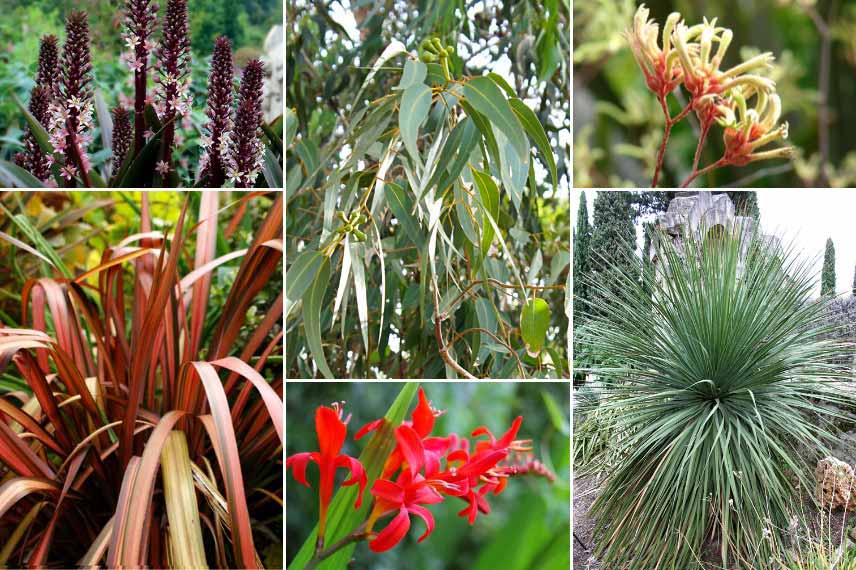
Eucomis ‘Sparkling Rosy’, Eucalyptus citriodora, Anigozanthos flavidus (photo: Forest & Kim Starr), Phormium ‘Pink Panther’, Crocosmia ‘Lucifer’ (photo: Vicky Brock) and Dasylirion
Discover other Eucalyptus
View all →
Available in 1 sizes
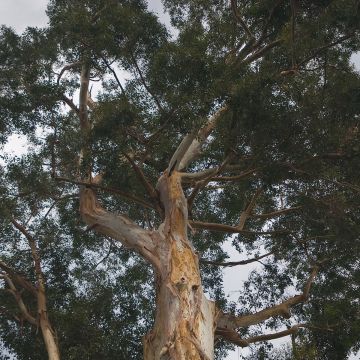
Available in 1 sizes
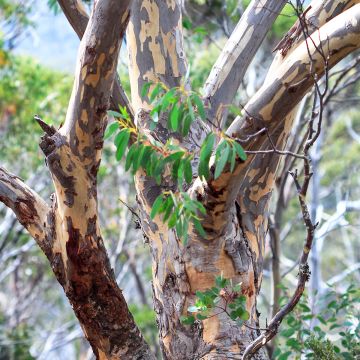
Available in 1 sizes
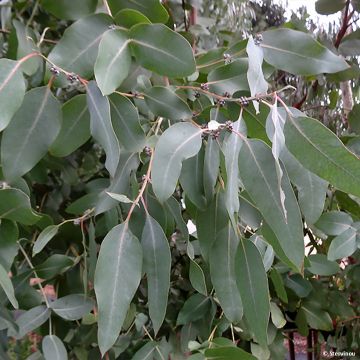
Available in 1 sizes
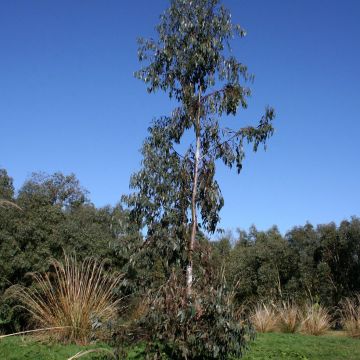
Available in 1 sizes
Available in 3 sizes
Available in 1 sizes
Available in 1 sizes
Available in 2 sizes
Available in 1 sizes
In a pot on a terrace
The most compact varieties of Eucalyptus adapt very well to pot cultivation and can beautifully decorate a terrace in summer! This is the case, for example, with Eucalyptus ‘Baby Blue’. To highlight the fine, bluish foliage of the eucalyptus, pair it with the dark, thick leaves of Mangave ‘Inca Warrior’. This will create a lovely contrast! You can also place a Strelitzia reginae in a large pot to enjoy its beautiful bird-shaped flowers. Be careful to bring it indoors for winter to protect it from the cold. Next to them, place other bushes such as Choisya ternata and a oleander. Finally, you can install a Delosperma ‘Wheels of Wonder Fire’ in a hanging basket; its stems will beautifully cascade, brightened by its vibrant orange flowers.
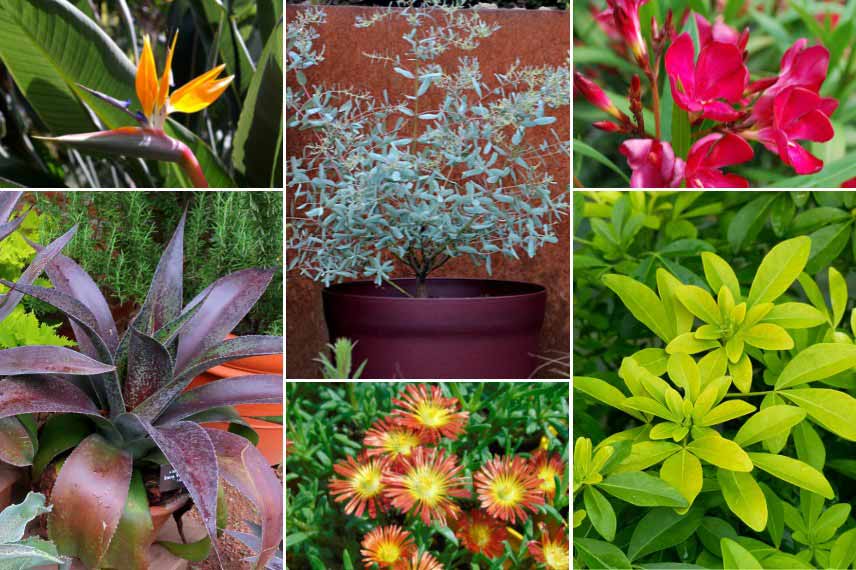
Strelitzia reginae, Eucalyptus ‘France Bleu’, Nerium oleander, Mangave ‘Inca Warrior’ (photo: cultivar413), Delosperma ‘Wheels of Wonder Fire’ and Choisya ternata ‘Sundance’
Read also
Choosing an eucalyptusTo play with colour contrasts
The best way to highlight the blue leaves of an Eucalyptus is to pair them with orange flowers, as these two colours are complementary on the colour wheel. This way, they will enhance each other and add depth to your flowerbed! Moreover, cool shades are calm, soothing colours that create a sense of distance, while warm colours bring vitality but can become overwhelming, compressing the space. When combined in a flowerbed, these cool and warm colours balance each other. Enhance the blue hue of an Eucalyptus by pairing it with Agapanthus ‘Midnight Blue’, Euphorbia myrsinites, the blue-tinged foliage of grasses such as Festuca glauca, and Helictotrichon sempervirens. Then, introduce contrast with the peach-orange flowering of Echinacea ‘Big Kahuna’, a Dahlia ‘Motto’, a Crocosmia ‘Emily McKenzie’, and a Hemerocallis ‘Apricot Beauty’.
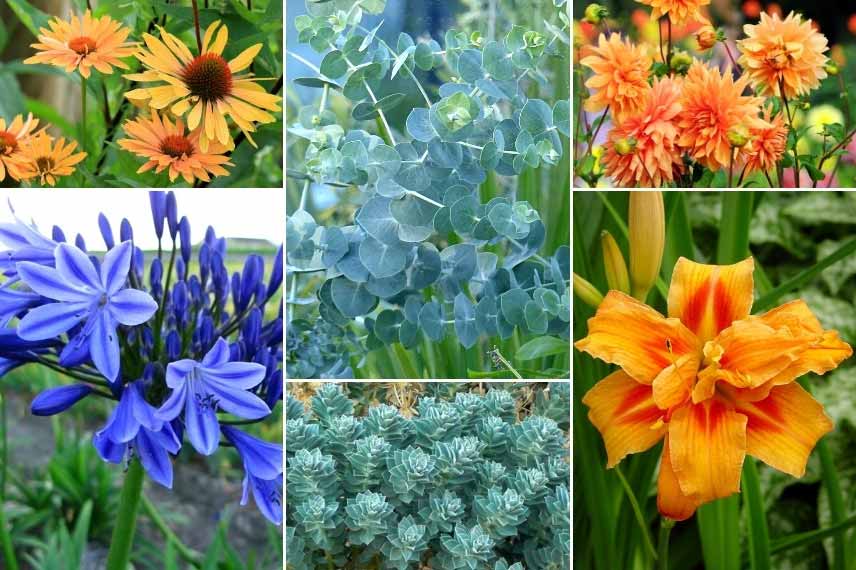
Echinacea ‘Big Kahuna’, Eucalyptus ‘Baby Blue’, Dahlia ‘Motto’, Agapanthus ‘Midnight Blue’, Euphorbia myrsinites (photo: Andrey Zharkikh) and Hemerocallis ‘Apricot Beauty’
In a blue-silver garden
Enjoy the Eucalyptus gunnii ‘Azura’ to create a stunning border in silver and blue tones, very original! Next to it, plant other perennials with silver-grey foliage, such as Euphorbia ‘Glacier Blue’, Artemisia stelleriana ‘Boughton Silver’, Cynara cardunculus, Salvia argentea, or Stachys byzantina. Enjoy the very graphic flowering of Echinops sphaerocephalus, shaped like metallic grey spheres, and Eryngium ‘Jos Eijking’, which bears conical umbels crowned with large, finely divided blue-silver bracts. Add small touches of bright blue with the flowers of Salvia patens, and white with those of Salvia nemorosa ‘Schneehügel’. In addition to bringing a lot of brightness, these silver, white, and blue tones will give your garden a very chic and timeless style!
Discover our inspiration page: “Silver White Garden”!
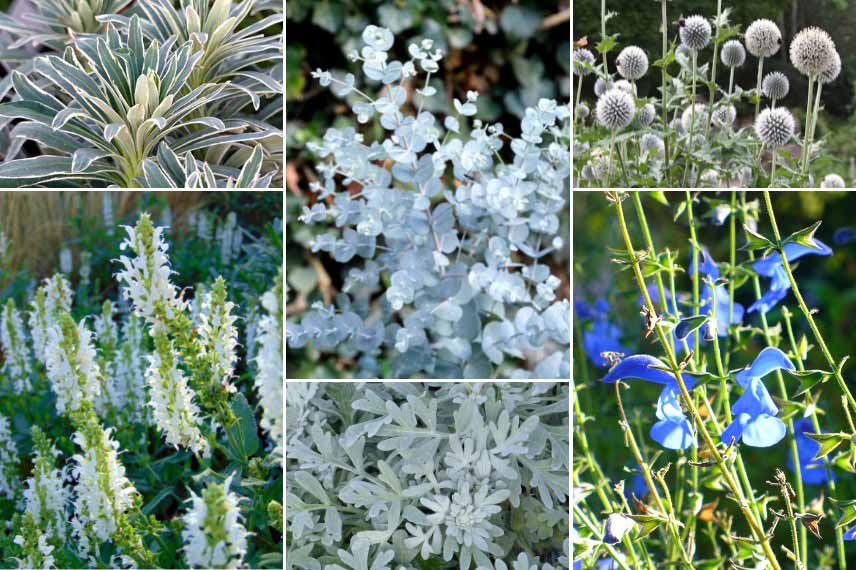
Euphorbia characias ‘Glacier Blue’, Eucalyptus ‘Azura’, Echinops sphaerocephalus (photo: Drew Avery), Salvia nemorosa ‘Schneehugel’, Artemisia stelleriana ‘Boughton Silver’, and Salvia patens
With trees and bushes with decorative bark
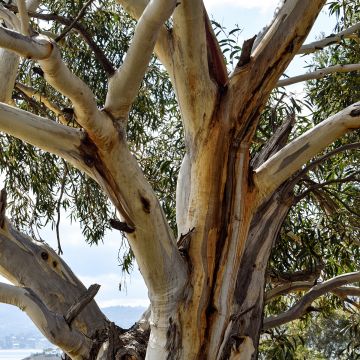
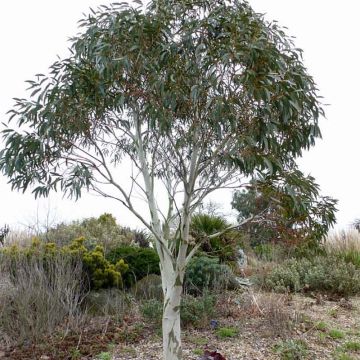
Eucalyptus have particularly decorative bark, often a pristine white that peels off in large strips. The one that stands out the most for its bark is the Rainbow Eucalyptus, Eucalyptus deglupta, which reveals stunning green, purple, orange, and brown stripes, but unfortunately, it is not hardy. However, in our latitudes, you can still enjoy the beautiful bark of the Eucalyptus neglecta and the Eucalyptus niphophila. To accompany them, consider the Arbutus andrachne (hardy down to -10 / -12 °C), with its reddish-orange bark, and the Crape Myrtle, Lagerstroemia indica, which has very smooth bark that exfoliates in soft shades: cinnamon, light brown, cream… It also offers a stunning summer flowering in shades of pink, red, mauve, or white. Don’t hesitate to pair these bushes with the decorative foliage of a Choisya ‘Aztec Pearl’ and a palm Washingtonia filifera, for a touch of exoticism.
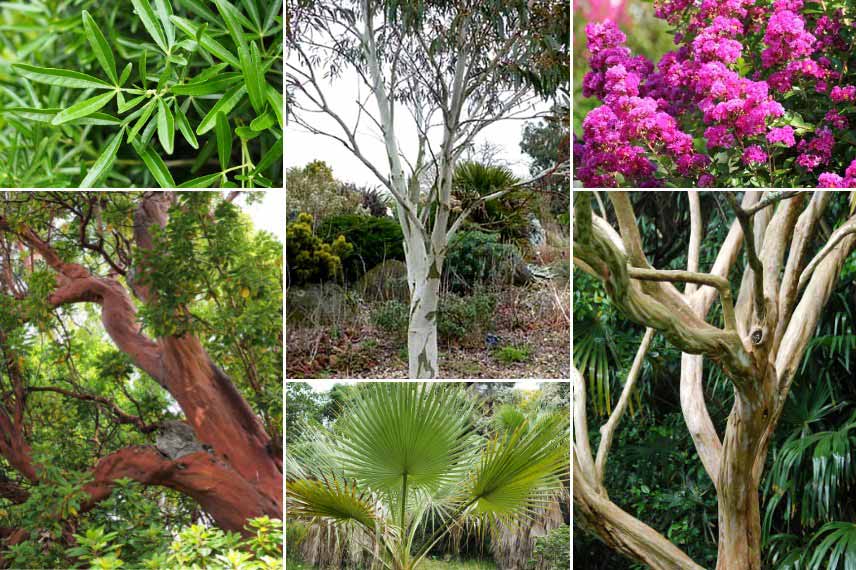
Choisya ternata ‘Aztec Pearl’, Eucalyptus niphophila, Arbutus andrachne, Washingtonia filifera, and Lagerstroemia indica (photo: Uliako Auzo Elkartea)
- Subscribe!
- Contents
![[plant id="1234" common_name="Eucalyptus" latin_name="Eucalyptus globulus"]
Eucalyptus is a versatile and attractive tree that can bring a touch of exoticism to your garden. Its evergreen foliage and aromatic scent make it a popular choice for gardeners looking to add a Mediterranean or Australian flair to their outdoor space.
When planting Eucalyptus, make sure to choose a sunny location with well-draining soil. Regular watering is essential, especially during the tree's establishment period. Pruning can help maintain a desired shape and promote healthy growth.
Whether you're looking to create a focal point in your garden or simply enjoy the benefits of its fragrant leaves, Eucalyptus is a fantastic addition to any garden landscape.](https://www.promessedefleurs.ie/blogwp/wp-content/uploads/2023/02/Associer-lEucalyptus.png "[plant1=\"Eucalyptus\"]")
Comments