





























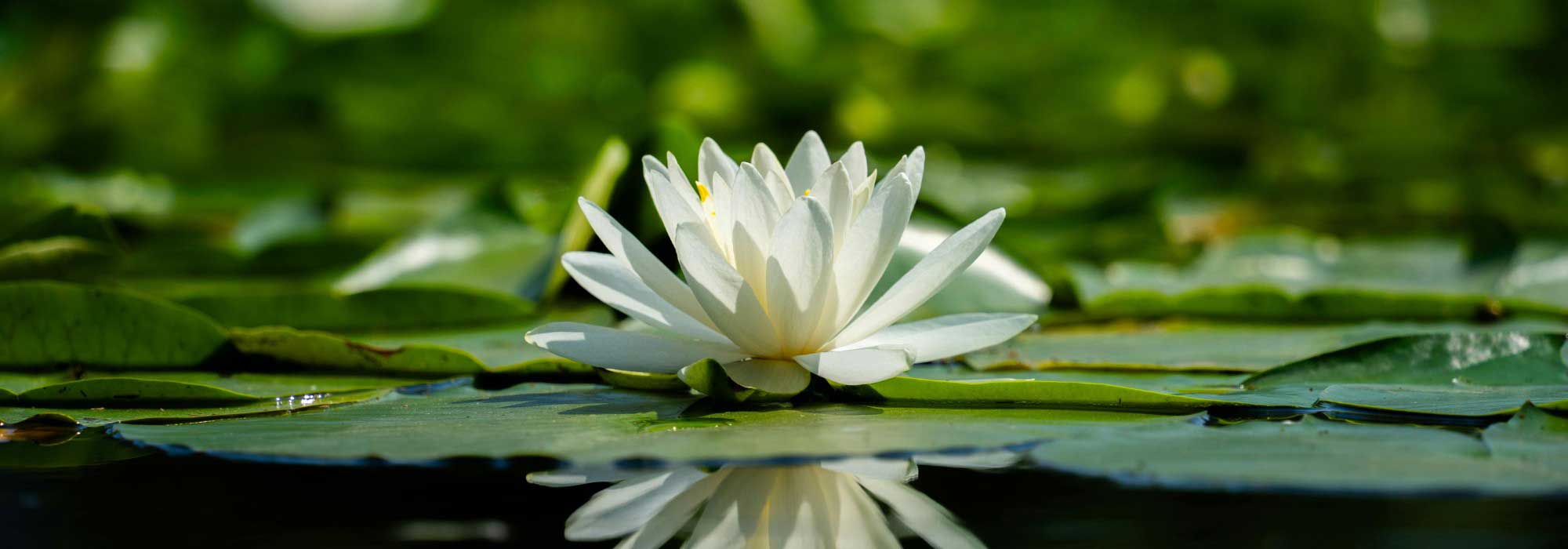
Lotus, Nymphaea, or Nuphar? Don't confuse these three plants any more
Discover our tips for telling them apart
Contents
Lotus, yellow water-lily or water lilies? It’s very easy to get confused! These three aquatic plants, which belong to different botanical genera, are often confused, and are usually all called water lilies. It’s true they resemble one another, with their large, rounded leaves and majestic flowers, not least because all three can be found in ponds and lakes. However, they display notable differences, both morphologically and biologically. Discover what their differences are and learn how to tell them apart!

Why are these three plants so often confused?
Confusion between lotus, Nymphaea and Nuphar is common, and it can be explained by several factors that are visual, linguistic and cultural. Firstly, these three plants share a common environment: they all live in calm aquatic mediums such as ponds, lakes or decorative basins. Their overall appearance — large round leaves, showy flowers and growth at the water’s surface — emphasises this similarity. From a distance, an untrained observer could easily mistake them for the same plant.
Secondly, the French language adds to this confusion by sometimes using the term ‘nuphar’ as a generic label to designate any large aquatic plant with floating flowers. In many contexts, people refer to ‘pink water lily’ or ‘white water lily’ to designate, in reality, a Nymphaea, or even a lotus. This imprecise usage blurs botanical distinctions.
Popular culture and artistic representations also play a role. In the collective imagination, lotus and water lily flowers are often interchangeable, notably in illustrations, films or decorative motifs. The lotus is sometimes depicted with characteristics specific to the water lily, notably floating flowers, which reinforces these misconceptions.
Finally, botanical classification is not always accessible to the general public. The differences between Nelumbo, Nymphaea and Nuphar are not known to everyone, and without a clear explanation, these genera can easily be amalgamated. This blend of visual, linguistic and cultural elements largely contributes to the confusion, though each plant has its own distinct characteristics, as closer observation reveals.
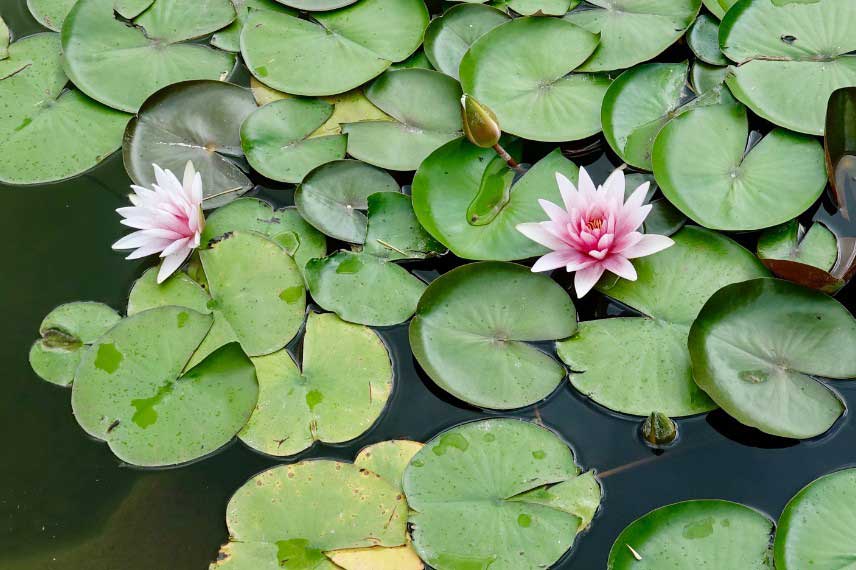 Nymphaea is very often called ‘Nuphar’
Lotus (Nelumbo nucifera)
Sacred lotus, or Nelumbo nucifera, is an iconic aquatic plant of Asia, where it holds a central place in spirituality and culture. It is notably found in Hindu and Buddhist traditions, where it symbolises purity, rebirth and enlightenment. Unlike other aquatic plants, the lotus is distinguished by its ability to emerge entirely from the water. Its large, round leaves, with a waxy texture, stand well above the surface and possess a remarkable property: they are water-repellent, meaning water beads on them and never wets them.
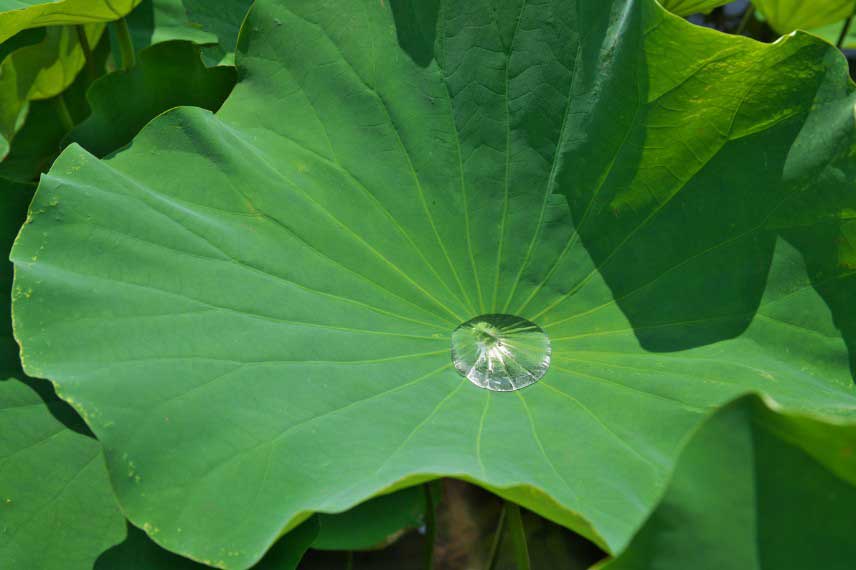
Leaves of the Lotus have the property of being water-repellent: water beads on the surface and slides off them without wetting.
The lotus flowers, often pink or white, are also borne on long peduncles that keep them upright above the water. They are large, typically 15 to 30 cm in diameter, and cup-shaped. After flowering, the lotus develops a unique fruit in the shape of a watering-can, in which its seeds are housed. This distinctive morphology, together with its height and majestic bearing, makes the lotus easily recognisable once the differences are well understood.
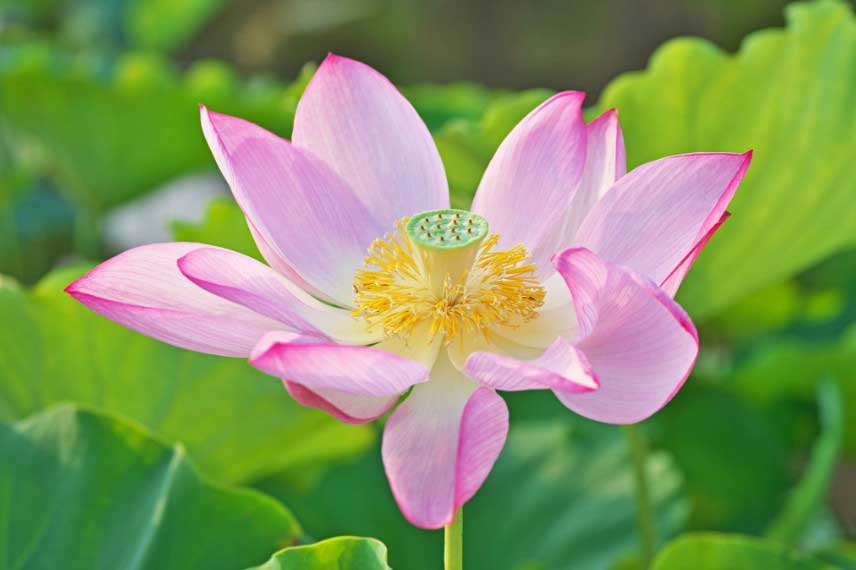
The lotus flowering, Nelumbo nucifera
The water lily (Nymphaea sp.)
The water lily, of the genus Nymphaea, is arguably the most widespread aquatic plant in ornamental ponds. Much loved for the beauty of its flowers and its great colour diversity, it is often confused with the lotus, due to their apparent similarities. However, the water lily has its own characteristics. Its leaves, rounded and floating, have a notch which distinguishes them from those of the lotus. They rest on the surface of the water and do not rise like those of Nelumbo. The flowers, for their part, are also floating or slightly emergent, depending on the species, and can display a wide range of colours from white to blue, including yellow, pink and red. They are fairly large, measuring 7 to 15 cm in diameter, sometimes more, and have a star-shaped rosette form, with fine and elongated petals. The fruit of the water lily is a capsule that develops underwater, discreetly.
Originating from many regions around the world, including temperate, tropical and subtropical zones, the water lily is a cosmopolitan plant that has won over gardeners for its decorative qualities. The water lily has thus been extensively hybridised to give rise to countless varieties, some of which have variegated leaves!
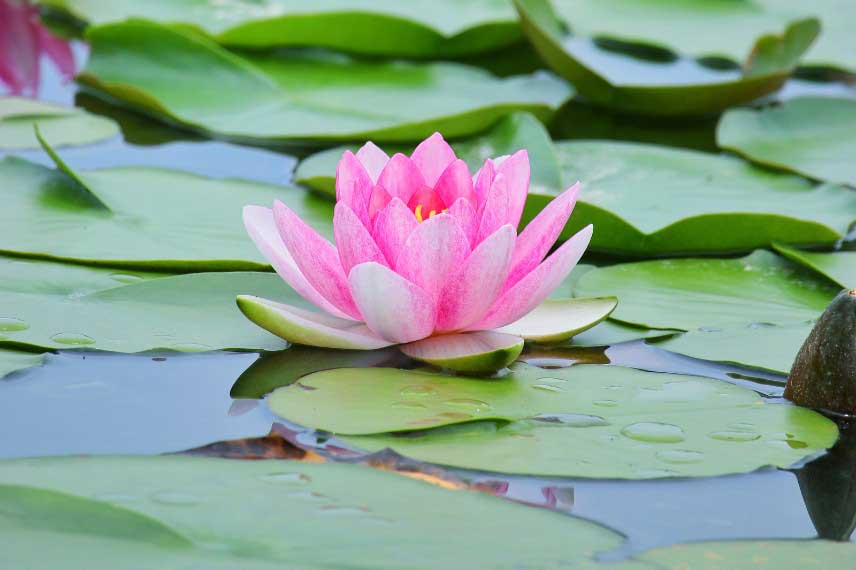
Nymphaea flower
Water lily (Nuphar sp.).
Often confused with the water lily due to its French common name, the true nuphar corresponds in reality to another botanical genus: Nuphar. This aquatic plant, naturally found in temperate zones of the northern hemisphere, is hardier and less exuberant than its cousins. Its leaves, thicker and more ovate, can be floating or partially submerged. They too have a notch and display a dark green colour which is quite characteristic. The flowers of the nuphar are generally bright yellow, slightly raised above the water, and composed of thicker petals, often fewer in number. Its flowers are not very large (4 to 5 cm in diameter) and have a very rounded shape. Their appearance is more discreet, almost wild, compared with the flowers of lotus or water lilies. The fruit that follows flowering is a globose capsule that protrudes slightly from the water, visible to the naked eye. Less ornamental, but very well suited to natural habitats, the nuphar plays an important role in the aquatic ecosystems of ponds and calm rivers.
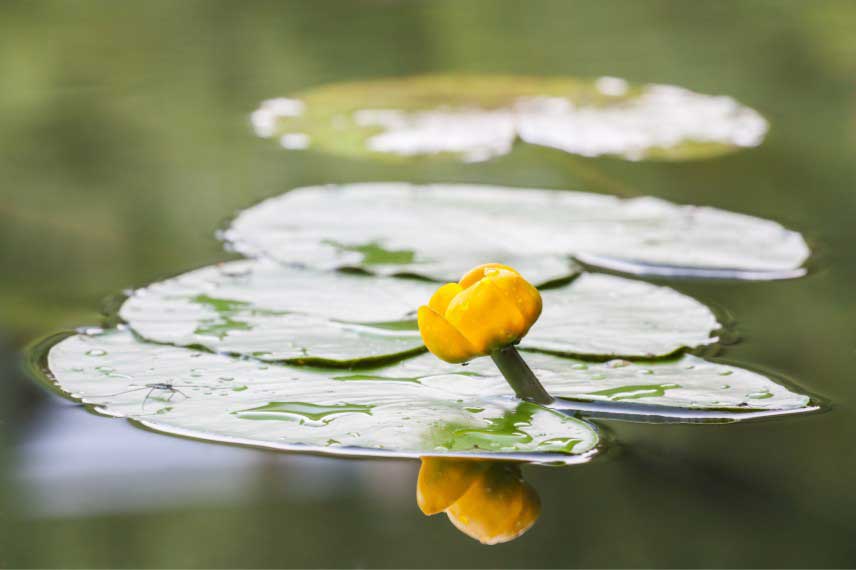
Nuphar lutea
How do you tell them apart?
| Common name | Lotus | Nymphaea | Nuphar |
|---|---|---|---|
| Latin name | Nelumbo nucifera | Nymphaea sp. | Nuphar sp. |
| Family | Nelumbonaceae | Nymphaeaceae | Nymphaeaceae |
| Origin | Asia (tropical regions) | Cosmopolitan | Northern Hemisphere (temperate zones) |
| Leaf position | Floating at first, then erect above the water | Floating, at the water surface | Floating or sometimes submerged |
| Leaves | Rounded and entire, water-shedding and hydrophobic | Rounded, lobed at the base | Oval, often lobed at the base |
| Flower position | Clearly above the water | Floating or slightly above the water | Upright, but shorter, sometimes at the surface |
| Flower shape | Large elegant flowers (10–20 petals), symmetrical. Central receptacle shaped like a watering-can | Numerous fine petals (up to 40), central stamens, star-shaped or cup-shaped | Smaller flowers, 4–6 thick rounded sepals (resembling petals) |
| Flower colour | Usually white or pink, occasionally yellow or cream (rare) | Very varied: white, yellow, pink, red, blue, mauve | Bright yellow only |
| Fruit | Alveolate receptacle (watering-can-shaped) | Spongey capsule, submerged | Globose and emergent capsule |
| Growing conditions | Requires a deep basin (min. 50 cm), full sun, warm water | Adaptable to small/medium ponds, sun to partial shade, cooler water tolerated | Suited to natural habitats, low-maintenance, ideal for wild ponds |
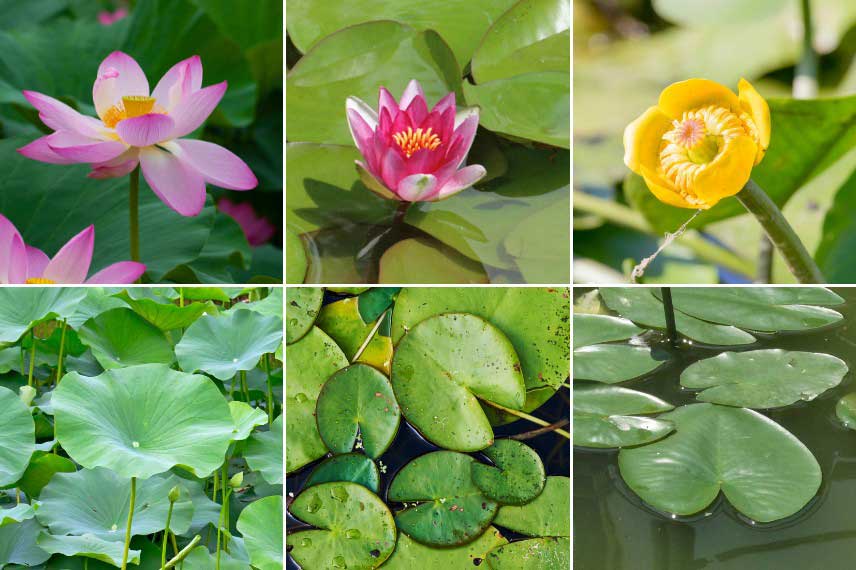
On the left, the flowers and leaves of the Lotus; in the centre, those of the Nymphaea; and on the right, those of the Nuphar
- Subscribe!
- Contents
Comments