





























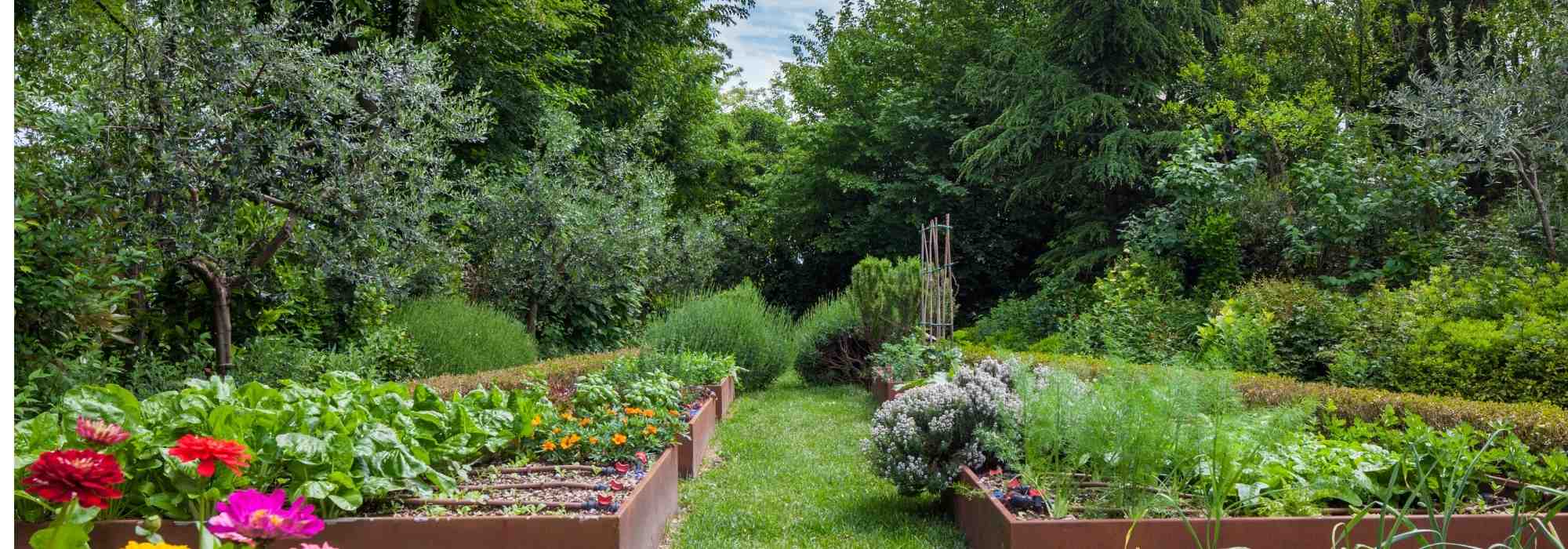
Living soil and yield: how can agroforestry revolutionise our vegetable gardens?
When trees can become the kitchen garden's best allies...
Contents
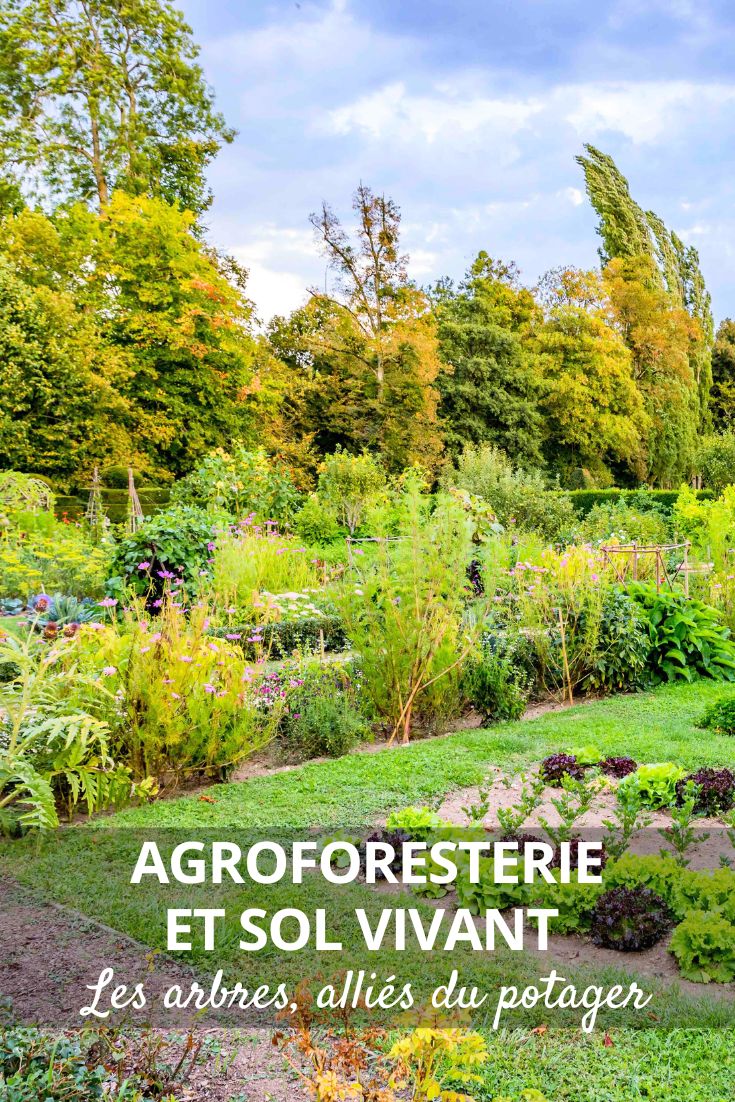
In the face of the increasingly pressing challenge posed by climate change and biodiversity loss, amateur gardeners are changing the way they garden, often drawing inspiration from what happens in nature. And they often challenge techniques that have been forgotten to date or habits, such as planting trees in the kitchen garden. Indeed, agroforestry proves to be a way forward for the future, even in the kitchen garden. Behind this term lies a simple idea: reintroducing trees into the growing space so that they work in synergy with vegetables, soft fruits and grapevines. Far from being a competitor, the tree becomes a key pillar for creating a truly living, resilient and naturally fertile soil.
Let’s explore how agroforestry can turn your kitchen garden into a nourishing and sustainable ecosystem.

Agroforestry, an ancient concept brought up to date
Older gardeners may remember a time when trees grew freely between fields and pastures, when hedgerows delimited the plots, when wheat grew among olive trees and vines… And then, in the 1960s, the rise of mechanised and intensive farming disrupted the landscapes. Farmers were encouraged to remove trees and hedgerows to ease the passage of farm machinery and to develop monocultures. The field tree had become a direct competitor to crops… With the impacts on soil and biodiversity as we know them today.
What is agroforestry?
However, in recent years, there has been a return to certain ancestral methods, forgotten and rejected in favour of profitability and productivity. Agroforestry is one of these practices that has regained favour today. How to define agroforestry? Simply as a land-use system that combines woody species among trees and hedgerow shrubs, agricultural or horticultural crops and livestock on a single plot. If agroforestry is practised in the agricultural environment, it can also be applied at the level of a kitchen garden.
At the scale of a kitchen garden or a small garden, it is often referred to as a forest garden or a market garden orchard. But the principle remains the same: to create a space where the roots, trunks and canopies interact positively with the low-growing vegetables, aromatic herbs and soft fruit.
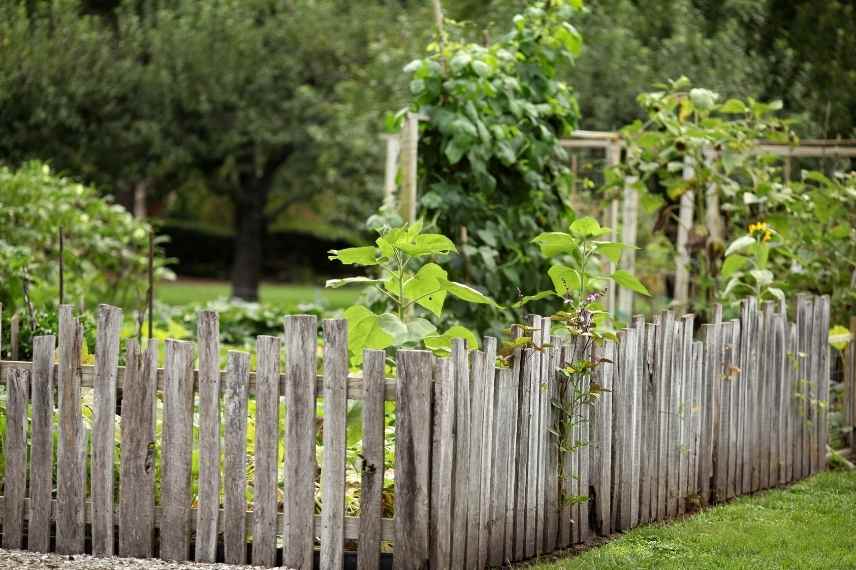
At the scale of a kitchen garden or a small garden, it is often referred to as a forest garden or a market garden orchard
What are the pillars of living soil?
Agroforestry helps create a living soil, a concept based on three fundamental principles, but it is always useful to recall:
- A living soil is soil that is not deeply worked, not ploughed or dug to preserve microorganisms (fungi and bacteria) and the microfauna (earthworms and insects) that thrive there.
- A living soil is soil that is never bare to protect it from erosion and drying out and to nourish it with organic matter.
- A living soil is a complex and resilient ecosystem where crops are diversified.
Read also
7 Must-have shrubs for a Forest gardenThe essential role of trees in maintaining living soil in the kitchen garden
Against the backdrop of a warming climate, trees, by virtue of their presence, help maintain a living soil. Far from being competitors, they are allies bringing more benefits than drawbacks.
The role of trees in water management
With recurring droughts, water management has become the gardener’s main challenge. Trees can be an exceptional hydrological ally, as their root system is essential to the soil:
- Tree roots explore deeper soil layers, creating cracks that improve water infiltration. Unlike ploughed soils that become compacted, soil beneath trees stays airy and permeable. Rainwater infiltrates there more readily, rather than running off and causing erosion.
- Some deep roots can draw water from groundwater or moist layers, redistributing it to the upper layers by a process called capillary rise, making it available for vegetable crops during dry periods.
- The root network weaves a protective mesh that holds the soil against the forces of water. In a sloping vegetable plot, a line of trees or a hedge can eradicate erosion problems, or at least attenuate them.
The tree for a protective microclimate
With heatwaves that recur each year, gardens suffer. The canopy of a tree modifies growing conditions for vegetable crops situated beneath or nearby:
-
- Partial shade provided by trees protects crops from direct sun and reduces soil surface temperature. This greatly reduces the water loss of vegetables through their leaves and the soil, i.e. evapotranspiration, thereby reducing their irrigation needs.
- Hedges and lines of trees act as windbreaks. By slowing the wind, they limit crop desiccation.
- In case of heavy weather, they also provide physical protection to fragile plants such as tomatoes, beans… and in hot weather, shade for other vegetables such as lettuces, radishes and spinach…
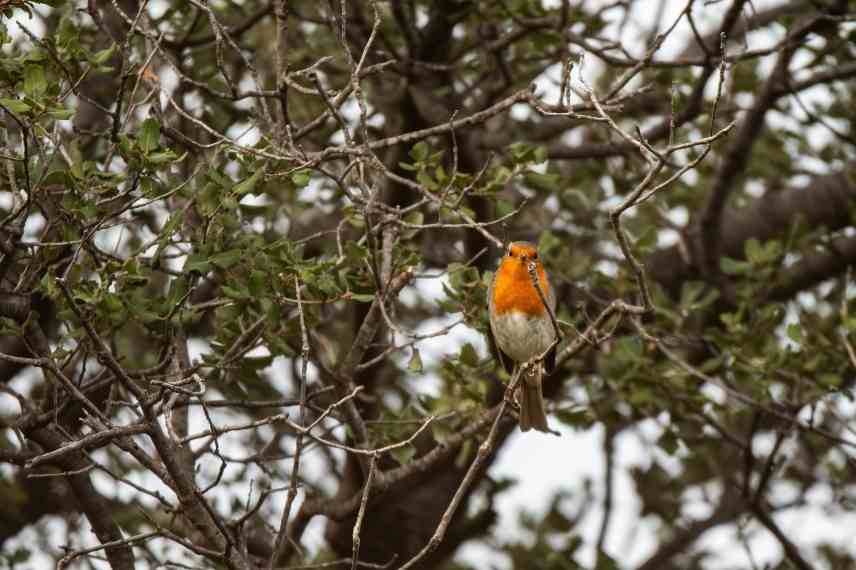
Trees are sources of biodiversity
Trees useful to soil fertility
The tree works indirectly to enrich the substrate and nourish life in the soil:
- It produces organic matter, rich in carbon, through its leaves, twigs or dead wood. The decomposition of this organic matter, rich in carbon and lignin, by soil organisms, leads to the formation of stable humus. It is this humus that gives the soil its dark colour, improves its water- and nutrient-holding capacity, and makes it crumbly and easy to work.
- It fertilises the surface soil : fallen leaves provide an excellent free natural mulch that protects the soil, maintains moisture and slowly turns into a surface fertiliser.
- It lifts nutrients : its deep roots reach leached minerals or nutrients inaccessible, such as phosphorus or potassium, from the lower soil layers. As leaves and twigs fall and decompose on the surface, they bring up these nutrients and redistribute them for the garden’s crops.
- It can fix nitrogen : some trees in the legume family, such as Albizia, work in symbiosis with bacteria called rhizobia. These bacteria capture atmospheric nitrogen and return it to the plant, a process called biological nitrogen fixation. Excess nitrogen is then released into the soil, acting as a natural fertiliser for neighbouring vegetables.
- Tree roots are often associated with mycorrhizal fungi that form a vast underground network. This network extends far beyond the tree’s roots and also connects to the roots of vegetables. This mycorrhizal network facilitates the exchange of water and minerals between the tree and the vegetable crops.
Trees, vectors of biodiversity
A thriving vegetable garden is a place where biodiversity is well represented. Trees are essential for welcoming and protecting the gardener’s beneficial allies. They provide shelter and food for useful wildlife.
Indeed, trees and hedges provide habitats, shelters and breeding sites for a multitude of beneficial organisms that naturally regulate pests. Thus, birds nest in the canopy and are major consumers of insects, thereby controlling populations of slugs, aphids, or harmful larvae.
Similarly, the flowers of fruit trees and hedges (lime tree, hawthorn, hazel, elder…) are a food source for bees and other pollinators. Deadwood and bark are ideal shelter for ladybirds, hoverflies and lacewings, formidable predators of slugs and mites.
The trees themselves
In agroforestry, the tree itself plays a service role:
- It provides biomass: Pruning residues (such as ramial chipped wood or RCW) are a valuable raw material for fertilising and structuring the garden soil. RCW is particularly effective at stimulating fungal and bacterial activity in the soil.
- It is a source of production: trees produce fruits, nuts, berries, and possibly firewood. They offer a diversification of harvests.
How can trees be incorporated into a kitchen garden?
Agroforestry in the garden doesn’t require large spaces. It mainly requires careful planning and the selection of suitable species. Here are some simple tips to get you started:
- Plant the trees in a north-south alignment if possible, so the shade cast moves with the sun during the day and does not unduly penalise the crops.
- Leave enough space between the tree rows and the vegetable plot to allow adequate sunlight. For small gardens, favour living hedges or smaller fruiting bushes.
- Choose trees and bushes that are useful as nitrogen fixers, such as the yellow acacia (Caragana arborescens), the American honey locust (Gleditsia triacanthos), the bladder senna (Colutea arborescens), the black locust (Robinia pseudoacacia) of the Fabaceae family. Some shrubs and trees in the genus Eleagnus such as the sea buckthorn (Hippophae), the ‘Russian olive (Elaeagnus angustifolia), the Japanese goumi (Eleagnus multiflora), the autumn olive (Eleagnus umbellata), also fix nitrogen while providing berries. Don’t forget the white alder (Alnus incana), and the Corsican alder (Alnus cordata).
- Choose trees that produce standing crop or berries.
- Regularly prune the lower branches of trees and bushes to regulate shade and free up space for legume crops.
- Keep a thick layer of mulch around trees and crops to conserve moisture and reduce competition for water and nutrients.
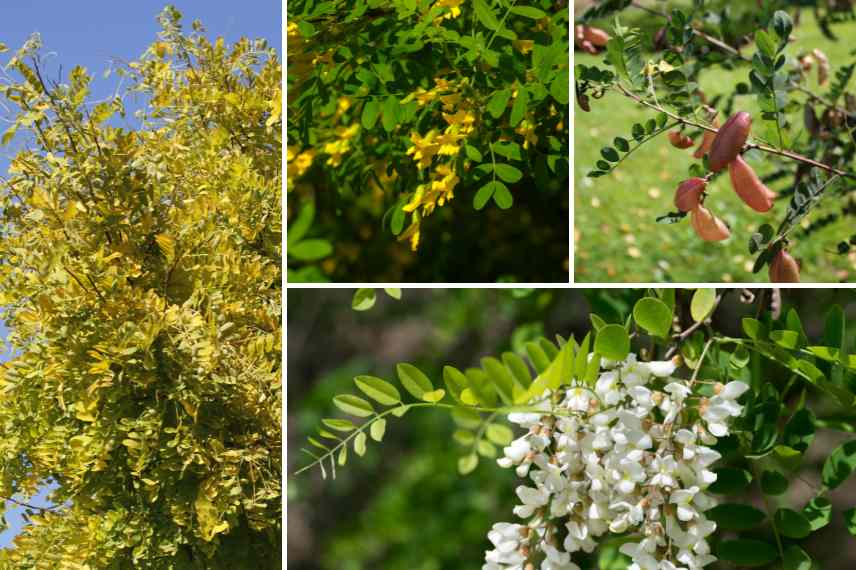
The American honey locust, yellow acacia, bladder senna and the black locust fix atmospheric nitrogen
- Subscribe!
- Contents
Comments