





























How to water without overwatering your plants?
Or how to water according to the needs of plants?
Contents
Knowing how to water in the garden: an essential skill for every gardener, especially in the face of chronic drought and recurring heatwaves. Indeed, watering is one of the most frequent actions in the garden, and yet it is also one of the least well mastered. Many gardeners, even experienced ones, water too often, not deeply enough, or at inappropriate times. And the results don’t take long to show: water stress, cryptogamic diseases, root rots or flowering failures. To water without over-watering, you must learn to observe the soil, understand how plants behave, and tailor your watering to the actual conditions, in the ground as well as in pots.
Discover how to find the right rhythm and avoid excess when it comes to watering in the garden, for plants in the ground or in pots.
Understanding the real water needs of plants
Water is essential to plant life, because it is involved in photosynthesis, and transports mineral nutrients essential to plant growth. Yet all plants do not have the same water needs. It’s all down to physiology, really!
Some, such as succulent plants or cacti, are able to store water or slow their metabolism to survive in arid environments, whereas others require a regular and controlled supply of water. Xerophytic species, such as agaves or the aromatics such as lavender, rosemary, thyme… cope with drought very well thanks to physiological adaptation mechanisms to the point of surviving without water, sometimes for several months. Conversely, woodland plants or tropical-origin such as ferns or the impatiens require a cool, moist soil to grow normally.
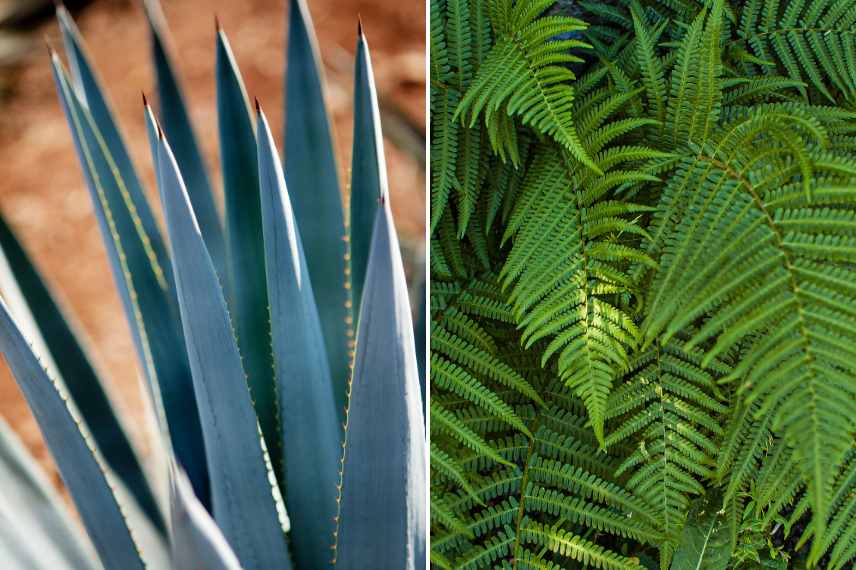
An agave and a fern do not have the same water needs
Needs also vary with growth stages. A plant during periods of active growth, flowering or fruiting consumes more water than during dormancy. That is why it is essential not to water systematically but according to the plant’s life cycle. A peony planted in deep soil will need water only in spring as sap rises, then very little in summer.
Factors influencing watering frequency
Beyond the physiological needs of each young plant, other factors can significantly affect the watering frequency. Starting with the soil. A sandy, well-draining soil retains little water and requires more frequent, but light, watering. Conversely, clay soil retains moisture for a long time, but can quickly become waterlogged if moisture levels are excessive. A humus-bearing soil, rich in organic matter, offers a good compromise between retention and aeration.
Exposure also plays a fundamental role. A young plant in full sun and exposed to wind transpires more than a young plant in shade. Climatic conditions must be taken into account in the assessment: heat, dry wind, ambient humidity or recent rain alter water needs. In summer, a terracotta pot facing due south can lose all its moisture in less than a day, while a planting bed in heavy, shaded soil will stay moist for several days after a rainfall.
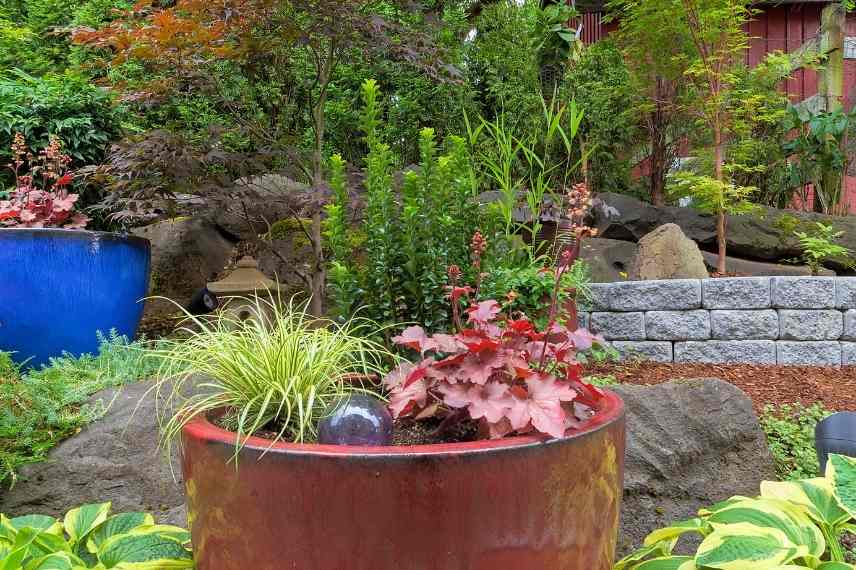
Potted plants require particular attention compared with those grown in the ground
Finally, young plants grown in pots require careful attention. Because the volume of substrate is limited, water evaporates more quickly there. But excess water or residual water in saucers or cache pots is also more quickly fatal, as the roots are confined and sit in water. The drainage of the container, the nature of the substrate and the material of the pot (terracotta, plastic, resin) directly influence the watering frequency.
Learn to recognise the visible signs of a lack of water
To learn when to water, you need to observe closely the signs the plants are giving.
The first sign to check is the soil’s condition: if it is dry on the surface but cool at depth, watering can wait. In pots, the finger test or simply weighing the container are usually enough to assess the need.
Plants also reveal their condition: drooping leaves, a slack habit or dull foliage signal the onset of water stress. However, plants or vegetable crops such as squashes and courgettes, with large leaves, are more susceptible to heat, not necessarily needing water immediately. By contrast, yellow, soft or spotted leaves, especially at the base, are often the symptom of overwatering.
A tomato plant, for example, responds quickly to poorly controlled watering: irregular watering leads to blossom-end rot, while constant excess causes necrosis at the bases of the leaves.
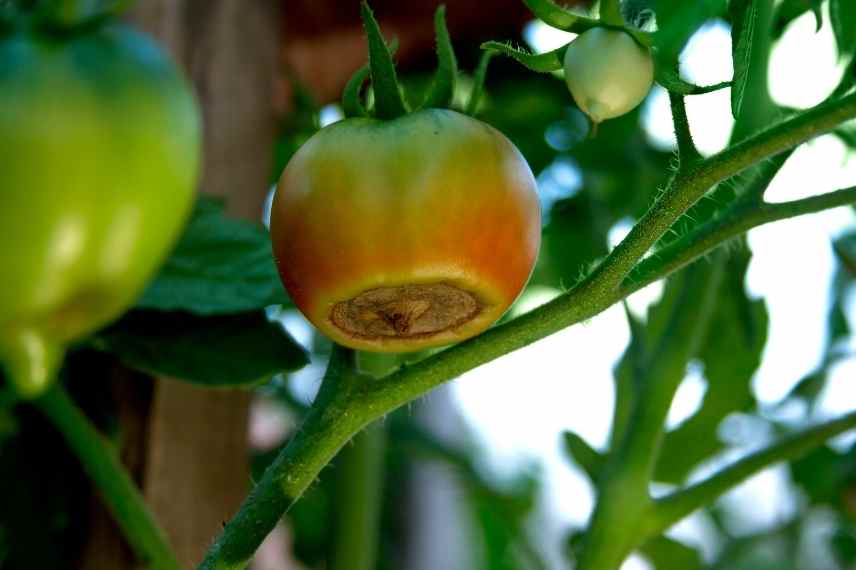
In tomatoes, blossom-end rot is mainly caused by irregular watering
Admittedly, it’s not always easy to interpret these signs, but experience will help you.
Read also
Watering the vegetable garden: our tipsHow to adjust your watering frequency?
En matière d’arrosage, il y a quelques règles d’or qui s’appliquent aux plantes ornementales comme aux plantes potagères :
- It is better to water less often, but more deeply, to encourage deep rooting. A superficial watering, repeated daily, encourages roots to stay near the surface, making them more vulnerable to drought. Young plants, still poorly rooted, require closer monitoring. But as soon as a plant becomes established, it is better to space out the waterings.
- Morning watering is preferable in summer to limit evaporation while avoiding disease risks. In winter or on cool days, it is better to water during the day so that water does not stagnate in the cold.
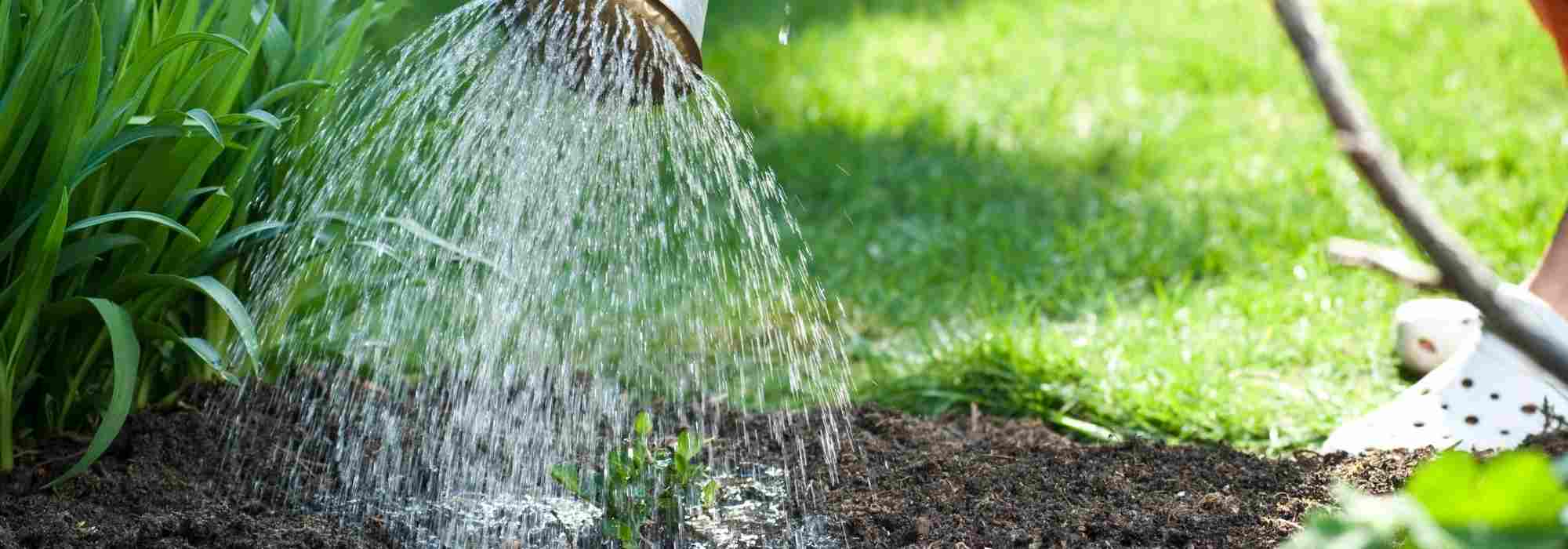
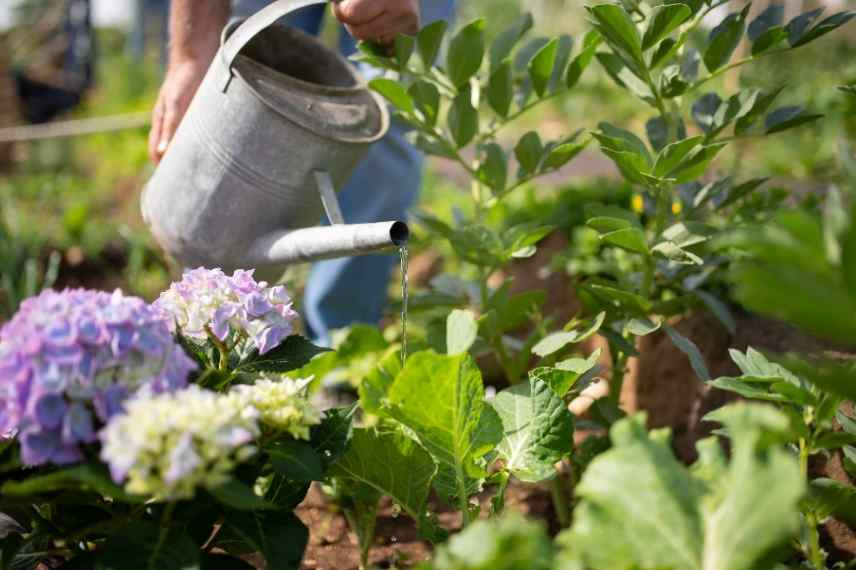 Watering with a watering can is always best, as it targets right at the base of the plants, without wetting the foliage</caption]
 - Watering techniques also have an influence. Watering with a watering can is always best because it targets the base of the plants, without wetting the foliage. And we use the rose to water the seedlings with a fine spray. The drip irrigation – is it really the panacea? provides a slow and regular supply, particularly useful in the vegetable garden, but does not promote deep rooting. The ollas, terracotta pots buried in soil, distribute water deeply. As for the watering basins around young trees, they concentrate water at the base, with no waste
- Mulching helps to keep the soil cool and reduce the frequency of watering.
How to water without overwatering for different plant types?
A few practical examples to help you get the watering rhythm right.
- Perennial borders : Hardy perennials suited to the local climate become self-sufficient after one or two seasons. A bushy sage or a well-rooted gaura requires no watering, except in extreme drought. Good mulch and well-prepared soil greatly reduce the watering needs.
- In the vegetable garden : Leafy vegetables (lettuce, spinach) and radishes require constant moisture, or they bolt. Fruiting vegetables (tomatoes, courgettes, squashes, aubergines, peppers…) require water at the right times: early in growth, then at fruit set. Root vegetables such as carrots, turnips, parsnips… need constant watering during germination, less abundant afterwards, but regular. Beans and peas should be watered regularly until flowering. Garlic, onions and shallots, or potatoes or beetroot, can grow even in drought conditions.
- Container plants on a balcony or terrace : in containers, watering is more frequent. A south-facing oleander in a pot exposed to the sun can consume up to 4 litres of water every two days in summer. Whereas the same in the ground can manage with virtually no water.
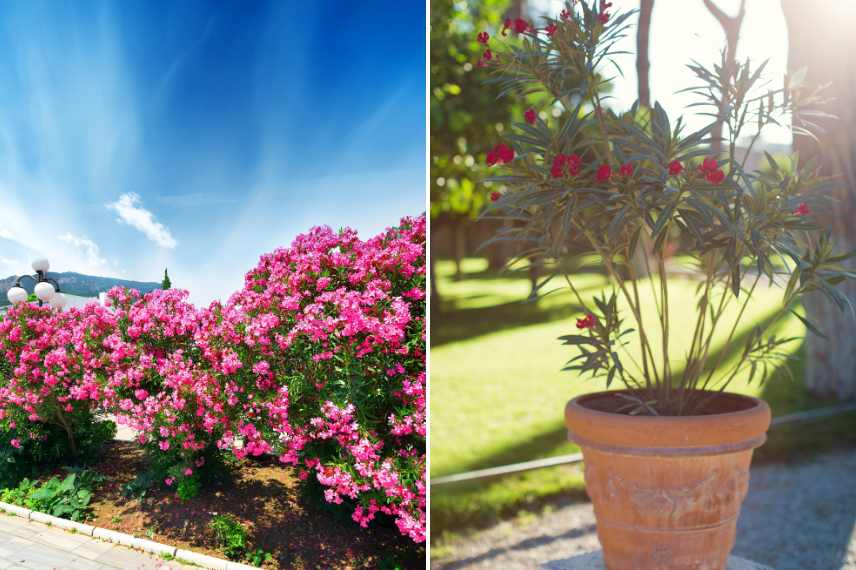
A south-facing oleander in a pot can consume up to 4 litres of water every two days in summer. Whereas the same in the ground can manage with virtually no water
- Trees and shrubs in the ground : The first summer after planting is crucial. Regular watering is needed to encourage deep rooting. After two or three years, needs decrease sharply. A laurustinus in a mild climate becomes self-sufficient. A Japanese maple, planted on well-drained and shaded soil, requires weekly watering in summer, but none in winter.
Our strategies for improving water management
Working the soil regularly and in the right seasons, without turning it over too deeply, remains the best long-term strategy. The addition of compost, organic matter or sand depending on the texture helps retain water better or to improve drainage.
The use of a plant mulch reduces evaporation, regulates soil temperature and protects microorganisms.
The choice of plants is decisive : no need to grow a Lobelia in dry soil in full sun. Better to adapt the plant palette to the local climate. In a dry garden, favour lavender, Euphorbias, Achillea, Santolina… In semi-shaded to shaded areas with moist soil, opt for Astilbes or Hostas.
Harvesting rainwater is a boon for relieving pressure on the network and saving potable water. A well-placed tank is often sufficient to meet the needs of an ornamental garden during the summer.
- Subscribe!
- Contents
Comments