





























How to stop an invasive plant?
Our planting tips and advice on controlling it
Contents
If you’ve ever had to deal with a plant that takes a bit too much liberty in your garden, you know how frustrating that can be. Some plants, though attractive, can quickly take over space in your garden and cause problems. What can you do to limit their spread without disrupting your entire green space? Don’t panic! Here are our tips to understand, prevent and limit invasive plants in your garden.
Understanding what an invasive plant is
An invasive plant is a species that tends to grow excessively, often to the detriment of other plants. They can multiply rapidly thanks to their seeds or even through root spread (the well-known stolons). This can pose a problem, as these plants compete with others for resources: water, light, nutrients and, above all, space.
Some of them are deliberately introduced into our gardens for their beauty or practicality (to cover a slope, for example), but beware if they escape your control. Among the common plants that become invasive in our area, for example Japanese knotweed, the bamboo, mint, the raspberry plant, lemon balm, St John’s wort, ivy or Virginia creeper. Some, like the last two, will even regrow from the smallest stem fragment… The problem is that they can quickly take over and harm other plants, or even local biodiversity, sometimes damaging infrastructures (such as walls or fences).
So, how can you keep these plants under control while preserving the balance of your garden?
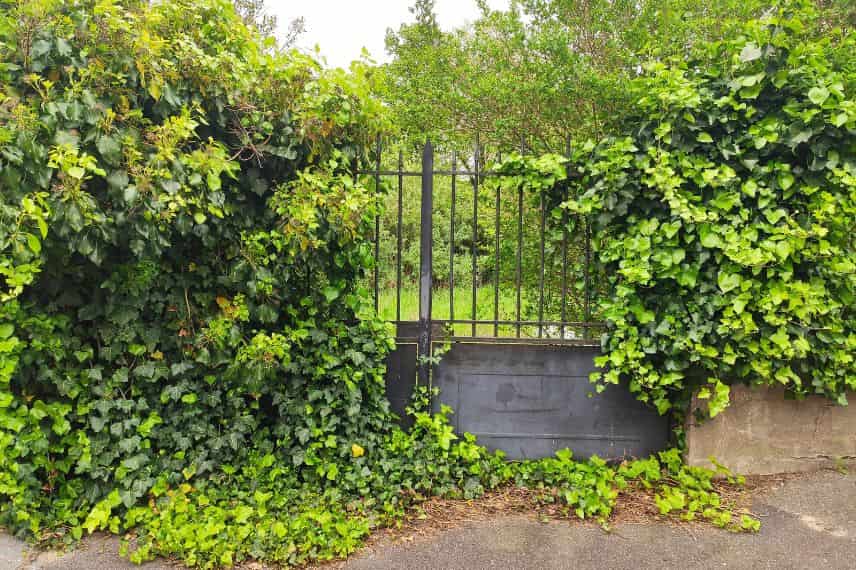
Ivy can become invasive if left unchecked.
Read also
How to get rid of an invasive acanthus?Choosing the right plants
Let’s head off the problem at source, and it’s as simple as that: before introducing a new plant into your garden, find out about its behaviour. Some species can be stunning, but are known for their invasive character. There are often local or less invasive alternatives, just as decorative.
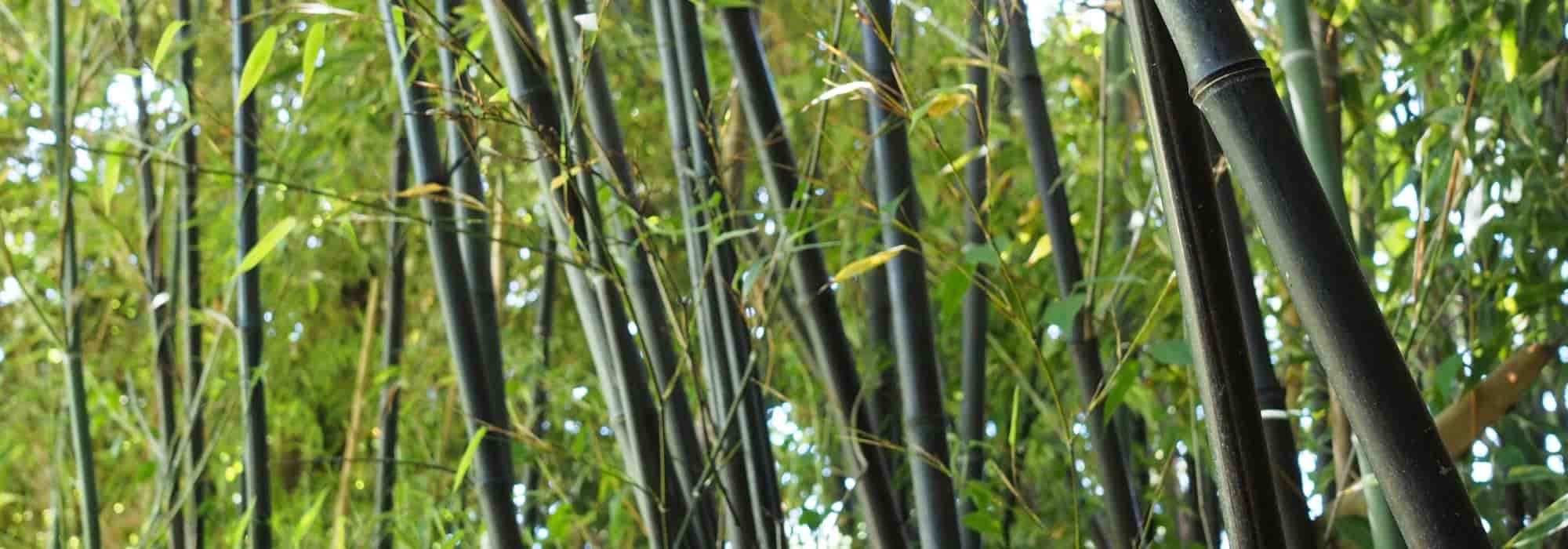
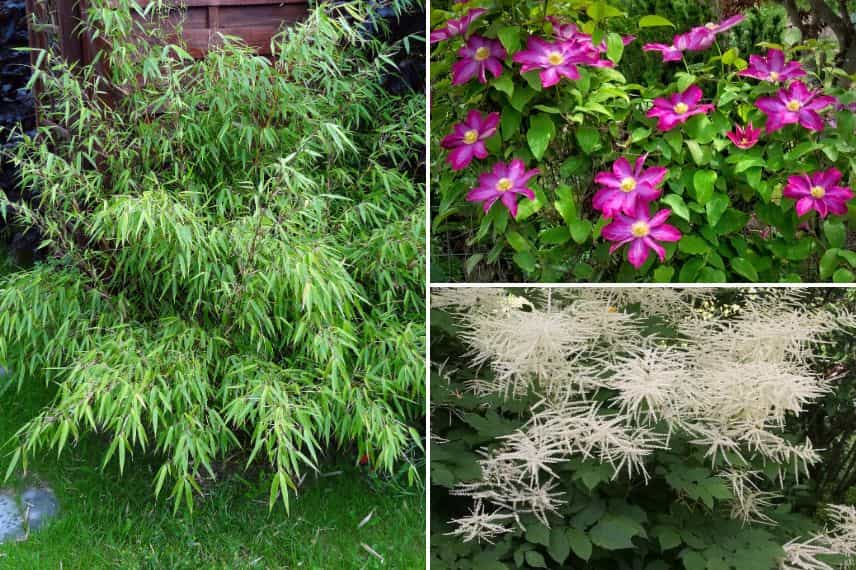
For example, rather than planting any bamboo species, prefer non-running varieties, i.e. non-invasive, such as the Fargesias. Among them, we recommend the handsome Fargesia rufa with its long green leaves or the tall Fargesia angustissima. The Fargesias generally reach about 2 metres across, but will not extend beyond that, nor colonise your garden, nor your neighbour’s. Conversely, the Phyllostachys are running bamboos, hence invasive, which should be avoided. And why not also opt for non-invasive ornamental grasses such as the Stipa?
Prefer non-invasive climbing plants such as the Clematis, the climbing hydrangea or the star jasmine to replace ivy or Virginia creeper. These alternatives are easy to manage and bring a lovely decorative touch to your walls and trellises, without the risk of overly rapid and uncontrolled spread.
And to replace Japanese knotweed or greater periwinkle, opt for non-invasive plants such as the Goat’s beard (Aruncus dioicus), the Meadowsweet (Filipendula ulmaria) or indeed a hardy geranium that provide structure and beauty without the risk of invasion.
Use physical barriers before planting
But what should you do if you have nevertheless set your sights on an invasive plant (for example the stunning Phyllostachys nigra, a running bamboo) ? You can install physical barriers at planting: the well-known rootstock barriers or root barriers.
Rootstock barriers are physical obstacles designed to prevent the spread of subterranean roots of certain plants, particularly those with invasive rootstocks, such as bamboo, but also mint, canes and some perennial plants. Rootstocks are underground stems that can spread far from the mother plant and give rise to new shoots. This can quickly overrun a garden or spill over into neighbouring spaces.
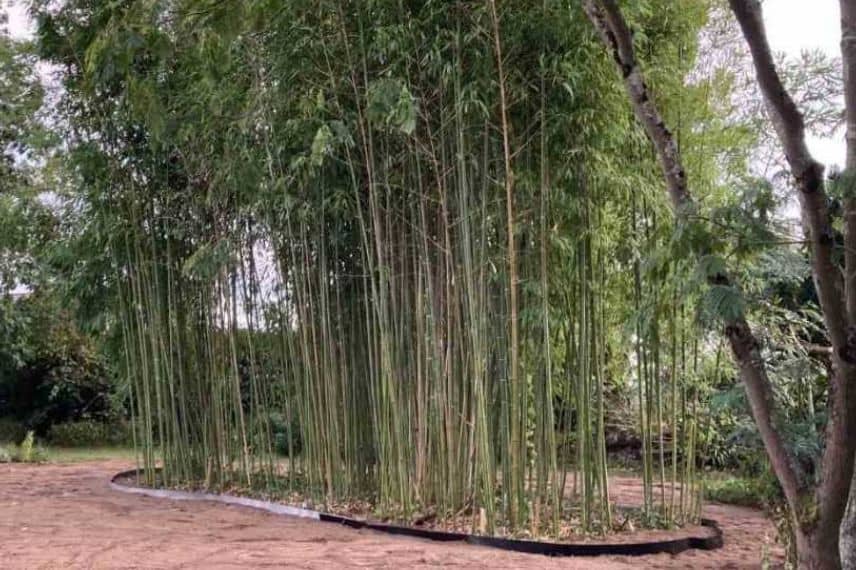
A root barrier to contain bamboo (photo GWENALLE DAVID AUTHIER)
These barriers are typically made from thick plastic, of reinforced geotextile. They are strong enough to halt the progression of roots and not degrade over time.
To learn how to install them, I invite you to read Solenne’s article: Install a rootstock barrier.
Note that for smaller perennial plants (the large periwinkle or mint, for example), you can also choose to install buried borders (often concrete, cladding, steel, etc.), bearing in mind that these borders must be deep enough to stop roots and protrude from the soil by several centimetres.
And what if I already have an invasive plant in the garden?
As with many gardeners (I must admit… I’ve been there too), you’ve fallen for an invasive plant that you’ve planted in the garden, without worrying about its character or telling yourself you’d be able to control it without any trouble… Don’t panic, there are techniques to limit its spread.
Regular mowing or pruning
For invasive perennial plants that spread by their roots or that are climbing, regular pruning can limit their spread. Prune at least two to three times a year. If the plant is surrounded by lawn (for example, raspberry canes), simply and regularly run the mower over the young shoots that spill over the edge and that’s that. If it’s a bed, use a hoe to dig out the creeping roots.
Remove the flowers before seed dispersal
Some perennial or annual plants spread by their seeds (such as pampas grass or lemon balm). Cut the flowers when they begin to fade, before they produce seeds.
Install a tarpaulin and/or mulch around the plant
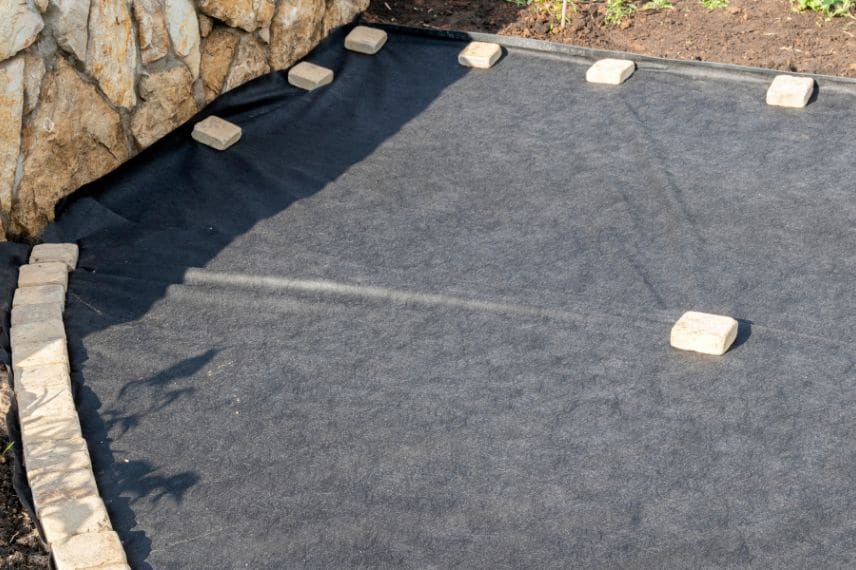
This technique works well with groundcover perennials and unwanted grasses. Surround, to at least 1 metre wide, the plant with geotextile and/or cover the soil with mineral or organic mulch. Note, however, that in windy areas, organic mulch (buckwheat hulls, straw, pine bark, etc.) needs to be laid directly in contact with the soil, without geotextile, so as not to blow away at the slightest gust. The mulch should be thick to deter new shoots from coming back (aim for at least 20 cm thick).
Install (if it’s not too late) a rhizome barrier
If the plant is not yet out of control, install a rhizome barrier as described in the previous chapter.
Manual uprooting
Manual uprooting is often the simplest solution to limit an invasive plant. This allows you to remove new shoots regularly (two to three times a year)… or eradicate the plant in question altogether. However, you need to be methodical. Some plants, such as Japanese knotweed, have very persistent root systems, capable of regrowing from a small root left in the soil! The ideal is to act at the start of the season, when the plants are still young and easy to remove, then monitor and repeat uprooting as needed. Use a spade or a fork to extract the roots deeply.
The ultimate solution: cover the surface with a black tarpaulin
Can’t see this plant in your patch any more and manual uprooting isn’t working (or you’re tired)? Here is your last resort: deprive the plant (or part of the plant) of light using a black tarpaulin! Without light, the plant will wither and disappear from your garden! Here is the method:
1- Prune or mow the plant down to ground level.
2- Cover the plant with a black tarpaulin. Be sure to extend well beyond the outer edge, to prevent stolons from wending their way towards the light.
3- Secure the edges and the centre of the tarpaulin with pegs or stones to stop it from blowing away.
4- The tarpaulin should remain in place for at least six months, or a full year depending on the vigour of the plant to be eliminated.
Additional tips
Beware of composting
Some plants, such as Japanese knotweed, ivy, Virginia creeper or periwinkle, can regrow from small fragments of stems or roots. It is therefore best to dispose of residues through the council’s green waste service rather than composting them, to prevent their reappearance.
Caution with weedkillers
We do not recommend resorting to chemical weedkillers, as they risk polluting the soil and water while disturbing your garden’s ecosystem. These products can also damage surrounding plants, degrade soil quality, and the life it supports. Some also pose a danger to your own health. So, take care!
- Subscribe!
- Contents
Comments