





























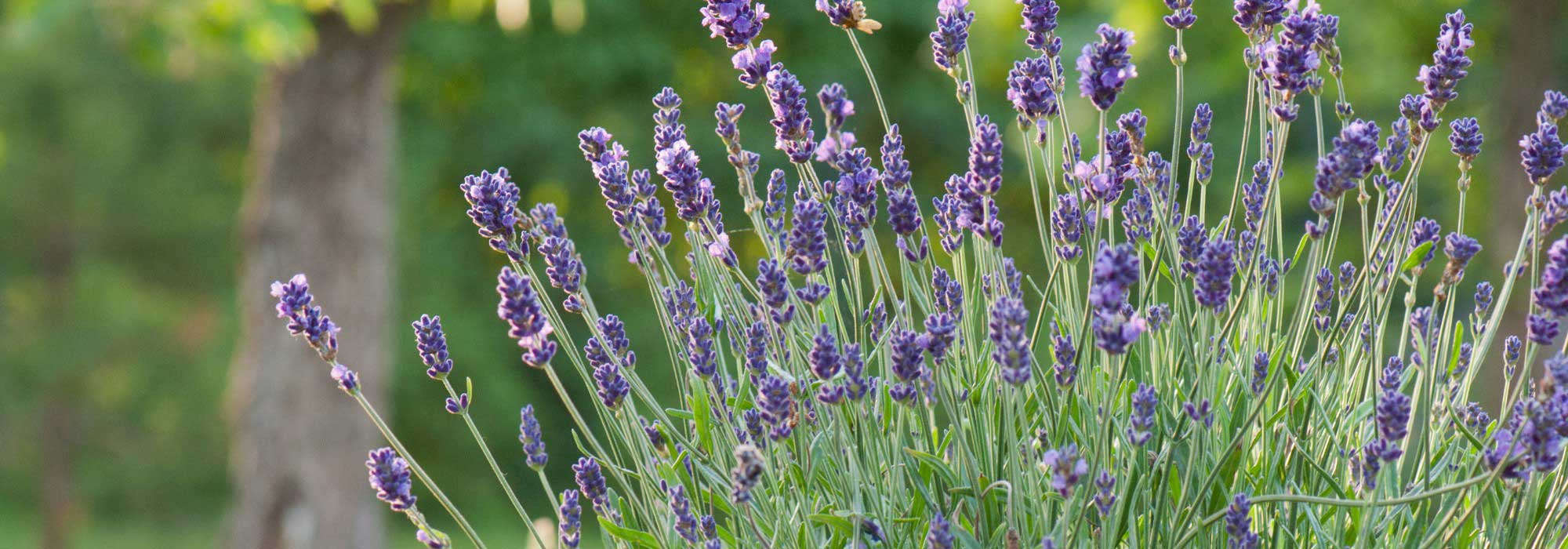
How to rejuvenate an old lavender by pruning?
How to revive a thinning lavender?
Contents
Lavender, or Lavandula, embodies dry, sun-drenched gardens. Robust, melliferous, fragrant, it forms beautiful compact tufts… at least during its early years. Over time, the plants become sparse, open up in the centre, the branches become lignified and flowering declines. It is quite possible to refresh an old lavender and to restore a denser habit for it, provided you intervene with precision and restraint. A lavender pruning well-conducted allows an old plant to remain floriferous for up to 10 years. You still need to know the right steps. If your lavender plant is thinning in places, you can remove older branches to air the clump. But beware: as far as pruning goes, lavender does not like severe cuts.
Let’s look at how to rejuvenate an old lavender, maintain an old lavender without exhausting it, and above all how to prune dead wood at the right time, and in the right way. All this will restore vitality, shape and flowering to your lavender, season after season!

Best practices for rejuvenating an old lavender plant
Before taking action, keep these simple rules in mind: they make all the difference between a lavender pruning that rejuvenates and a pruning that is too severe, which would weaken your lavender.
| ✅ What to do | ❌ What to avoid |
|---|---|
| Prune just after flowering (August–September) | Pruning in mid-winter or during periods of high heat |
| Remove only dead wood and the leafy stems at the top | Cut into the old naked wood, without leaves |
| Maintain the natural rounded habit | Avoiding pruning to a flat shape or disturbing the habit |
| Remove only one third of the plant’s volume | Reducing lavender by half or more |
Read also
Lavender: planting, growing, pruningWhat is the problem with an old lavender plant?
As lavender ages, lavender can become bare at the base, its woody stems proliferate and the living part concentrates at the top. Result: the centre of the plant dies, which compromises flowering, weakens the structure and promotes the appearance of diseases. The older branches naturally shed their foliage while new shoots grow only in the upper part.
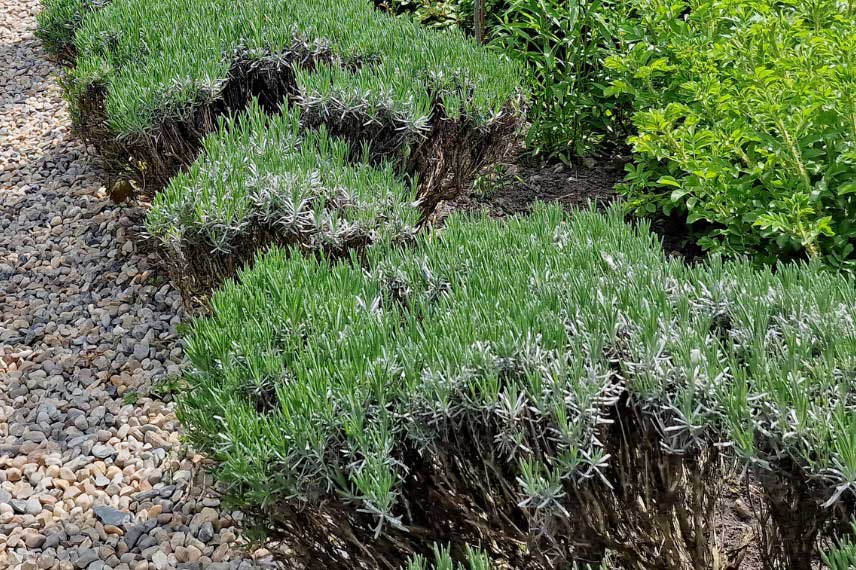
Over time, lavender plants tend to become bare at the base
Why should you prune an old lavender plant?
Lavender pruning is not simply an aesthetic gesture: it is essential for rejuvenating an old lavender plant, stimulating its vigour and prolonging its life. Over the years, lavender develops a woody base, becomes bare at the base, loses density, and flowers less generously. It then becomes essential to prune dead wood on the lavender to stimulate new growth and maintain the balance of the plant. Pruning slows ageing, stimulates the formation of new shoots and prolongs its longevity. It also limits standing moisture at the base, reducing the risk of cryptogamic diseases.
Read also
Lavenders: the safe betsWhy should pruning be done with care?
An old lavender plant does not tolerate harsh pruning. Old plants have a lignified, hard base, often without foliage and unable to produce new shoots. If one cuts into this dead wood, regeneration is not possible. Old wood, often dry and lacking foliage, no longer harbours dormant buds: a cut too low in this zone would not trigger any new growth. The pruning of lavender should be adapted to the plant’s condition. It is essential to observe each branch individually: identify the zones that are still green, slightly leafy, or bearing young shoots, and never cut below. The cutting height will vary, but always above a visible growth point.
Removing a large portion of the foliage also compromises photosynthesis, weakening the plant’s ability to regenerate. There are also risks of root imbalance, water stress, and excessive mobilisation of reserves — all of which, combined, can irreparably exhaust the plant. Hence the importance of measured pruning, tailored to the age and condition of the plant.
An old lavender plant, already fatigued by past seasons, does not have the same reserves as a young plant. Forcing it to produce a large number of new shoots at once drains its resources, risking exhaustion before winter. Thus lavender pruning should be conceived not as a radical intervention, but as a gentle, progressive accompaniment to the plant’s natural renewal.
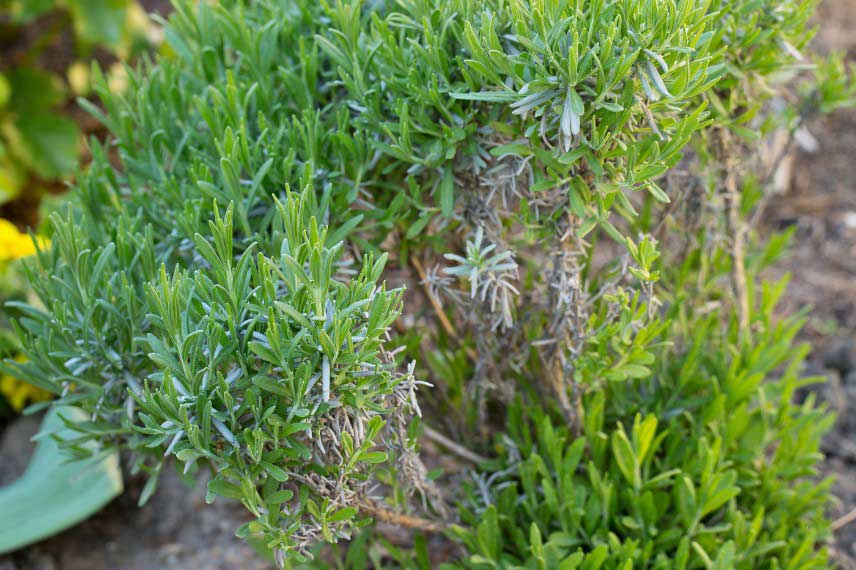
A lavender plant producing new shoots at the base of the stems.
When should you prune an old lavender plant?
The right time to prune an old lavender is at the end of summer, immediately after flowering, ideally in August or early September. This avoids the risks of late regrowth that would not harden the tissues before winter.
In regions with mild winters, a very light maintenance pruning in spring (May–June) may sometimes be considered if the plant has produced some flowers or has long, untidy stems.
⚠️ Do not perform more than one structural pruning per year. Any other intervention should remain occasional and light, in order not to exhaust an ageing plant.
How do you rejuvenate an old lavender plant?
Pruning lavender with sparse growth requires tact and restraint. The pruning must be precise, measured and perfectly suited to the plant’s base condition. The aim is to stimulate the plant without depleting its reserves or compromising its ability to recover. Lavender does not tolerate brutal pruning or routine, mechanical cuts. Pruning without assessing the wood’s condition can be fatal. Here are the precise steps to follow to succeed in this prune without compromising the plant’s health:
- Use pruning shears or a shear that are clean and well sharpened to guarantee clean cuts that will heal more quickly.
- Remove dead or dry wood first, cutting at their base, as close to the trunk as possible, without injuring living tissue.
- Identify the leafy young shoots on the old stems and prune just above them, at about 5 to 8 cm from the wood.
- Respect the lavender’s natural shape, keeping a rounded or dome-shaped silhouette to promote homogeneous growth.
- Never prune into old dry wood devoid of foliage, as it will not regrow. Limit cuts to parts that are still slightly green.
- Do not reduce the plant by more than a third of its volume, to avoid excessive stress that would weaken its recovery.
- Avoid pruning in damp or very hot weather: prefer a dry, mild day to reduce the risk of diseases or dehydration.
- Apply to the wounds a wound-healing product.
- Carefully clean the plant base after the lavender pruning to remove debris, spent blooms and dead leaves, thereby reducing the risk of fungal diseases.
- Do not water routinely after pruning, unless there is a prolonged drought: lavender dislikes stagnant moisture.
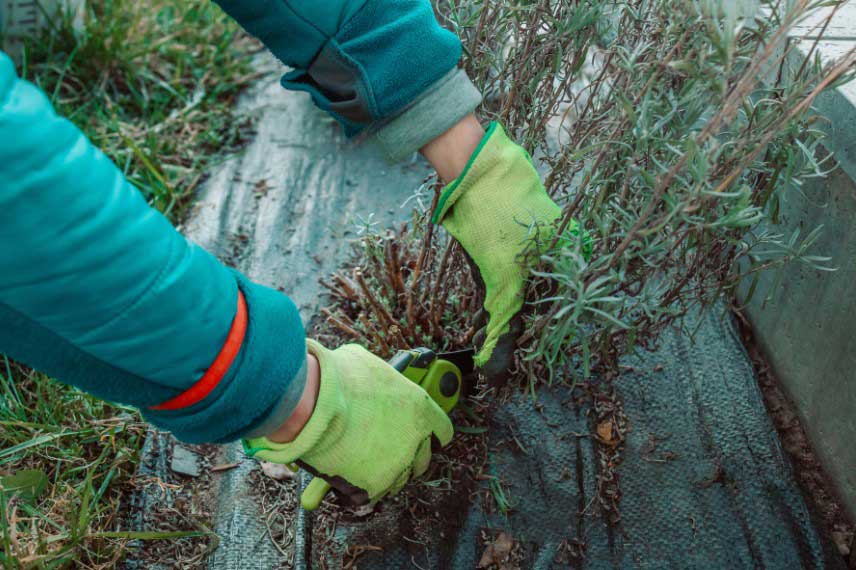
Cut the old stems just above leafy young shoots to encourage them to regrow.
How to care for an old lavender plant?
Even though a lavender plant won’t live forever — count 10 years maximum with proper maintenance — a few well-targeted actions can prolong its beauty:
- Annual pruning after flowering (August–September): cut back the older branches as close to the base as possible to air out the centre, and prune the others just above the young shoots.
- Well-drained soil: lavender dislikes moisture. A light, well-drained soil is essential, especially in winter.
- No nitrogen fertilisers: a little well-rotted compost in spring is enough to support new growth.
- Watering: only during very dry spells.
→ Also read: how to fail at growing lavender in 5 lessons
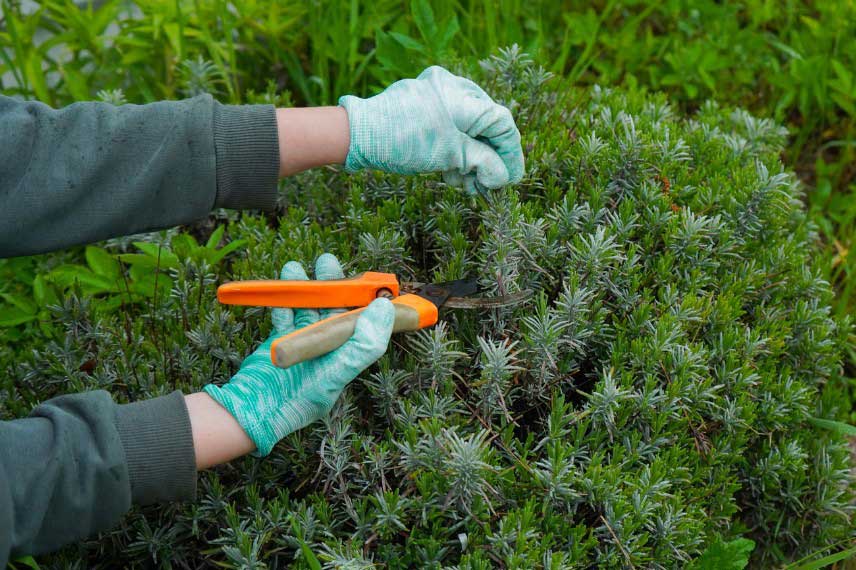
Each year, you can perform a light pruning on young shoots.
- Subscribe!
- Contents
Comments