





























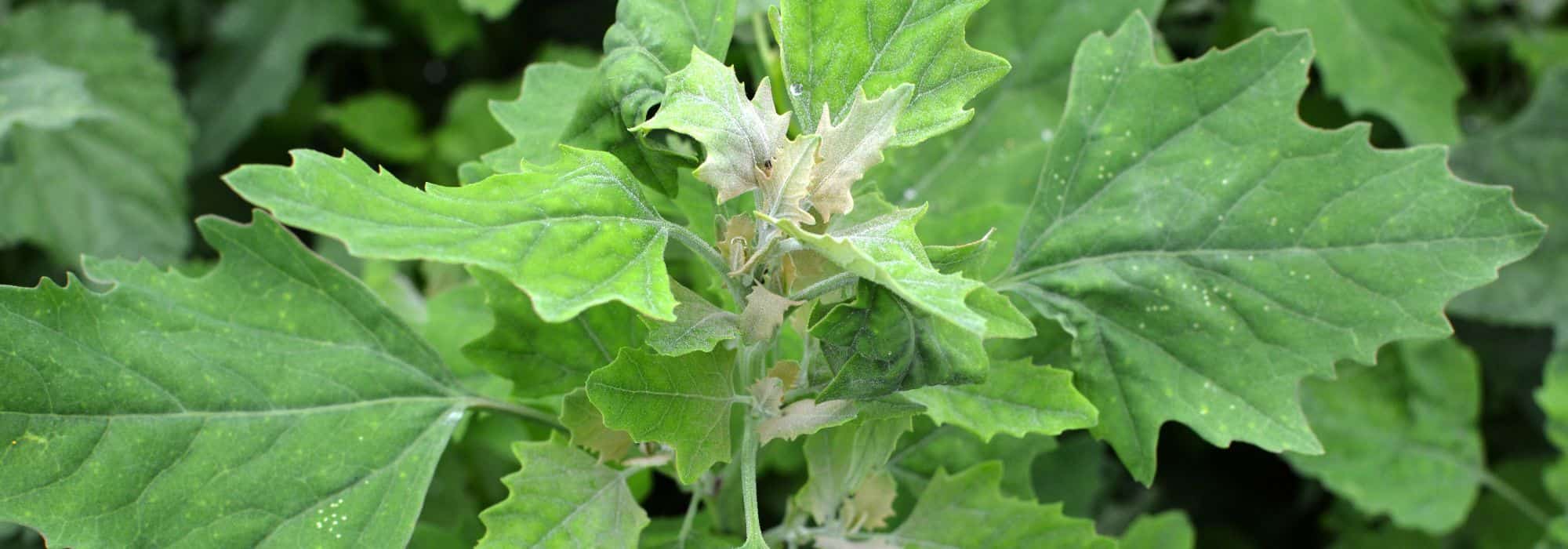
How to recognise goosefoot (fat hen) and get rid of it in the garden?
Our tips to combat its spread
Contents
The white goosefoot (Chenopodium album), sometimes nicknamed wild spinach or fat hen is an annual plant very common in gardens, cultivated fields and nitrogen-rich soils. Considered a weed by many of us, it readily invades vegetable plots and crops, notably maize and vegetables, and can even become the gardener’s nightmare… In this article, we will look at how to identify this wild plant, why it can pose a problem and what natural solutions exist to get rid of it.

Identifying and recognising goosefoot.
Botanical description
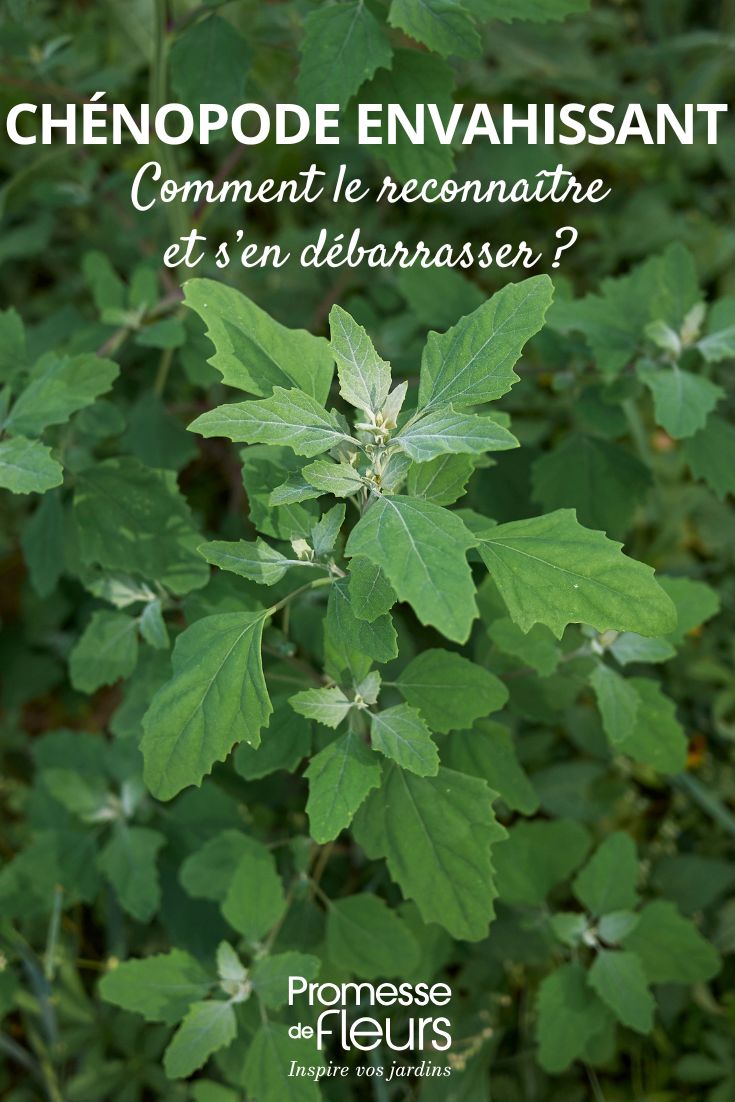
The white goosefoot belongs to the Amaranthaceae family, like Chenopodium quinoa (the quinoa) and Chenopodium rubrum. This annual plant can reach up to 1.5 metres in height and grows on soils rich in nitrogen.
Its leaves are numerous, triangular to diamond-shaped, often compared to the shape of a goose’s foot. Green on the upper surface, the underside of the leaves is pale green, with a farinose, powdery feel to the touch on this underside, which makes it easy to identify. Its stem, often tall and erect, is striped with pale green, almost white or purple. Its flowers, small and pale green, appear from July to autumn, forming compact clusters.
Common species
The Chenopodium album (white goosefoot) is the most common species in Europe. It is considered invasive in our green spaces. But other varieties exist, such as:
- The Good King Henry goosefoot, a perennial plant cultivated in cooking for its spinach-flavoured leaves.
- The Hybrid goosefoot (Chenopodium hybridum), which is distinguished by leaves that are more dentate.
- The Chenopodium ambrosioides, a tropical species with a strong fragrance.
- The Giant goosefoot (Chenopodium giganteum) : larger still, it can reach up to 2 metres and features green leaves with purple-tinged reflections.
- The Chenopodium quinoa : cultivated for its protein-rich seeds, the famous quinoa. It is a very popular edible plant.
Habitat and growing period
The wild spinach grows in spring, and its germination can extend into autumn. It occurs on cultivated soils, vegetable plots and fallow land. It prefers rich soils, which explains its strong presence in agricultural fields and home gardens.
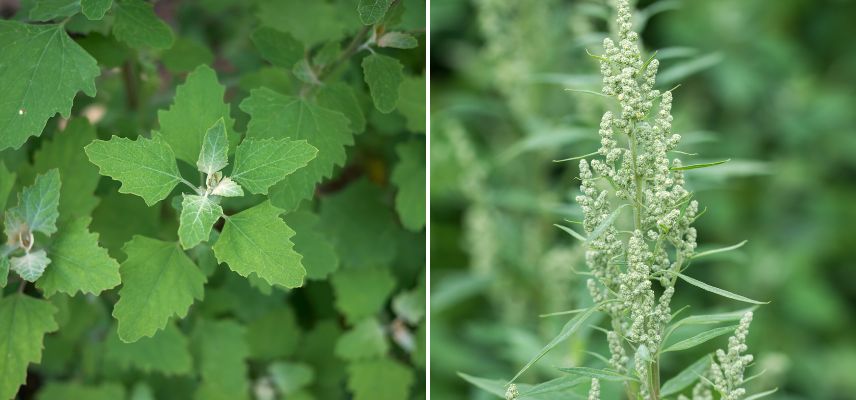
White goosefoot and its flowering
Read also
Chenopodium: planting, sowing, harvestWhy removing goosefoot?
Competition with crops
White goosefoot is considered by many gardeners to be a weed because of its highly invasive nature. Indeed, it grows rapidly and competes with crops, notably by absorbing large amounts of nutrients such as nitrogen, essential for vegetables and cereals such as maize. In a vegetable garden, it can smother young plants by depriving their root system of nutrients and light.
Rapid spread
A single plant of wild spinach can produce up to 100,000 seeds (in optimal conditions, of course) in a single season. These seeds can remain viable for several years in the soil. Its germination begins in spring and continues through autumn, which allows massive proliferation.
Health and environmental risks
The pollen of white goosefoot can trigger allergies in some sensitive people. Moreover, its seeds and leaves, though edible, contain oxalic acid, which can be toxic in large quantities. For livestock, excessive consumption can cause digestive disturbances.
But it is possible to take natural measures to eliminate white goosefoot before it sets seed and thus limit its spread.
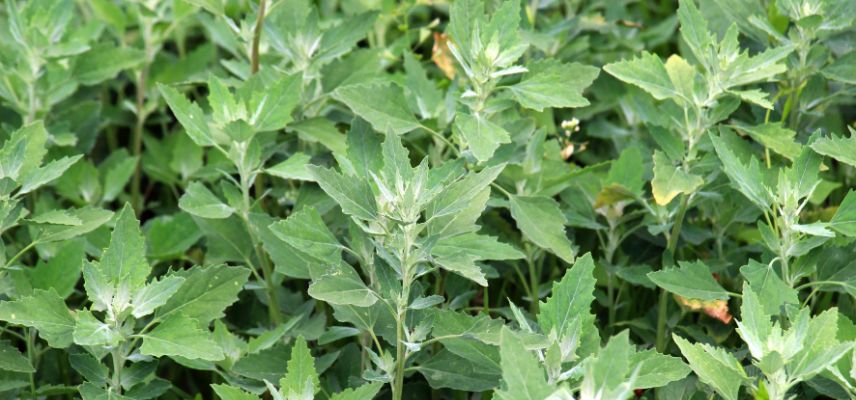
How to get rid of fat hen?
Manual uprooting and mechanical weeding
Manual uprooting is a simple and effective method for removing fat-hen, especially when the plants are still young and have not yet produced seeds. It’s best to act before the annual weed flowers, typically from spring. And the flowering is inconspicuous!
How to remove fat-hen effectively?
- Act after rainfall : when the soil is moist, the roots come away more easily, reducing the risk of regrowth.
- Grasp the base of the plant : pull firmly to extract the entire root system, as a broken root can allow rapid regrowth.
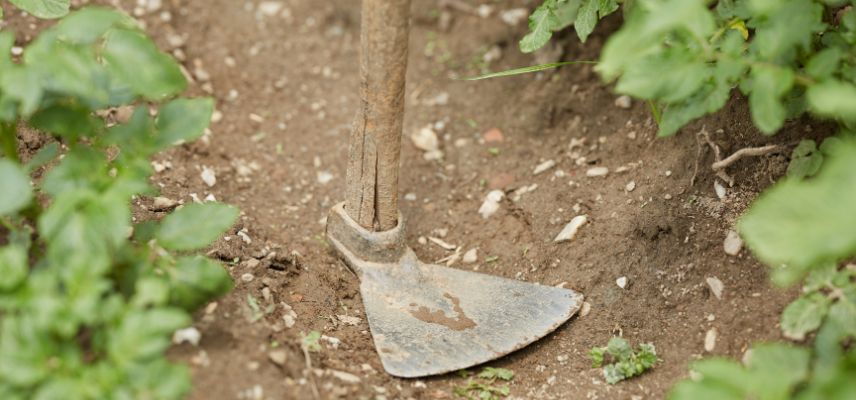
- Use suitable tools to remove the roots : a hand hoe, a hoe, or a hand cultivator to uproot well-established roots. For large areas, a scuffle hoe or a manual cultivator will make the job easier.
When and how often to weed?
- From early spring : the first emergence of fat-hen occurs at this time, making it the ideal moment to start.
- Every 10 to 15 days : regular weeding prevents seed buildup in the soil and stops the plant from reseeding.
- After harvest of crops : before autumn, it is advisable to tidy the veg patch or field to limit the spread of seeds in the following spring.
By following these steps, it is possible to significantly reduce the presence of fat-hen within a few years, provided you are consistent and pull every plant before flowering.
Natural techniques and alternatives
- Mulching : cover the soil with mulch (straw, hay, dead leaves) to prevent seed germination and limit weed growth. Additionally, mulching retains moisture and enriches the soil with organic matter.
- Practice stale-seedbed sowing : water the ground, allow the fat-hen seeds to germinate, then pull them out with a tool such as a hand rake or a rake before installing the crops. This method is very useful in the vegetable garden.
- Sowing ground-covering plants : plants, notably green manures like white clover or phacelia, establish quickly, cover the soil and thereby prevent light from reaching the soil, reducing germination of fat-hen.
- Black plastic mulch : covering the ground with an opaque sheet for several months deprives the weed of light and prevents it from germinating. This technique is effective for weeding large areas and avoids chemical herbicides. However, the growing area is not usable during this period.
- Regular weeding : by combining these techniques and intervening every year, it is possible to sustainably reduce the presence of this adventive weed.
Read also
How to sow Good King Henry?Did you know?
The white goosefoot, often regarded as an invasive plant in our country, is, in fact, an edible plant and consumed in some regions of the world. It is reputed for its content of vitamins, minerals and protein. Known since ancient times, it is eaten cooked like spinach. Its seeds, close to quinoa, can be ground into flour or eaten whole. However, due to its oxalic acid and saponin content, excessive consumption can be toxic, especially for sensitive individuals. It is therefore recommended to cook it to reduce this effect. It is also consumed by livestock and poultry, but quantities should also be moderate.
For more information, read our full guide: “White goosefoot: planting, sowing, harvesting“.
- Subscribe!
- Contents
Comments