





























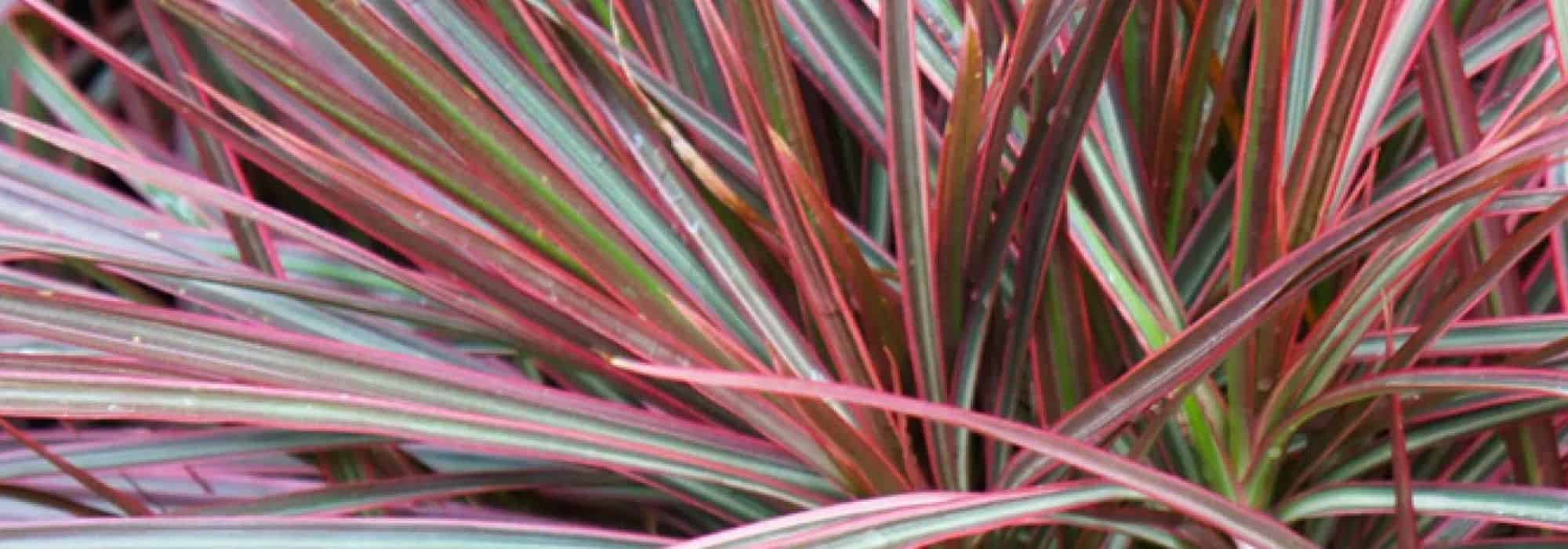
How to pot a Madagascar dragon tree in a pot?
All our tips
Contents
The Madagascar Dragon Tree, also known by its botanical name Dracaena marginata, is a very popular indoor plant for its slender foliage and graphic silhouette. Native to the island of Madagascar, this plant appeals with its exotic appearance and easy maintenance. Easy to grow indoors, the Madagascar Dragon Tree adapts very well to pot culture. It requires little watering, prefers bright light, and adds a lovely touch of greenery. But to keep it healthy and preserve its decorative appeal, you should start by planting it properly and providing it with the right growing conditions.
Here’s how to plant a Madagascar Dragon Tree in a pot properly and provide it with ideal conditions to thrive.

Which Madagascar dragon tree varieties are suitable for growing in pots?
All Madagascar dragon trees grow well in pots, in bright, well-lit interiors. Some stand out for their more colourful foliage or their more compact habit, ideal for small spaces.
- Dracaena marginata: This is the most common botanical form of the Madagascar dragon tree. It features a bold green foliage subtly edged with a fine red margin. Slim, understated and easy to care for, it reaches up to 2 m tall in a pot and requires little maintenance.
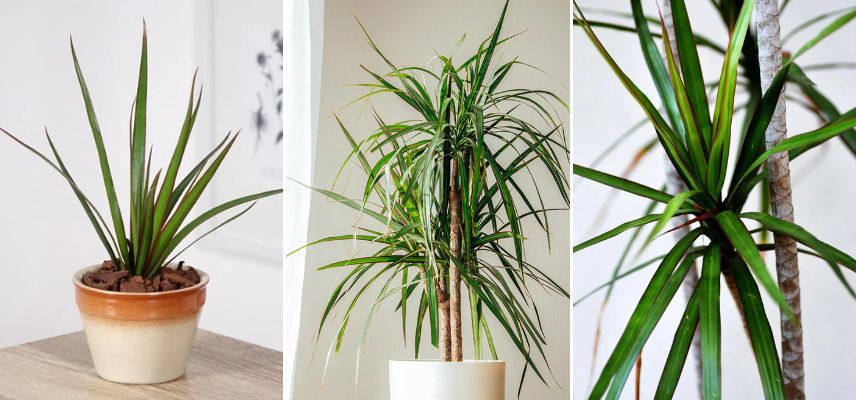
- Dracaena marginata ‘Bicolor’: Easy to grow and easy to recognise with its long, slender leaves edged in red, this variety is ideal for pot culture, where it can reach 1.5 to 2 m tall indoors.
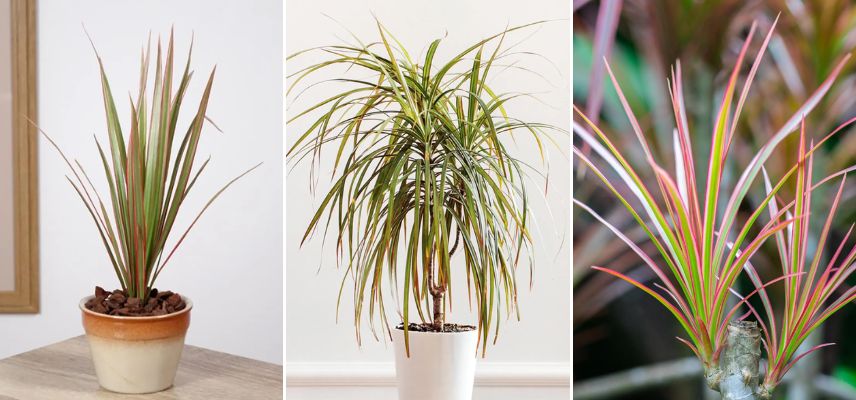
- Dracaena marginata ‘Magenta’: This cultivar is distinguished by its green leaves edged with an intense purple-red. In a pot, it reaches 1 to 1.8 m tall over time. Very striking, it’s an excellent choice for giving structure to a room.
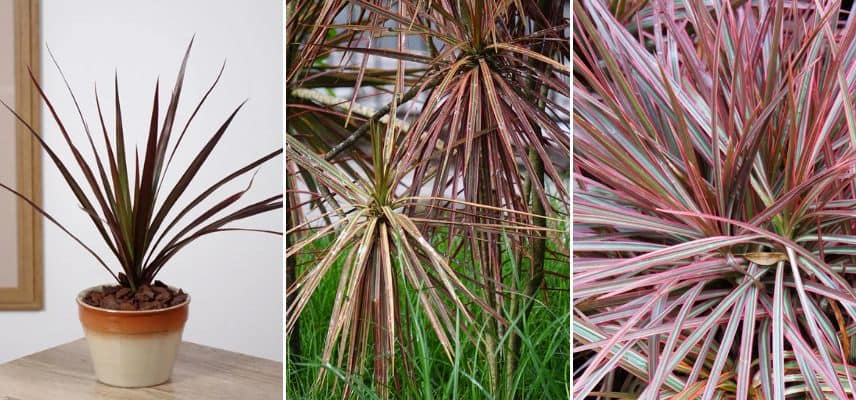
Tip : For an even more graphic effect, don’t hesitate to group several Dracaena marginata with contrasting foliage in the same space, varying the height of the pots or specimens.
→ Discover also our other varieties of Dracaena.
Which pot to choose for a Madagascar dragon tree?
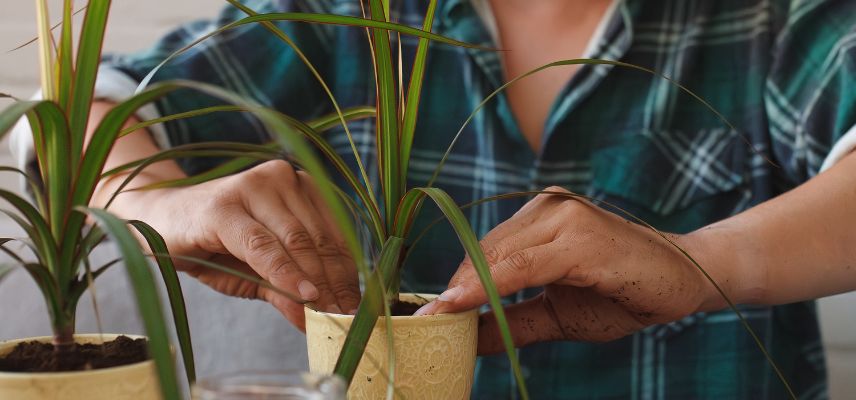
For a young Madagascar dragon tree grown indoors, a pot 20 to 25 cm in diameter is sufficient. If the plant is more developed, opt for a pot 30 to 35 cm in diameter, with a depth of at least 25 cm so the roots can spread out properly.
It is important that the pot has drainage holes at the bottom: Dracaena is sensitive to excess moisture, which can cause yellowing of the leaves or root rot. You can place a saucer underneath the pot, which you should empty after each watering.
Terracotta pots are often recommended, as they allow the substrate to breathe, but a plastic pot can also be suitable provided there is a drainage layer (clay balls) at the bottom. Also avoid unperforated cache pots, unless the plant is in an inner pot with holes and you ensure you empty any residual water after each watering.
Good to know: always choose a pot one size larger than the current pot.
What growing medium should I use to pot a Dracaena?
The Madagascar dragon tree in a pot needs a light, well-drained substrate. Preferably use a special houseplant compost, suitable for tropical plants grown indoors.
A universal potting mix can also be suitable, provided you lighten it by mixing it with one-third drainage material: coarse sand, perlite or pumice. This mix helps prevent waterlogging, which Dracaena cannot tolerate.
Also consider placing at the bottom of the pot a layer of 3–5 cm of clay pebbles. This drainage is essential to protect the Dracaena’s roots in a pot, especially if the container is plastic.
How to pot a Madagascar dragon tree?
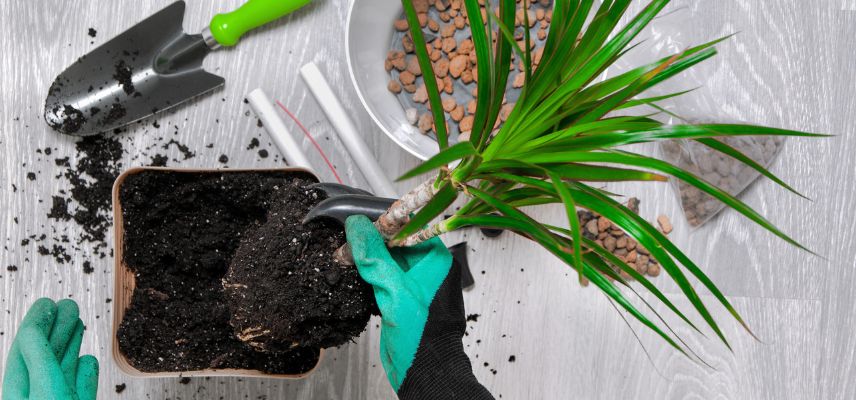
Planting a Dracaena in a pot is straightforward and can be carried out indoors year-round, although spring remains the ideal time. Here are the steps to follow:
- Start by placing a drainage layer at the bottom of the pot (expanded clay pellets or gravel).
- Add a little potting compost for houseplants.
- Position the root ball in the centre, taking care not to bury the collar (base of the plant).
- Fill the remaining gaps with potting compost, then gently firm the surface.
- Water moderately right after planting.
The Madagascar Dragon Tree in a pot doesn’t need to be buried too deeply. It’s best to leave a small rim at the top of the pot to make watering easier.
Where should you place a Dracaena in a pot?
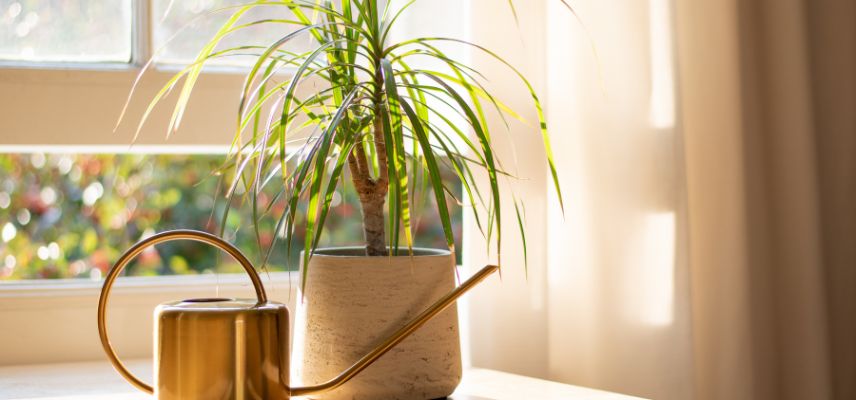
Dracaena enjoys light, but not direct sun in midsummer. A bright location, for example near a window facing east or west, suits it perfectly. Too much shade slows its growth, while too much sun can burn the leaves, especially on young plants.
You can also move the Madagascar dragon tree outdoors in a pot onto a terrace or balcony in summer, if the temperature stays mild and the exposure is sheltered. You’ll need to bring it indoors as soon as nights start to get cool.
Watering and care for Dracaena
Caring for Dracaena is not very demanding. This plant does not like overwatering: the surface of the substrate should be allowed to dry out between waterings. In general, watering every 10 to 15 days is sufficient, depending on the temperature and the amount of light.
In winter, water requirements decrease: one watering per month may sometimes suffice. Always adjust the watering frequency to the ambient conditions, avoiding the substrate becoming waterlogged. Foliage can be wiped from time to time with a damp cloth, especially if the plant is placed in a dusty room.
To support its growth, a liquid fertiliser for green plants can be applied monthly from March to September. This helps to strengthen the foliage and keep its colour.
Dracaena repotting takes place every two to three years, or as soon as the roots appear cramped. This is also an opportunity to refresh part of the substrate, which becomes depleted over time.
- Subscribe!
- Contents
Comments