





























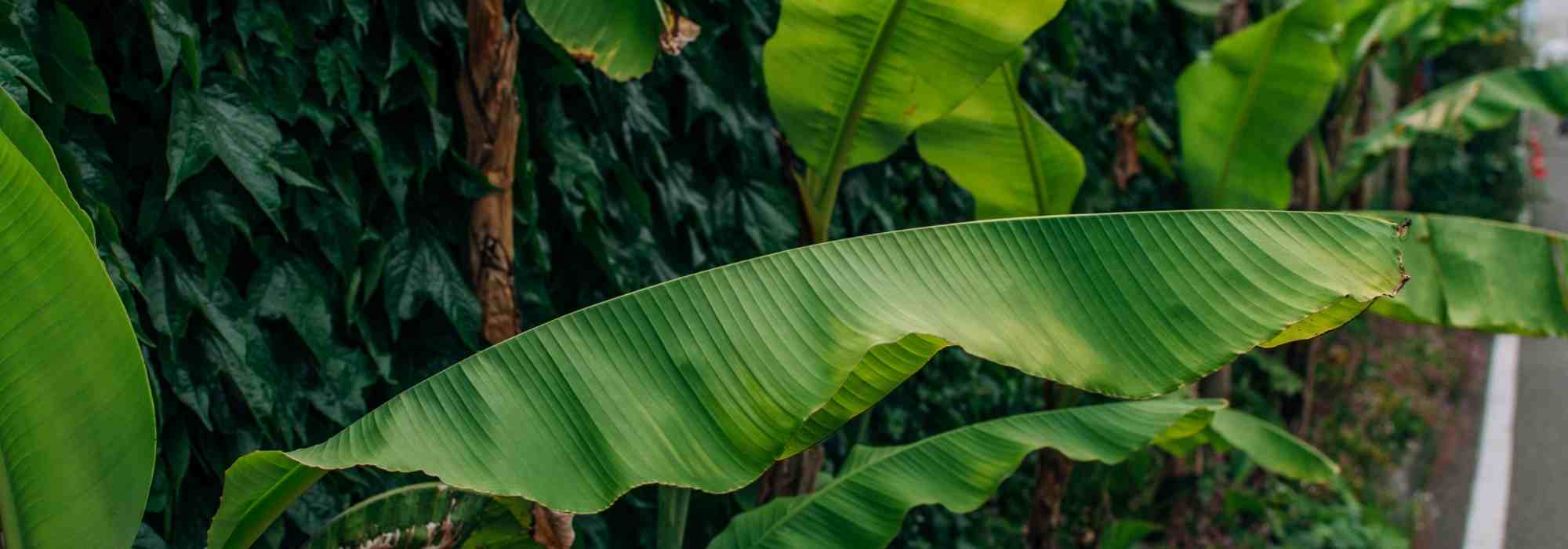
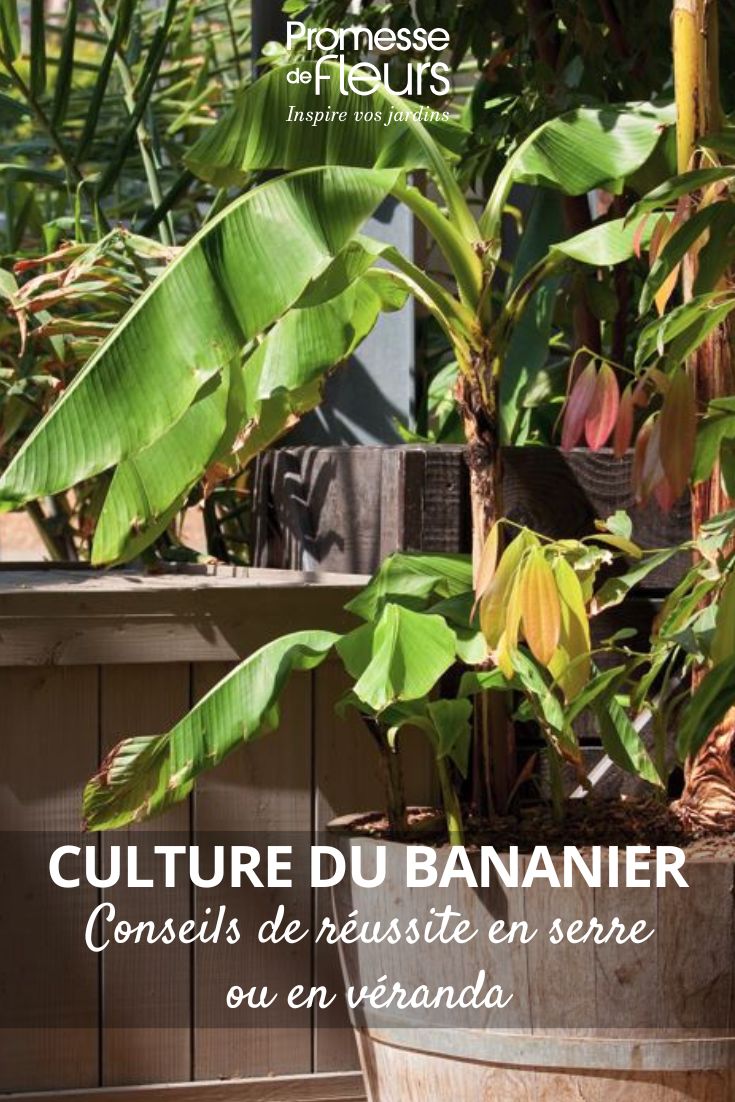
How to grow a banana plant in a greenhouse or conservatory? Tips for success
Growing banana plants in a greenhouse or conservatory: varieties, care and fruiting
Contents
Considered a tropical plant restricted to warm climates, the banana tree (Musa spp.) now finds its place in the greenhouses and conservatories of passionate gardeners, even in our temperate latitudes. Thanks to advances in protected cultivation techniques and a better understanding of the requirements of this spectacular plant, it is now quite possible to consider growing it in a closed environment, not only as an ornamental subject, but sometimes bearing fruit.
However, successfully growing a banana tree in a greenhouse or conservatory does not come about by chance. This plant requires precise conditions in terms of heat, light, humidity and nutrition. Not to mention the real know-how! The banana tree is not an ordinary indoor plant, but a semi-tropical species.
Discover how to successfully grow a banana tree in a greenhouse or conservatory, with its constraints and specifics, and above all the precise advice on cultivation conditions.

Which species and varieties are suited to growing in a greenhouse or conservatory?
Choosing the right species or variety of banana is fundamental. It’s often what makes the difference between success and failure. Not all banana plants are suited to life in a greenhouse or conservatory. The choice of species and variety is decisive in guaranteeing vigorous growth and, in some cases, fruiting.
Selection criteria
For a protected space in a temperate climate, here are the essential criteria:
- A compact size: to fit within ceiling height. This is why dwarf varieties are preferred
- A tolerance to lower temperatures: even when heating is used, night-time dips can occur in winter
- Moderate vigour : overly vigorous varieties can become unmanageable
- An ability to bear fruit in less-than-perfect conditions
- An ornamental value can help if the fruit is secondary. This appeal may, for example, be enhanced by colourful foliage.
Recommended species
Most cultivated bananas belong to the genus Musa :
-
- Musa acuminata: the mother species of many edible varieties. It is sensitive to cold but grows well in a heated greenhouse. It forms the genetic base for most dessert bananas
- Musa balbisiana : hardier, often used in cross-breeding hybrids. It tolerates greater temperature fluctuations but yields less tasty fruit
- Musa basjoo : the hardiest of bananas. It can survive sub-zero temperatures, but does not fruit under our latitudes. Its lush foliage makes it an excellent decorative choice
- Ensete ventricosum : often confused with Musa, it does not produce edible fruit but offers a majestic presence. Ideal in a conservatory for its architectural habit
- Musa velutina : this species, highly ornamental for its pink bananas, can be grown in a greenhouse or conservatory, but the fruit has fairly hard seeds
- Musa lasiocarpa: perfect for a bright conservatory or a cool greenhouse. It is a purely ornamental variety
- Musa sikkimensis: to be grown in a greenhouse or conservatory with plenty of space. Cultivation is possible there but it is less suited for indoor use due to its size, vigour, and its light and space requirements.
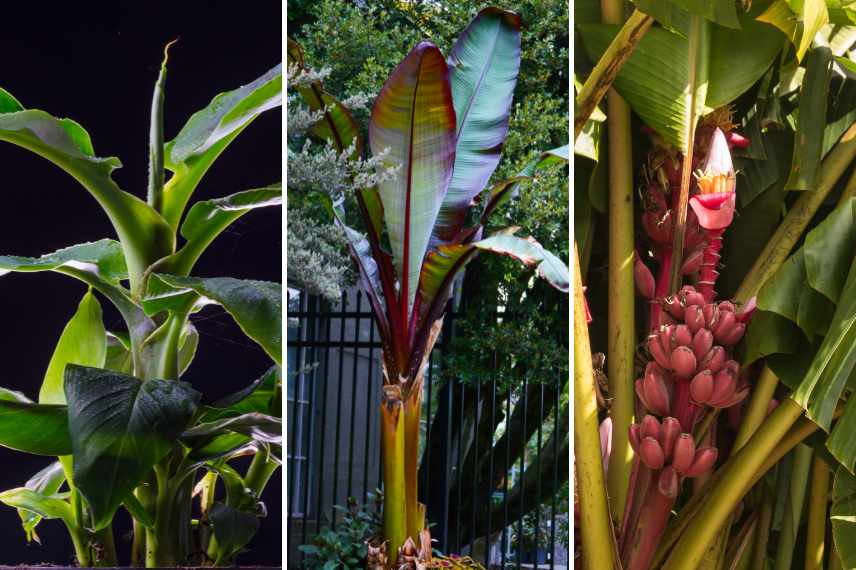
Three species for greenhouse or conservatory cultivation: Musa acuminata, Ensete ventricosum and Musa velutina
The most suitable varieties
- ‘Dwarf Cavendish’: a compact variety (1.5–2 m), ideal for conservatories. It bears sweet fruit and tolerates confined spaces well
- ‘Red Tiger’: a variety with green leaves, purple on the reverse and dark red on the upper surface
- ‘Maurelli’: Abyssinian red false banana with purplish foliage
- ‘Red Dacca’: a dwarf banana with a red-brown trunk and pink fruits.
Challenges and constraints related to growing banana plants in a greenhouse or conservatory.
Growing a banana plant in a protected space is a challenge, as you need to recreate a tropical microclimate in an environment far more restrictive than nature. This demanding cultivation is nonetheless reserved for experienced gardeners.
Temperature constraints
Banana plants are tropical or subtropical plants. They therefore require daytime temperatures above 20–22°C and little tolerance for large nocturnal fluctuations or drops below 12–15°C. In a conservatory or greenhouse that is poorly insulated, cold nights can slow growth, halt it altogether, or cause damage.
Moreover, daytime heat buildup can cause a greenhouse effect, which can burn the foliage or dry out the growing medium abruptly. Finally, in winter, maintaining a minimum tolerable temperature requires a heating source. If the space cannot be heated effectively, some hardier varieties will be essential.
Optimal light
Banana plants require bright light but not scorching. A minimum of 10 hours of light per day is recommended to sustain growth. In a conservatory or greenhouse, orientation, the transparency of the glazing or their treatments (UV-protective glass, films, shading screens) play a crucial role.
In autumn and winter, light can become deficient. That is why artificial lighting (full-spectrum horticultural LEDs) can compensate for the lack of natural light.
Humidity and air circulation
Banana plants require a relative humidity of 60–80%, constantly monitored by an essential hygrometer. Therefore, use humidifiers, water trays or misting devices to maintain this level.
However, excess humidity without air exchange promotes fungal diseases. Ventilation of the greenhouse or conservatory must therefore be controlled to prevent air stagnation. This air circulation is also important to limit attacks by mites or scale insects, but without causing unwanted draughts that could damage the delicate leaves.
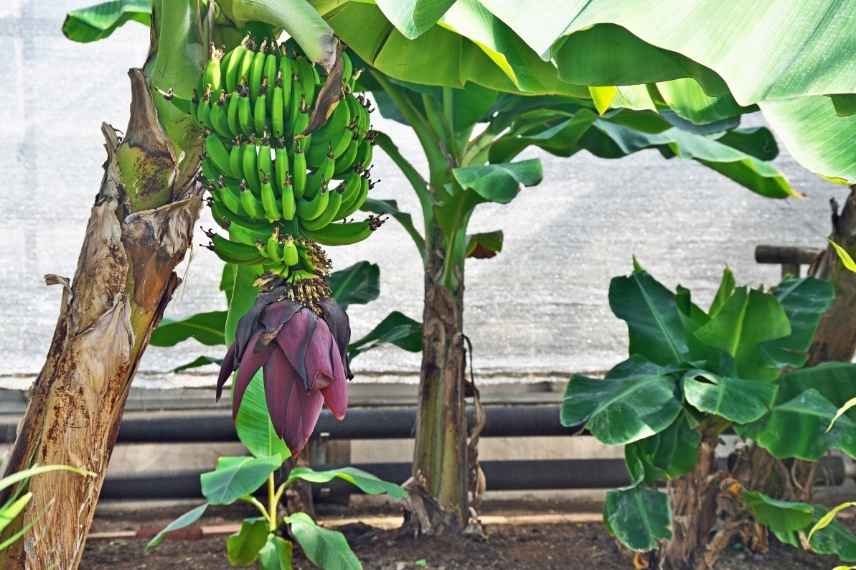
Growing banana plants in a greenhouse or conservatory requires optimal and rigorous cultural conditions
Space management
The banana plant can become sizeable, its stipe thickening and its foliar branching occupying a lot of space. In a conservatory, plan for ceiling height, passage width, and access to the canopy.
Keys to successful growth
The banana plant is fast-growing, thirsty for water and nutrients. Fine management of the substrate and nutrient inputs is essential.
Substrate selection
- Use a well-draining, nutrient-rich mix formed of 40% horticultural potting compost, 30% well-rotted compost, 20% perlite or sand, and 10% coconut fibre
- Aim for a pH between 6.0 and 6.5
- Provide a good drainage layer (gravel or clay pebbles)
Watering
- During the growing season (March to October), water frequently but moderately: the substrate should remain moist but not waterlogged
- During hot periods, mist the foliage or keep a water tray nearby
- In winter, reduce watering, but never allow the substrate to dry out completely
- Avoid hard water and prefer rainwater or filtered water
- Mulch to retain moisture
Fertilisation
- Apply a balanced NPK 10-10-10 fertiliser once a month during the growth period
- During the fruiting stage, favour a potassium-rich fertiliser NPK 5-5-15
- Incorporate well-rotted compost or manure in spring to stimulate the soil’s microbial life
- A trace-element supplement (magnesium, iron, zinc) can be beneficial if deficiencies are visible.
Repotting
Every 2 to 3 years, repot into a larger container. Take the opportunity to partially refresh the substrate and inspect the root system. Banana plants appreciate space: a 40 to 60 litre pot is recommended for fruiting varieties.
Pruning
- Remove suckers so that only one or two remain
- Remove damaged or poorly oriented leaves to improve air circulation and light within the crown
- Consider topping if the banana plant becomes too tall. This cut of the terminal bud stimulates lateral shoots
Read also
Potted Banana tree: planting and careGrowth monitoring, flowering and fruiting
This final section focuses on the more technical and delicate aspects of not only growing a banana plant, but bringing it to production in a greenhouse or conservatory. Obtaining fruit in a greenhouse or conservatory is possible, but requires patience and rigour. The banana plant is semelparous: it dies after fruiting, but produces offshoots. Most cultivated banana varieties are parthenocarpic, which makes greenhouse or conservatory cultivation easier.
A lengthy growth timeline
- After planting or repotting, the plant goes through a period of vigorous growth before flowering begins.
- Some varieties can trigger an inflorescence after 9 to 12 months. In temperate climates under glass, this interval can be longer.
- Once the flower has opened, fruiting takes several months depending on the variety and temperature.
- After harvest, the pseudostem weakens and often needs replacing. The selected ‘mother’ sucker then takes over.
Maintenance
- Right after harvest, the exhausted pseudostem should be removed with a clean cut, and the selected sucker allowed to grow.
- Regularly removing dead leaves helps keep the area around the trunk clean.
- An annual maintenance schedule (re-potting, nutritional assessment, treatments, greenhouse glass cleaning) helps maintain performance and longevity.
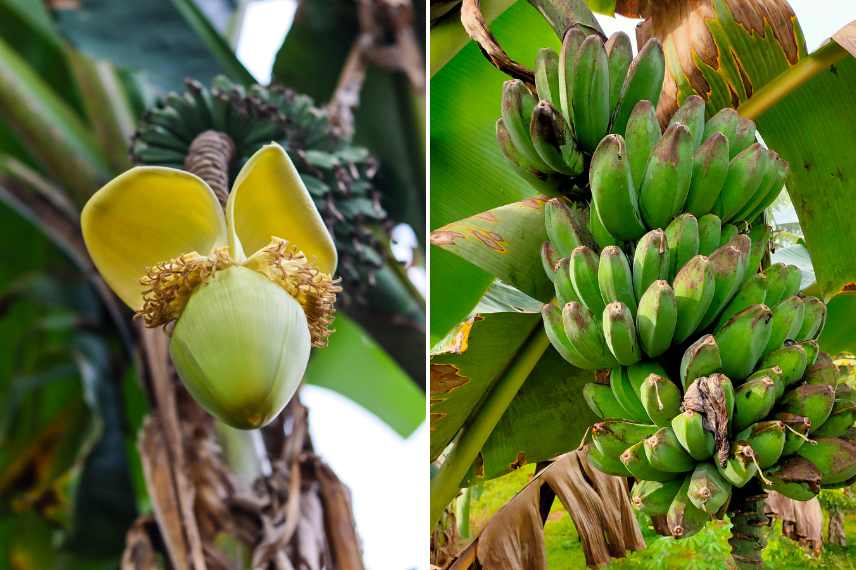
The flowering and fruiting of a banana plant are difficult and time-consuming to obtain in a greenhouse or conservatory
Disease and pest control
- Root rot: it is a real risk in pot culture, particularly if drainage is insufficient. Watch for symptoms such as yellowing leaves or leaf wilting.
- Leaf fungal diseases: stagnant humidity combined with a lack of ventilation promotes spotting. Air circulation is a good defence.
- Insects (mites, scale insects, thrips, aphids): in a greenhouse, populations can explode. Regular inspection and appropriate treatment (predatory beneficials, gentle insecticidal soap) are necessary.
- Thermal stress / leaf-edge desiccation: in case of extreme heat or dry air, leaf margins can scorch. Plan for shade sails and misting.
- Subscribe!
- Contents
Comments