





























How to choose a Katsura tree or Cercidiphyllum?
Buying guide and criteria for finding the perfect variety
Contents
The Katsura tree (Cercidiphyllum) is valued for the changing colours of its foliage, but also for the sweet, candy-like notes it exudes, which give it its name. But it is also a fairly adaptable bush all year round, which will enjoy sun or partial shade, in moist, fertile soil. Pollution-tolerant, it will even find a place in urban gardens and can be planted as a standalone specimen, in a shrub hedge or as a backdrop to borders.
But among the different varieties available, which one should you choose? This is what we invite you to discover here by following our buying guide.
In addition, to learn everything about its cultivation, discover our comprehensive dossier: Caramel tree, Cercidiphyllum: planting, pruning and care.
Choosing a caramel tree based on its foliage
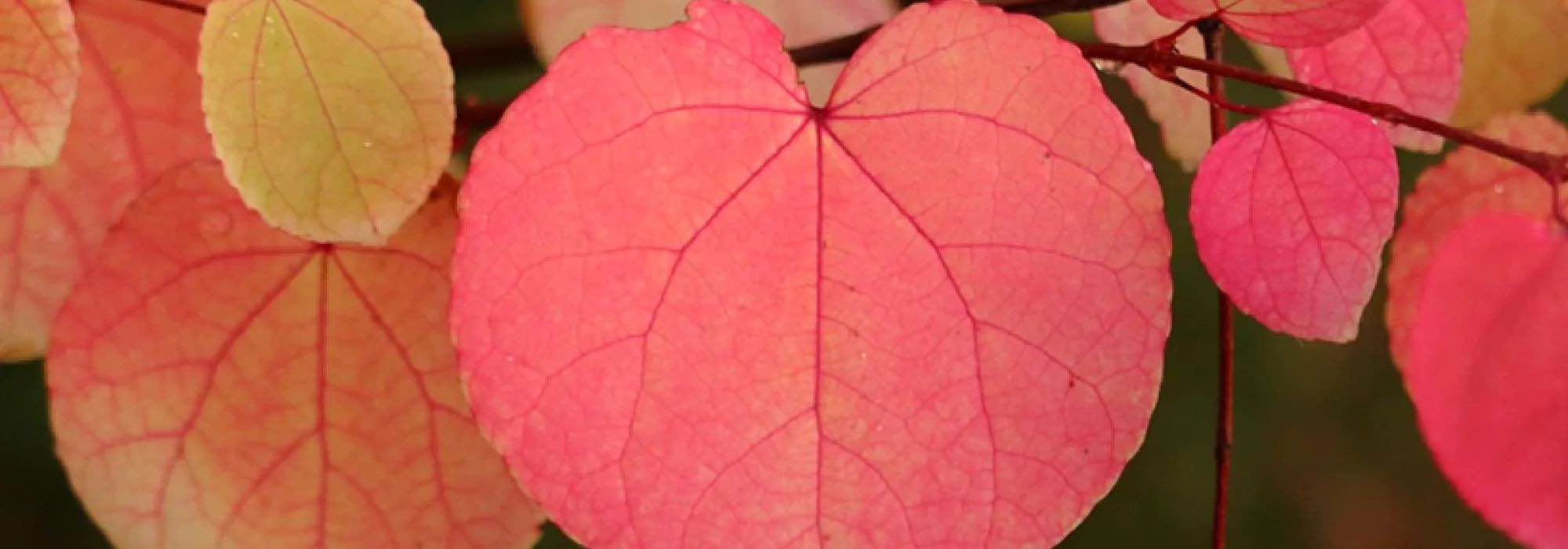
One of the Katsura tree’s strengths, Cercidiphyllum, or katsura tree: its lovely changing foliage, colours evolving through the months, culminating in the grand autumn display. Its heart-shaped leaves (cordate) resemble those of the Judas tree (Cercis).
Green foliage
Green foliage is the most common, but it won’t be monotone for long. For the katsura tree, colours are evolving.
With Cercidiphyllum magnificum, the heart-shaped leaves first display bronze hues in spring. They turn green over time, then take on yellow, but also pink or purple, as autumn arrives. Let us recall that it is during this period that the aromas of caramel or gingerbread are strongest. The crushed leaves fallen to the ground will indeed release this remarkable fragrance.
For its part, Cercidiphyllum japonicum us presents young leaves with a pretty pink-reddish hue in spring. After the summer green, they reward us with magnificent seasonal colours, blending yellow, orange, pink and red.
As for the variety Cercidiphyllum japonicum ‘Pendulum’, the fountain-like foliage almost entirely covers the tree trunk. In spring, the rounded leaves have slightly undulate margins. Initially bronze, they turn to soft green during the warm season, before taking flamboyant colours ranging from yellow to purple, even mauve, in autumn.
Let us also mention Cercidiphyllum japonicum ‘Morioka Weeping’, which goes through numerous shades. Its spring foliage is initially purple-tinged, before taking blue-green tones. In autumn, yellow and orange dominate afterwards.
Finally, Cercidiphyllum japonicum ‘Ra’ prefers to stay on sunny colours: the young foliage is orange, mature leaves display a green leaning toward yellow, then take on distinctly yellow and orange colours in autumn.
Purple foliage
We have seen that some katsura trees produce juvenile foliage that sometimes displays purple hues. If you wish to retain this colour almost year-round, opt for Cercidiphyllum japonicum ‘Rotfuchs’. The young shoots initially display a very dark colour, a nearly black purple. At maturity, they then take on a purplish-green hue.
Variegated foliage
The Cercidiphyllum japonicum ‘Chameleon’ has the peculiarity of offering a particularly bright variegated foliage. Its leaves are blue-green with a broad margin of yellow. This intense colouring is most noticeable at bud burst period, before fading a little over time. But in autumn, flamboyant reds, oranges and yellows will take over.
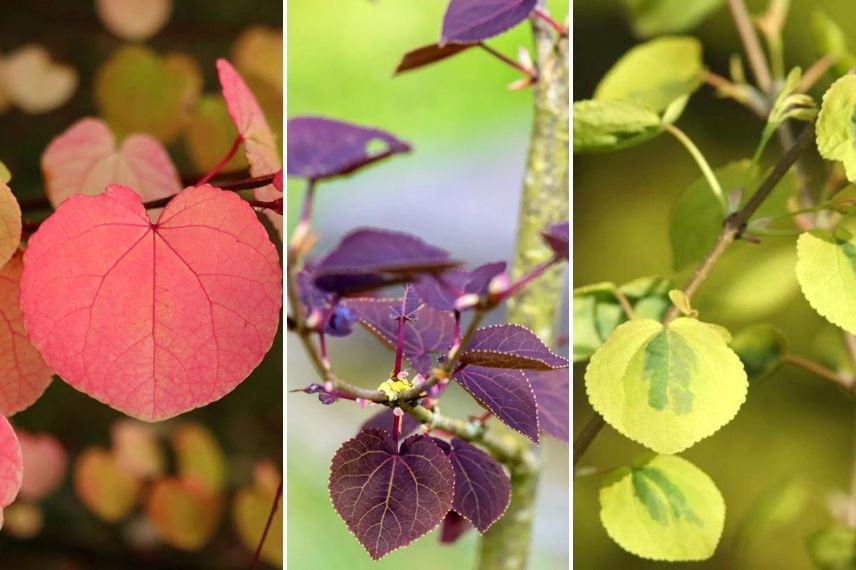
The changing foliage of Cercidiphyllum japonicum, Rotfuchs purple, variegated with ‘Chamaeleon’
Choosing a caramel tree according to its habit.
The caramel tree offers several silhouette styles. It typically has several trunks, from which their branches extend horizontally in a slightly trailing habit. This is particularly the case for the type species Cercidiphyllum japonicum.
But some varieties offer a decidedly weeping habit, making them resemble real cascades of foliage. They will bring a romantic and poetic note to the garden. This is particularly the case with ‘Pendulum’ which offers a very spreading habit and generously trailing. It forms a true dome with colour-changing foliage. With ‘Morioka Weeping’ too, the habit is weeping. Also mention ‘Amazing Grace’, which has the peculiarity of being slightly wider than tall, giving it a more prostrate appearance.
The variegated cultivar ‘Chameleon’ continues to stand out, but this time owing to its rounded silhouette. It has several trunks forming each a narrow fork, with rather short branches that spread out to form step-like tiers. The same goes for ‘Glowball’, which offers a dense and rounded habit.
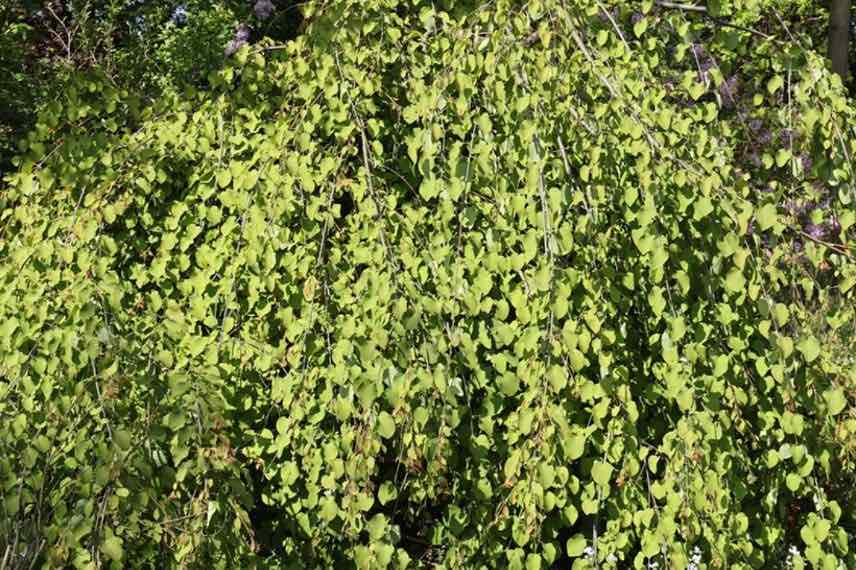
‘Amazing Grace’, caramel tree with rounded habit and weeping
Choosing a caramel tree according to its pruning and its use.
The small varieties
For small gardens or for growing in a large tub during the early years, some varieties with modest habit will be perfectly suitable. If they can exceed 30 metres in their native range (China, Korea, Japan), they will only reach a few metres in our latitude. These caramel trees will stand about 4 metres in height with a 2.5 metre spread after several years of cultivation. This is particularly the case with:
- ‘Rotfuchs’ and its purple foliage (4 metres in height with a 2.5 metre spread);
- ‘Glowball’ and its spherical habit (4 metres in height with a 3 metre spread);
- ‘Râ’, regarded as a dwarf caramel tree (4 metres in height with a 3 metre spread);
- ‘Chameleon’ and its variegated foliage (4 metres in height with a 3 metre spread).
The larger varieties
For the larger gardens, you can readily turn to the more imposing varieties, which will become true trees exceeding 7 metres in height. They will be perfect as a specimen plant or in a large bush hedge, alongside shrubs with ornamental flowering.
The type species of Cercidiphyllum japonicum will, for example, measure between 12 and 15 metres in height with a 6 to 8 metre spread.
Even more impressive, the Cercidiphyllum japonicum ‘Morioka Weeping’ can reach 20 metres in height with a 12 metre spread.
For slightly smaller varieties, you can turn to the graceful ‘Pendulum’, with its 6 metres in height and a 5 metre spread.
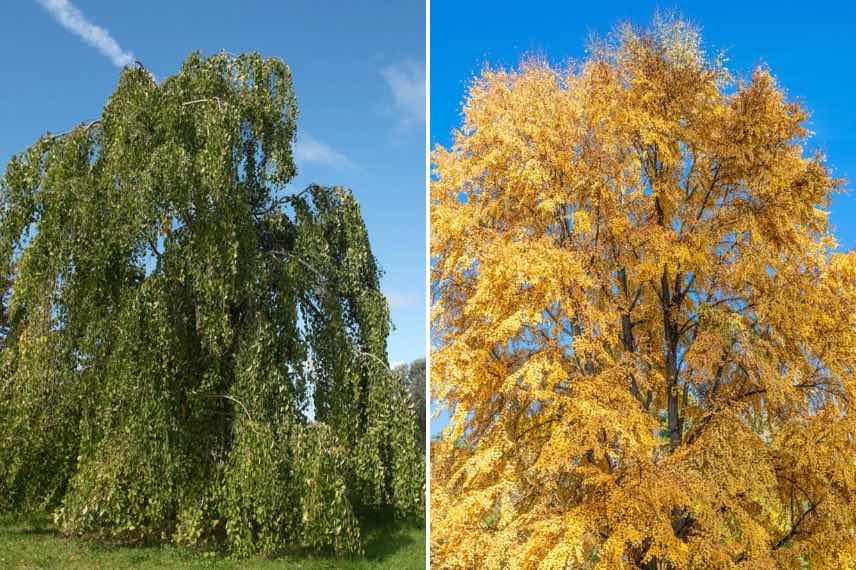
The large specimens: Cercidiphyllum japonicum ‘Pendulum’ and the type species Cercidiphyllum japonicum
- Subscribe!
- Contents
Comments