





























How to care for lawn in autumn?
Our tips for a well-cared-for lawn before winter
Contents
Maintaining a beautiful lawn is a year-round job! In autumn, it greens up for our great pleasure, but it’s mainly a time of year when we devote careful, specific care to it.
What does a lawn need in autumn? What maintenance should be carried out on its lawn before winter rears its head? You will find in this article our tips for looking after your green carpet as befits this transitional season.

Mowing
Mowing is still on the agenda in early autumn! Admittedly, it will be less frequent, but the milder spell in September and October and the frequent rains still help the lawn to grow well in some regions. Therefore it is advisable to continue mowing while the lawn is growing, so as not to head into winter with a lawn that is too high, more vulnerable underfoot and more susceptible to disease.
The mowing height will be reduced compared with the summer mowings, but not too short, which would weaken the lawn in mid-winter. The final mowing will usually take place during October, before the first frosts, earlier or later depending on the region, at a height of 3.5 to 4 cm.
The mower will then be stored away for winter, after taking care to clean it properly (deck, blades, air filter, wheels and bearings, grass catcher, etc.) and to empty the fuel tank and perform an oil change for petrol models. This is also the time when you can have the annual service carried out by your repairer (blade sharpening, balancing…)

Read also
How often should we mow the lawn?Sweeping
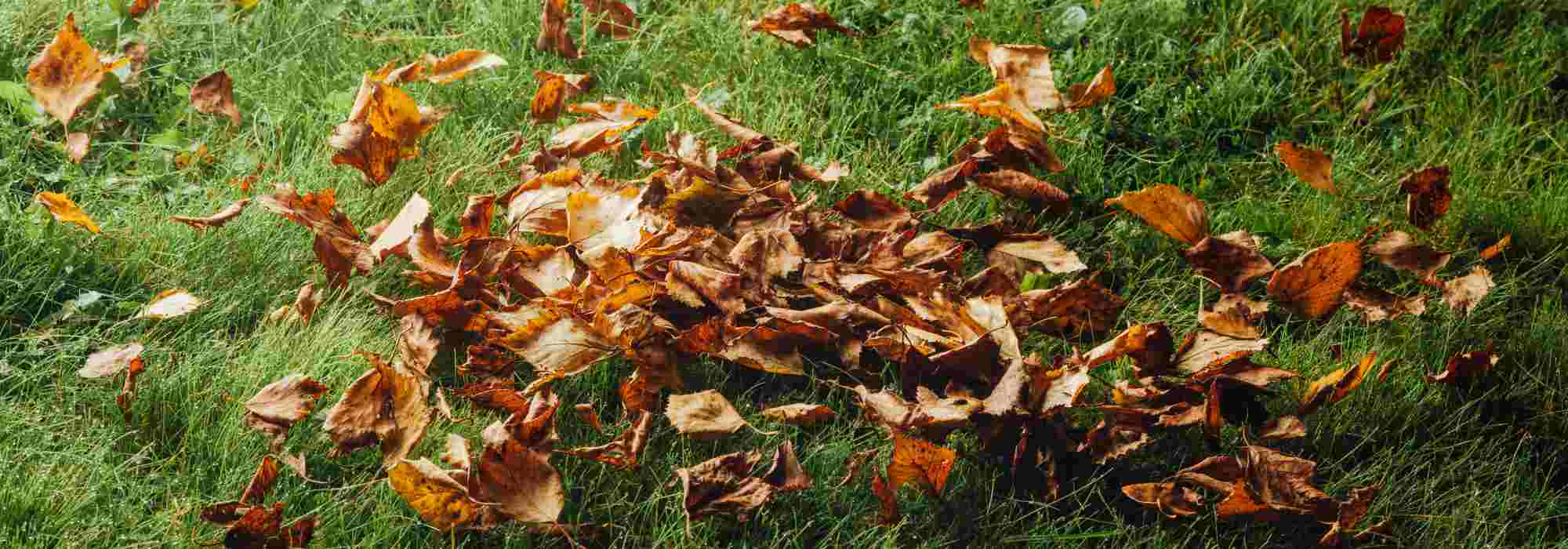
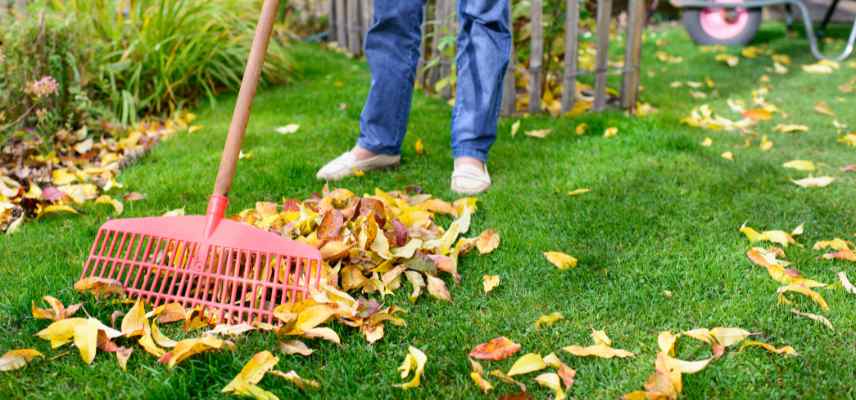
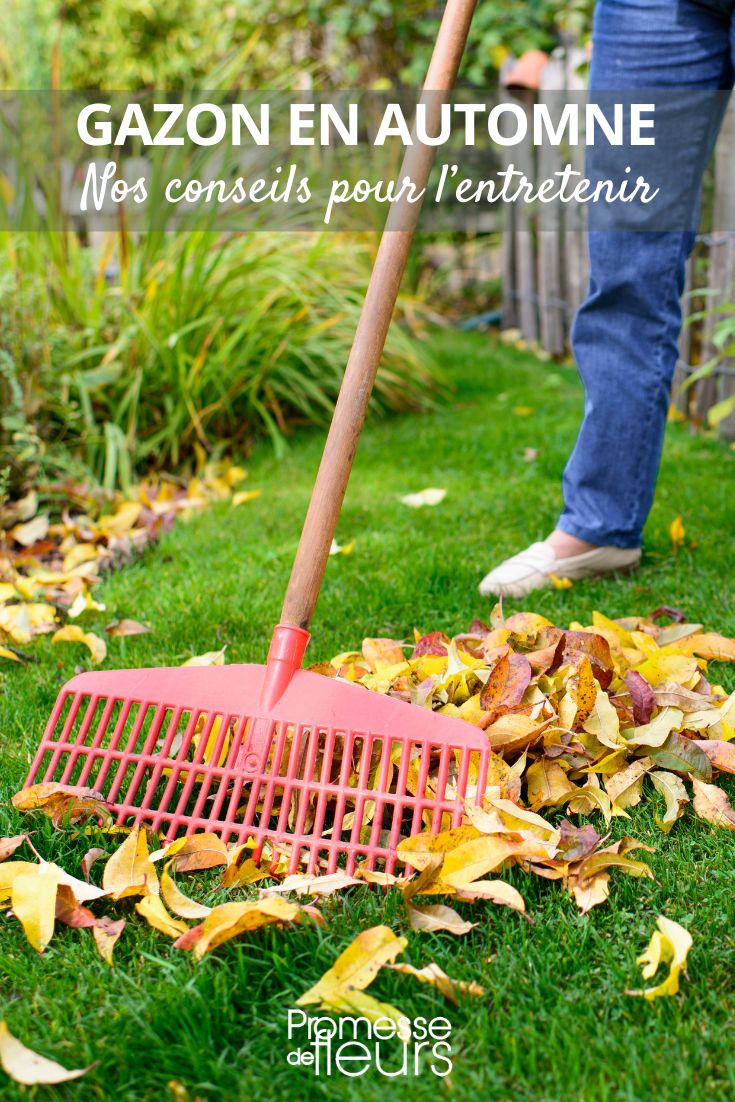
It’s probably the task that will take the longest in gardens with plenty of deciduous trees. Even though russet, beautifully coloured leaves are charming on the ground, your lawn won’t thank you for them. A layer of leaves that builds up stops it from breathing and will eventually turn it yellow, or even suffocate it if not removed. Rake up fallen leaves on a dry day, which makes the job easier, with the help of large lawn rakes and/or a blower.
This treasure trove of fallen leaves is pure gold in the garden, and it would be a shame to miss out on it! Compost them to make your own leaf mould, incorporate them into your compost bin to provide brown matter or use them as mulch on your borders.
→ Also read: How to collect fallen leaves? and Fallen leaves: how to use them in the garden?
Scarifying
Scarification or dethatching of a lawn is an essential step when it becomes overrun with moss or a thick culm (this is also known as thatch, a layer of dead, undecomposed organic matter). This accumulation of intertwined material causes permeability to varying degrees depending on its thickness, and promotes the development of cryptogamic diseases of the lawn. We intervene when the thatch is 10 mm thick.
Autumn is the best time to scarify your lawn, although this operation is also recommended in spring, another period of lawn growth. We mainly work on older lawns that show significant thatch, and on mulched gardens that accumulate a lot of organic debris, ideally in September and up to early October. This work should be undertaken after one or two days of rain, the ground needing to be at least damp.
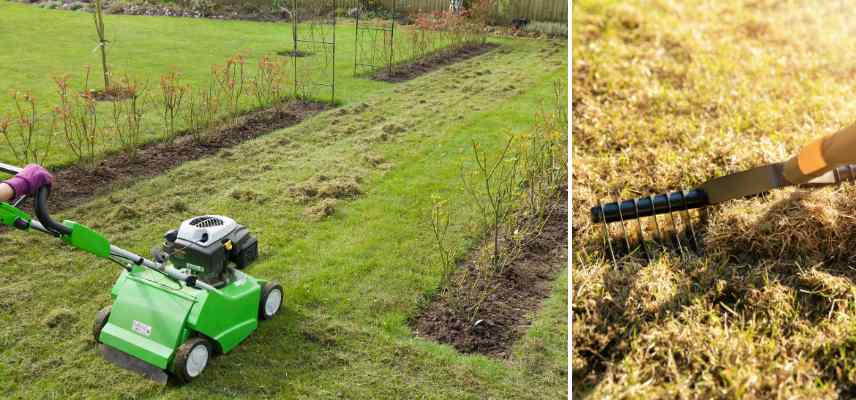
Use a scarifier to remove this layer. This operation promotes lawn tillering: the sharp blades slice through the roots, which allows the lawn to regenerate as it is in its active growth phase.
You can opt to purchase a manual scarifier, very satisfactory in small gardens or small lawn areas, or for an electric or petrol-powered scarifier for larger gardens. Do not hesitate to hire one if you do not wish to invest.
Then apply a light top-dressing of either compost or potting compost on the bare and badly damaged areas: it will penetrate the soil well over the winter and revitalise your lawn.
For large areas too badly damaged after scarification, reseeding may be considered.
Read also
How to scarify a short grass meadow?Aerating
Alongside scarification, lawn aeration is the other useful operation in early autumn when your soil is compacted. It allows air, water and nutrients to penetrate deeper into the soil, thereby promoting root growth.
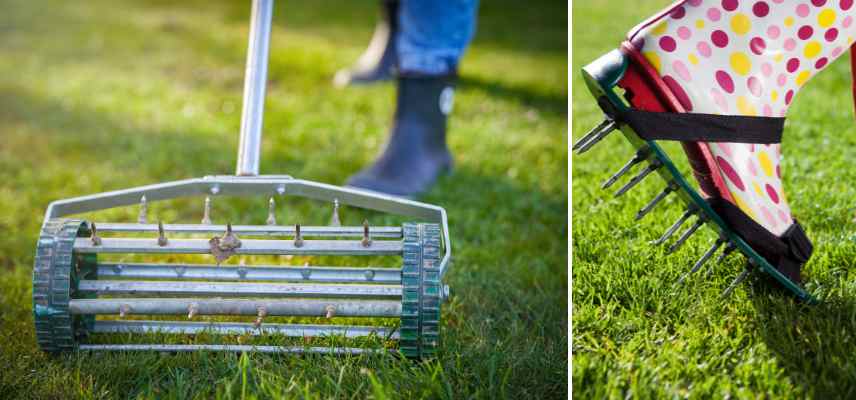
Use a lawn aerator to punch small holes in the soil. There are manual, push-type lawn aerator rollers available commercially, fitted with steel spikes, or aerating shoe attachments to wear on your shoes. In more challenging cases, on heavily compacted soils, it is strongly advised to resort to core aeration (soil cores are removed by hoe-type aerators, then backfilled with sand): a landscaper will carry out this work with ease, even though various tools are available online or in shops.
Carry out after one or more days of rain to facilitate the penetration of these tools into the soil.
Repairing
Finally, if early autumn is the ideal time to sow a lawn, it is also the right moment to repair bare patches and to feed it! To do this, spread in fine layers a good potting soil or well-rotted compost sieved on the parts of the lawn to be treated (or both mixed) with a spreader or by hand, then rake it level. This simple action will give the lawn a boost by stimulating microbial activity in the soil and feeding it.
→ Virginie explains these operations in detail in Topdressing a lawn: why and how? and Renovating a lawn: how to do it?
- Subscribe!
- Contents
Comments