





























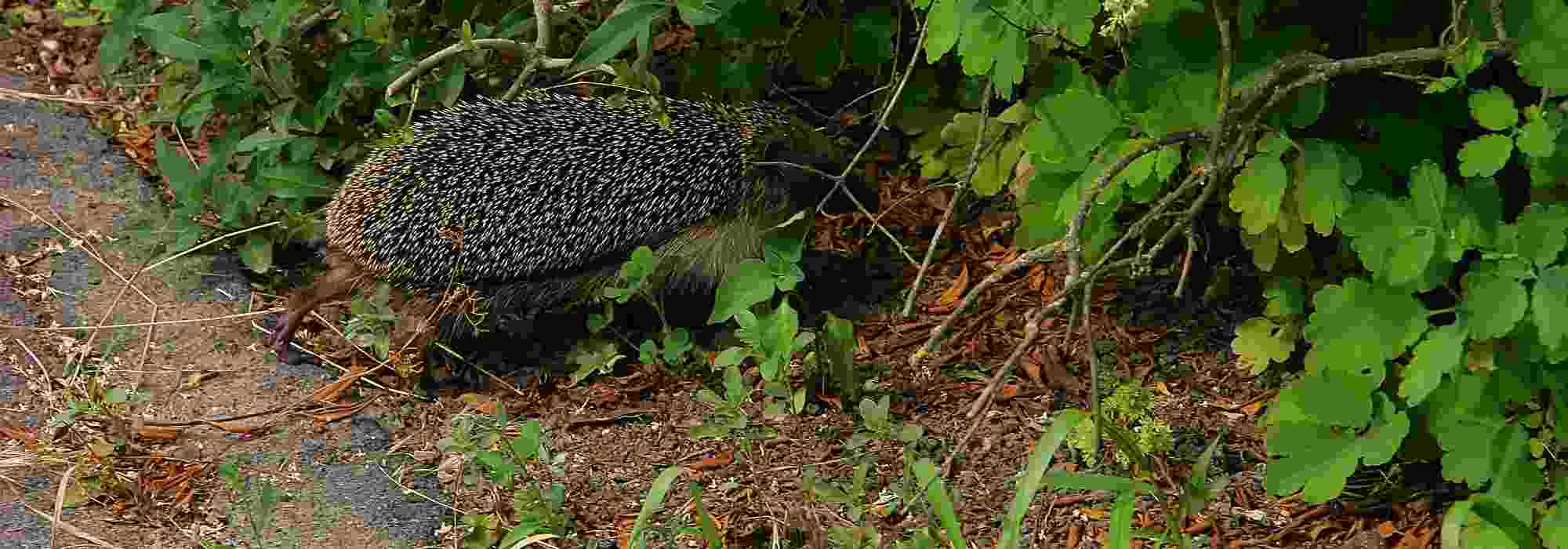
How can you encourage wildlife to roam freely in your garden?
Our tips for opening up your gardens and inviting useful wildlife into them
Contents
Promoting biodiversity in your garden has become second nature to you. Because you have perfectly understood that the fauna living in your garden is a formidable ally in growing vegetables and ornamental plants in the most natural way possible. This fauna helps to regulate pest populations and contributes to the pollination of plants. That’s why you have installed bird feeders, nest boxes and insect hotels, you practise differentiated mowing, you leave piles of dead leaves, twigs and stones in a secluded corner of the garden, you grow melliferous plants… In short, you are exemplary and we can only commend you.
But have you ever wondered how this wildlife moves from your garden to another? Some animals do indeed need a large territory to complete their life cycle.
Discover all our practical, easy-to-implement advice to help wildlife move from your garden to your neighbours’ gardens.
Which animals frequent my garden?
Whether you live in the heart of the countryside, in a peri-urban area, or even in an urban setting, your garden certainly hosts a wealth of wildlife, whether readily visible or more discreet. Especially if you have put in place all the ecological measures designed to promote biodiversity.
A garden where biodiversity thrives
Thus, you have created a wild area where a few plants grow spontaneously, and you also tolerate weeds. You have installed insect shelters, nest boxes for birds or bats, you have dug a small natural pond, you have eliminated all chemical or organic pesticides… In short, you feel you are doing everything you can to maintain a balanced, rich and healthy garden, and above all, welcoming to wildlife.
And the results are starting to show: blue tits, robins and other garden birds are more frequent, ladybirds and hoverflies are active in helping to rid the garden of some pests, and your insect hotel is home to a profusion of insects. But did you know that other small animals, far less visible, can be extremely useful in the garden?
And what if you helped these small animals move freely around your garden?
Wildlife that is often invisible
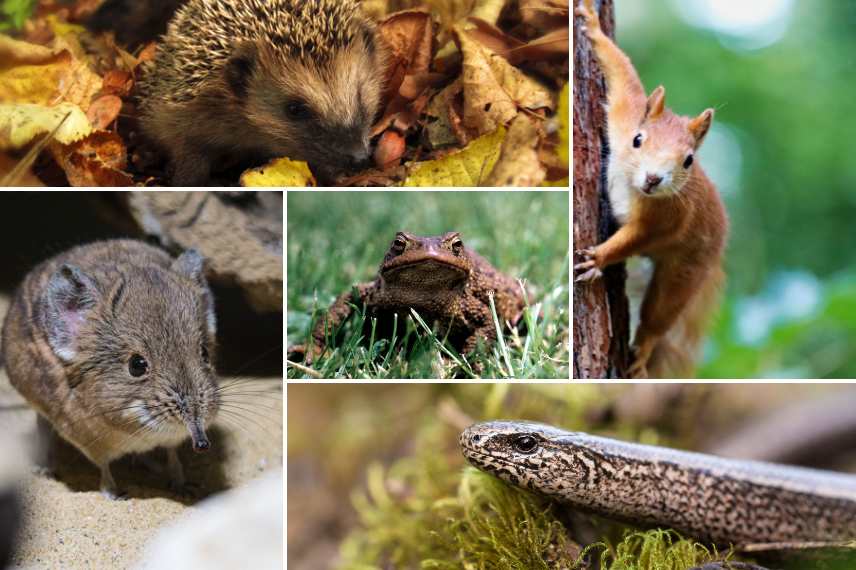
Let’s start with representatives of micromammals such as the hedgehog or the shrew that spend their nights feeding on snails or slugs, spiders, caterpillars, woodlice… Quite voracious, they are relatively effective as garden allies. There are also voles and field mice among these small mammals, and then squirrels. In your garden, amphibians are welcome as well, such as the common frog, the common toad, the newt, the salamander… or even reptiles such as the wall lizard, the grass snake or the slow worm, all of which play a significant role in feeding on pests.
However, in towns or the countryside, these animal species, which may seem ordinary and unremarkable, often pay a heavy price to human activities, infrastructure development, and habitat fragmentation… That’s why your garden can become a haven for small wildlife.
All that remains is that all these representatives of wildlife can access it and move around freely!
Read also
How to rewild your garden?The vital importance of wildlife movements
Did you know that a hedgehog can travel between 3 and 4 km each night? In other words, even if it spends a bit of time in your garden, the space there is far too small.
Indeed, like hedgehogs, wild animals need to move. It is even vital for them! Because these movements fulfil different needs.
Moving to satisfy its needs
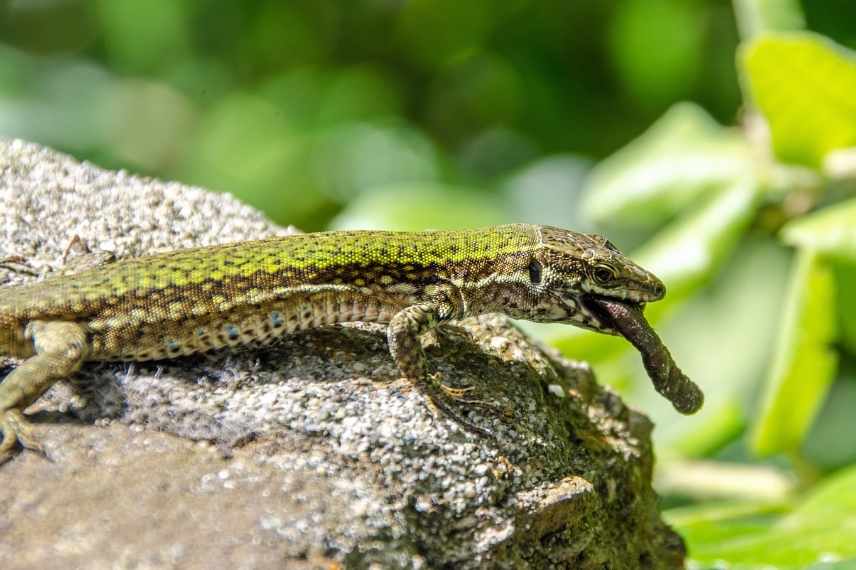
Thus, the search for food is one of the main causes of movement, often organised according to a network of tracks that lead animals to favourable places, such as your garden. A search for food that will inevitably intensify when there are youngsters to rear. But other animals will need to move, periodically, to reproduce, hibernate or simply defend their territory.
Moving to feed
As animals are social beings, they also need to interact with other members of the group within the same population. These movements can also be essential for colonising new favourable mediums, particularly for young adults. Finally, an animal’s movements can be triggered by fear, a disturbance and retreat. Hence, your garden can become a refugium.
Thus, the home range required for a small mammal, an amphibian or a reptile to feed is of the order of 1000 m² to 5000 m².
Biodiversity corridors in urban areas
That is why, however welcoming your garden is, it will quickly become too cramped to meet all of the needs of the small animals that have settled there. Hence the importance of creating a genuine network with neighbouring gardens to offer wildlife a varied range of sites where they can search for food, reproduce or rest.
This issue of wildlife movements has been addressed by local authorities over the past few years. More and more biodiversity corridors are created in urban or peri-urban areas whenever an environmentally impactful project comes to fruition. And what if you adopted these same recommendations on the scale of your garden to allow wildlife to enter, leave and move about freely?
Our tips to encourage wildlife to roam freely in and around your garden
A quick look around your garden makes one thing clear: your garden is ringed by low walls, palisade fencing, mesh fencing, barriers and other gates that protect you from unwanted intruders, separate you from your neighbours and mark your property boundaries. But at the same time, these fences of all kinds are also impenetrable obstacles to wildlife. Not to mention the routes of movement that can be hazards!
To facilitate wildlife to move freely, it is therefore essential to act on these levers. Obviously, it isn’t about removing all fences, but about making small, simple adjustments to allow wildlife to roam freely through your garden, and into your neighbour’s as well. And if you spark the movement across the whole neighbourhood, you can quickly offer a few hectares of habitat very useful to hedgehogs, toads and other shrews, the aim being to reconnect all the gardens together, while preserving your privacy and your safety.
Create openings in fences
If your garden is enclosed by a mesh fence or a wooden palisade, it is relatively easy to create a small passage at ground level. Simply cut the mesh or saw through the palisade to create a hole about 15 to 20 cm in all directions. If you have a large plot, don’t hesitate to create several passages, spaced 10 to 15 metres apart. Be sure to bend the iron rods and to rub down the timber of the palisades to avoid injuries.
Also avoid using barbed wire, which is very dangerous for some animals such as bats.
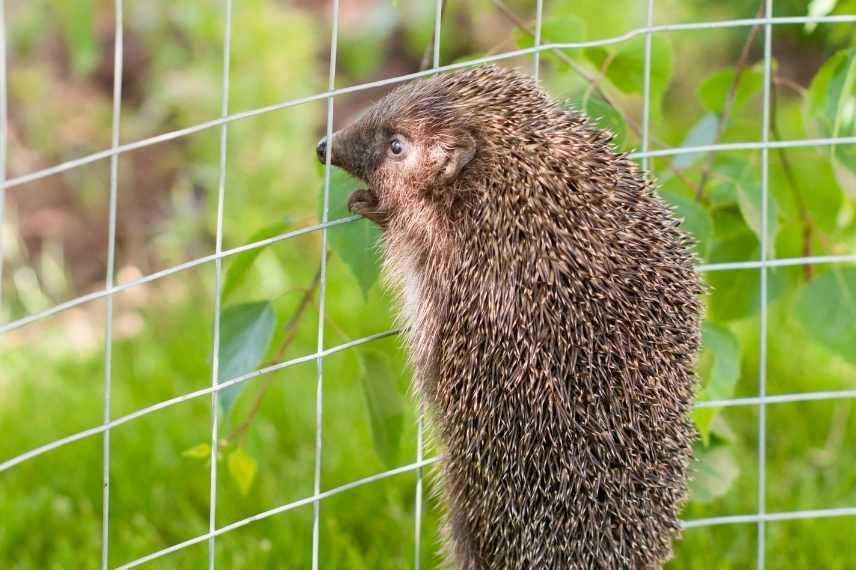
Fences are often impenetrable to wildlife. A simple hole at ground level allows the hedgehog to pass
If your garden is surrounded by a wall, it will be more difficult to create a passage there. The solution may lie in your garden gate or wicket gate, which can simply be raised by 10 to 15 cm. If this gate is wooden, it’s certainly feasible to cut a small hole in it? You can also plant at the foot of this wall or of this impenetrable palisade a climbing plant that can help some animals to reach the other side.
Create informal hedges as property boundaries
Another way to delimite your garden while encouraging wildlife movement is to plant free-standing, countryside hedges, made up of native species. Indeed, the plants that make up these hedges do not hinder animal movements, while providing feeding sites, refuges or nesting sites. Ideally, these hedges should not be combined with fences, but if you can’t do otherwise, don’t hesitate to create ground-level passages.
You can also plant your hedge along a fence, which can then be dismantled when the shrubs have grown enough to shield you from the neighbours. Of course, be sure to comply with planning regulations for boundary hedges. Alexandra explains everything in this article: Hedges, bushes, trees: what planting distances?
To compose your hedge, consider trees or bushes such as the hornbeam, the hazel, the maple, the beech, the hawthorn, the dog rose, the elder, the dogwood, the willow. It can also be interesting to include species of thorny shrubs for a defensive aspect (holly, pyracantha, berberis…).
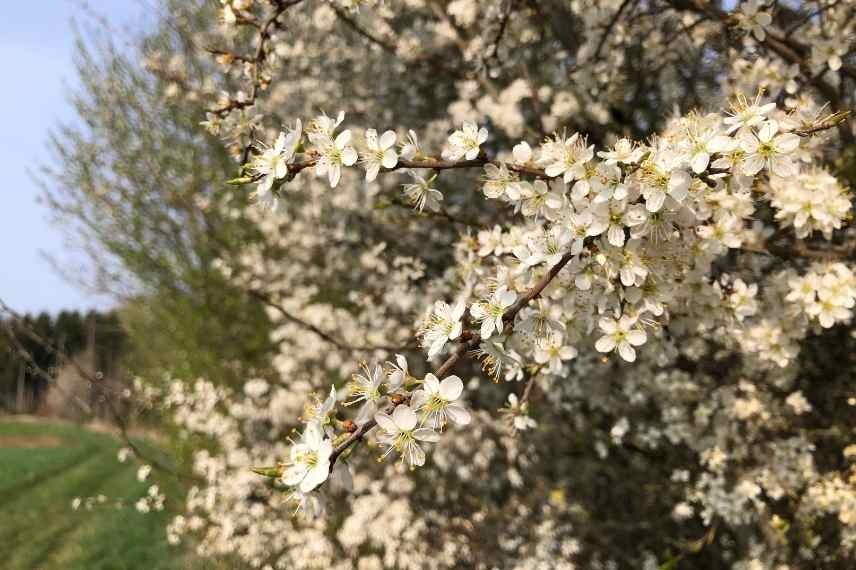
The free-standing, countryside hedge, planted with native species, facilitates wildlife movement
For all you need to know about planting the ideal hedge for wildlife-friendly movement:
- A natural hedge to boost biodiversity
- How and why to create a countryside hedge?
- 9 shrubs for a hedgerow
- Fast-growing hedge: 10 shrubs that grow quickly
- Bird-friendly hedges: which shrubs to choose?
- 10 shrubs for a melliferous hedge
However, hedges composed of a single species are of little interest to wildlife.
Pruning with wildlife in mind
If you already have a hedge of bushes, or handsome trees at the boundary of your property that you prune regularly for aesthetics, and your neighbour does the same on their side, what about agreeing to keep one or two branches to connect your two gardens? This leafy continuity could allow a squirrel to move freely between the two gardens. For the joy of this little acrobat, and for yours as well!
Limiting visual and noise pollution
To facilitate wildlife movement, it is also important to minimise nuisances, mainly nocturnal, that disturb the balance of animals. Thus, the small lights that illuminate your façade, your borders or your paths are very pretty after dark when you can enjoy them, but are they really useful when you are fast asleep in bed? These lights can disorient nocturnal insects and frighten small mammals. We recommend installing lighting with motion detectors or timers to reduce their impact.
Similarly, the mobile that distills crystal-clear sounds, very pleasant to your ear, may not be a nuisance for the small mammals that intrude on your garden at night? By favouring silence or more natural sounds, such as the rustle of leaves or birdsong, you create a more welcoming environment for hedgehogs, bats and other species that visit your garden.
- Subscribe!
- Contents
Comments