





























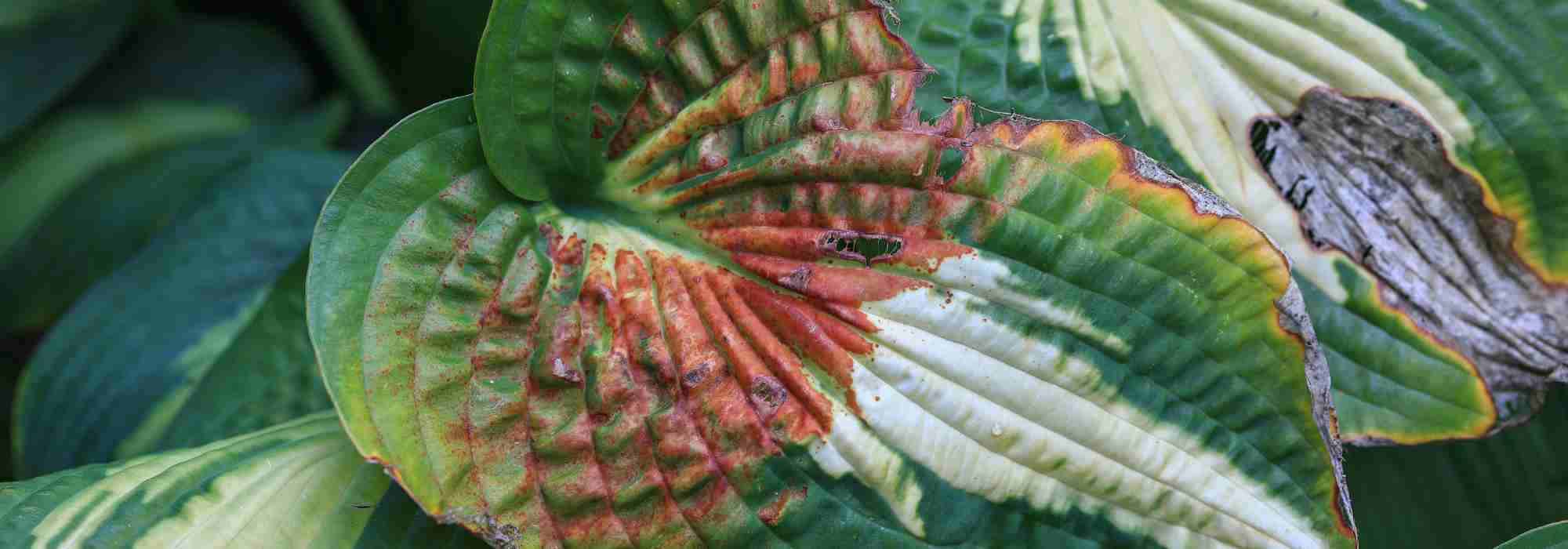
Hosta diseases and parasitic pests
Identification, Prevention and Natural Solutions
Contents
Hostas are essential perennials for brightening up cool, shady spots. We love them for their foliage, which can come in a range of colours and textures, but also for their summer flowering, in bell-shaped blooms, sometimes fragrant.
These are easy-to-care-for, hardy plants that require little maintenance to enjoy a long lifespan. However, they can be susceptible to certain diseases or parasites. Let’s see how to identify them, prevent problems and apply natural treatments if needed to keep beautiful Hostas for longer.
Slugs and snails: the main pests of Hostas
Description and symptoms
They are the number one enemies of Hostas, especially in early spring. As they emerge from their winter dormancy, slugs and snails are hungry. And what could be more appetising than young, tender Hostas leaves, just unfurled, grown in cool, shaded conditions? The gastropods can thus cause serious damage by devouring the foliage and impacting the overall growth of the plants.
It is often the slime trails and the chewed leaf remnants that will tell you they’ve been there. If an established plant or one that has already produced many leaves is to suffer only cosmetic damage, slugs and snails can completely devour the youngest plants.
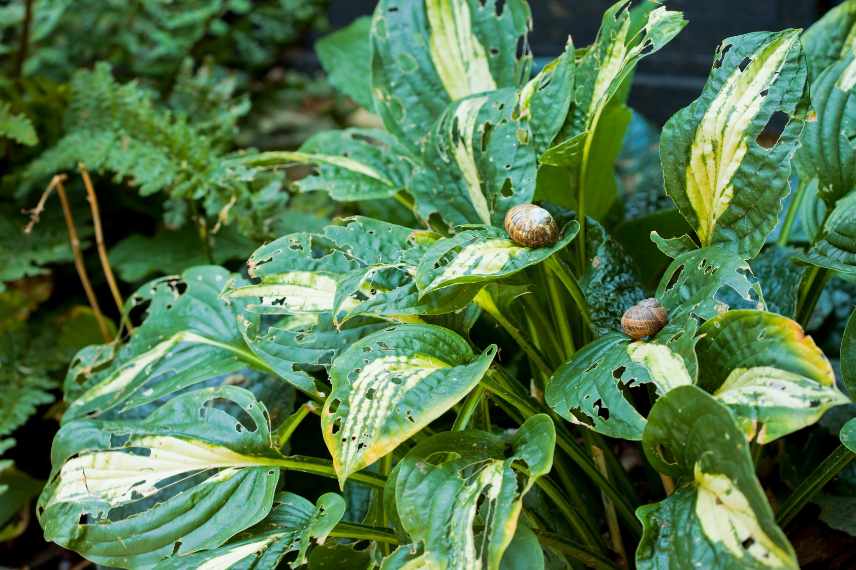 Slugs and snails are the arch-enemies of Hostas!
Prevention and natural solutions
As a preventive measure, to limit the appeal of slugs and snails, you can first opt for container growing. This makes the Hostas’ roots less accessible and thus limits damage. Most varieties can be grown in pots, whether they are dwarf Hostas or giant Hostas. Simply adjust the pot size to the plant’s mature dimensions. On average, plan for about 30 cm in diameter for the small ones and at least 60 cm for the larger ones.
If you grow your Hostas in the ground, avoid planting them on their own, in the middle of a lawn or in a bed. Pair them with other less palatable plants for gastropods, such as ferns or ophiopogons.
Adding mulch at the base of Hostas helps retain moisture and thus spaces out the watering. But it can sometimes also provide a cosy shelter for slugs and snails. As a preventive measure, opt for rough materials, which will make slug movement more difficult and may deter the less motivated. This is the case with pouzzolane or wood chips. Conversely, avoid mulch made from hay, straw, dead leaves or lawn clippings, at least in early spring, until the early growth stages have passed. You can also add natural barriers made from crushed eggshells, wood ash or coffee grounds. Their effectiveness really depends on the garden and the gardener’s experimentation, so it’s up to you to test. In any case, they should be renewed regularly, especially after a good rain.
Finally, as a preventive measure, we recommend turning to varieties naturally more resistant to slug and snail attacks. They do indeed have thicker, tougher foliage, making them less palatable. You will find a wide range, with blue foliage (Hosta tardiana ‘Halcyon’, ‘Big Daddy’, ‘Blue Angel’…), variegated (‘Great Expectations’, ‘Forbidden Fruit’…), variegated (‘Diamond Lake’…), giant (‘Lakeside Maverick’..), etc. For more, read our article “9 slug-resistant Hostas”.
If you prefer not to opt for slug and snail elimination, you can choose to “sacrifice” a cultivation area. For example, sow mustard—a plant very popular with hungry gastropods—which also has the advantage of being a green manure beneficial to the soil at several levels. Some gardeners even opt for surface compost or placing plant waste in a corner of the garden. Naturally, gastropods prefer dead plant matter. It’s often when this is lacking that they turn to our young garden plants…
If you prefer quicker methods, you can install beer traps. Attracted by the scent, slugs and snails eventually drown in them. Make sure to use a trap with a small opening so that other garden wildlife, such as hedgehogs, are not affected.
Ferramol-based granules are also effective. While blue slug pellets still conjure images of hazardous chemicals, newer products are suitable for organic farming and pose no risk to pets or the natural predators of gastropods.
Finally, there is manual gathering, which lets you choose to either remove the snails and slugs or send them off to explore places away from your garden. Do this ideally early in the morning, late in the day or after a good rain. Chickens or Indian Runner ducks can also help to regulate slug and snail populations.
However, remember that a balanced garden should also welcome some pests to feed the predators and honour the food chain. Regulation is therefore always preferable to extermination. After all, that’s how you’ll attract toads, birds or hedgehogs, who will happily feast on the slimy ones.
For more, discover our article Slugs: 7 ways to fight effectively and naturally.
Read also
Hosta: planting, growing and careAphids: other common parasitic pests
Description and symptoms
You will no doubt have come across them, whether in the garden or on indoor plants. There are different species of aphids, which can be green, black or winged. They are small, widespread insects that feed on the sap of plants. You notice their presence with the naked eye or observe curling on some of your hosta leaves. The presence of ants, which feed on the honeydew secreted by aphids in exchange for protection, can also alert you.
Aphids generally do not cause the decline of an adult hosta plant, but can contribute to weakening it. Their honeydew can also promote the development of a more serious fungal disease: sooty mould. It forms black, sticky deposits resembling soot on the above-ground parts of the plant, affecting the process of photosynthesis.
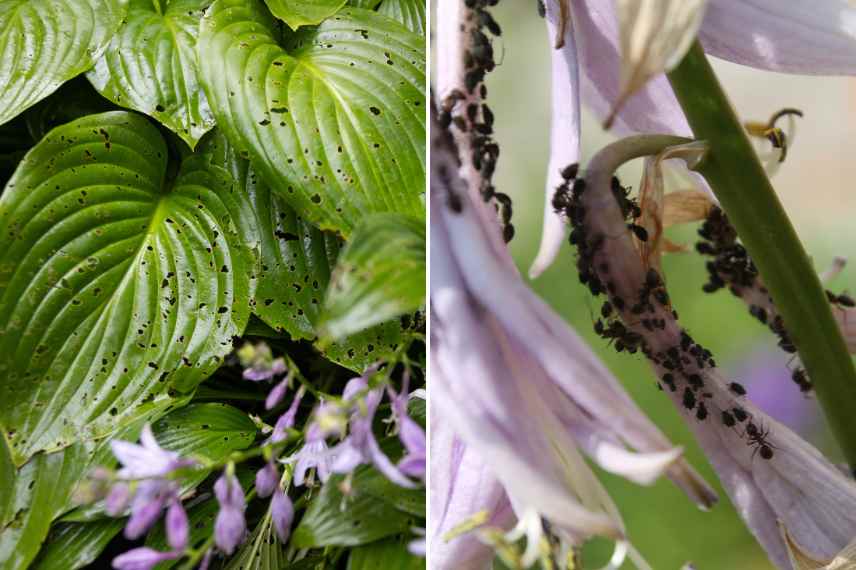
Aphids also cause damage to hosta leaves or flowers
Prevention and natural remedies
As a precaution, regularly inspect your hosta plants. The presence of only a few individuals can be easily managed with a cloth or a spray of water.
Avoid excessive nitrogen fertilisation. If they do promote the production of lush foliage, they can make the plants softer, more fragile and appealing to aphids.
If infestation occurs, you can make your own natural insecticidal soap based on pure black soap. To do this, mix 1 to 2 tablespoons into 1 litre of lukewarm water. Pour into a spray bottle and spray onto the affected parts, out of direct sunlight. Reapply after 10 days if needed.
To protect your hostas without treatment, you can grow trap plants. They will attract aphids, leaving the other plants to be protected. The nasturtium is, for example, known for being very attractive.
To learn more, read our article: Aphid: identification and treatment
The vine weevils: particularly on pot-grown Hostas.
Description and symptoms
Vine weevils are small beetles measuring less than 10 mm. The adults feed on the leaves using their rostrum (a kind of grinding beak), while the larva feeds on the plant roots, affecting growth by contributing to the weakening. We find these small pests mainly when growing Hostas in pots. They are difficult to spot, as they are small nocturnal insects and often dark in colour.
Vine weevils particularly favour the warm, dry conditions of summer, together with mild winters.
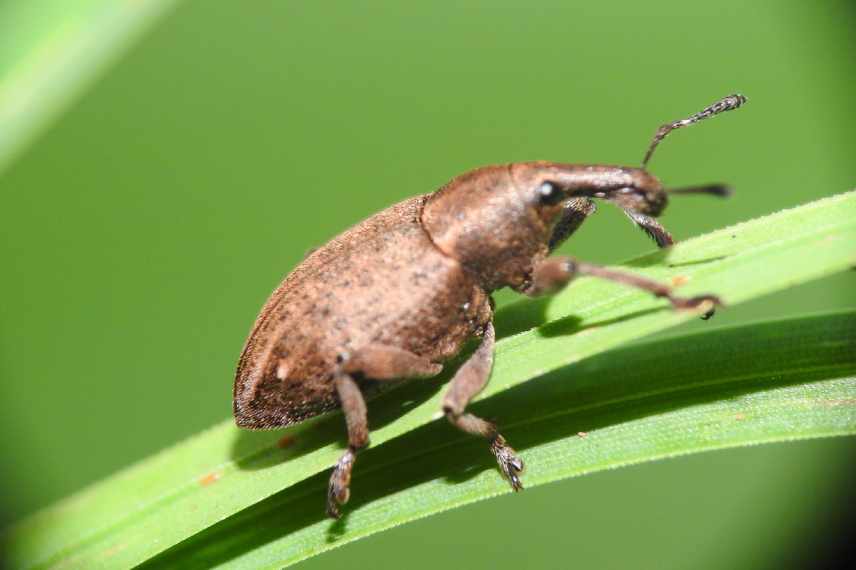
Another dreaded pest on hosta: the vine weevil
Prevention and natural solutions
In prevention, installing mulch at the base of your Hostas will help retain moisture in the soil, something vine weevils dislike.
If you’re keen, you can go hunting for adults in summer, at dusk, to break their breeding cycles. You’ll see that when threatened, the vine weevil uses the death feigning tactic: it feigns death.
In cases of severe infestation, you can resort to biological control, with the spraying of nematodes (Heterorhabditis bacteriophora). They will parasitize the vine weevil larvae by devouring them from the inside. It is a natural way to get rid of the pests, but requires careful adherence to the usage recommendations. It is a powder to be diluted in water and sprayed onto affected plants as temperatures rise (above 12°C), between spring and autumn.
For more information, read our article: “How to get rid of vine weevils?”
HVX virus (Hosta Virus X)
Description and symptoms
The HVX virus (Hosta Virus X) is a viral disease that affects hostas and often appears in spring. It was first identified in Quebec in 2005.
The symptoms are visible on the foliage and vary according to the cultivar. They may include mottling, discoloured or darker spots, yellowing along the veins, or irregularities of varying degrees. The plant remains a lifelong carrier of the virus.
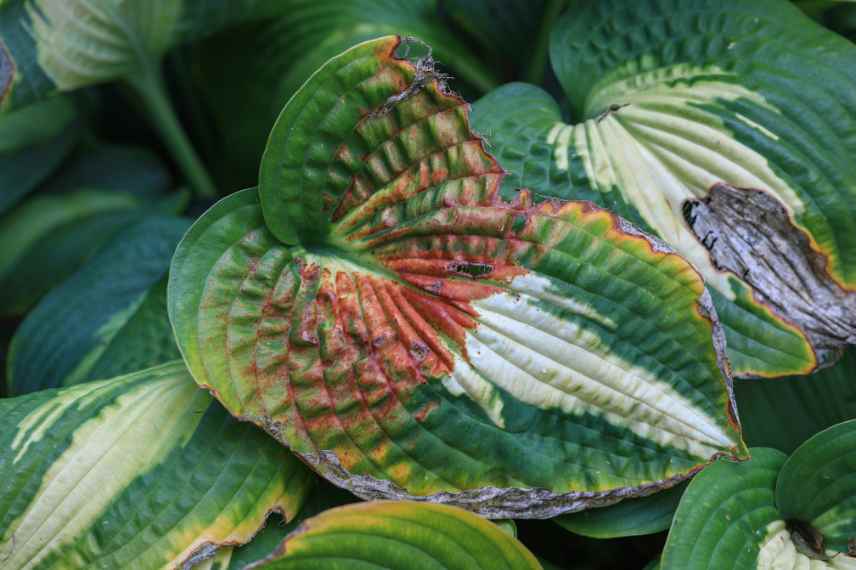
HVX-infected Hosta
Prevention and natural solutions
As a precaution, source healthy hostas. Plant them in good growing conditions, making sure not to crowd them too closely and providing well-drained soil.
Since HVX is transmitted by contact with sap, make sure you thoroughly disinfect your cutting tools with alcohol before and after use. In addition, do not take cuttings from infected plants.
No curative treatment exists to date. If symptoms are detected, immediately remove the affected plant and take it to a household waste recycling centre.
- Subscribe!
- Contents
Comments