





























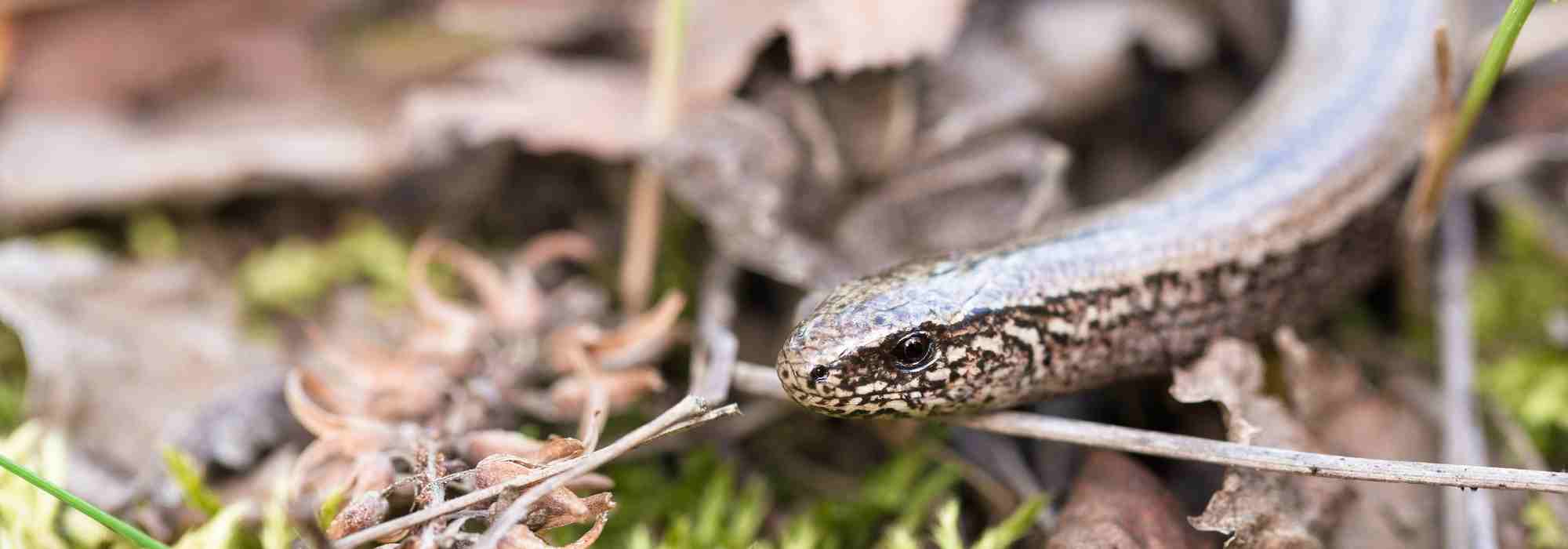
Reptiles in the garden: How to identify them? How to attract them?
Lizards, snakes, slow worms... all of these reptiles are valuable allies in a garden
Contents
From the outset, I know my article is likely to make even the most phobic readers break into a cold sweat. Because reptiles suffer from numerous misconceptions, prejudices and other preconceptions. Yet, bite-related accidents (from venomous snakes or other) are very rare, all the more so if one adopts the right attitude when dealing with these reptiles that are commonly encountered in gardens. In the event of an inopportune encounter with a snake, slow-worm, or another cold-blooded animal, simply keep a safe distance, and do not attempt to chase it away or catch it. This reptile will certainly be more afraid than you, and its first instinct will be to flee and seek shelter.
To further convince you, know that these reptiles are highly effective allies in your garden for getting rid of pest insects, slugs and snails.
Find refugium in the garden, what they are useful for and how to attract them?

Which reptiles might you encounter in a garden?
Obviously, reptiles are more numerous in the wild than in gardens. Unfortunately, the destruction of their natural habitats and the use of pesticides affect them and sometimes threaten their survival, just as with the birds or the hedgehogs. That is why your garden can provide an excellent refugium for different reptile species (even when its area is modest).
For, in a garden, a reptile can find what is vital for it: a food source, places to bask in the sun (as reptiles need to regulate their body temperature), refuges to hide from predators or inclement weather, shelters for hibernation, and egg-laying sites for incubation. Of course, these requirements vary from one species to another, but several reptile species can perfectly cohabit in your garden.
So, which reptiles are able to make a home in your garden?
Lizards and slowworms
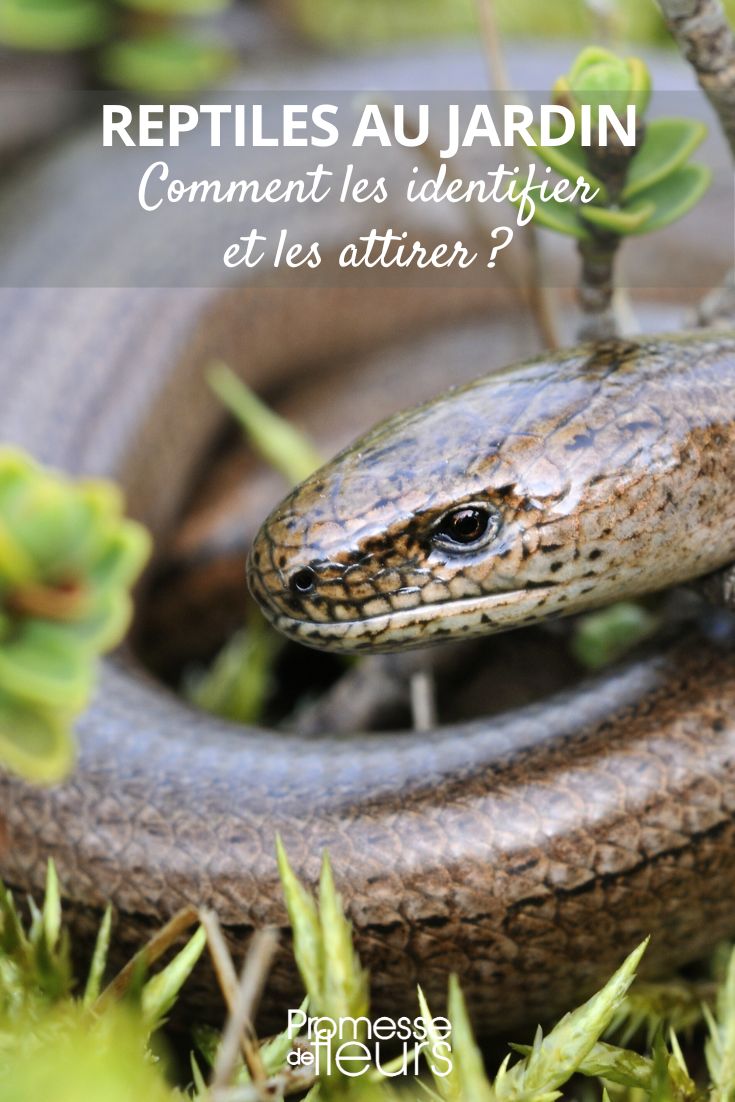
Indeed, lizards and slowworms are classified in the same category, simply because they are saurians! And despite its snake-like appearance, the common slowworm or fragile slowworm (Anguis fragilis) is indeed a legless lizard, which can be recognised by its movable eyelids, ventral scales and movements markedly less undulating than those of snakes. To learn more about this rather peculiar lizard, I invite you to consult Olivier’s article: The common slowworm or fragile slowworm, the famous “legless lizard”.
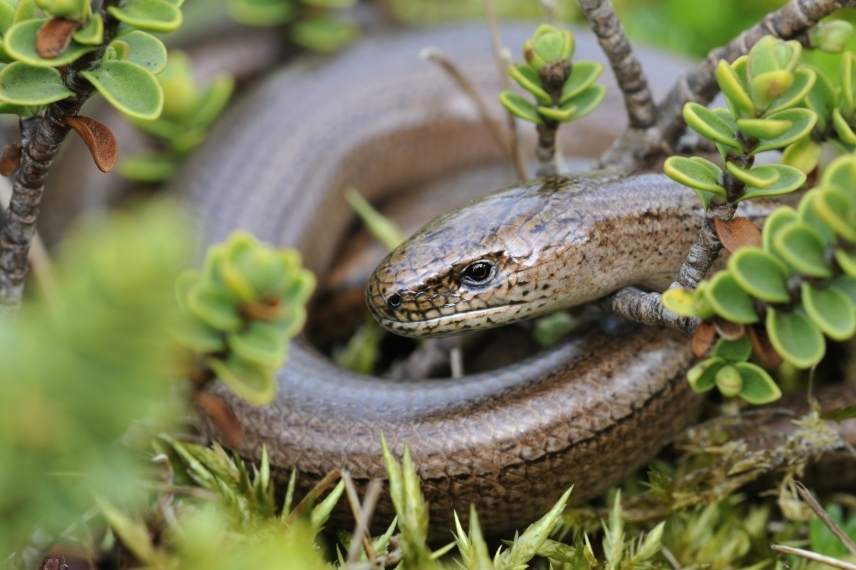
Under its snake-like appearance, the slowworm is a lizard
Among the lizards, various species can be found across mainland France: the wall lizard (Podarcis muralis), the sand lizard (Lacerta agilis), the two-lined lizard or green lizard (Lacerta bilineata), and the viviparous lizard (Zootoca vivipara) near water bodies. In the south of France, other species can be found such as the ocellated lizard and the Catalan lizard…
These lizards display slightly different physical characteristics from one species to another:
- The sand lizard measures about 25 cm in length, with a stout body, a short head and a touch of green on the flanks and head, especially during the breeding period for the male
- The wall lizard measures less than 20 cm. Its head and body are fairly flat, the tail is thin and long. It shows a grey to brown colour, maculated with darker tones. It is the most common species
- The two-lined lizard or green lizard : a lizard that can reach 40 cm in length, with an elongated head. It bears green colour all over the body, with a blue throat and white lines
- The viviparous lizard : a lizard whose length does not exceed 16 cm, with a head and body not flattened, and a heavy tail. It lives near damp areas.
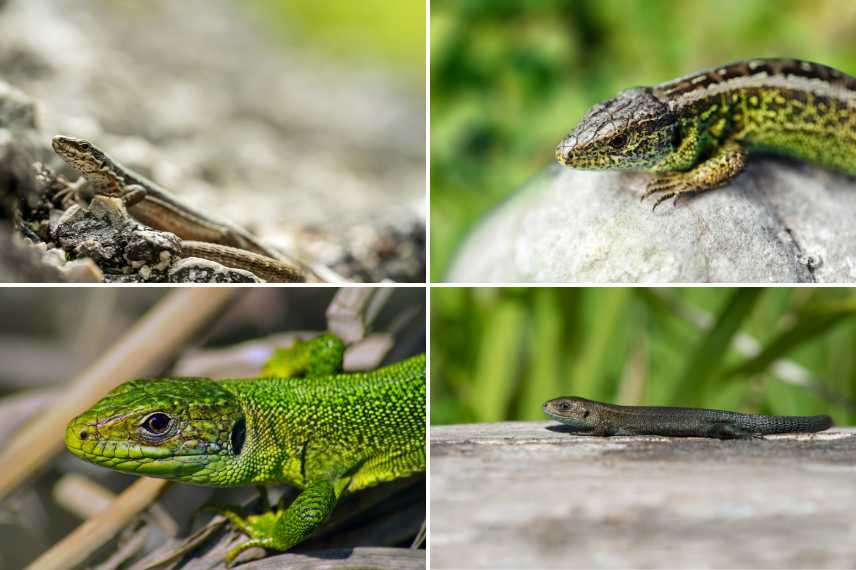
The most commonly encountered lizards in the garden: wall lizard, sand lizard, green lizard and viviparous lizard
Snakes
We tackle the paragraph most feared by ophidiophobes! If you have a large, very welcoming garden, some snakes can make it their home quite discreetly. There are five main species of snakes, among grass snakes and vipers. As a reminder, grass snakes are entirely harmless, while vipers are venomous, but very shy. Grass snakes are distinguished from vipers by their round pupils, rounded snout and scales on the head.
- The Aesculapian snake (Zamenis longissimus) : 110 to 160 cm long, this slender snake has a fine head, a rounded snout, and a uniformly coloured coat from brown to yellowish beige, sprinkled with white
- The barred grass snake or Natrix helvetica : it measures up to 140 cm long and is distinguished mainly by its grey to olive-green colour with a black and yellow collar behind the head. Black bands also appear on the flanks and under the eyes
- The smooth snake (Coronella austriaca) : a small grass snake of about 70 cm in length, with a fairly stout grey-brown body. A dark band runs from the snout to behind the eyes, a dark spot is visible behind the head
- The common adder (Vipera berus) : venomous snake of approximately 60 to 80 cm in length, with a broad body and head, a non-upturned snout and a yellow-orange iris. It bears a very pronounced dark zigzag along the back
- The asp viper (Vipera aspis) : venomous snake of small size (50 to 70 cm), with a thick body and a short tail, an upturned snout and a golden-yellow iris. It is recognisable by its black dorsal bands on the back.
Again, depending on the region, other snakes, grass snakes or vipers can be encountered.
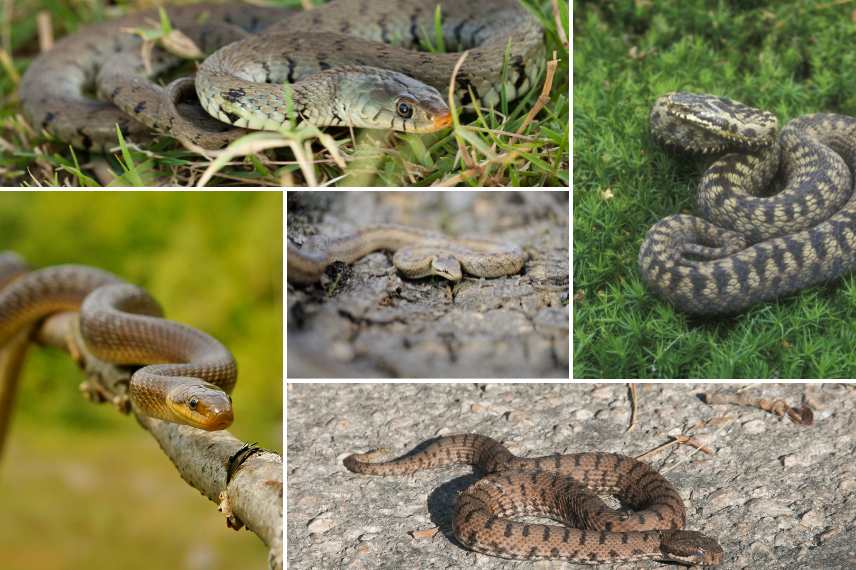
Barred grass snake, common adder, Aesculapian snake, smooth snake and asp viper
Turtles
In the wild, you can encounter a few turtles, including Hermann’s tortoise (Testudo hermanni) in the Var region and Corsica, the Greek tortoise (Testudo graeca) or the invasive Florida turtle (Trachemys scripta), introduced in recent decades and listed among invasive alien species of concern for the European Union.
In what ways are reptiles useful allies in the garden?
Like many animal species, reptiles play a crucial role in the functioning and preservation of ecosystems. They actively contribute to maintaining the balance of natural habitats, as well as that of your garden. They are both predators and prey for other species. Moreover, reptiles pay a heavy price, facing threats such as predation by wild or domestic species (cats), and the degradation of their habitats (roads, motorised maintenance of green spaces…).
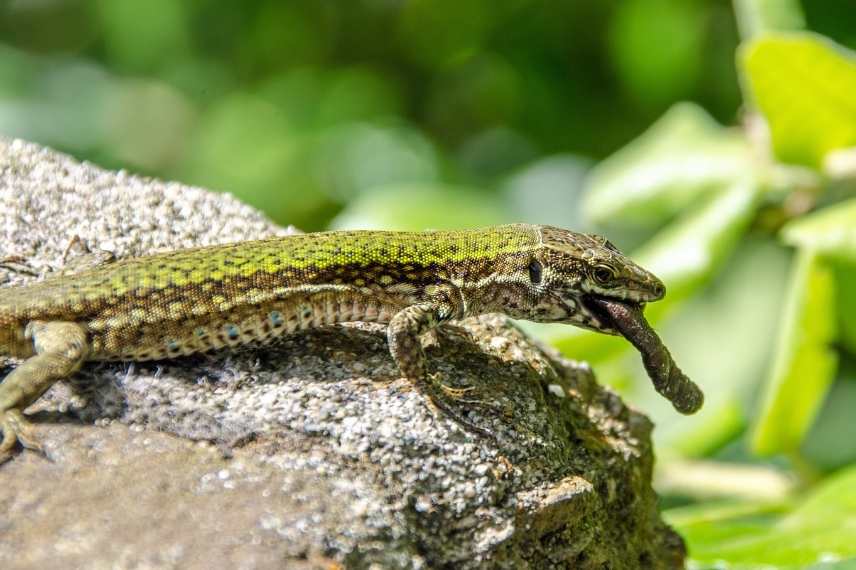
Reptiles are effective garden allies
In a garden, reptiles prove very useful in terms of pest regulation. Most reptiles are insectivorous, which makes them valuable allies in the biological control you undertake in your garden or vegetable patch. Thus, a lizard feeds, for example, on caterpillars, on crickets and grasshoppers, on woodlice, on spiders, on aphids and on slugs.
As for the snake, it will target mice, field mice and voles that have taken up residence in your garden and gnaw on your root vegetables. Occasionally, it may also include larvae and larger insects in its diet.
Having a reptile in your garden mainly means that it constitutes a perfectly balanced habitat.
How to attract reptiles to your garden?
To encourage reptiles to inhabit or traverse your garden, a few essentials for welcoming them:
- Let a fallow corner develop in your garden, in a quiet area away from the house and preferably sunny. Simply let wild herbs grow, do not mow or sow a flowering meadow
- Provide refugia at various spots around the garden, sunny and secluded, near fallows (wood piles, brushwood, tiles, stones, fallen leaves, mowing debris… so that reptiles can shelter there to warm up). You could even build a dry-stone wall that combines practicality with aesthetics
- Install thick layers of mulch at the base of bushes
- Avoid mowing very short by setting the mower blade higher to prevent injuring slow worms
- Create a compost heap so that slow worms and grass snakes can lay eggs or hatch young there, or even hibernate there. The compost heap should be located in a sunny spot and near a fallow
- Leave a pile of sand or sandy gravel, with a well-drained base, in a secluded corner, to encourage egg-laying
- Dig a pond if you have a sufficiently large plot. Amphibians will settle there and attract ring-necked snakes
And above all, you will need to facilitate the movement of these reptiles in your garden and the gardens of your neighbours, by establishing biodiversity corridors. Reptiles, like other animals, need to expand their territory. Likewise, do not hesitate to raise awareness among those around you about the importance of reptiles in a garden, debunking common misconceptions.
As for cats, major predators of these reptiles, it may sometimes suffice to deter them by placing thorny branches or dry brambles around the refugia and shelters you have installed in your garden.
- Subscribe!
- Contents
Comments