




















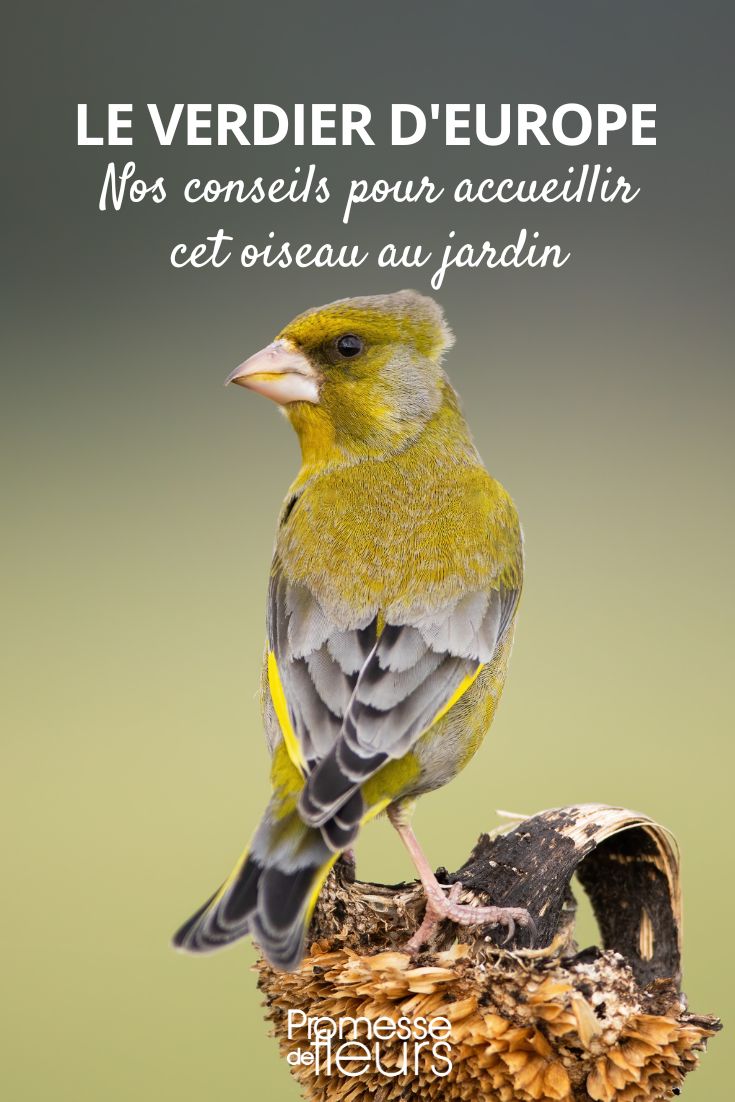
European Greenfinch: Welcoming this bird to the garden
Meet this little songbird, easy to recognise
Contents
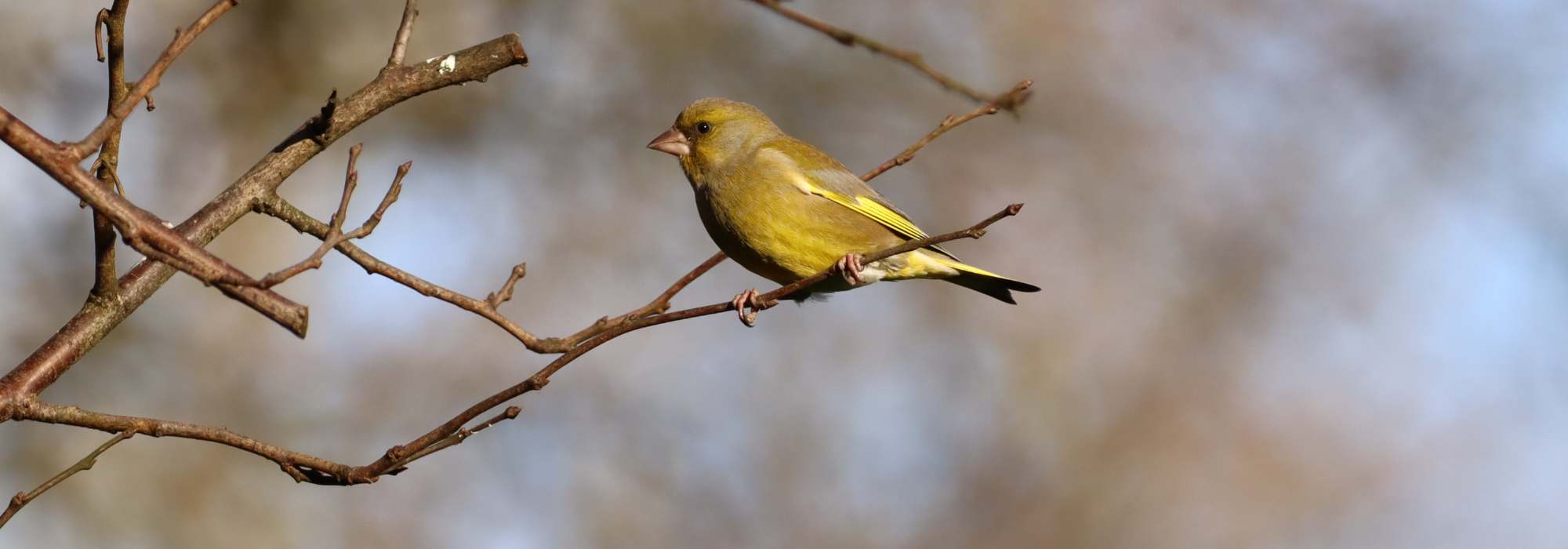
If you install winter bird feeders to feed the garden birds, there’s a good chance the European greenfinch (Chloris chloris) will visit them. Car, Indeed, this small passerine, easily identifiable by its yellow and olive-green plumage, is a keen eater of sunflower seeds and other cereals. On the other hand, it is a fairly feisty bird that steadfastly defends its little patch of the feeder. A protected bird under the ministerial order of 29 October 2009, the European greenfinch has, in the past, suffered a heavy toll from the widespread use of pesticidal chemicals in intensive agriculture. Today less endangered, it remains under surveillance in France. Discover everything you need to know about the European greenfinch in terms of diet, habitat, behaviour… to welcome it best into your garden.
How to recognise the European greenfinch?
The European greenfinch (Chloris chloris) is a passerine in the Fringillidae family, a cousin of the European goldfinch, the tree sparrow and the siskin. Common throughout Europe, it is relatively easy to identify, mainly by its colourful plumage, one of the characteristics of the Fringillidae. A little larger than the house sparrow, the European greenfinch has a stocky body, a short tail and a thick ivory-coloured beak.
The male’s plumage is broadly yellow-green-olive, with the wing feathers and the tail edge in bright yellow, clearly visible on the ground as well as in flight. The belly and back are greener, the wings grey. The female differs from the male with a duller plumage, though the yellow on the wings remains, but paler. The body feathers are brown-tinged, and striated on the chest and back.
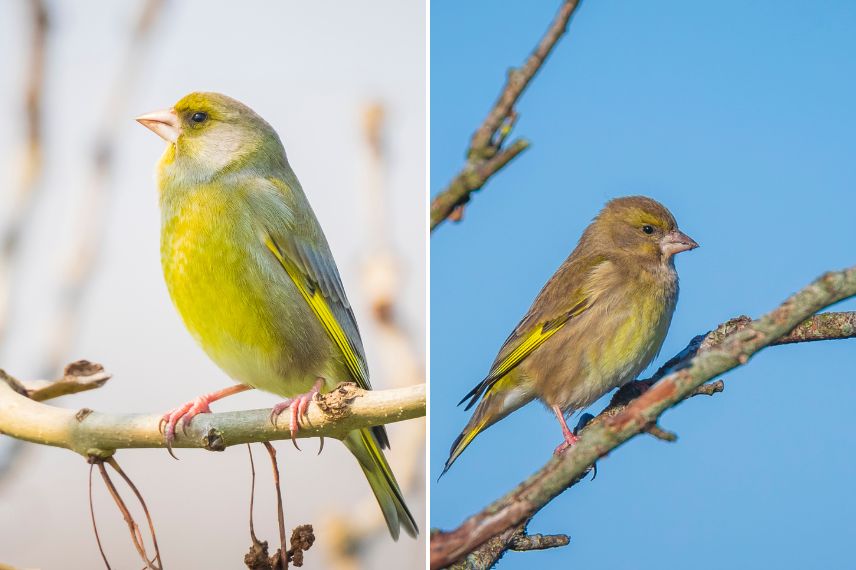
The European greenfinch male has noticeably more colourful plumage than the female greenfinch
The song of the European greenfinch is characterised by fairly sharp, isolated and repetitive notes of the kind “chuiiiii”, interspersed with “yu yu yu”, “tu tu tu” and other “tsi tsi tsi”.
The European greenfinch is a resident passerine in France, but the population is greatly augmented by seasonal influxes of migrants from northern Europe. Migration peaks generally occur in late October, early November and in spring, late March, early April.
Behaviour, reproduction and habitat of the European greenfinch
The European greenfinch is an anthropophilic bird (a term for animals that live in habitats frequented by humans), and is commonly found in parks and urban gardens. Generally gregarious, the European greenfinch can be aggressive at feeders, but tolerant of other species such as finches, particularly in winter when they forage in cultivated fields for seeds.
Where do European greenfinches live?
The European greenfinch prefers wooded habitats with trees and shrubs, but rather open and not too dense, the woodland edges, copses and hedgerows, not forgetting parks and city gardens where it is frequently found.
In terms of vegetation, our little Chloris chloris has a preference for evergreen shrubs and conifers, mainly for establishing its nest. But a ivy (Hedera) that climbs a wall also makes an ideal nest site. And in leafy hedges, it can also readily rely on deciduous shrubs such as hornbeams (Carpinus), hawthorns (Crataegus) or dog-roses (Rosa canina).
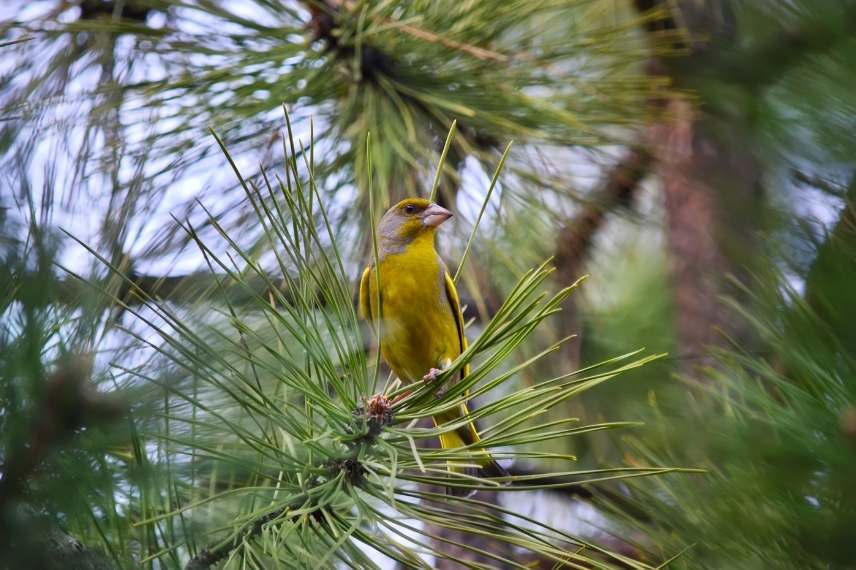
The European greenfinch likes conifers for nesting
During the non-breeding season, the small passerine with yellow and green plumage frequents agricultural areas, fallows and set-aside fields, to find its food, mainly consisting of seeds. In winter, it moves closer to inhabited areas, a regular at feeders.
A few notes on reproduction and nesting
As with most garden birds, the breeding season takes place in spring, generally from mid-April to August. But the male begins his courtship display as early as March. During this period, he tries to attract a female with a gliding and fluttering flight, punctuated by fairly slow wingbeats, with the wings spread wide.
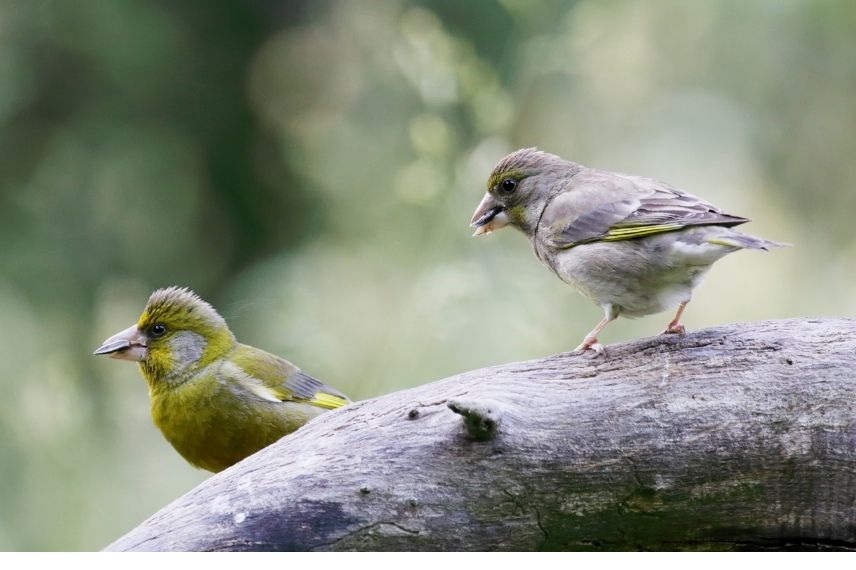
A pair of European greenfinches
Then, it is the female who goes to seek the nesting site and builds the cup-shaped nest in a medium-sized tree, a leafy shrub or a rather dense bush, or even in ivy climbing along a wall. To establish her nest, Mrs. Verdier will travel the countryside (or the town) in search of grasses and dry stems, mosses and lichens, plant fibres, rootlets, feathers and hairs… In short, she will devote all her energy to building a fairly sizeable nest, well concealed in the vegetation.
There she will lay 4 to 6 pale blue eggs which she alone incubates for 13 to 14 days. The male’s role is limited to feeding her during the incubation period. Once the nestlings hatch, they are fed by both parents, initially with insect larvae, then with a regurgitated seed mash. Less than 20 days after hatching, the young verdiers leave the nest, not straying far.
There are two to three broods per year. But the eggs and nestlings are preyed upon by corvids, magpies or jays.
What do European greenfinches feed on?
European greenfinches are seed-eating birds, which become insectivorous only during the nesting period. For the rest of the year, they mainly feed on sunflower seeds, maize or rapeseed, or cereals, not forgetting seeds from a variety of woody or herbaceous plants. They can also feed on berries, small fruits and buds. In general, when they set their sights on fruits, they choose species with seed-included, such as Rubus (blackberry brambles, ornamental brambles, raspberry plants). Otherwise, the European greenfinch enjoys the seeds of white goosefoot or of the great burdock.
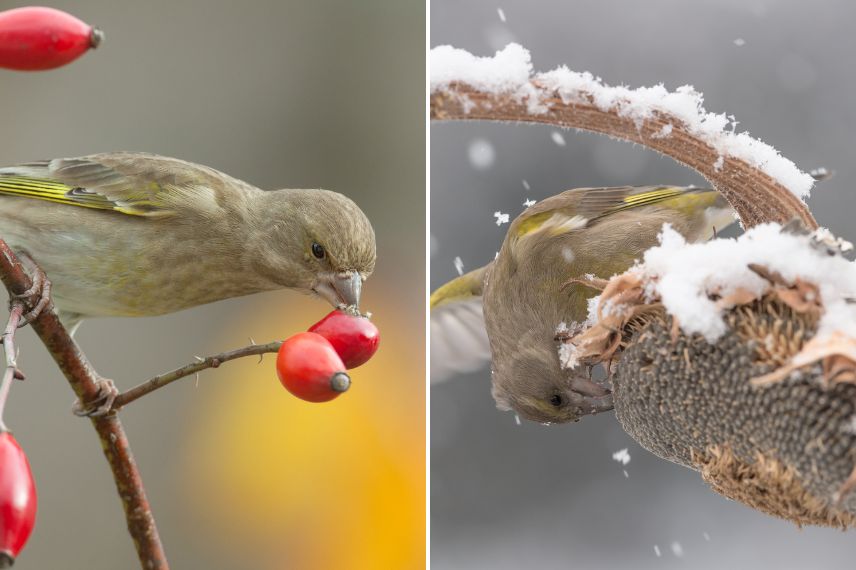
European greenfinches especially enjoy rose hips from roses and dog-roses and the sunflower seeds
In winter, European greenfinches manage fairly well to feed themselves. However, they do not turn up their noses at feeders, especially if they are filled with sunflower seeds, hemp, pumpkin, buckwheat, flax, sorghum, or peanuts.
Read also
Hedge for birds: which shrubs to choose?How to grow Chloris chloris in your garden?
Attracting European greenfinches to your garden can be a good idea. First, because it’s always pleasant and rewarding to observe birds going about their lives in their environment and ours. Next, during the breeding season which runs from April to August, adults feed their young on insect larvae. And among these larvae, many can be potential pests for our vegetables in the vegetable patch and our fruit in the orchard. That’s why the European greenfinch can be considered an effective ally in biological pest control. Perhaps less effective than other birds such as the blue tits, but still effective.
So, to welcome the European greenfinch into your garden in the best possible way, several options:
- Plant berry-bearing bushes (hawthorn, hawthorns…), dense-leaved shrubs and conifers (spruce, juniper, yew…), small fruiting shrubs or small trees (hornbeam, elm whose seeds it enjoys, alder) which will allow it to feed or even nest. It also loves the hips of roses and dog roses, the seeds of plants such as the knotweed, mustard, the senecio, white clover or dandelion. Planting ivy along a wall will also allow it to establish a nest. In your vegetable patch, you can also sow sunflowers, hemp, flax, and various cereals
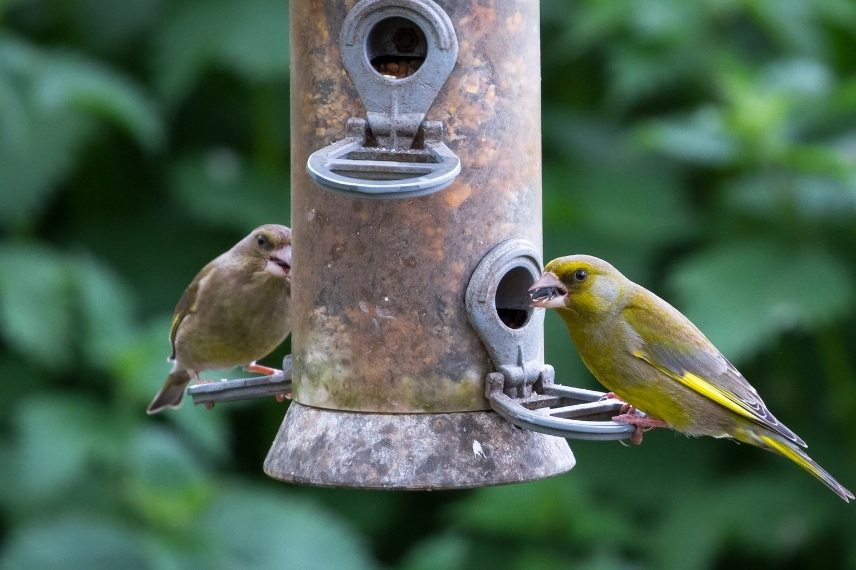
The European greenfinch is a regular visitor to feeders in winter
- In winter, European greenfinches frequent feeders without hesitation, often in groups, especially those filled with sunflower seeds or peanuts, or the seeds mentioned previously. However, they can sometimes be a touch quarrelsome towards other species such as blue tits. That is why it is advisable to provide multiple feeding sites so that birds distribute themselves according to their preferences.
Note that the European greenfinch is highly susceptible to a parasitic respiratory disease called trichomonosis, so it is essential to clean feeders and waterers carefully.
- Subscribe!
- Contents
Comments