





























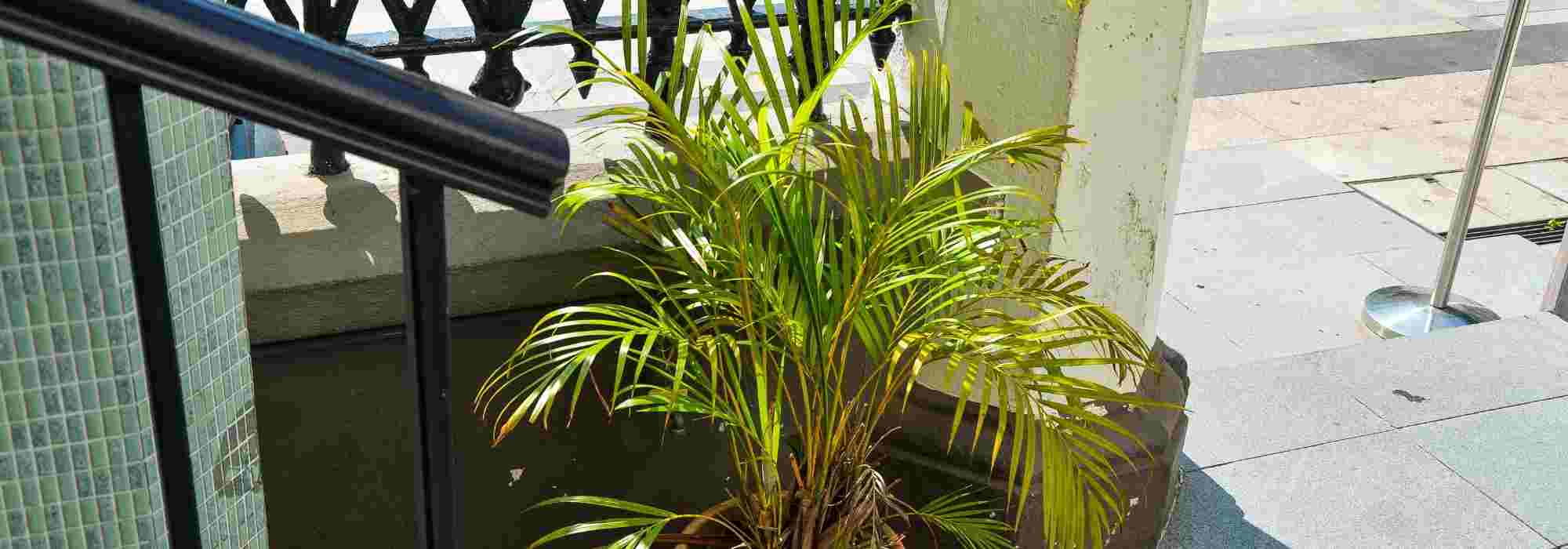
Dypsis, Areca palm: diseases and pests
How to diagnose, treat and prevent diseases and pests affecting this indoor palm?
Contents
Dypsis or Areca palm is a particularly popular indoor plant. Its long pinnate leaves, divided into fine leaflets, flexible and trailing, and its slender, graphic silhouette give it an incredibly exotic charm. Relatively easy to grow and easy to care for, this indoor palm is nevertheless sensitive to fluctuations in humidity and to pest infestations, especially when its growing conditions are not met.
Discover how to accurately identify the diseases and pests that affect the Dypsis, in order to apply natural treatments and preventive strategies, while taking into account the constraints of indoor cultivation.
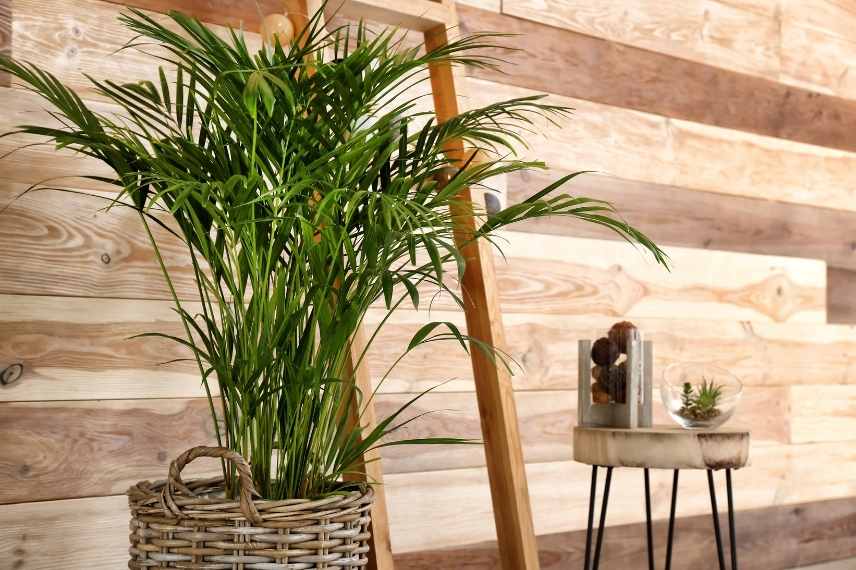
Dypsis lutescens is a very popular indoor palm

Areca palm parasitic pests: how to recognise and combat them?
Dypsis is not immune to pest attacks, especially when grown indoors, where dry air and a lack of natural predators create an environment conducive to their proliferation. Some insects find ideal conditions to establish themselves permanently, causing progressive weakening of the palm if no intervention is taken promptly.
Mealybugs
Mealybugs are among the most common pests on the foliage and petioles of the Areca palm. Powdery mealybugs leave cottony white masses clearly visible on the veins and leaf sheaths, while shield scales embed more on the stems, forming small brown or grey discs that adhere. Their presence is often accompanied by honeydew, a sweet secretion that promotes the appearance of black sooty mould on the leaves.
What to do? In case of early detection, a manual cleaning with a cotton bud soaked in 70% alcohol may suffice. If the infestation is more advanced, you can apply by spraying a natural treatment composed of one tablespoon of black soap, one tablespoon of vegetable oil and one tablespoon of 70% alcohol, diluted in one litre of water.
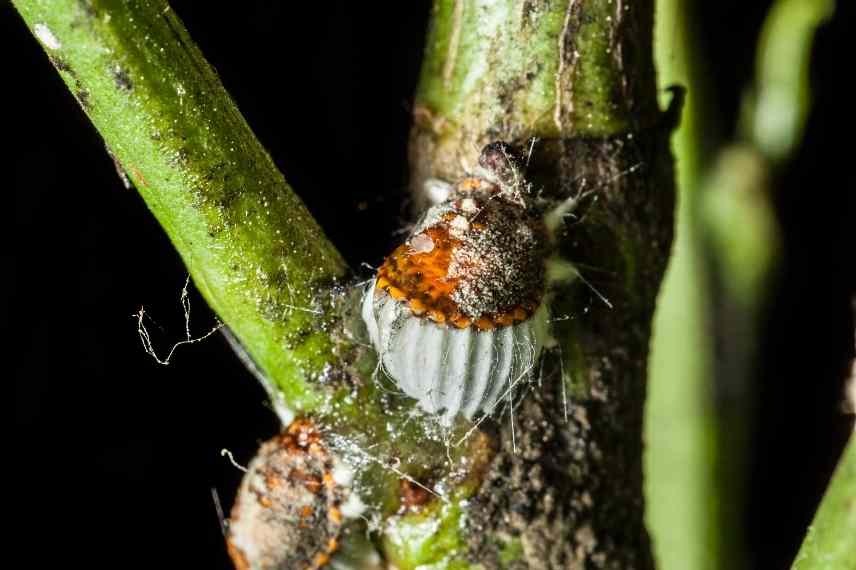
Mealybugs and sooty mould are fairly common on the Areca palm
Red spider mites
Tetranychid mites, often called red spider mites, proliferate quietly under the leaflets, especially when the ambient air is dry and temperatures are high. Their activity causes mottled discolouration of the leaves, which take on a dull, greyish, or even silvery appearance. Fine webs may appear in the most affected areas.
What to do? Increasing humidity around the foliage often slows their development. Water sprays on the undersides of the leaves, together with better room ventilation, provide an effective response at a moderate infestation stage.
Thrips
Thrips, tiny insects barely visible to the naked eye, also cause notable damage. They pierce leaf cells, causing a silvery or striped appearance, accompanied by small black dots corresponding to their excrement. The youngest leaves are often the most susceptible. Hot and dry conditions favour them, making their appearance frequent in poorly ventilated rooms.
What to do? The use of blue chromatic traps helps monitor their presence. To eliminate them, you can use a natural pyrethrum treatment.
Fungus gnats or soil gnats
The fungus gnats, or sciarids, although not dangerous to a healthy adult plant, can weaken young palms when they lay eggs in a consistently moist substrate. The larvae feed on the rootlets and promote the establishment of opportunistic fungi.
What to do? To limit their appearance, it is essential to allow the top layer of the potting mix to dry out between waterings. In the most severe cases, repotting is required, into a perfectly clean pot with fresh substrate.
Diseases of Dypsis: How to identify and treat them?
The Dypsis, although suitable for pot culture, remains susceptible to a number of fungal diseases favoured by stagnant moisture, poor aeration or an unsuitable substrate. Indoors, lack of air circulation and overwatering are the two main triggers of these diseases, which initially affect the roots, then the foliage indirectly.
Root rot
Root rots are among the most insidious ailments. They develop when water stagnates around the root system, suffocating the fine roots and creating conditions favourable to soil-borne fungi such as the Phytophthora. The plant initially appears weakened, then shows clearer signs: the stems soften at the base, the leaves lose their turgor, and the roots darken.
What to do? This type of pathology requires a rapid response. Immediate repotting allows observation of the extent of the damage. The necrotic parts should be removed with a clean tool, then the healthy roots replanted in a fresh, well-drained substrate.
Leaf spots
Fungal foliar diseases, less frequent but just as troublesome, generally appear in the presence of dense, poorly ventilated foliage, subjected to high ambient humidity. Some species such as the Alternaria cause the appearance of brown spots more or less circular, sometimes bordered in yellow. These lesions can spread rapidly if conditions remain favourable, leading to the decline of the fronds.
What to do? Immediate removal of the affected leaves is imperative, paired with an adjustment of environmental conditions. The preventive fungicidal treatment based on copper, such as the Bordeaux mixture can strengthen protection of healthy tissues, provided doses and usage precautions indoors are strictly observed.
Botrytis
The Botrytis, or grey mould, may also appear occasionally, particularly on young or weakened plants, cultivated in a confined atmosphere. It manifests as fluffy grey mould on damp tissues, especially at the base of the stems or in the leaf folds. This disease progresses very quickly in the presence of condensation on the foliage, especially after late spraying or overwatering.
What to do? Remove the affected parts, ventilate the room regularly and avoid any moisture landing on the foliage.
What are the signs of stress in Dypsis palms?
The Areca palm is an indoor plant sensitive to environmental fluctuations and imbalances in cultivation conditions. When a problem occurs, the foliage often responds visibly, but the underlying causes can be multiple. Correctly interpreting these signals is essential to avoid worsening the situation through unsuitable interventions.
Yellowing of the foliage
The progressive yellowing of the oldest leaves is a common phenomenon. It may be a natural process linked to foliar renewal, but if the phenomenon extends to the entire plant, it is worth considering overwatering, a nutrient deficiency or a lack of light. However, overwatering remains the most common mistake. In a pot without effective drainage, stagnant moisture quickly asphyxiates the roots, leading to diffuse decline. Better monitoring of watering will resolve the problem. It can be supplemented by a balanced fertiliser to potentially correct a nutrient deficiency.
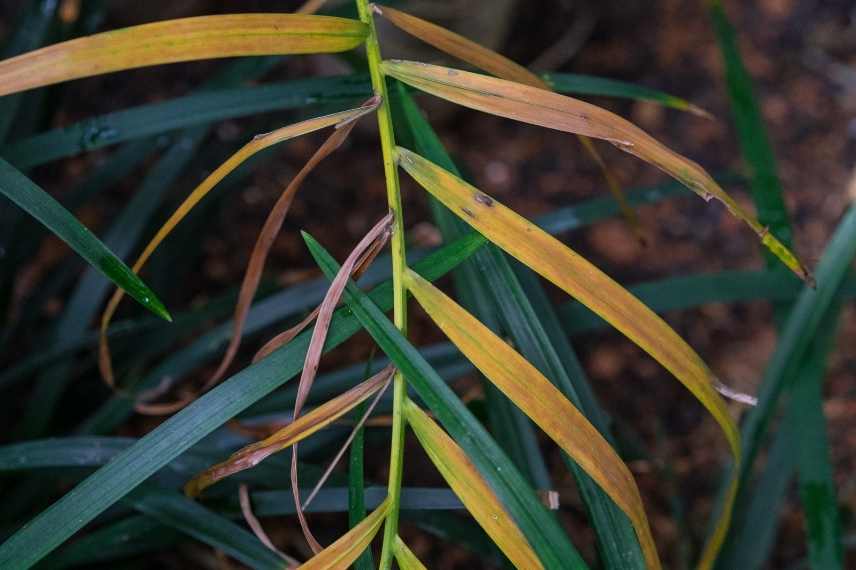
Leaf yellowing is often due to overwatering, a nutrient deficiency or a lack of light
Brown or blackish spots on the leaves
The appearance of brown or blackish spots on the edges of the leaflets often indicates water stress or an atmosphere that is too dry. Leaf burns can also result from an excess of fertiliser, especially if the application is made on a dry substrate. Light that is too intense, particularly if the palm is exposed to direct sun through a window, can also cause localized necrosis. It should be enough to regulate watering again and move the palm to a more diffuse light environment.
Generalised weakening
A general drop in vigour, dull or limp foliage, and slowed growth frequently signal an imbalance in the culture medium. These signs should prompt a check of the substrate’s condition, its compaction, its moisture, the possible presence of visible surface roots, or unpleasant odours emanating from the pot. A lack of light or too low a temperature can worsen these symptoms in winter. Sometimes repotting is enough to resolve the problem.
Read also
Indoor palm: how to grow Areca palm?Meeting the growing needs of a healthy Dypsis
The best way to limit the appearance of diseases and parasitic pests on the Areca palm is to create a cultivation environment that meets its needs. Originating from Madagascar, this palm is a tropical plant that, when potted, remains dependent on the quality of its growing medium and on regular care:
- The container and substrate : The substrate should be light, well-draining and able to retain moderate moisture. A potting compost for houseplants enriched with compost, lightened with perlite or fine pumice, helps to obtain an airy structure that prevents root asphyxia. The use of an unglazed terracotta pot allows better aeration of the substrate by capillary action and helps limit excess moisture.
- Watering : It should be managed precisely. During the active growing period (spring and summer), moderate but regular watering, about once a week, is recommended, ensuring that water never pools in the drip tray. In winter, needs decrease significantly. It is preferable to use water at room temperature, ideally low in lime-scale if possible.
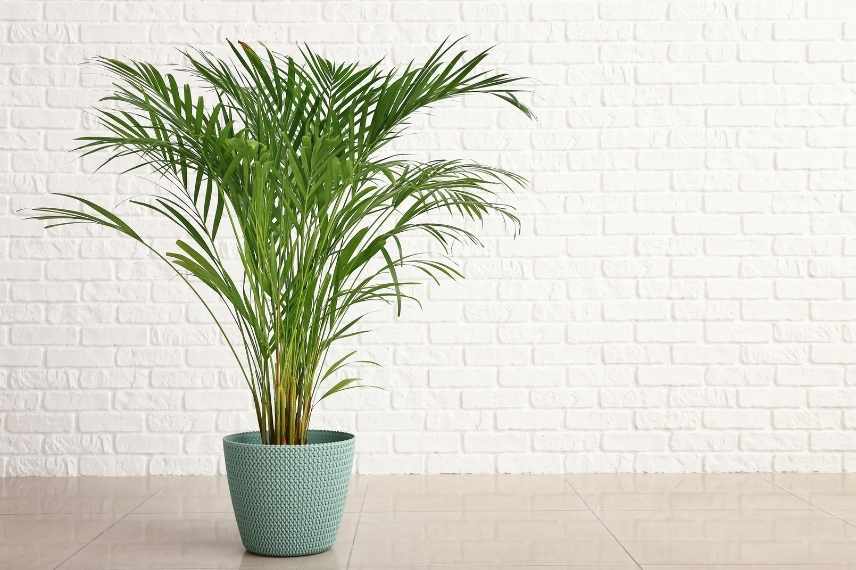
A healthy Dypsis palm should benefit from a cultivation environment that meets its natural requirements.
- Ambient humidity : Ambient humidity plays a central role in preventing infestations, particularly red spider mites. In interiors that are too dry, especially when the heating is on, the palm can be placed on trays filled with damp clay balls. Foliar sprays on the foliage, although beneficial in summer, should remain occasional and targeted.
- Fertilisation : It should accompany the vegetative cycle without excess. A balanced liquid fertiliser, rich in nitrogen, potassium and trace elements, can be applied once or twice a month between April and September. In winter, all fertilisation should be suspended, as the plant naturally enters a rest period.
- Subscribe!
- Contents
Comments