






























Diseases and parasitic pests of Anthurium: identification, treatment and prevention
Symptoms, treatments and prevention
Contents
Anthurium or Flamingo Flower, with its beautiful colourful flowers and lush foliage, is a very popular houseplant. But it can be prone to various diseases and parasitic infestations that threaten its health. Discover the main problems that can affect your Anthurium, how to identify them and, above all, how to treat and prevent them. Yellowing leaves, brown spots, root rot or attacks by aphids and scale insects, learn to recognise the early signs and adopt the right steps to protect your plant. Follow our tips to ensure your Anthurium growth and vibrant flowering all year round.

How to grow Anthurium in a pot indoors?
For healthy indoor potted Anthurium cultivation and to prevent diseases, it is essential to provide it with an adequate environment:
- Ideal location : place the Anthurium in a bright spot, with no direct sun, away from draughts.
- Temperature : it prefers a temperature between 18°C and 25°C, and dislikes cold below 15°C.
- Substrate : use a well-draining, airy potting mix, such as special houseplant compost.
- Watering : water moderately, about once a week, allowing the substrate to dry slightly between waterings.
- Humidity : maintain good hygrometry by misting the leaves or placing a saucer with clay beads and water under the pot.
- Fertiliser : apply a liquid fertiliser for green plants every 15 days in spring and summer.
- Repotting : repot every 2 to 3 years, in spring, to keep the substrate fresh and well-draining.
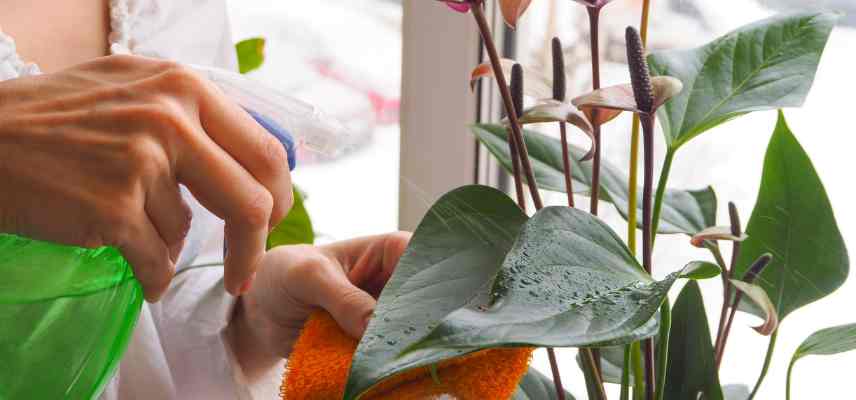
- Cleaning : wipe the leaves with a damp cloth to remove dust and promote photosynthesis.
- Pruning : remove yellowing leaves and faded flowers to encourage new shoots.
→ For everything you need to know about this magnificent plant, read Anthurium – Flamingo Flower: growing and caring.

Common Anthurium diseases
-
Root rot (caused by overwatering)
- Symptoms: yellowing leaves, black and soft roots.
- Treatment: repot the plant into a well-draining substrate after removing rotten roots. Limit watering and ensure good drainage.
-
Leaf spots (bacterial or fungal)
- Symptoms: small brown or black spots on the leaves, which may spread.
- Treatment: prune the affected leaves, apply a suitable fungicide and avoid excess humidity on the foliage.
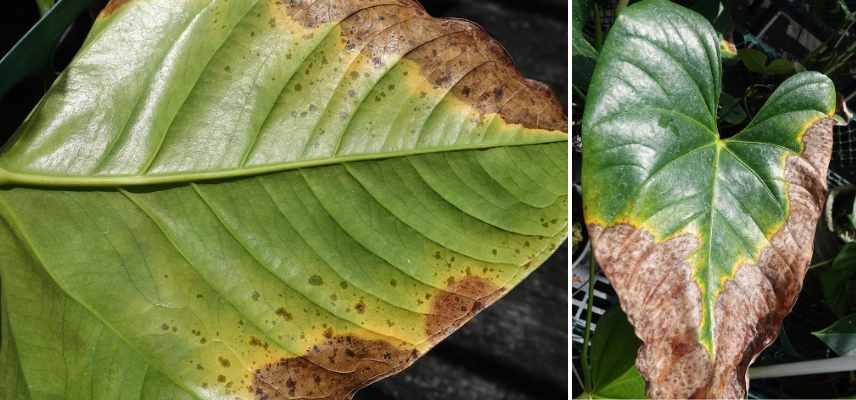
Photos Flickr and Wikimedia Commons (©Scot Nelson)
-
Downy mildew and powdery mildew
- Symptoms: white powdery growth on the leaves or oily spots.
- Treatment: use a natural fungicide (such as a solution of sodium bicarbonate) and improve ventilation.
- Read Powdery mildew or white disease: prevention and treatment for more information.
Parasitic pests of Anthurium
-
Aphids
- Symptoms: distorted leaves and presence of small green or black insects.
- Treatment: spray diluted black soap or a garlic infusion on the leaves.
- Read Aphids: identification and treatment for more information.
-
Mealybugs
- Symptoms: small white cottony masses or brown shell-like coverings on stems and leaves.
- Treatment: dab with a cotton pad moistened with 70% alcohol or apply neem oil.
- Read Mealybugs: identification and treatment for more information.
-
Red spider mites
- Symptoms: yellowing leaves and fine webs beneath the foliage.
- Treatment: increase ambient humidity and spray soapy water onto the plant.
- Read Red spider mites: identification and treatment for more information.
Read also
Growing AnthuriumPrevention of diseases and parasitic infections in anthurium
- Moderate watering: let the potting mix dry out slightly between waterings.
- Good ventilation: avoid stagnant moisture and place the plant in a well-ventilated spot.
- Regular cleaning: wipe the leaves with a damp sponge to limit infections and inspect them regularly.
- Natural preventive treatments: spray nettle manure to strengthen the plant.
- Subscribe!
- Contents
Comments