





























Diabolical or devil bug: how to protect your plants from this pest?
Identification, prevention and natural solutions against this insect
Contents
There are various plant pests, whether in the vegetable garden, the orchard, the ornamental garden or indoors. But some can cause more damage than others. The diabolical bug is notably one of these insects that attack many plants. Fruits, vegetables and ornamental plants can thus fall victim to its punctures.
Let’s look at how to identify this insect, the preventive measures to put in place and the natural treatments to use in case of proliferation.

Who is the diabolical bug?
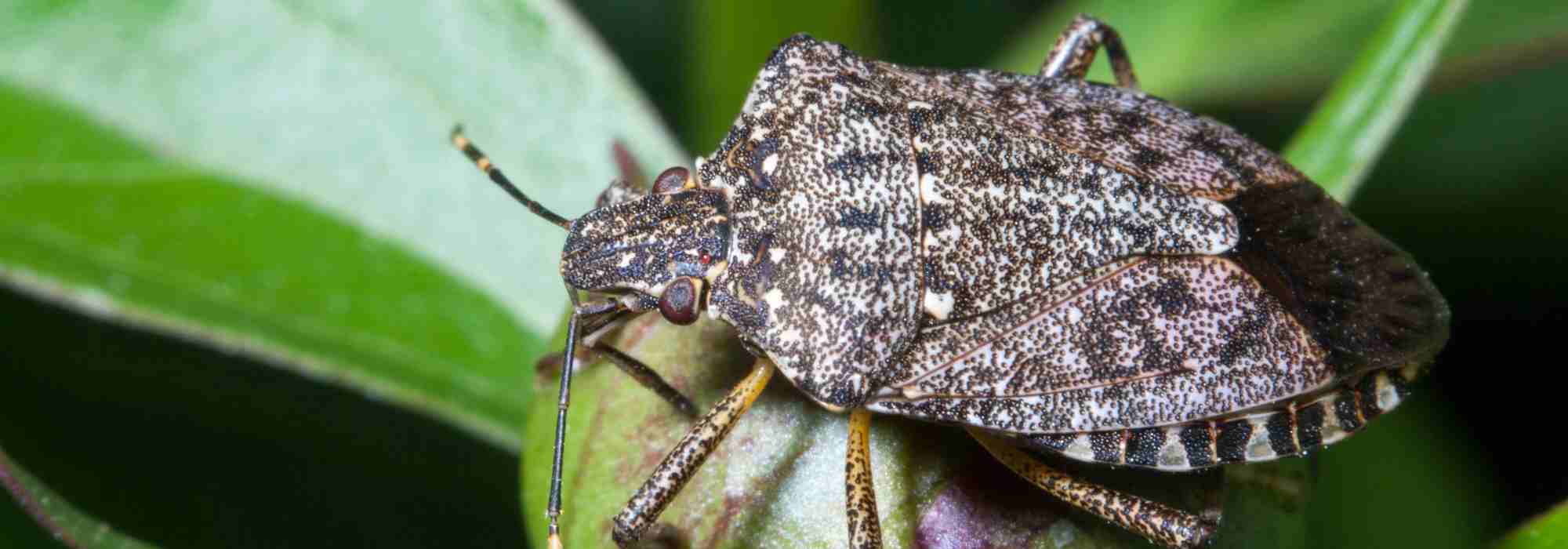
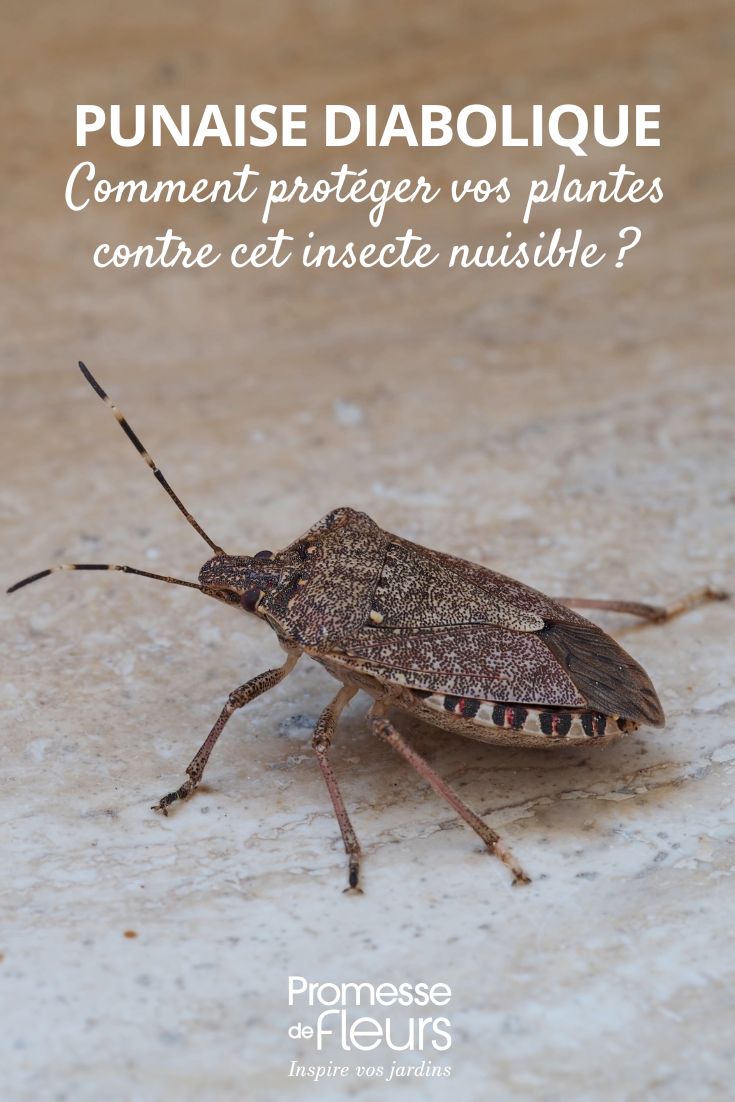
The brown marmorated stink bug, Halyomorpha halys is also known by its common name, the marbled stink bug. It is a true bug (order Hemiptera) with short forewings (elytra) that cover its body, just like the aphid, cicada or scale insect. It is a piercing-sucking insect that uses a rostrum to pierce various parts of plants in order to feed on sap.
Quite large, it measures about 12–17 mm long and 7–10 mm wide. It has a fairly flat body, shield-shaped. In terms of colour, it is generally greyish, but can display brownish or reddish tints, somewhat marbled or speckled. Around its abdomen, white and black bands are visible. In reality, it resembles other stink bugs, such as the Nebulous stink bug (Rhaphigaster nebulosa), the most widespread in Europe. This latter species also shows colouring ranging from grey to brown with faint patterns. Visually, it bears an abdominal needle that its cousin does not possess, but this feature is not always easy to observe. The brown marmorated stink bug, however, bears white markings on its antennae. Both are capable of emitting an unpleasant odour when threatened, thanks to glands located on the sides of their abdomens.
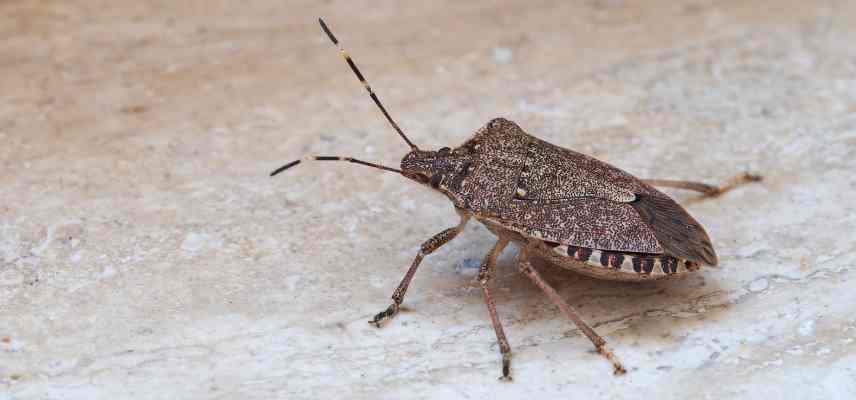
Halyomorpha halys
The brown marmorated stink bug is native to East Asia. It has spread around the world and is now found just as readily in North America (where it was first accidentally introduced) as in Europe, owing to its great adaptability to different environments. It also does not have many natural predators in these regions, which helps explain its rapid spread. In France, it has been present since 2012, where it was first observed in Alsace.
The brown marmorated stink bug appears in a variety of habitats, especially wooded areas, hedgerows and gardens, where it finds both shelter and food. But it also thrives in agricultural areas. In late autumn, adults tend to seek the warmth of our homes, even our vehicles, but they also protect themselves by staying outside in dead wood. Activity peaks again in spring and continues until the end of summer.
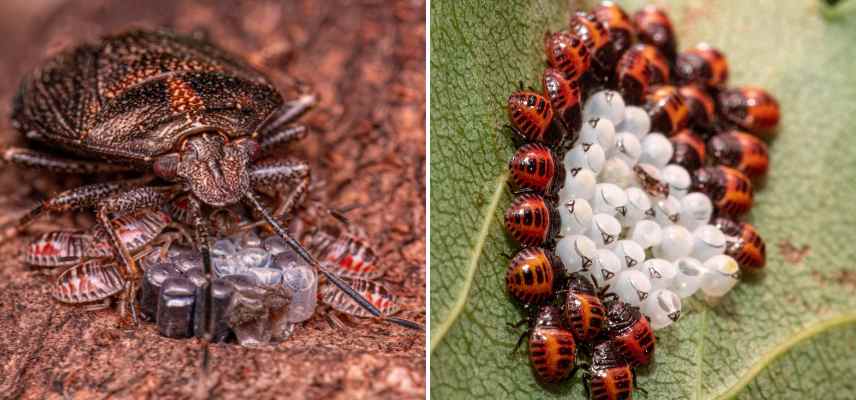
To reproduce, the bug lays white, round and pointed eggs gathered in clusters directly on host plants. This offspring will go through several nymphal stages before becoming adults. There is generally only one generation per year.
s
Read also
Stink bugs in the gardenDamage caused by the diabolical bug
The diabolical stink bug can cause a lot of damage to crops, both on fruiting plants and on vegetable and ornamental plants, perennials as well as annuals. Brassicaceae, Cucurbitaceae, Rosaceae… It does not seem to snub any plant family. That is why it is regarded as a true crop pest, even a threat to arboriculture, viticulture and market gardening. It thus causes damage to cherry trees, kiwifruit, apple trees, pear trees, raspberries, tomatoes, aubergines, peppers, soya beans, maize, grapevines, hazelnuts, etc.
Whether in private gardens or on agricultural land, it will impact the harvest by piercing the fruits and vegetables, which will become discoloured. Most notably, they may not reach ripeness properly or their flavour may be altered. Flowers may also drop prematurely; buds abort. This results in a real yield loss.
Finally, like other piercing insects, the bug can also contribute to spreading pathogenous elements (bacteria, viruses…), which can weaken the plant as a whole.
On the other hand, let us remind you that the diabolical stink bugs do not pose any danger to humans and to pets: they do not bite and do not attack. Their presence in homes can, however, be uncomfortable.
Preventing the appearance of the devil's bug
In the garden, fostering natural balance—allowing both pests and their predators to coexist—is one of the keys to protecting your harvests. Ladybirds, lacewings, spiders and micro-wasps Anastatus bifasciatus are among the potential predators of the diabolical stink bugs. To sustain their presence in the garden, several small steps can be taken.
- Ban any use of chemicals, pollutants and substances harmful to biodiversity (insecticides, fungicides, herbicides…).
- Install insect hotels and/or provide various shelters (wood piles, stone heaps, hollowed-out stumps…).
- Provide waterers for wildlife, especially in summer and winter (careful to change the water regularly and place a pebble at the bottom of the containers so that no creature drowns).
- Cultivate melliferous plants, wild plants and native species, but also prioritise polyculture (cultivation of different plant species).
- Leave fallow patches or practice differentiated mowing.
- Install a pond, as wetlands are precious for many living beings.
As a precaution, to protect your crops, you can also use physical barriers by installing fine-mesh nets from early spring. This is, admittedly, not the most aesthetically pleasing solution, but it has the advantage of not requiring any special products.
Also try repellent plants, such as catmint (Nepeta) or catnip, whose very aromatic scent would help deter the stink bugs. Grow them near sensitive crops. Garlic macerates would also have a natural repellent effect.
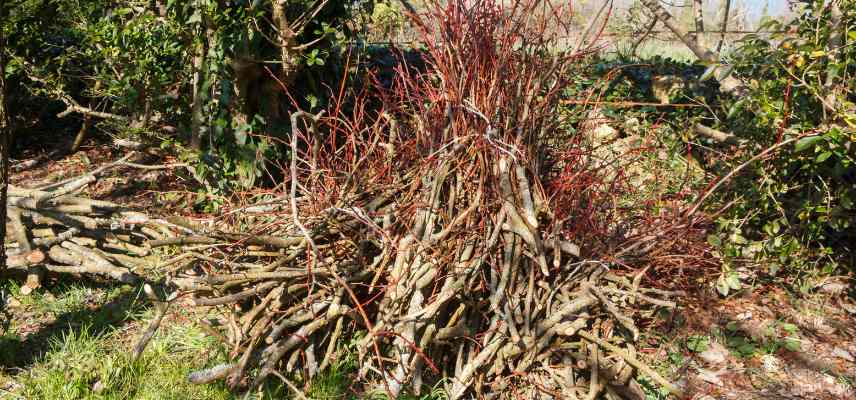
The presence of a few piles of wood in a garden helps shelter numerous predators
Natural remedies for diabolical bugs
As always, we do not recommend using chemical insecticides. In addition to being polluting and non-selective (they can affect many insects, including the most beneficial), they are often not very effective, especially outdoors.
However, there are other natural solutions to implement in the event of an infestation of diabolical stink bugs.
In spring, the placing of pheromone traps, which will attract the males and prevent them from breeding, is fairly effective.
Hand-picking of insects can also be considered at the start of the season, although this solution can be lengthy and tedious. To be reserved for confined spaces. The lethal method involves placing them in a jar, left in the freezer for 24 hours.
Research appears to be ongoing regarding the use of trap crops, which would attract diabolical stink bugs to certain plants to divert them from crops to protect (such as nasturtium for aphids). Sorghum, sunflower and millet could in particular prove effective.
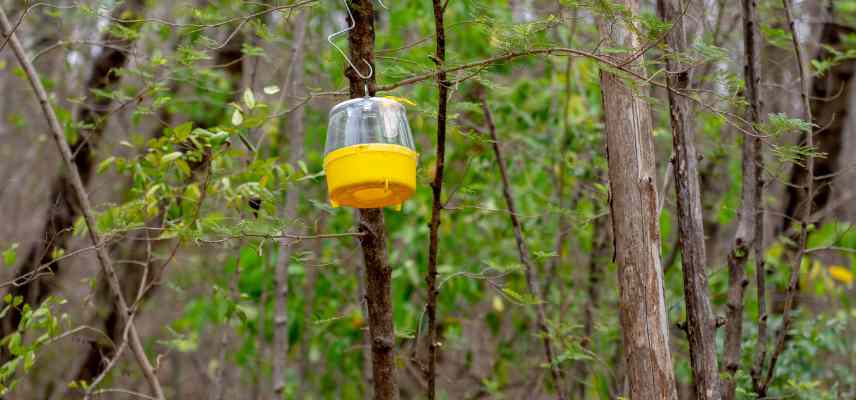
The installation of pheromone traps proves effective
- Subscribe!
- Contents
Comments