





























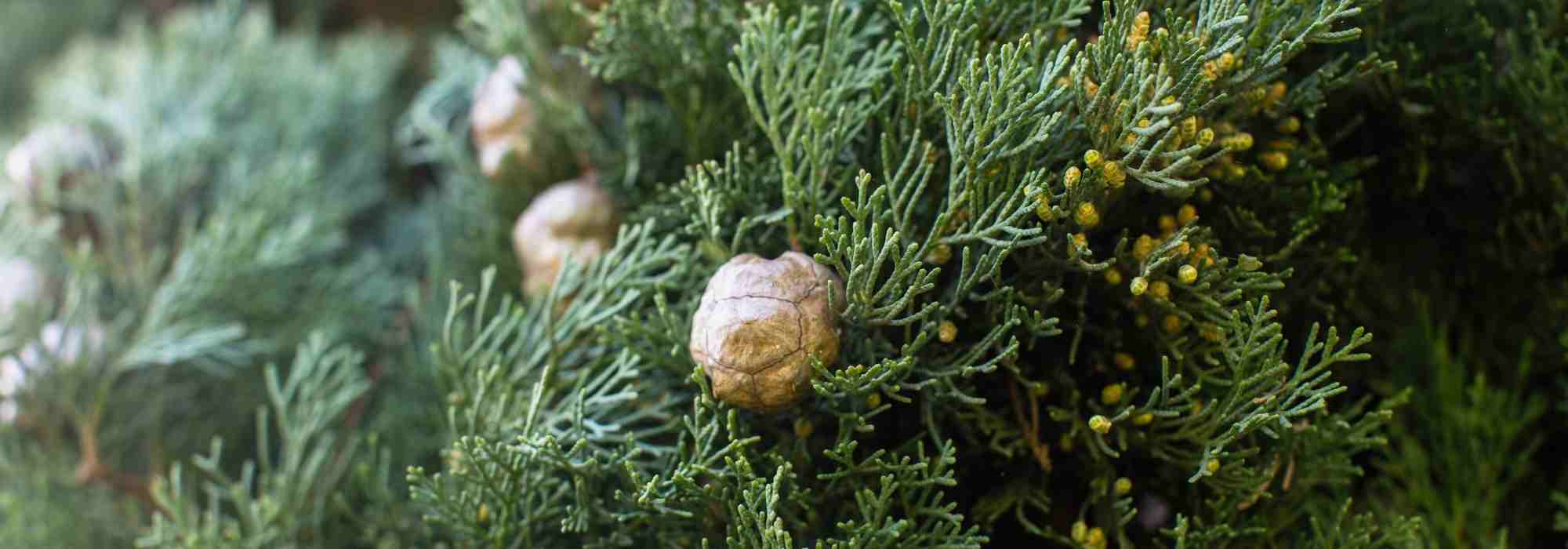
Cypress care: watering and fertilising for a vigorous growth
Proper care for different Cypress species
Contents
Cypresses are often essential in a garden, planted in dense hedges, used as a privacy screen or installed as stand-alone ornamental conifers. Their slender habit and evergreen foliage make them essential elements of a landscape design. But behind the generic term ‘cypress’ lie several genera and species with equally diverse needs, including watering of cypresses and fertilising for Leyland cypress, Provence cypress or Lambert cypress. What’s more, given their robust appearance, these inputs are often neglected. Signs of distress then appear, such as water stress, deficiencies or outright decline.
Let us understand the watering and fertilising needs of cypresses to ensure their longevity and vigour.

What are cypress trees?
From a botany standpoint, cypress is the vernacular name for the genus Cupressus. However, in the minds of many gardeners, other genera and varieties and their hybrids are included:
-
- Cypress (Cupressus) are conifers with a habit often columnar or conical. Their shoots are rather rounded and not flattened, and their globose cones are larger than those of the false cypresses (Chamaecyparis). They generally have a main taproot. Not all are perfectly hardy, therefore often suited to southern regions. We distinguish the Provence cypress or Italian cypress (Cupressus sempervirens), the Arizona cypress (Cupressus arizonia) and Lambert’s cypress (Cupressus macrocarpa).
- False cypress (Chamaecyparis): formerly included in Cupressus, these false cypresses form today a distinct genus in their own right. It is the most cultivated genus in Western Europe. Most false cypresses grow in cool, damp conditions, and dislike drying winds. We mainly encounter Lawson cypress (Chamaecyparis lawsoniana), and its numerous cultivars, Japan Hinoki cypress (Chamaecyparis obtusa) and Sawara cypress (Chamaecyparis pisifera).
- The Leyland cypress (Cupressocyparis or Cuprocyparis) which is a natural hybrid of Cupressus macrocarpa and Chamaecyparis nootkatensis. It is mainly used to form dense hedges.
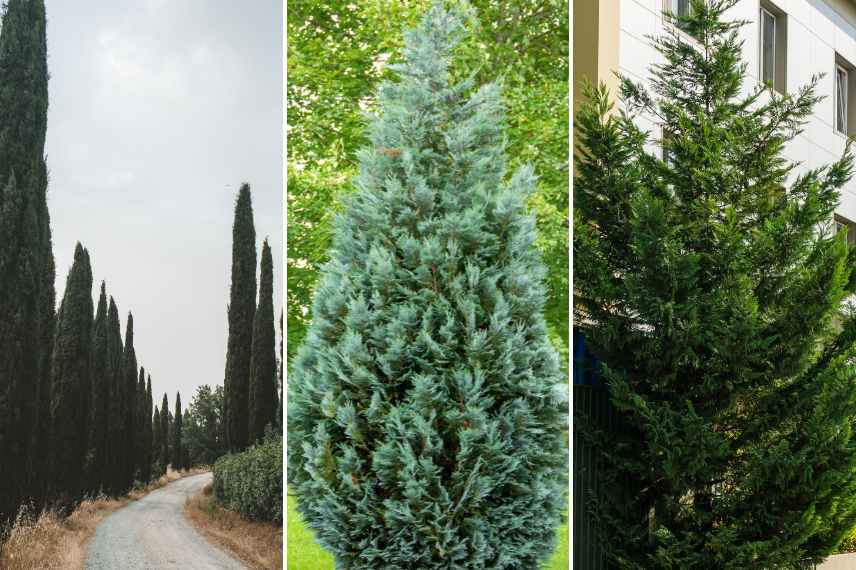
From left to right, a cypress of genus Cupressus, a false cypress (Chamaecyparis) and the Leyland cypress hybrid (Cupressocyparis)
What are the physiological needs of cypresses?
All cypresses share their ability to grow in all soil types—neutral, calcareous or acidic—and they must be perfectly drained. Therefore, cypresses fear above all excess moisture or waterlogged soils, which favour attacks by pathogenous fungi, such as Phytophthora.
While Cupressus adapt to poor and dry soils, false cypresses prefer cool, deep soils, even mediocre ones. But their growth will be reduced there, their foliage less lush.
As for the Leyland cypress, it favours ordinary and deep soils to allow its taproot to seek water. This root system, initially tap-rooted and then lateral, is, moreover, their common characteristic, enabling them to anchor themselves firmly and to explore the soil deeply in search of water. This makes them more or less drought-tolerant.

The growth rate of cypresses is rapid in the early years before stabilising, which also conditions their water and nutrient needs
In terms of exposure, Cupressus prefer sun, while Chamaecyparis favour cooler environments, not too sunny and semi-shaded. And the Leyland cypress likes sunny situations, provided they are not scorching like in the south of the country.
Their growth rate, rapid in the early years before stabilising, also determines their needs in water and nutrients.
Watering of cypresses: what frequency?
Watering is one of the key aspects of cultivating cypresses.
- Cupressus, commonly used in Mediterranean regions, tolerates heat well and tolerates some drought once mature. However, they require close monitoring during the first three years, as their root system establishes itself deeply. Therefore, ensure regular, thorough watering of cypresses in the first year and in the following two years, copious and regular.
- Chamaecyparis, more common in cooler, damp climates, tolerate wetter atmospheres better, but fear standing water, which quickly causes root asphyxia and yellowing of foliage
- Cuprocyparis, vigorous hybrids sought for their rapid growth and density, fulfil their full potential only if watering is regular and controlled, especially in light soils that dry out quickly.
Overall, water management adapts to the age of the young plant and the climatic conditions. A young plant installed in spring needs infrequent but thorough watering to promote deep rooting, while an established plant, well rooted, only requires supplementary water during prolonged drought.
A cypress turning yellow can be explained by inadequate watering or nutrient deficiencies. In summer, during heatwaves, a lack of water causes browning of the foliage and promotes the appearance of red spider mites. Conversely, excess watering invites cryptogamic diseases. In autumn and winter, watering is therefore limited or withheld to avoid saturation.

Cupressus, commonly used in Mediterranean regions, tolerates heat well and withstands some drought once mature
Cultural practices boost watering effectiveness: applying a layer of pine bark mulch and targeted watering at the base make watering more effective.
How to fertilise cypresses for successful growth?
Nutrient supply is essential to support the vigor and foliage density of cypresses, but it must be tailored to the genus grown and the soil type:
- Cupressus, renowned for their rapid growth in warm regions, benefit from regular applications of potassium and magnesium which strengthen their resistance to drought, deficiencies and diseases
- Chamaecyparis, more sensitive to poor and acidic soils, respond well to balanced fertilisers that combine nitrogen, phosphorus and potassium, favouring gentle applications
- Cuprocyparis, hybrids with vigorous growth, require a rich soil well supplied with mineral elements; additional slow-release fertilisers allow them to express their full potential without growth fluctuations.
Note that mineral or slow-release fertilisers are well suited to Cupressus and Cuprocyparis planted in dense hedges, where regular growth is sought. In all cases, moderation is essential: an excess, especially of nitrogen, promotes unbalanced growth and makes cypresses more susceptible to fungal diseases; you may observe a cypress turning brown, for example.
Fertiliser applications to cypresses are typically made in spring to stimulate the start of growth and foliage density.
Watering potted cypresses
Watering a potted cypress requires close monitoring, as the substrate dries more quickly than in the ground. In a pot, it prefers slightly cool soil, with no excess water. In summer, regular feedings are necessary, especially during hot, dry periods, while in winter, watering should be limited to prevent root asphyxiation.
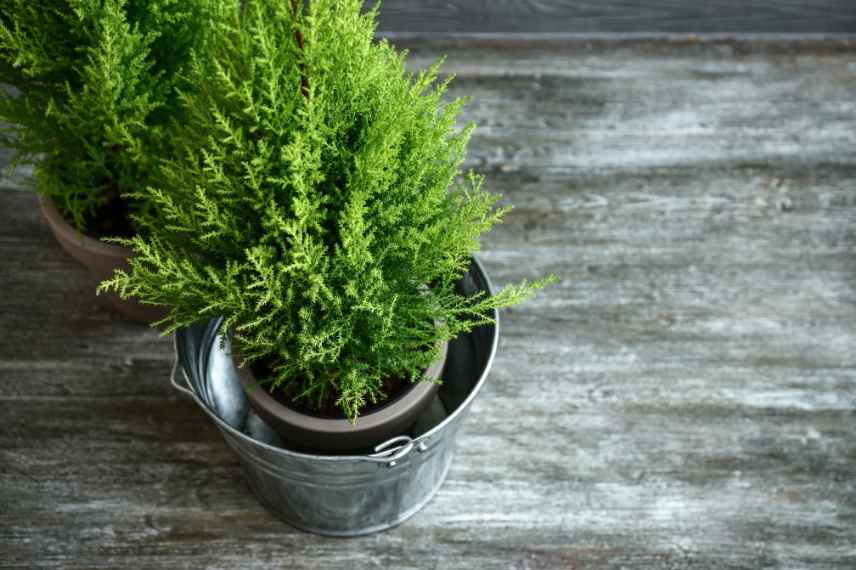
The potted cypress requires careful attention to watering.
To support its growth and maintain dense foliage, it is advisable to apply a slow-release fertiliser specifically for conifers, from spring to mid-summer. These nutrient applications should remain moderate to avoid weakening the plant.
- Subscribe!
- Contents
Comments