





























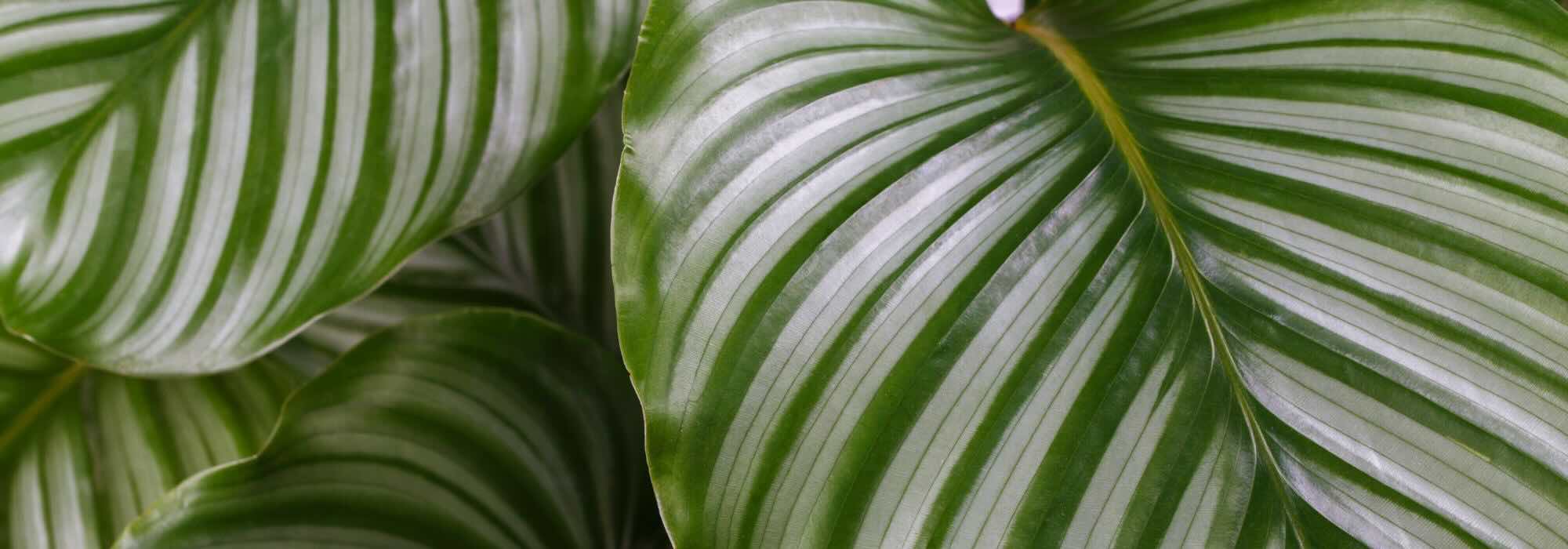
Calathea: All our tips for successful care throughout the seasons
Showcase this stunning indoor plant
Contents
Calathea is a popular plant that appeals to indoor plant enthusiasts with a unique and elegant foliage. Native to tropical forests, it is known for its marbled and coloured leaves that add an exotic touch to any interior. Some varieties are particularly bright, and among the most popular, the Calathea ‘White Fusion’ stands out for its superb marbled leaves of white, green and sometimes even a hint of purple. However, be aware that the more variegated the foliage with white, the more sensitive and delicate the plant is to changes.
Calathea isn’t a plant that settles for less; it’s among the most challenging houseplants to grow over the years. It often shows browning on the edges of leaves, a sign of its sensitivity to minerals present in the water used for watering. Placement, well-balanced watering and a suitable environment are essential for it to thrive, and these factors evolve with the seasons. In this article, discover how to care for your Calathea with tips tailored to the different times of the year.
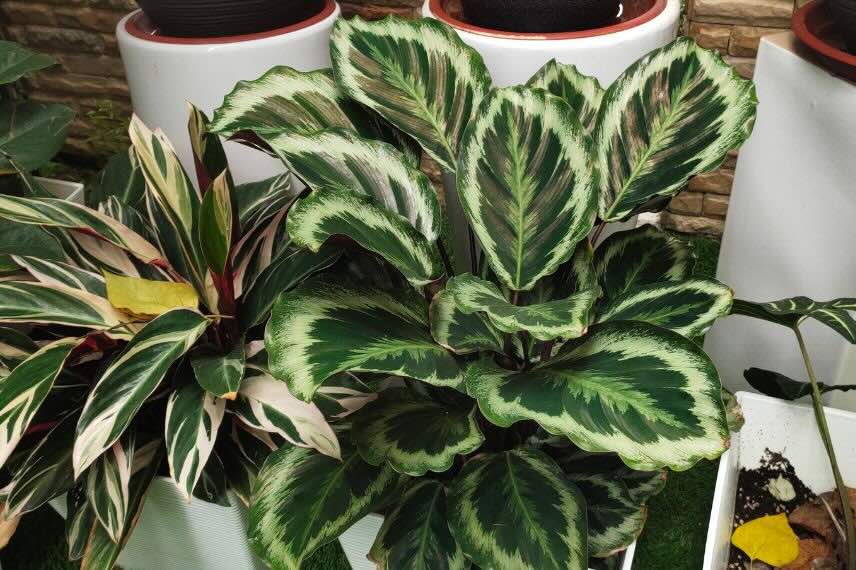
The beautiful foliage of Calathea ‘Medaillon’

Seasonal subtleties of Calathea placement
Where to place Calathea in the home?
Calathea appreciates light, but not just any light. In its natural habitat, it grows under the canopy of trees, where it receives soft, diffused light. To recreate these conditions at home:
- Indirect light: place your Calathea near a window facing east or north for gentle light in the morning or during the day. If your window faces south or west, install a sheer curtain to filter the sun’s rays and move the plant a little away from the window. Direct light may scorch the leaves.
- Away from draughts: Calathea does not like sudden temperature fluctuations. Avoid areas near doors, windows frequently opened or air conditioners.
- Distance from radiators: in winter, keep your plant away from direct heat sources, which dry the air and could harm its foliage.
Seasonal specifics to know
The needs of your Calathea in terms of placement may evolve slightly with the seasons:
- In spring and summer: the sun is stronger, even behind glass. It is essential to protect your plant from direct rays to prevent its leaves from browning or discolouring.
- In autumn and winter: Days shorten and light becomes scarcer. You can bring the Calathea closer to a natural light source without risk, it will appreciate it, while ensuring it is not exposed to temperatures below 16°C, too close to a cold window for example. If the room is dark, using a grow light can compensate for the lack of natural light.
A humid environment, key to success
Humidity is another key factor for the Calathea, which enjoys a tropical ambience. A humidity level of 50 to 60% is ideal. To maintain a suitable environment:
- Place your Calathea in a naturally humid room such as the bathroom (if it has suitable natural light).
- Use a humidifier, particularly in winter, when indoor air is often too dry due to heating.
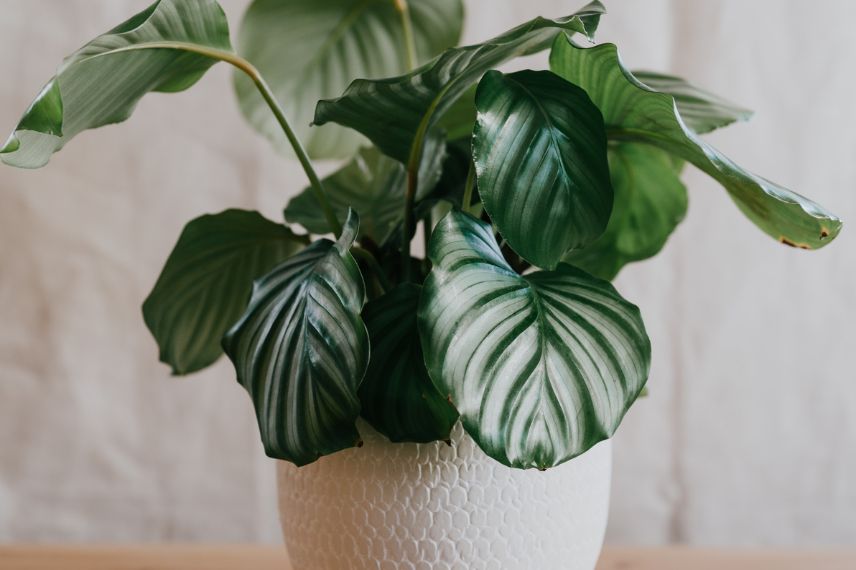
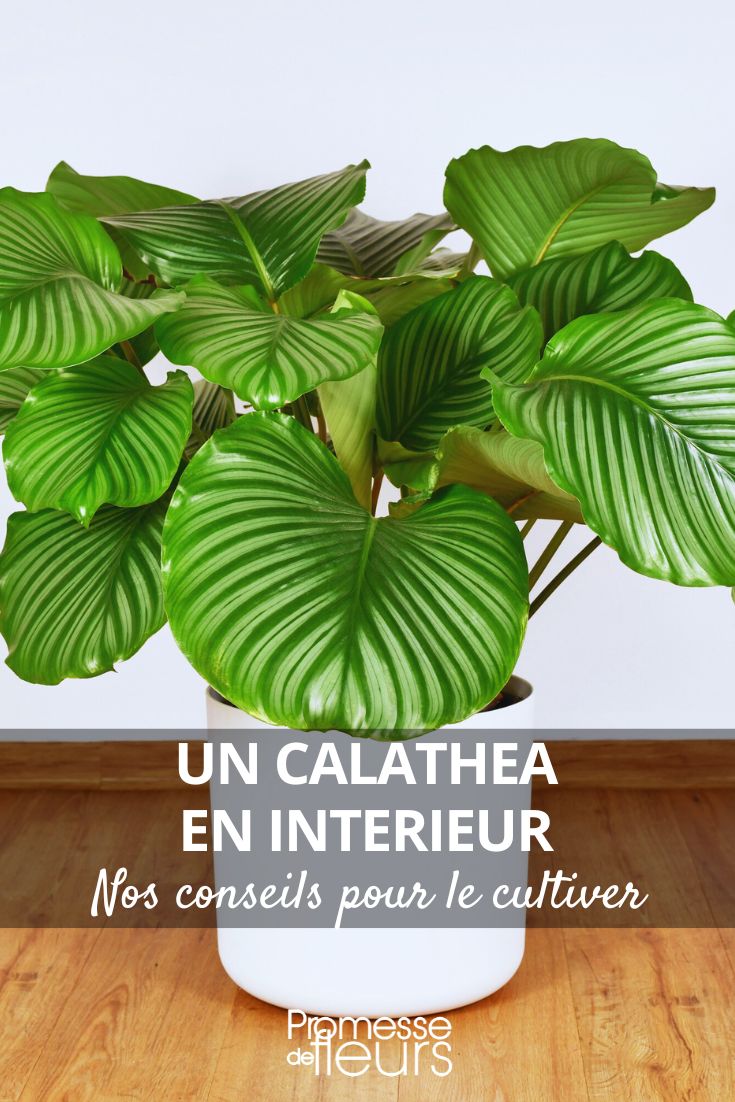
Calathea (here orbifolia) is one of the few plants that appreciates moderate indoor light.
Read also
Misting indoor plantsSeasonal watering for Calathea
Watering and water quality are two very important aspects for keeping your Calathea healthy. Too much or too little water, or water high in minerals, and your plant is likely to show signs of distress quickly: leaves turning yellow, browning or curling : Moreover, watering management isn’t the same in mid-winter or in midsummer.
When should you water Calathea?
The watering schedule depends on the season:
- Spring and summer:
During the active growth period, Calathea needs soil that is consistently moist, but never waterlogged. Water as soon as the top 2–3 cm of the soil begins to dry. This usually corresponds to a weekly watering, but may vary with ambient humidity and temperature. Typically, on heatwave days and with high indoor temperatures, you will probably need to water daily.
- Autumn and winter:
During the rest period, Calathea has reduced water needs. Space out the watering and let the soil surface dry further, while ensuring it does not dry out completely. A watering every two weeks may suffice, but again, adapt to your home conditions. If heating is low, the substrate will stay damp for quite a while in winter. The warmer the interior, the more you will need to water, except that the plant takes up less water in winter as it produces fewer new shoots.
How can you tell if the Calathea is thirsty?
Calathea is an expressive plant that gives you clear signals:
- Leaves curling: this is often a sign that it needs water. Check the soil to confirm it is dry before watering.
- Loss of vibrancy: if the leaves lose their vitality or if the markings appear less distinct, it may be a call for watering or for more humidity in the air.
- Soil test: this is the most scientific method! Dip a finger into the potting mix about 2–3 cm deep. If it is dry, it is time to water. If it is still slightly damp, wait a few days.
Best watering practices
Proper watering isn’t simply about frequency. Here are some tips to properly hydrate your Calathea:
- Use soft water: Calathea is sensitive to hard water. Rainwater is ideal, but if that’s not possible, use filtered water.
- Water evenly: ensure the entire root ball is evenly moistened, but avoid standing water in the saucer, which could cause the roots to rot.
- Water at room temperature: water that is too cold or too hot can stress the plant.
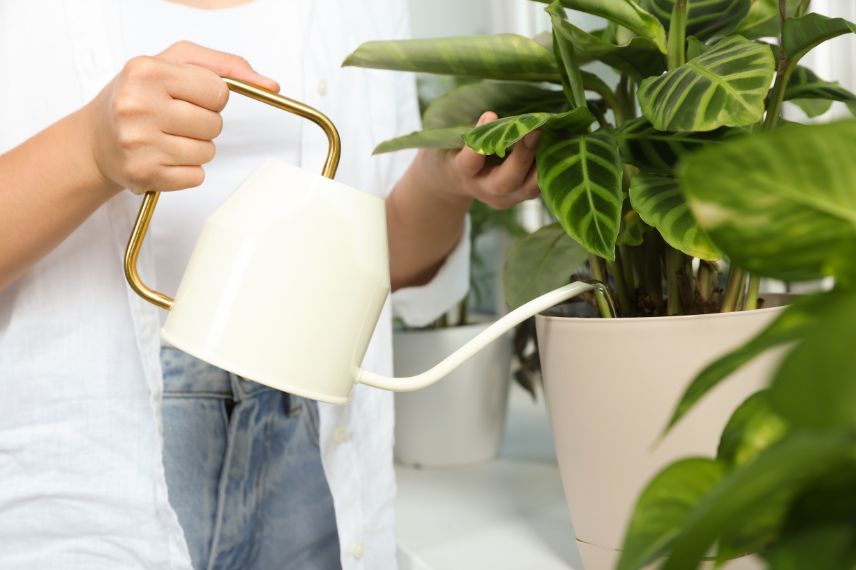
Calatheas appreciate regular watering
Adapt Calathea care to the seasons
Calathea is a tropical plant that follows a natural rhythm influenced by changes in light, temperature and humidity throughout the year. Understanding how its needs evolve between growth periods (spring and summer) and rest periods (autumn and winter) is essential to provide it with appropriate care all year round.
Spring and Summer: the active growth period
As the days lengthen and natural light becomes more abundant, Calathea enters its growth phase. Here’s how to help it thrive:
- Mist its leaves or use a humidifier to recreate the tropical atmosphere it loves.
- Add a liquid fertiliser for green plants every two to three weeks to support its growth. Dilute the fertiliser to avoid burning the sensitive roots.
- Take this opportunity to wipe its leaves with a damp cloth, removing dust that could obstruct photosynthesis.
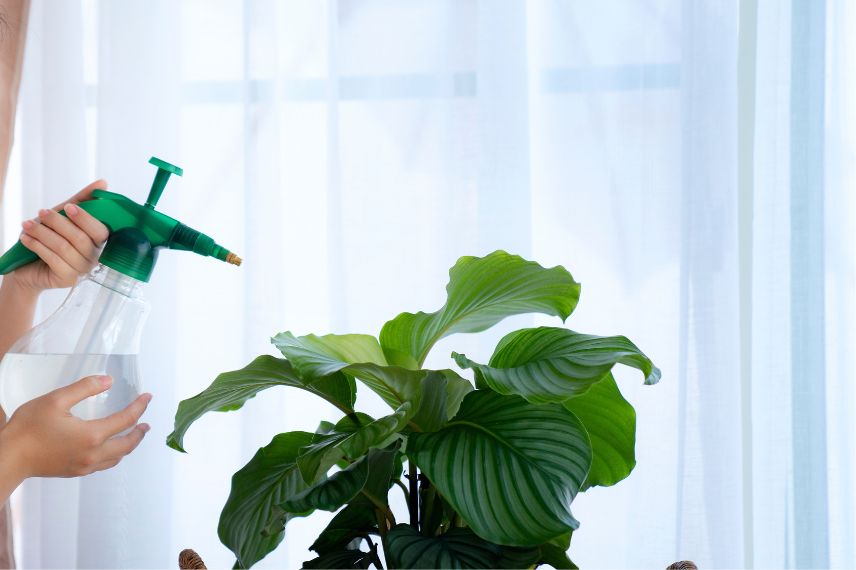
Mist Calatheas to help them thrive
Autumn and Winter: vegetative rest
When days shorten and temperatures fall, Calathea goes into energy-saving mode. It is important to adjust your care so as not to stress it unnecessarily.
- Check that your plant’s placement remains suitable, and that it is not exposed to cold drafts or near a cold window. A grow light can be useful if light is insufficient.
- Watch out for dry air caused by radiators. Increase humidity around your plant with a humidifier.
- Suspend fertiliser feeding during this period, as the plant does not need additional nutrients while resting.
- Watch for brown spots or leaves that curl, often caused by dry air. Act quickly by adjusting humidity and light.
Why are these seasonal adjustments essential?
Calathea is particularly sensitive to changes in its environment. In autumn and winter, excess water combined with low light can lead to root rot or fungal diseases. Conversely, in summer, a lack of humidity or too much light can burn its leaves.
Adapting care for Calathea to the seasons respects its natural rhythm. By observing its responses and adjusting your actions, you will help it weather each season in style, ready to thrive fully when sunny days return.
To learn more about Calathea
- Read also our comprehensive guide on Calathea: varieties, growing and care.
- Discover our article: “Calathea: Diseases, common problems and parasites“.
- Subscribe!
- Contents
Comments