





























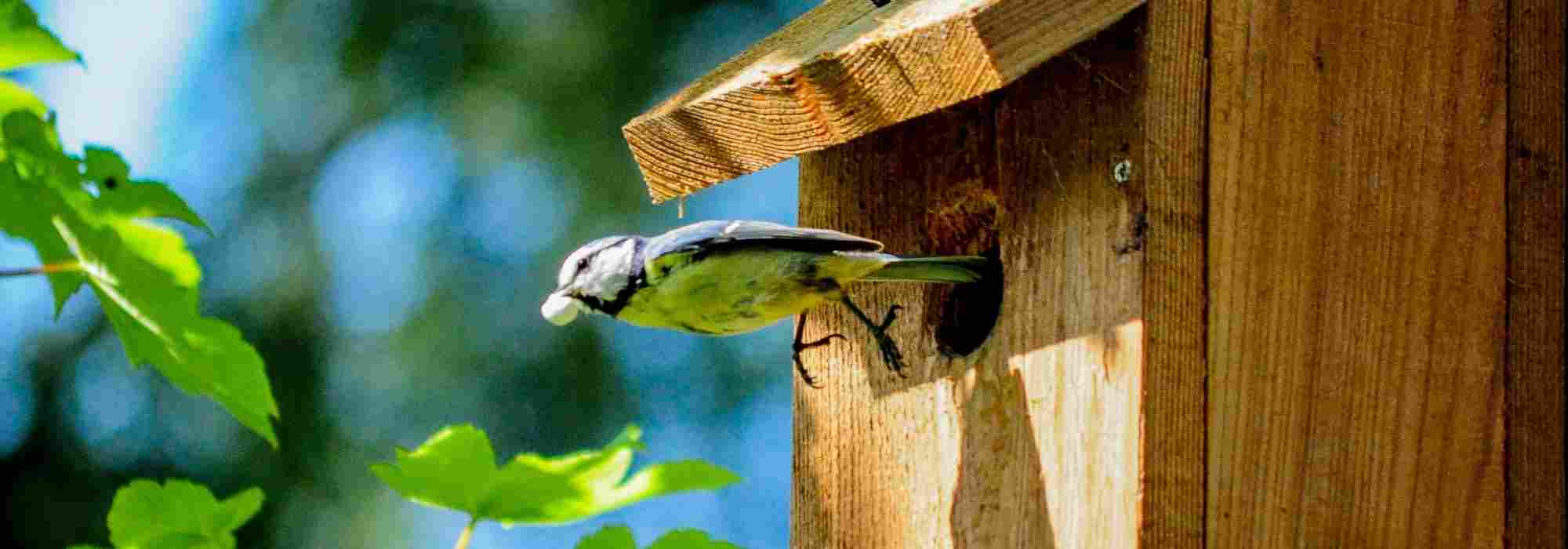
Bird boxes: how to choose the right ones and install them in the garden?
Our advice on nest boxes best suited to each garden bird species
Contents
If we were to count the hectares represented by private gardens, we would arrive at a huge figure. Even wild birds aren’t fooled, as many species, such as titmice or robins, have learned to nest in this new environment, very different from their native habitat. That is why installing a nest box in the garden is a genuine action in favour of biodiversity that meets the needs of birds. By offering a safe shelter, the gardener plays an active role in the preservation of species and helps to maintain the ecological balance of their surroundings. It is also a real pleasure to observe the life that settles in a nest box and to understand the behaviour of birds.
Discover how a nest box should be chosen and installed to be effective, taking into account the specific needs of each species.
Why installing a nest box in your garden?
Installing bird boxes in a garden serves a dual ecological and practical purpose.
Many nesting bird species have seen their natural habitats disappear over the decades. Old hollow trees are becoming increasingly rare, modern buildings offer few cavities, and intensive farming, as well as overly strict garden maintenance, reduce the refugia available. This rarity is reflected in a decline in bird populations, particularly among cavity-nesting species such as tits, sparrows or redstarts.
Bird boxes are thus artificial substitutes for natural nesting sites. They are even vital for certain species. Birds find a safe place to raise their brood, sheltered from the weather and predators. The impact is direct on their reproduction rate and on the long-term survival of local species.
Beyond their value for birds, bird boxes provide a tangible benefit for the garden. Throughout the nesting period, the nestlings of most species are fed on insects, such as caterpillars, larvae, beetles and aphids… Encouraging their presence therefore helps naturally regulate certain pest populations and maintain ecological balance without recourse to chemical treatments. And this lasts from spring to late summer, since some birds do not settle for a single brood, but can have two to three broods per season.
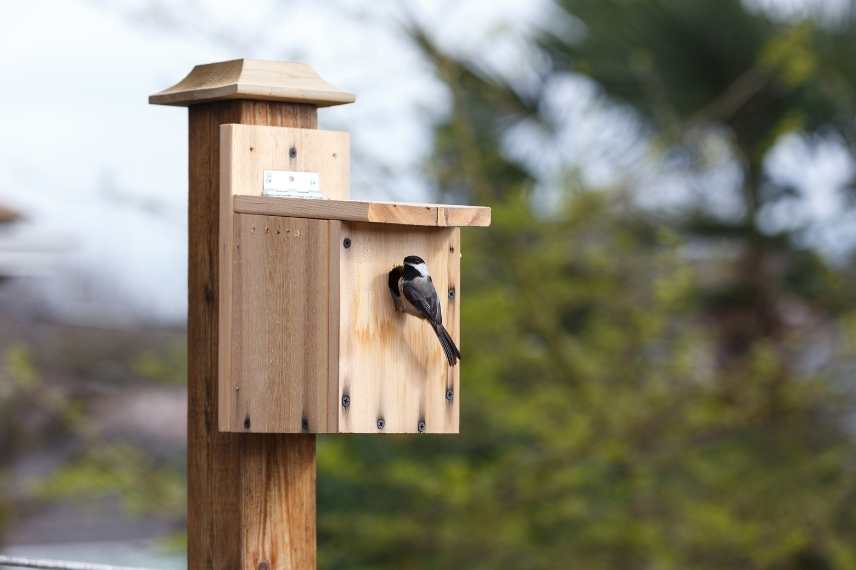
Bird boxes are guardians of biodiversity in the garden
Installing a nest box is also a unique observing experience. For the keen gardener, watching the comings and goings of the parent birds as they feed their youngsters, or waiting for the fledglings to take flight at the end of the season, is a source of enrichment and satisfaction, even educational value for children.
Read also
Hedge for birds: which shrubs to choose?Understanding the needs of nesting birds in the garden
Before buying a nest box, it’s essential to understand the needs of the birds visiting the garden. Thus, cavity-nesting birds, such as tits, Eurasian nuthatches or house sparrows, prefer closed cavities with a circular entrance. By contrast, other species such as robins prefer semi-open nest boxes that imitate the natural edges of split trees. The size of the entrance plays a decisive role. A hole that is too wide allows rival species or predators to access the nest, while an appropriately sized diameter selects the target species and guarantees the safety of the nestlings.
The choice of location and type of nest box should also take into account the birds’ seasonal behaviour. Some species, such as blackbirds, settle very early in spring, sometimes as early as the end of winter, while others seek shelter later.
What are the different types of nesting boxes available?
The market offers a wide range of nest boxes, each designed to meet the specific needs of a species. The choice of model is therefore based on local wildlife and its objectives:
-
- The “mailbox-style” nest boxes with a round entrance hole are the most common. Their diameter determines the species they welcome: a hole of 27 to 28 mm suits blue tits, coal tits, crested tits and nuthatches, while a hole of 32 to 34 mm tends to attract great tits, house sparrows or treecreepers.
- Semi-open nest boxes are suitable for species that prefer a clear entry. Robins, redstarts, grey flycatchers or even wagtails, or the tiny wren, settle there willingly. These models, however, should be placed in quiet areas and less accessible to predators, as they offer less protection than hole-front models.
- Wooden swift boxes are mounted under a roof overhang, on the gable end of a house or on a façade from a height of 5 m.
- Artificial nests for barn swallows or house martins are fixed under roof overhangs or on façades. They often come in the form of bowls made of wood or composite materials, sturdy and durable.
- Very specific nest boxes for the great spotted woodpecker, for the kingfisher, for garden treecreepers… are also offered.
- Nest boxes for raptors (falcons, owls) are also very specific.
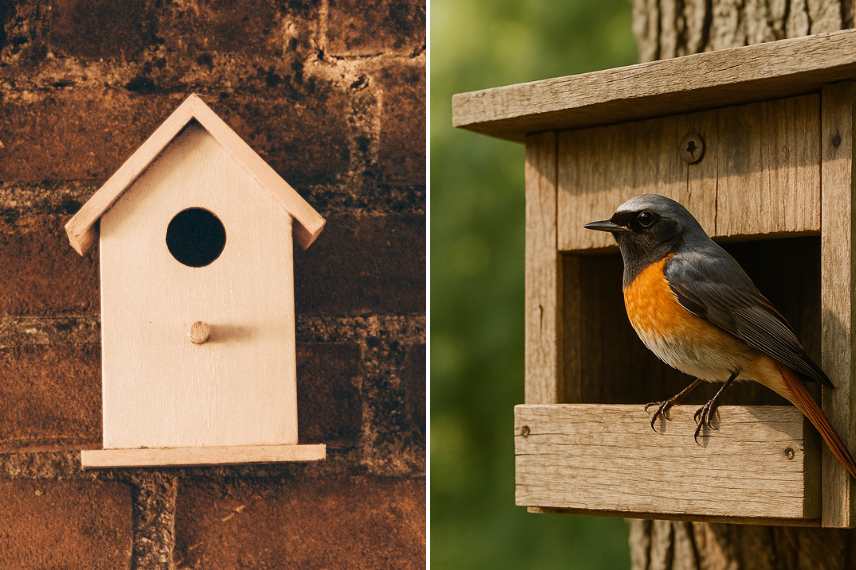 The two most common nest box models: the nest box with a round entrance hole and the semi-open nest box (AI-generated image)</caption]
What other criteria should be considered when choosing a nest box?
The effectiveness of a nesting box is not determined solely by its shape. To be truly functional and durable, several technical criteria must be considered:
- Material choice is essential: rough, untreated wood remains the reference. It should be sufficiently thick (between 15 and 20 mm) to ensure good thermal insulation
- Nesting box colours: avoid colours that are too bright and opt for neutral tones (brown, grey, etc.)
- Internal dimensions and the flight-hole diameter should correspond to the target species
- Ease of maintenance is a decisive factor. A good nesting box should be equipped with a trapdoor or removable panel to allow annual cleaning. This cleaning is essential to reduce parasitic pests
- Anti-predation measures are a bonus, particularly if cats roam in your garden.
Where and how to install them?
The placement, height and orientation of the nest box are crucial factors for attracting birds and providing them with secure shelter:
- Install the nest box in autumn or winter so that birds notice it during feeding at the feeders. This helps them become accustomed to its presence before the breeding period
- Attach the nest box to a tree (on the trunk, not on the branches) or to a wall, possibly in a hedge or on a post, at a height of 1.5 to 5 m above the soil. Blue tits and house sparrows generally settle at 2 to 3 metres, while starlings and owls require a higher mounting, around 4 to 6 metres. Do not drive nails into a tree; secure your nest box with a rope or rubber strap. And fix it carefully, as a nest box that moves in the wind will deter birds
- Face the nest box towards the east or south-east to keep it protected from prevailing winds and inclement weather, while being shielded from too-bright light and overheating. Tilt the front of the nest box slightly downward to create a rim that will shield it from rain
- Keep the nest box out of reach of cats, squirrels or rats and away from perches used by predatory birds such as the European sparrowhawk
- Space the nest boxes apart to avoid altercations between males in territorial species.
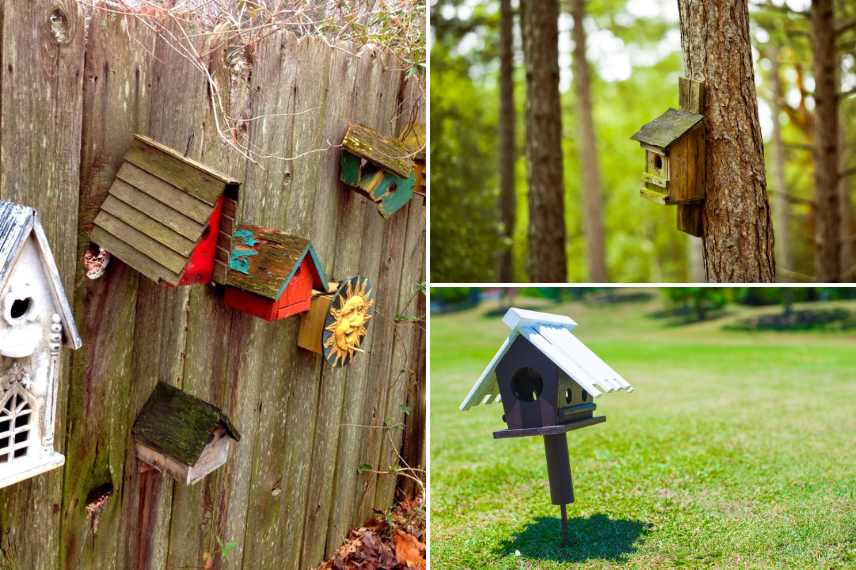 The mistakes to avoid when installing a nest box</caption]
Finally, one must be patient. Birds will take their time to settle in, and it often takes at least a year before you see them move into the nest box. Once the birds have settled in, you must resist the temptation to inspect the nest box.
How to care for them?
A nesting box remains attractive only if it is well maintained. Without cleaning, it can quickly become a home for parasitic organisms, which discourages birds from returning. Regular maintenance is therefore an integral part of its care in the garden.
Cleaning should be carried out once a year, at the very start of autumn, when the youngsters have left the nest. We then remove the accumulated materials, feathers, droppings and leftover food. This operation limits the proliferation of fleas, mites and bacteria which would threaten the health of the future occupants. A dry brush is usually sufficient, the use of chemical products should be avoided to prevent contaminating the wood.
It is also advisable to check the condition of the nesting box at the same time. The wood can crack due to weather conditions, the fixings can loosen or the joints let water in. Repairing or replacing the damaged parts ensures better durability and increased safety for the birds. Models equipped with a removable hatch greatly facilitate this operation.
- Subscribe!
- Contents
Comments