





























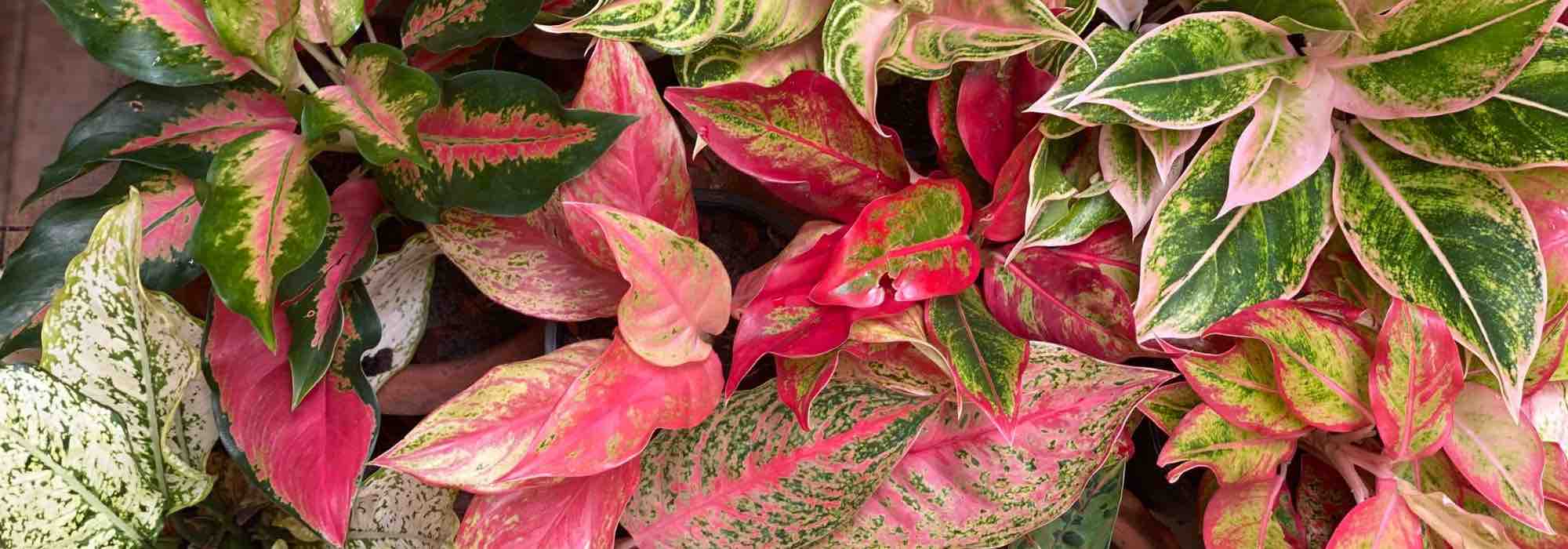
Aglaonema: care through the seasons
For a healthy indoor plant
Contents
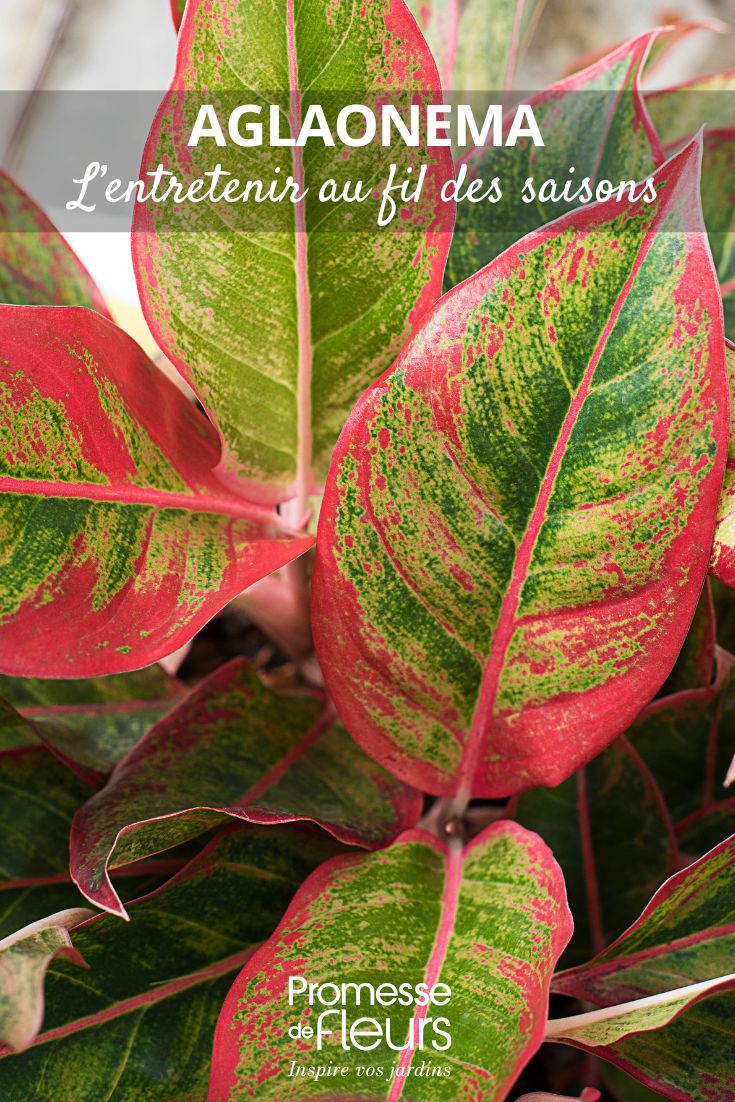
Aglaonema is an indoor plant with decorative, coloured and variegated foliage. Originating from the hot, humid tropical forests of Southeast Asia, it adapts quite well to our interiors, provided you offer it a stable environment and appropriate care.
However, like any plant, its needs evolve with the seasons. Watering, humidity, fertilisation… each season calls for a few adjustments to ensure its health. A well-thought-out maintenance routine not only promotes lush growth, but also helps prevent diseases and issues linked to temperature and humidity fluctuations.
In this article, discover how to care for the Aglaonema throughout the year, adapting its care to each season so that it stays beautiful and in good health.
Note that some Aglaonema species are more delicate to cultivate, such as the Aglaonema pictum ‘Tricolor’: they are grown in the same conditions as the others, but on the brighter end of the spectrum: more light, higher ambient humidity.
Also note that if your interior is particularly stable in light levels, temperatures and ambient humidity, you can apply more constant care, less dependent on the seasons. You’ll notice this if your plant continues to produce leaves in winter with the same regularity.
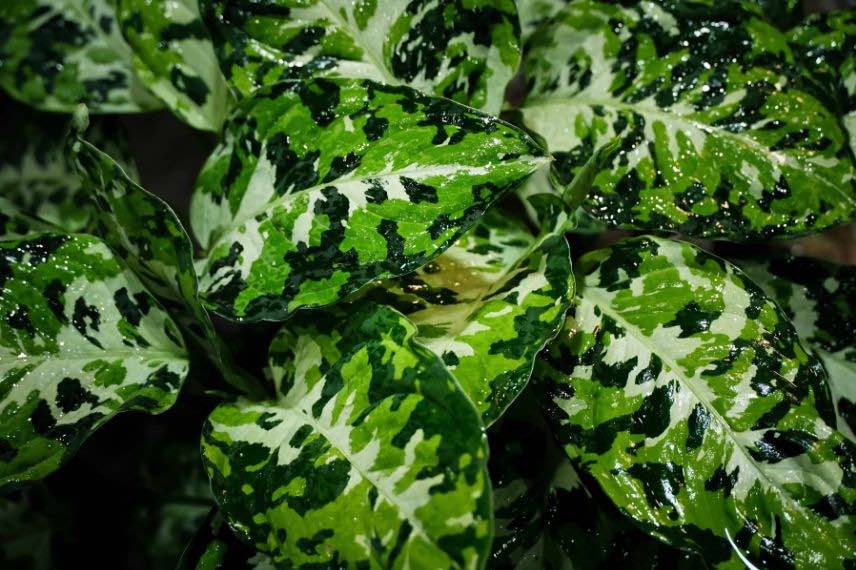
Aglaonema pictum ‘Tricolor’, a lovely, somewhat delicate variety

Spring: the season of renewal
Spring is the perfect time to refresh your Aglaonema. After winter months when growth has slowed, the plant gradually regains vigour. It’s therefore the right moment to adjust its care to support it through this phase of renewal.
More light for more growth
With the increase in natural light, the Aglaonema begins to produce new leaves. To help it:
- Check that it is placed in a well-lit spot, sheltered from direct sun which could burn its foliage. The Aglaonema tolerates medium light, but growth is better with maximum light.
- If your indoors is dark, you can use a grow light to compensate for the lack of light.
Watering and humidity: a balance to find
In spring, the plant comes out of its rest period and needs more water:
- Water when the top few centimetres of the potting mix are dry (usually once a week, but adapt according to ambient temperature, the substrate and the pot).
- Use water at ambient temperature to avoid thermal shock to the roots.
- Maintain good ambient humidity by misting the leaves regularly and/or placing a humidifier nearby.
Repotting: a fresh start
If your Aglaonema seems cramped in its pot or if the roots start to protrude through the drainage holes, it’s the right season to repot.
- Choose a pot slightly larger (2 to 3 cm in diameter more).
- Opt for a well-draining substrate, such as a mix of houseplant potting soil based on turf, enriched with perlite and possibly coarse sand.
- Take the repotting opportunity to inspect the roots and remove any damaged or rotting ones.
Fertilisation: a boost of energy
After winter, your Aglaonema needs nutrients to properly restart its growth:
- Begin fertilising with a liquid fertiliser for green plants, balanced or nitrogen-rich.
- Apply fertiliser every four to six weeks, diluting the recommended dose slightly to avoid over-fertilisation.
- Reduce or stop fertilising if you notice brown spots on the leaves, a sign of mineral salt excess.
Monitoring and leaf care
Spring is also a good time to clean the foliage:
- Wipe leaves with a damp cloth to remove dust and improve photosynthesis.
- Inspect the plant to spot any pests such as scale insects or aphids, attracted by new growth.
- If problems arise, use a diluted black soap solution to treat your Aglaonema naturally.
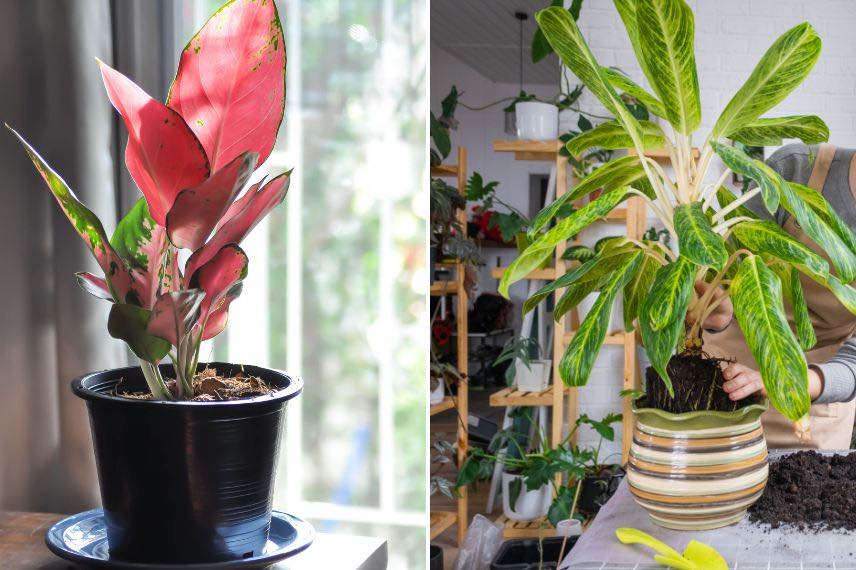
Aglaonema thrives in bright light. Spring is the ideal season to repot.
Read also
Aglaonema: planting, growing and careSummer: Heat and Vigilance
Summer is a period when Aglaonema can thrive thanks to warmth and light. However, this season also requires special care, as high temperatures, dry air and excessive exposure to light can weaken the plant. Here is how to adapt its care to keep it in good health throughout the summer.
Adjust watering to the heat
With rising temperatures, Aglaonema needs more water, but it’s important not to overdo it.
- Water only when the potting mix begins to dry on the surface, usually twice a week depending on the heat and ambient humidity. During very hot periods, you may need to water three times a week.
- Always check the moisture of the potting mix before watering to avoid overwatering, which can lead to root rot over time.
- Avoid water pooling in the saucer by draining any excess after each watering.
Light: avoid direct sun rays
In summer, light is stronger, which can be beneficial, but also problematic if the Aglaonema is too exposed.
- Ensure the plant gets plenty of light, but avoid direct sun which could burn its leaves.
- If the light is too direct, move it away from windows or use a sheer curtain to filter the sun’s rays.
Humidity: preventing dry air
With the summer heat and possibly the use of air conditioning, the air can become too dry for the Aglaonema, which adapts to indoor conditions, but prefers 50 to 70% ambient humidity where it thrives more readily.
- Mist the leaves several times a week with soft water.
- Group your plants to create a microclimate.
- Use a humidifier to prevent the leaves from drying out.
Pest monitoring: beware unwelcome guests
Summer encourages the proliferation of certain pests, including mealybugs, aphids and spider mites, drawn to warmth and the dry or humid air.
- Regularly inspect the undersides of the leaves and the stems for any invaders.
- If pests appear, use a natural solution such as diluted black soap (see our related articles linked in this article).
- Increase the humidity around the plant slightly to discourage red spider mites from settling, as they hate humidity.
Fertilising: feed in moderation
Summer is a period of vigorous growth, so Aglaonema can benefit from a nutrient boost, but don’t overdo it.
- As in spring, apply a liquid fertiliser for green plants every four to six weeks, ensuring you follow the indicated dosages.
- Avoid fertilising during heatwaves, as overly stimulated growth under high heat can weaken the plant.
- If you notice brown spots on the leaves, space out fertiliser applications to prevent mineral salt buildup in the soil.
Prevention of heat stress and thermal shocks
Aglaonema cannot tolerate temperatures that are excessively high or sudden fluctuations; its ideal temperature range is between 18 and 26°C.
- Avoid placing it near an air conditioner or a fan that blows directly on it.
- If the temperature exceeds 30°C, monitor humidity more closely and water a little more often to prevent the plant from suffering water stress.
- If you ventilate the room, take care not to expose the plant to drafts that are too cool, especially in the evening.
Summer is a key period for the Aglaonema’s flourishing. With a good balance of watering, humidity and light, it can thrive without suffering from the heat.
Autumn: a smooth transition
Autumn marks the end of the active growth period for Aglaonema. As the days shorten and temperatures fall, the plant begins to slow its metabolism. This is a transitional period where care should be gradually adjusted to prepare Aglaonema to cope with winter with complete ease.
Gradually reduce watering
With the drop in temperatures and reduced light, Aglaonema requires less water.
- Water less frequently than in summer, about once per week, depending on how quickly the substrate dries.
- Always check soil moisture by inserting a finger to a depth of 2–3 cm before watering.
- Absolutely avoid excess water, as the roots take longer to absorb moisture at this time, which can promote rot.
Space out fertiliser applications
Aglaonema enters a phase of slowed growth and no longer requires as many nutrients.
- Reduce the frequency of fertiliser applications, then stop fertilising completely from the end of October.
- An excess of fertiliser in autumn can lead to mineral salts building up in the substrate and weaken the roots.
Leaf cleaning
Autumn is a good time to refresh Aglaonema.
- Remove yellowing or damaged leaves using clean, disinfected scissors.
- Clean the leaves with a damp cloth to remove accumulated dust and maximise photosynthesis.
- Take the opportunity to inspect the plant and spot any parasites.
Managing the diminishing light
The days are shortening and light levels are falling, which can slow growth and affect the colour of the leaves.
- Move the Aglaonema to a brighter location, such as near an east- or west-facing window.
- If natural light becomes insufficient, consider using a grow light to compensate for the lack of light.
- Turn the pot regularly so all leaves receive the same amount of light and to prevent the plant from stretching in one direction.
Monitoring temperatures and humidity
Keep it away from heat sources such as radiators and cold drafts near open windows or doors leading outside.
- Monitor the ambient humidity, which can begin to fall with indoor heating.
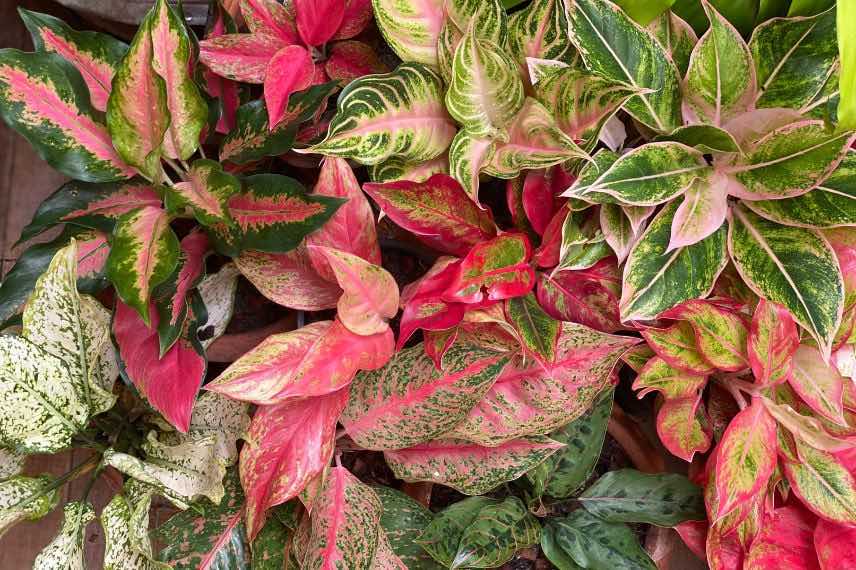
The beautiful colourful foliage of Aglaonema
Winter: rest and simplicity
Winter is a delicate period for Aglaonema. The reduced light levels, dry air from heating and cooler temperatures slow its metabolism. At this season, the aim is to avoid maintenance mistakes that could weaken the plant and to provide conditions suited to its winter rest.
Watering: less, but better
Aglaonema needs less water in winter, as growth is slow.
- Water a little less often, when the substrate is dry about halfway up the pot.
- Avoid any standing water in the saucer to prevent root rot.
Temperature: protect from cold and draughts
Aglaonema is a tropical plant that does not tolerate temperatures below 15°C.
- Maintain a stable ambient temperature.
- Away from poorly insulated windows, doors to the outside and sources of cold draughts.
- Be wary of radiators: direct heat can dry out the plant and burn its leaves.
Humidity: avoid air that is too dry
Indoor heating tends to dry the air, which can affect Aglaonema. If humidity falls below 50%, consider using a humidifier.
Fertiliser: winter pause
As Aglaonema has no active growth in winter, it does not require feeding.
- Stop fertilising completely between November and February.
- Resume feeding only at the start of spring, when growth restarts.
Monitoring and minimal care
Winter is a period when you mainly need to monitor the plant and avoid maintenance mistakes.
- Continue to wipe the leaves with a damp cloth to remove dust and optimise photosynthesis.
- Check for pests, as dry air can promote red spider mites.
- If the plant seems to weaken, don’t panic: it’s normal for its growth to slow.
- Subscribe!
- Contents
Comments