





























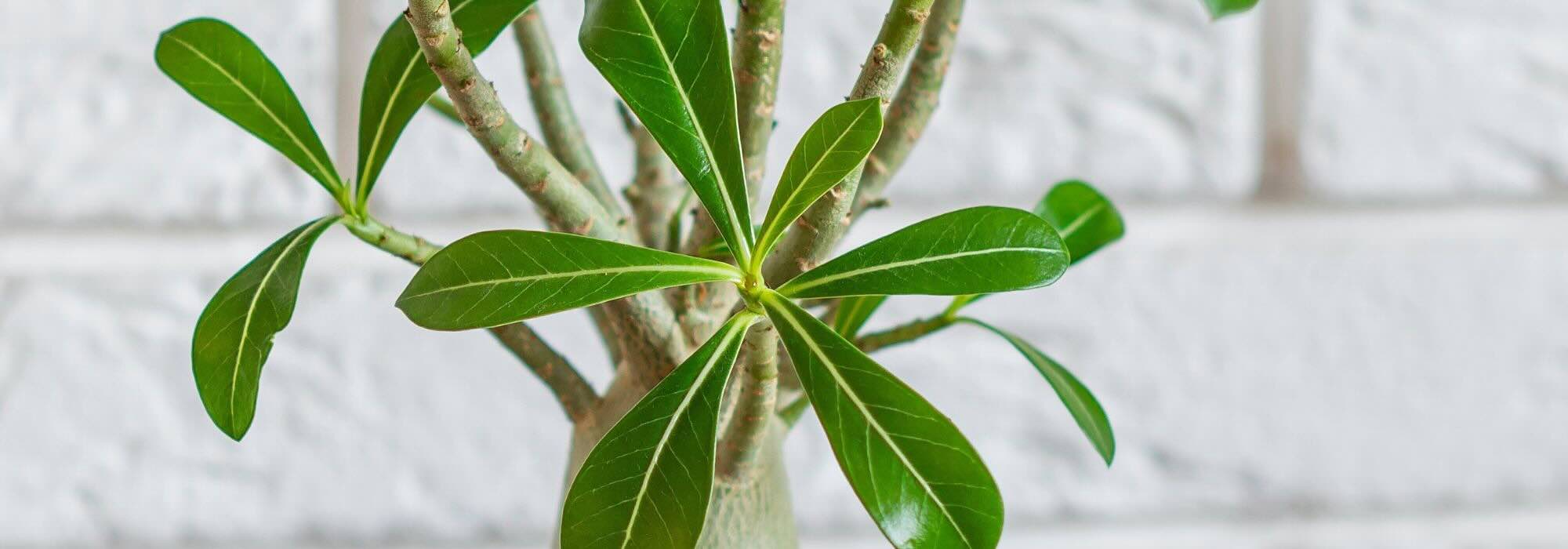
Adenium or Desert rose: Seasonal care
Our tips for a thriving indoor plant
Contents
Adenium, also known as the desert rose for its main species Adenium obesum, is a plant native to the arid regions of Africa and the Middle East. Its bulging caudex (the plant’s large base), which allows it to store water, is an adaptation to its natural habitat where periods of drought alternate with wetter seasons. This ability to survive in extreme conditions makes it a hardy plant, but it requires care adapted to seasonal variations, as the Adenium follows a well-defined annual cycle. It enters active growth in spring and summer, producing its foliage and its spectacular flowering, before entering dormancy in autumn and winter, a period during which it slows its metabolism and may shed its leaves.
To ensure harmonious growth and abundant flowering, it is important to adjust watering, sun exposure, fertilisation and care according to the seasons. In this article, discover how to support the Adenium throughout the year, respecting its natural needs and avoiding the most common mistakes.

Spring: the resumption of growth for the Desert rose
Spring marks the awakening of the Adenium after its winter dormancy. During this period the plant begins to produce new leaves and prepares its summer flowering. It is essential to gradually adjust its care to accompany this transition and ensure healthy growth.
Gradual reintroduction of watering
After winter, the desert rose needs water to restart its growth, but too rapid and too frequent watering can lead to root rot. It is recommended to reintroduce watering gradually:
- Adenium should be watered deeply, but not frequently.
- Gradually increase the amount of water over the weeks as temperatures rise, ensuring the substrate dries out completely between two waterings.
- Check the state of the caudex: if it is still well swollen, the plant has water reserves and does not need watering immediately.
Sun exposure: a progressive hardening
The Adenium thrives in full sun with at least 6 hours of direct sunlight per day. After winter, it is important to hardening off the plant to strong light to avoid leaf scorch.
The desert rose prefers temperatures between 20 and 30°C and should be kept above 10°C. It adapts quite well to indoor environments, in which case, place it behind a south-facing window.
Repotting: renew the substrate if necessary
Spring is the best time to repot the desert rose, especially if the plant has been in the same pot for more than two years. A good substrate ensures optimal drainage and stimulates caudex growth.
- Recommended substrate : a fast-draining sandy mix (succulent potting mix with a handful of perlite or coarse sand).
- Pot choice : favour a shallow, well-drained terracotta pot to accommodate the caudex’s development.
Fertilisation: giving a boost to growth
With the resumption of growth, the Adenium needs nutrients to strengthen its foliage and prepare its summer flowering. It is advisable to use a fertiliser low in nitrogen and rich in phosphorus to encourage good development of the caudex and flowers.
- Apply once a month a liquid fertiliser for succulents or a slow-release fertiliser.
- Opt for a phosphorus-rich formulation (e.g. NPK 5-10-10) to promote flowering and prevent excessive foliage growth.
- Stop fertilising if the plant shows signs of stress, such as leaves yellowing too quickly.
Pruning: encourage branching and shaping
Early spring is the ideal time to prune the desert rose to obtain a more compact and well-balanced plant. Regular pruning promotes branching and allows you to sculpt the plant to your preferences, especially if grown as bonsai.
- Cut overly long or unbalanced branches to maintain a harmonious shape.
- Remove dead or damaged branches to stimulate new shoots.
- Disinfect cutting tools before and after pruning to prevent infection.
Monitoring and first aid after winter
After several months of dormancy, it is important to inspect your desert rose to ensure it has not suffered during winter.
- Check the state of the caudex: if it is hard and swollen, the plant is healthy; if it is soft or has dark spots, there may be early signs of rot.
- Watch the new shoots: a slow start is normal, but if the plant shows no signs of growth after several weeks, it may be helpful to adjust watering and fertilisation.
- Check for the possible presence of pests (scale insects, red spider mites) that may take advantage of a plant weakened after winter.
With these tailored care measures, the Adenium begins the season on a good footing and prepares for vigorous growth and abundant flowering throughout the summer.
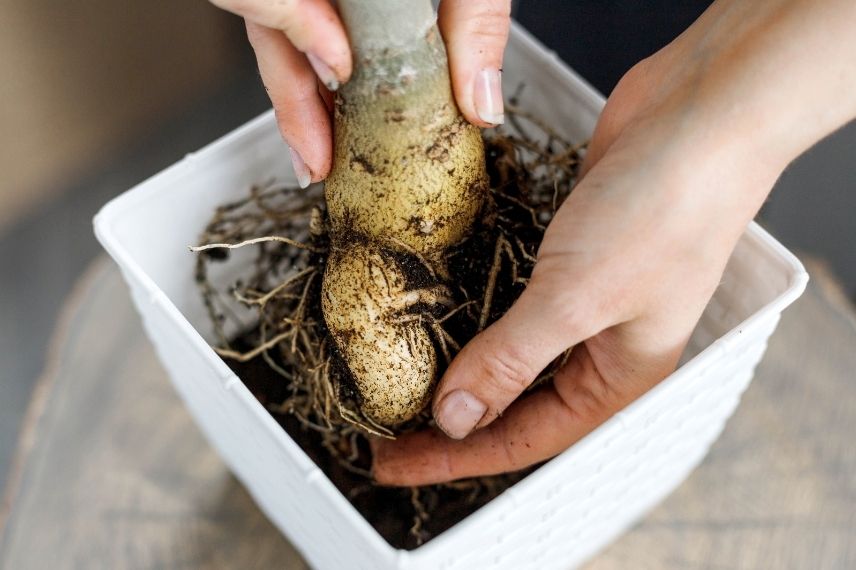
Spring is the right season to repot the Adenium if necessary
Read also
How to grow Adenium or Desert Rose?Summer: active growth and flowering of the Desert rose
Summer is the period when the Desert Rose enters vigorous growth and can display its beautiful flowering (it sometimes flowers as early as mid-spring). At this time, it requires proper watering, full sun exposure and regular fertilisation to support its development. It is also a period when vigilance is needed against pests that can take advantage of the heat to proliferate.
Watering: thorough but infrequent
During summer, the Adenium needs water to support its active growth. However, excessive watering can cause root rot, especially if the substrate is not well-drained.
- Water thoroughly, for example over a sink, ensuring the entire substrate is well moistened, then allow the substrate to dry completely between two waterings.
- Recommended frequency: adjust according to temperature and ambient humidity, about once every two weeks or once a week during hot periods.
- Avoid standing water: always empty the excess water from the saucer after watering.
Taking the Desert Rose outdoors: a natural boost
If temperatures permit, leaving the Adenium outside during the summer season will bring significant benefits:
- Faster growth thanks to better sun exposure.
- More abundant flowering than indoors.
- Natural strengthening of the caudex and roots thanks to temperature and wind variations.
- Better ventilation, which reduces the risk of fungal diseases.
However, care must be taken to protect the plant from heavy rains and from cold drafts.
- Be mindful of sunburn: if the plant has spent a long time indoors, gradual hardening is necessary to prevent the leaves and the caudex from burning.
Fertilisation: stimulating flowering
With the heat and light, the Desert Rose needs nutrients to support its flowering. Continue the spring recommendations.
- Stop fertilising during extreme temperatures (+35 °C), as the plant may slow its growth.
Pest monitoring: stay vigilant
Summer favours the development of certain pests, notably mealybugs, aphids and spider mites.
- Regularly inspect the leaves and the caudex for signs of pests.
- Treat at the first signs of infestation with black soap, neem oil or manual cleaning.
- Slightly increase humidity in case of spider mite attack (which proliferates in very dry air).
- Avoid over-fertilising the plant, as excess nitrogen can attract aphids.
Minimum maintenance
- Remove spent flowers.
- Clean the leaves with a damp cloth to remove dust and optimise photosynthesis.
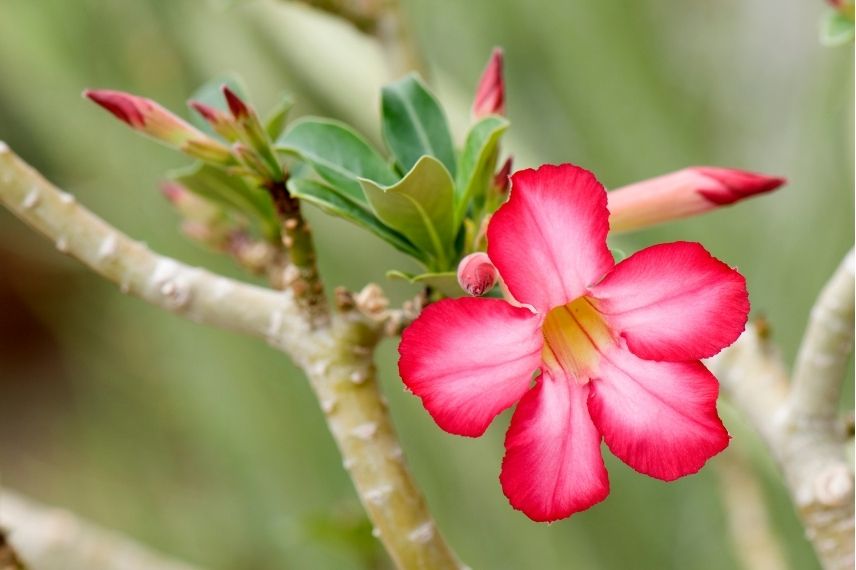
Adenium obesum flower
Autumn: transition to dormancy for Adenium
Autumn marks the end of the growth period and the start of a gradual slowdown for the Desert Rose. At this time of year, the plant begins to prepare its winter dormancy. It is essential to adapt its care by gradually reducing water and nutrient inputs, while ensuring it is protected from the first drops in temperature.
Gradual reduction of watering
As the heat and sun diminish, water evaporation slows and the Adenium absorbs less moisture.
- Reduce watering frequency, spacing out the waterings as temperature and light decline.
- Completely stop watering once the plant shows clear signs of dormancy (loss of leaves, growth halted).
Spacing of fertiliser applications
The Desert Rose no longer needs fertiliser as winter approaches. Its metabolism slows and it can no longer assimilate nutrients properly.
- Gradually reduce fertilisation from early September.
- Stop fertiliser inputs completely in October to avoid overloading the substrate with unnecessary minerals.
Move indoors
- If the plant was outdoors, acclimatise it gradually: bring it indoors for a few hours each day before keeping it permanently indoors.
Signs of dormancy to monitor
The Desert Rose naturally begins to lose its leaves in autumn. This is normal and should not worry.
- Do not force watering to try to keep the leaves on; this could weaken the plant.
- Monitor the state of the caudex: if it remains firm and swollen, the Adenium is healthy.
- If the plant retains its foliage, this may indicate that temperatures remain sufficiently high, but care should still be reduced gradually.
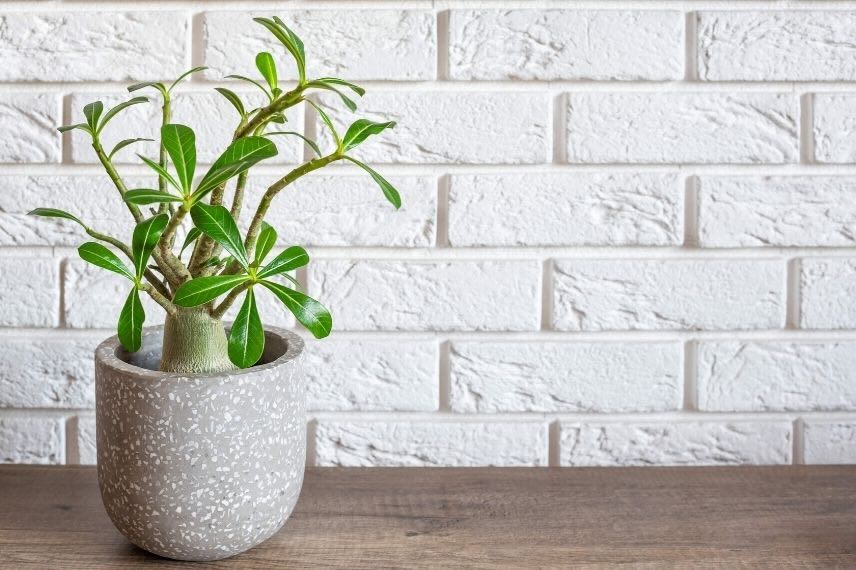
Observe the caudex to monitor the health of the Desert Rose across all seasons, but especially during dormancy
Winter: rest and moderate care for a Desert Rose in good health
Winter is a period of total dormancy for the Desert Rose. Its metabolism slows considerably, growth stops and the plant may lose all or part of its foliage. This dormancy is a natural process that allows the plant to conserve energy until temperatures rise. Maintenance during this season should be minimal to avoid unnecessary stress or risk of rot.
Watering: keep to the bare minimum
With growth halted, the Adenium needs almost no water. Its caudex acts as a reservoir, enabling it to survive for weeks, even months, without watering.
- Stop watering completely if Desert Rose is in total dormancy (leaf drop, growth stopped).
- If the plant still has a few leaves, a very light watering (a small amount of water every 4–6 weeks) may be considered, only if the caudex begins to crack slightly.
- Never water if the substrate is still moist, as roots, in dormancy, cannot absorb water, which could cause rot.
Temperature and placement: protect from cold
Adenium is a tropical plant that cannot tolerate temperatures below 10°C. It must be kept in a dry, warm environment during winter.
- Place it in a well-lit room where the temperature remains stable, ideally between 15 and 20°C.
- Avoid cold drafts near windows or poorly insulated doors.
Light exposure: limit etiolation
Even in dormancy, the Desert Rose needs plenty of light to avoid excessive weakening.
- Place it near a south-facing window to maximise natural light intake.
- If sunlight is too weak, a grow light can be used to compensate for the lack of light.
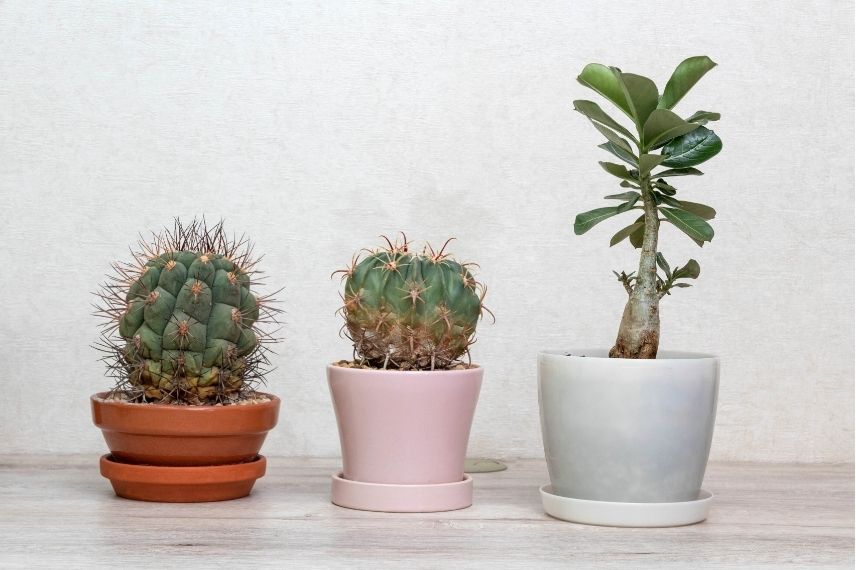
As with your cacti, reduce watering to the bare minimum, or even stop watering in winter
Learn more about the desert rose
You can also read our articles:
- To treat Desert Rose, Adenium: diseases and parasites
- Subscribe!
- Contents
![Caring for Your Desert Rose
The desert rose (Adenium obesum) is a striking succulent that thrives in arid conditions. Follow these essential tips to keep yours healthy and blooming year-round.
Optimal Growing Conditions
- Position in full sunlight (minimum 6 hours daily)
- Use well-draining soil mix – combine cactus compost with perlite or coarse sand
- Maintain temperatures above 10°C
Watering Protocol
[Image: Desert rose in terracotta pot]
Water sparingly even during growth periods:
1. Spring-Summer: Saturate soil completely, then allow full drying before rewatering
2. Autumn-Winter: Reduce to monthly watering if leaves drop
Pruning & Maintenance
- Wear gloves when handling – sap is toxic
- Shape plant in late winter before new growth appears
- Remove dead branches promptly to prevent rot
Flowering Boost
Apply diluted potassium-rich fertiliser monthly during active growth phases. Cease feeding during dormancy.
Winter Care
[Interactive element]
Protect from cold draughts and reduce watering frequency significantly. Consider grow lights if indoor conditions lack sufficient brightness.
Troubleshooting Guide
Yellow leaves: Overwatering – allow soil to dry completely
Dropped buds: Sudden temperature changes – maintain consistent environment
Soft trunk: Root rot – repot immediately in fresh soil
With proper attention, your desert rose will reward you with spectacular trumpet-shaped flowers and sculptural form.](https://www.promessedefleurs.ie/blogwp/wp-content/uploads/2025/02/Adenium-ou-Rose-du-desert-lentretien-au-fil-des-saisons-1.jpg "Adenium or Desert Rose: Care Through the Seasons (Part 1)
The Desert Rose, with its sculptural trunk and vibrant blooms, requires seasonal adjustments to thrive. Follow this guide to harmonise your care routine with nature’s rhythms.
Spring: Awakening Phase
As temperatures rise, gradually reintroduce watering. Begin with modest amounts every 10-12 days when new leaf buds appear.
- Repotting window: Ideal time for root maintenance
- Fertiliser strategy: Initiate balanced nutrient feed
- Sunlight transition: Increase exposure progressively
Summer: Growth Surge
This succulent enters its most active phase.
Watering frequency: Increase to weekly sessions (ensure complete soil drying between waterings)
Bloom enhancement: Apply phosphorus-rich fertiliser fortnightly
Heat management: Provide afternoon shade in extreme temperatures
Key Summer Considerations
1. Drainage vigilance: Prevent waterlogged roots
2. Pest checks: Regular leaf inspections for aphids/mealybugs
3. Pruning timing: Limit major trimming to preserve energy
[Image: Desert Rose in full summer bloom]
Autumn and winter guidance will follow in Part 2, covering dormancy preparation and cold-weather protection strategies.
Remember: Consistency and observation are paramount. Adjust care based on your plant’s responses rather than rigid schedules.")
Comments