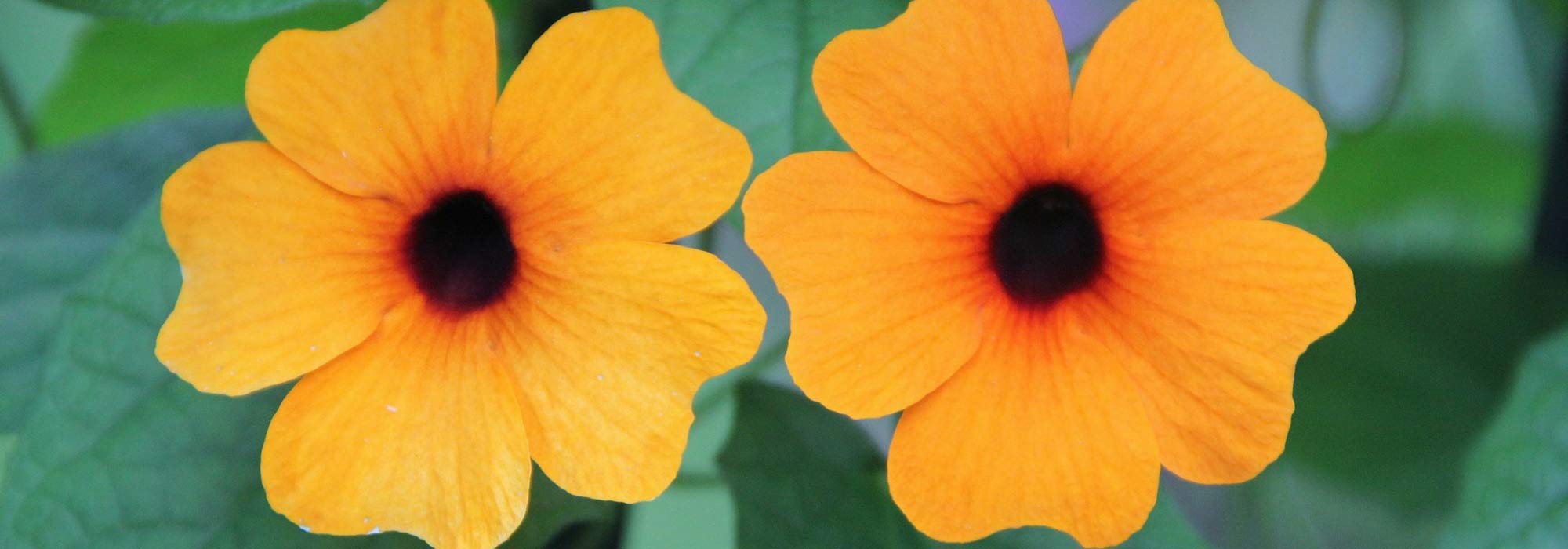
Black-eyed Susan: sowing, planting and care
Contents
Black-eyed Susan in a nutshell
- This very floriferous, fast-growing climbing plant will cover any support provided within a few weeks, from June to October
- It brings a touch of exoticism with its intensely characteristic summer flowering of orange-yellow with a dark eye
- Of tropical origin, this tender perennial, which is killed below 8°C, is grown as an annual in our regions, either in open ground or in a pot brought indoors for winter
- This sun-loving climbing plant fears only frost and grows in any fertile soil in a well-sheltered spot
- Very voluble, it is ideal when trained on a support such as a trellis or wire mesh, as an extensive groundcover, in a pot or in striking hanging baskets from which it will trail elegantly in a cascade of leaves and flowers
A word from our expert
Thunbergia, more poetically known by the pretty name Black-eyed Susan, is a remarkable voluble climber noted for its showy flowers, usually orange with a black centre, very distinctive.
Grown in our climates most often as an annual or in a pot to be overwintered indoors, in a warm greenhouse or conservatory, its flowering from May to first frosts and its rapid growth make it a top choice as a climber.
It is a beautiful ornamental greenhouse climber or garden plant in summer! Its bold stems cling unaided to anything within reach, quickly turning even the smallest support into a highly floriferous display.
Exuberant, Black-eyed Susan can reach 2 m in a single season!
Alongside the traditional orange Thunbergia alata (‘Superstar Orange’), there are blue Thunbergias such as Thunbergia grandiflora and white Thunbergias (‘Alba’).
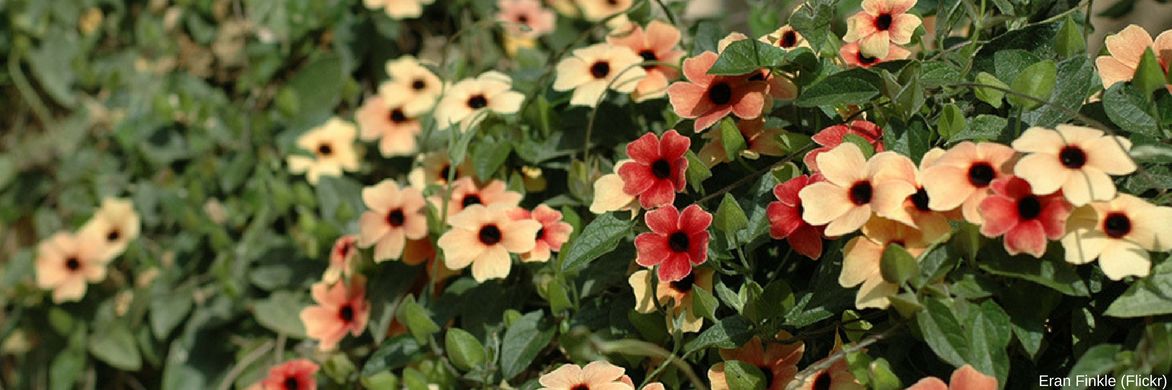
“Black-eyed Susan” is a very floriferous annual.
With its numerous trumpet-shaped flowers, this voluble annual with rich, vivid colours and lush foliage will twine all summer around your pergolas, trellises, wire fences, thread through shrubs, or even form a large groundcover. You can also grow it in pots or in surprising hanging baskets where it will be an elegant trailing plant.
With its exotic looks, it is an easy plant to grow provided it is in a sunny spot and sheltered from cold draughts. Little prone to disease, Black-eyed Susan requires very little maintenance, only really threatened by frost.
From cuttings to sowing, discover our collection as well as our fine selection of Black-eyed Susan seeds, this lovely climbing flower that brings an indispensable touch of originality in summer!

Description and botany
Botanical data
- Latin name Thunbergia
- Family Acanthaceae
- Common name Black-eyed Susan, Susan's Eye
- Flowering May to autumn
- Height 0.60 to 5 m
- Sun exposure Sun, partial shade
- Soil type All, well-drained
- Hardiness +8°C
Thunbergia, or more poetically “Black-eyed Susan” (also called “Susan’s Eye” or “Zanzibar smile”), is a climbing, voluble plant of the Acanthaceae family, native to tropical regions of East and South Africa, Madagascar and India. In the wild, it grows in forests, on rocky faces, twining around trees or shrubs.
It has naturalised in many countries including Australia, Haiti and Florida, where it is considered an invasive perennial.
From its tropical and subtropical origins it retains some sensitivity to cold (hardiness between 8 and 10°C), and is grown as an annual or kept frost-free over winter in our climate.
The genus Thunbergia comprises around 100 annual or perennial species with evergreen foliage, climbing or shrubby in habit, notably Thunbergia alata with orange to yellow flowers and Thunbergia grandiflora (large-flowered Thunbergia, Bengal trumpet) with deep blue flowers, which are the most widely cultivated. The latter exists in several cultivars including Thunbergia grandiflora ‘Alba’ with white flowers. Less commonly encountered are Thunbergia erecta, a bushy species with violet-blue flowers and a yellow throat, and T. gibsonii with bright orange flowers.
With its climbing habit, this vine is fast-growing and vigorous and can produce in a single summer a large bush up to 2 metres high in all directions, sometimes more. Plant height is very variable. In its natural habitat Thunbergia can reach up to 12 m tall (Thunbergia grandiflora), much less at our latitudes. The taller woody types can live for several years in a greenhouse over the cold season, becoming magnificent and reaching several metres when grown in containers.
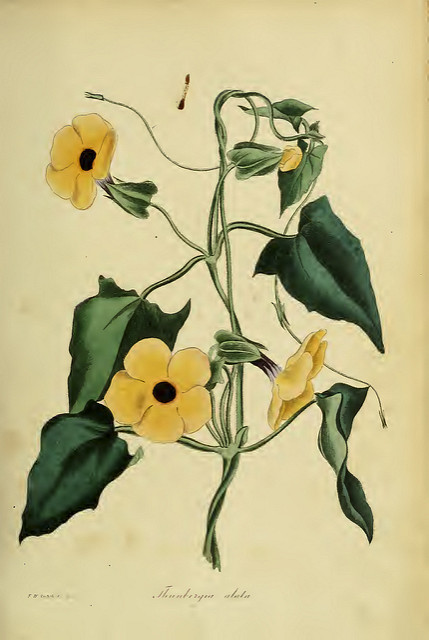
Thunbergia alata – botanical illustration
From a woody base, Thunbergia develops twining stems that climb by the petioles of the leaves wrapping around any support. Hairy, thin and square in section, sometimes purplish, they cling unaided until they form an entangled mass. They lignify with age.
On these stems grows luxuriant foliage, bright to dark green. It remains evergreen when the plant is overwintered frost-free. Leaves are opposite, entire or lobed and toothed, up to 20 cm long by 15 cm wide. Rough and downy, they are heart-shaped with sagittate tips (arrow-shaped) and measure between 2.5 and 20 cm long. In the species alata (winged), leaves are borne on a fine winged petiole at the base of two small leaflets, which gave the species its name.
Particularly striking, these long leafy stems give a lush aspect and set off the exotic colours and voluptuous shapes of the flowers. Thunbergia is prized for its original, long-lasting flowering which runs from June until first frosts. Black-eyed Susan is one of the most spectacular vines of the warm season. The bushy foliage is set with a profusion of large trumpets.
Flowers, enclosed in a hairy calyx and suspended on a short peduncle, open all summer without interruption, solitary or in small groups in leaf axils along the stems. Around a small black-violet eye resembling a pupil at the centre of an iris, which gives it the nickname “Black-eyed Susan”, each petal unfurls in varied, often vivid shades.
Tubular flowers 2 to 8 cm long open into five flared lobes in golden-yellow, yellow–orange, sulphur-yellow, orange, brick red, cream yellow most commonly, more rarely white or lilac-blue (Thunbergia grandiflora) or blue-violet (Thunbergia erecta) with throats marked in brown or yellow. Thunbergia ‘Tangerine Slice’ is notable for the bicoloured hue and unusual pattern of its red–orange flowers striped with mustard yellow. Thunbergia grandiflora, the large-flowered Thunbergia, bears the largest flowers (6 to 8 cm diameter).
Nectariferous, this aubergine‑violet eye almost black at the centre attracts pollinating insects. After pollination, in warm climates only, flowers form fruits, globose capsules that explosively eject the small round seeds.
Black-eyed Susan is usually grown here as an annual, planted outdoors or in a pot as a houseplant because of its fragility and low hardiness (-8°C) to frost. If you want to keep it: bring it indoors!
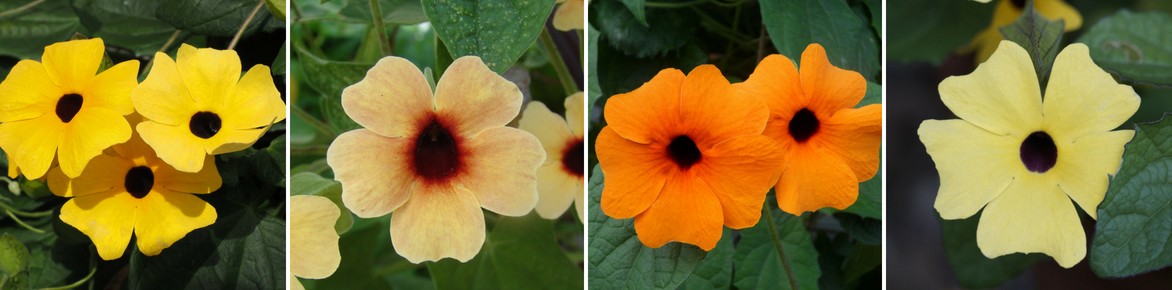
Thunbergia, several flower colours.
Easy to grow, this tropical perennial needs heat, light, water and a light, well‑drained, humus-rich soil to thrive. For best flowering it prefers a sunny or partly shaded spot sheltered from winds and cold draughts.
Black-eyed Susan grows very rapidly and will clothe a fence, arbor, trellis or a pyramidal cane support within weeks in a summer bed. Untrained, it can also form an original groundcover beneath shrubs.
Grown in a pot, hanging basket or window box, it flowers on terraces and balconies. It will also find a place in a conservatory where it will flourish in warmth.
Main species and varieties
Genus Thunbergia comprises around one hundred climbing species, and the one most commonly cultivated is Thunbergia alata with its trumpet-shaped flowers marked by a characteristic black eye that come in all shades of yellow and orange.
Occasionally seen is Thunbergia grandiflora (or large-flowered Thunbergia, Bengal trumpet) with deep blue flowers, available in several cultivar forms including Thunbergia grandiflora ‘Alba’ with white flowers. Main selection criterion for these very floriferous voluble climbers is flower colour. Worth collecting for the garden as an annual or grown year-round in a heated greenhouse!
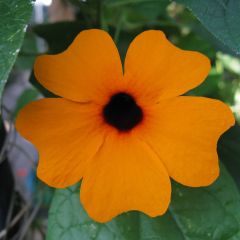
Thunbergia alata Tangerine - Black-eyed Susan
- Flowering time July to November
- Height at maturity 2 m
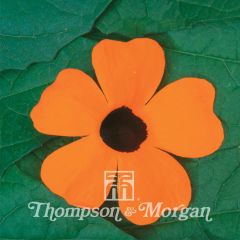
Thunbergia alata - Black-eyed Susan Vine Superstar Orange Seeds
- Flowering time July to October
- Height at maturity 2 m
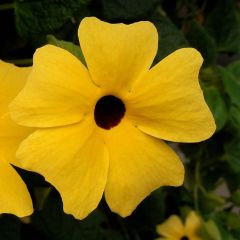
Thunbergia alata
- Flowering time August to November
- Height at maturity 2 m
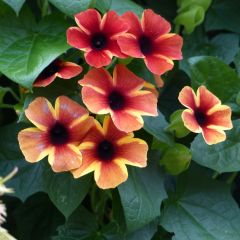
Thunbergia Tangerine Slice - Black-Eyed-Susan
- Flowering time July to November
- Height at maturity 2 m

Thunbergia alata Collection - Black-eyed Susans
- Flowering time July to October
- Height at maturity 2 m

Thunbergia alata - Black-eyed Susan Vine Salmon Shades
- Flowering time July to October
- Height at maturity 1,50 m
Discover other Thunbergia
View all →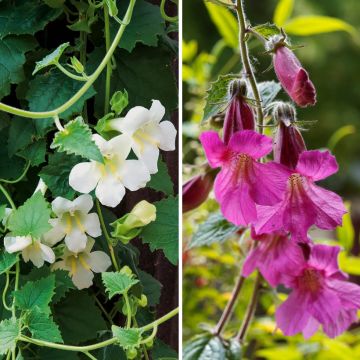
Available in 0 sizes
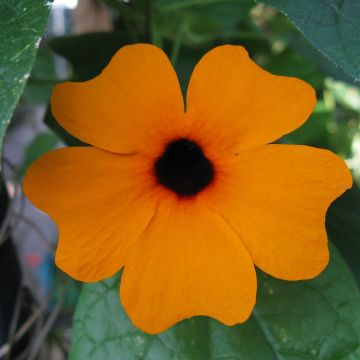
Available in 1 sizes

Available in 1 sizes

Available in 0 sizes
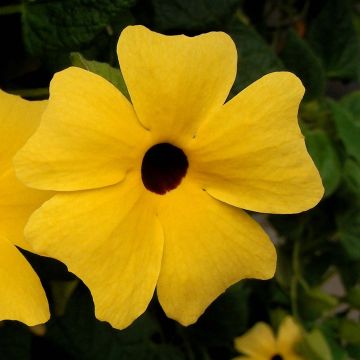
Available in 1 sizes
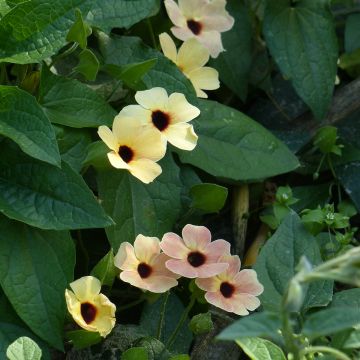
Available in 1 sizes
Sowing and planting
Where to plant Black-eyed Susan vine
Black-eyed Susan vine dislikes cold; frost is fatal. It is a tropical plant suited to warm climates and cannot tolerate frost. It does not withstand temperatures below 8°C, which is why, in our climate, it is usually grown as an annual outdoors or planted in pots and brought indoors to avoid frost over winter. In October, before first frosts, bring pots into a bright, warm place (temperature should be above 10°C to preserve attractive foliage). You can put them back outside during the warm season.
It needs full sun to flower well. In the south of the country it will fear scorching sun and will tolerate semi-shade sheltered from the harsh midday rays.
This attractive perennial climber grows quickly and should be planted in a light, rich, free-draining soil. In fertile, cool soil its growth will be multiplied and flowering very abundant.
Black-eyed Susan vine can reach 2 m over the course of a summer. Plant height is variable: provide a suitable support and enough space. It needs training or staking if used as a climber.
This remarkable climber is easy to grow, both in the ground and in pots on a terrace or in a greenhouse.
Use it in a border or as a specimen, left to its own devices in a warm spot or trained on a trellis or mesh, tipi, pergola, balustrade, or a pyramid stake. It can even weave around shrubs or cover walls profusely.
Flowering from May until the first cold spells makes it an excellent choice to quickly flower large, luxuriant containers or striking hanging baskets that can be kept on the balcony all summer or in the conservatory where it will thrive in warmth over winter.
When not trained on a support or staked, in the garden it can also form an elegant bushy, trailing mass over a low wall or an original groundcover at the foot of shrubs.
When to plant and sow Thunbergia or Black-eyed Susan vine
Plant pots outdoors only once risk of frost has passed, during May. Seeds are sown in warmth from March in pots or seed trays. You can also sow directly in the ground from April through June.
How to plant and sow Black-eyed Susan vine
- Planting in the ground
On receipt, prick out into pots and store our young plug plants of Black-eyed Susan vine under cover in a warm, bright place (conservatory, greenhouse, cold frame…) at a temperature above 14°C for a few weeks. Once risk of frost is definitely past, plant them outdoors.
Space 2 to 3 Black-eyed Susan plants per m², i.e. about every 30 cm.
Give a trellis or stake at planting around which it can entwine. If garden soil is too poor, enrich it with potting compost and compost.
- Dig a hole three times wider than the rootball
- Make a good bed of gravel to ensure perfect drainage
- Place the plug plant in the centre of the hole with the collar level with the soil
- Return the excavated soil mixed with potting compost to enclose the roots
- Firm down with the foot
- Water regularly
- Sowing
In pots:
- Soak seeds before sowing
- Late February to March, under cover at 18–20°C, sow two to three seeds in 6 cm pots in a light mix of peat and sand in equal parts
- Cover seeds no more than 1 cm deep
- Firm and keep at 20°C in sunlight until germination (14–21 days)
- Three to five weeks later, separate seedlings and prick out into individual 12 cm pots and keep under cover
- In May, when soil is warmed and frost risk has passed, plant out in the garden or into pots or window boxes of 20 cm diameter (larger for taller varieties) in soil enriched with compost
- Provide a support immediately for them to climb
Direct sowing:
You can also sow directly in place in warmed soil from April to June, sowing 2 or 3 Thunbergia seeds per station every 30 cm. Stake or allow to trail on the ground. Feel free to mix different varieties together to compose warm, colourful displays.
- Container culture
All Black-eyed Susan vine varieties are suitable for growing in a large pot or as a hanging basket (the trick to avoid staking this vigorous climber!). They can be put outside during the warm season and brought in at first frost or kept in a warm conservatory year-round.
- Plant in a rich, well-draining mix of one third potting compost, one third river sand and one third garden soil
- You can also add a little compost
- Mulch the base well to retain freshness
- Train if necessary
- Water generously, keeping substrate slightly moist
- Fertilise regularly
- Place in bright light, out of direct sun to preserve colours
- In autumn, bring pots into the conservatory to protect from frost
→ Learn more about growing Black-eyed Susan vine in a pot with advice from Leïla
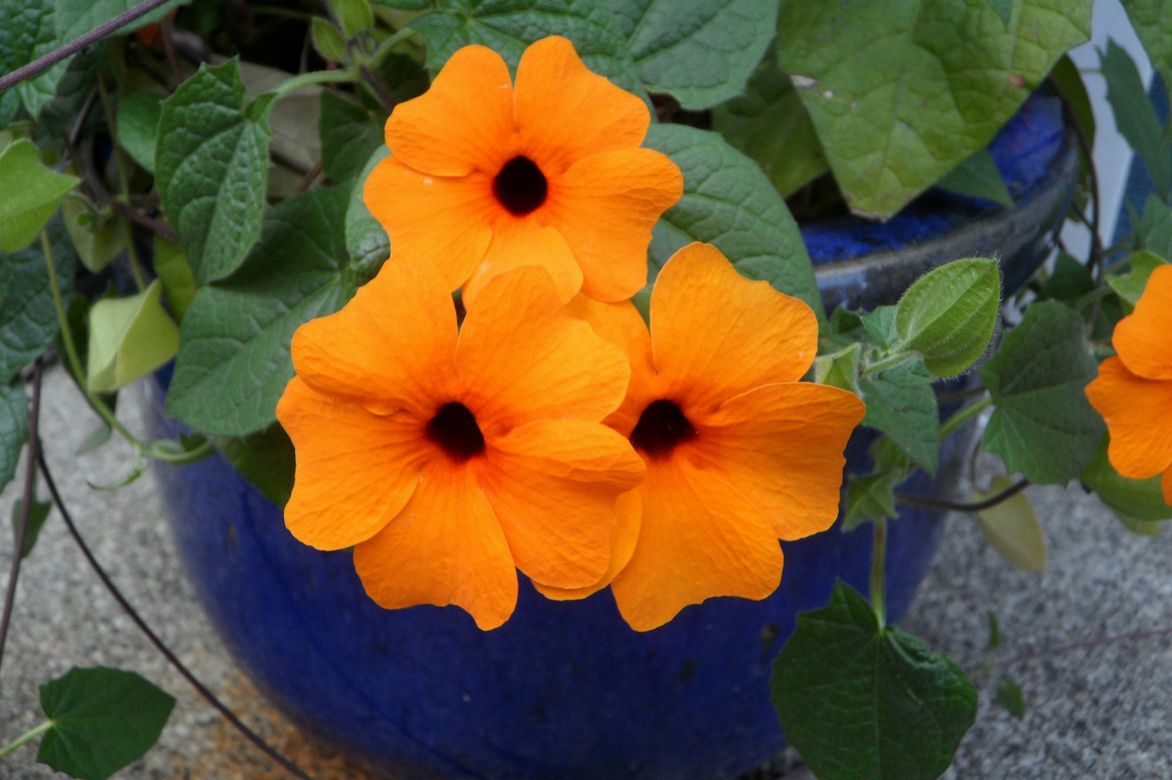
Black-eyed Susan vine is well suited to container growing.
Care and maintenance
Undemanding, black-eyed Susan really requires very little maintenance, only vulnerable to frost. It simply needs protection from cold. It proves easy to grow after careful establishment, provided it is not short of food, water or sun, as this tender plant loves warmth!
Stake plants as soon as planted out, in ground or in pots.
In summer, keep soil cool, especially during prolonged drought. It is best to mulch generously around base at planting: it will tolerate short dry periods fairly well, provided it is watered regularly during hot summer spells.
From November, lift black-eyed Susans planted outdoors.
In pots
If necessary, insert a stake in centre of pot to help vines twine.
Black-eyed Susan is a heavy feeder. Throughout growth, apply fertiliser for flowering plants every 15 days.
Water generously once rootball begins to dry, keeping soil always slightly moist.
In winter, space out watering, allowing soil to dry between waterings.
From October, as winter approaches, bring Thunbergia grown in pots into a very bright, not too cold place, sheltered from frost, in a greenhouse or conservatory where temperature will not fall below 10°C.
Pruning black-eyed Susan
Remove faded flowers regularly; this will encourage continued flowering.
In August, if your Thunbergia loses vigour, cut stems back slightly; it will regrow more vigorously.
Pruning is really carried out only on plants overwintered or grown indoors whose lifespan is thus extended. It is more a yearly thinning. This allows balancing or reducing branching, rejuvenating stems and encouraging growth and flowering. It can also be useful if your Thunbergia becomes invasive: sometimes its growth must be contained!
- In September, before bringing them inside or between February and March, before new growth, with a pruning shear, remove crossed stems, spindly or dead at their base, keeping only the most vigorous; cut off spent shoots
- You can also cut the clump back a little
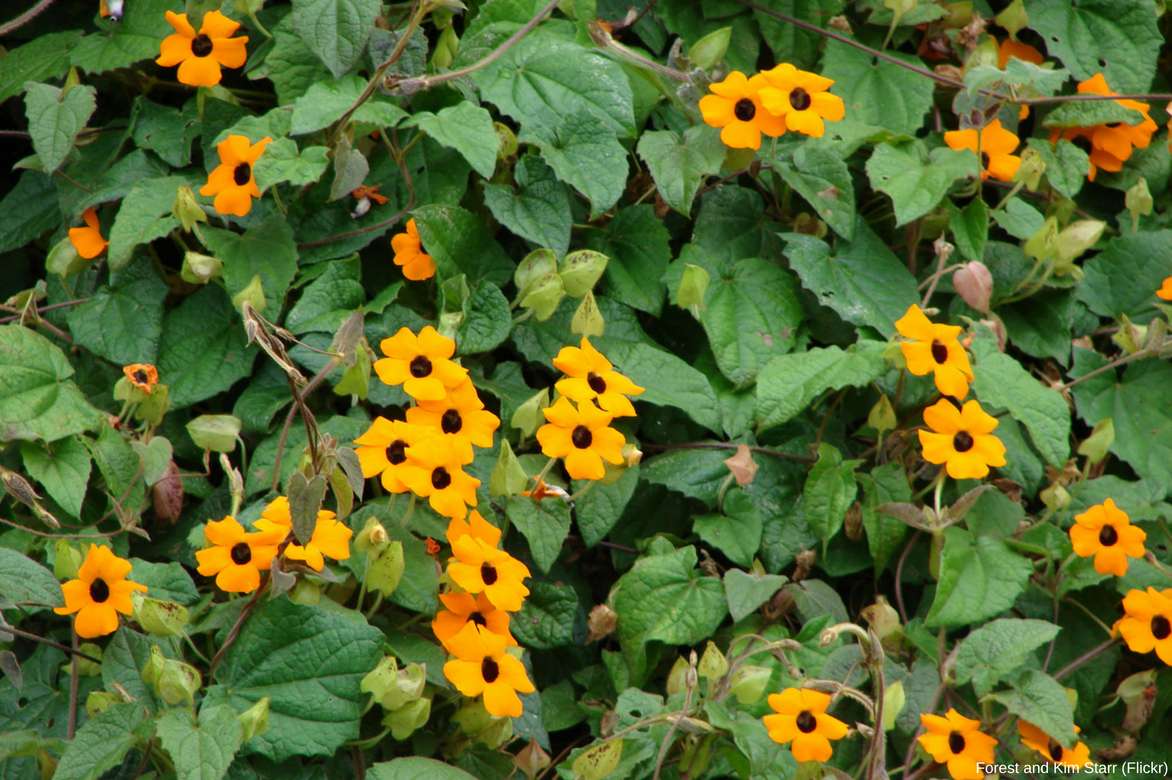
Flowers of Thunbergia or “black-eyed Susan”.
Potential pests and diseases
In open ground, Black-eyed Susan has no pests, only plants grown under glass may be more susceptible to invasions of mealybugs, whiteflies or red spider mites.
Mealybugs are removed with a cotton wool pad soaked in 90% alcohol, then with rapeseed oil sprays, to be repeated two or three times at 15‑day intervals.
To eliminate whiteflies, spray a soapy solution made from black soap with a little vegetable oil.
Against red spider mites, common when plants lack water, spray a nettle maceration.
Powdery mildew sometimes whitens its foliage in cases of excess moisture: spray horsetail decoctions or nettle manure.
Propagation
How to take cuttings of Black-eyed Susan?
This method can be somewhat hit-and-miss. However, it is worth taking cuttings of Thunbergia because after two years of indoor culture the plant tends to flower less.
- In August–September, take semi-ripe cuttings (becoming woody), 10–15 cm long, just below a node
- Remove lower leaves and any flowers
- Dip in plant hormone
- Insert them three-quarters of the way into individual pots filled with a light, free-draining mixture (turf and river sand) kept moist but not waterlogged
- Place under a warm frame (18°C–25°C) during winter, in light but sheltered from direct sun, under a cloche or plastic
- Repot into 10 cm pots
- Plant out in ground in spring, in May, once they have sufficient roots and soil has warmed sufficiently
Associate
The Black-eyed Susan is a magnificent voluble climbing plant with warm, dynamic colours that adapts to every desire, whether planted in soil or in pots. In a few weeks it will dress any support with an exotic touch, bringing a playful note to otherwise somewhat rigid borders.
Its colours, always lively, are indispensable in summer in beds or containers and pair well with warm-toned plants.
Left to trail, it will form an original dense carpet at the foot of shrubs alongside the pretty slender red flowers of a nasturtium.
You will find it in our summer perennial plants borders alongside the large tomato-red or blazing-orange flowers of Echinacea, the large daisy-like flowers in a rich deep red of Helenium or gladioli around which it will twine. Meanwhile, some ornamental grasses such as Calamagrostis will tone down the display with their golden hues.
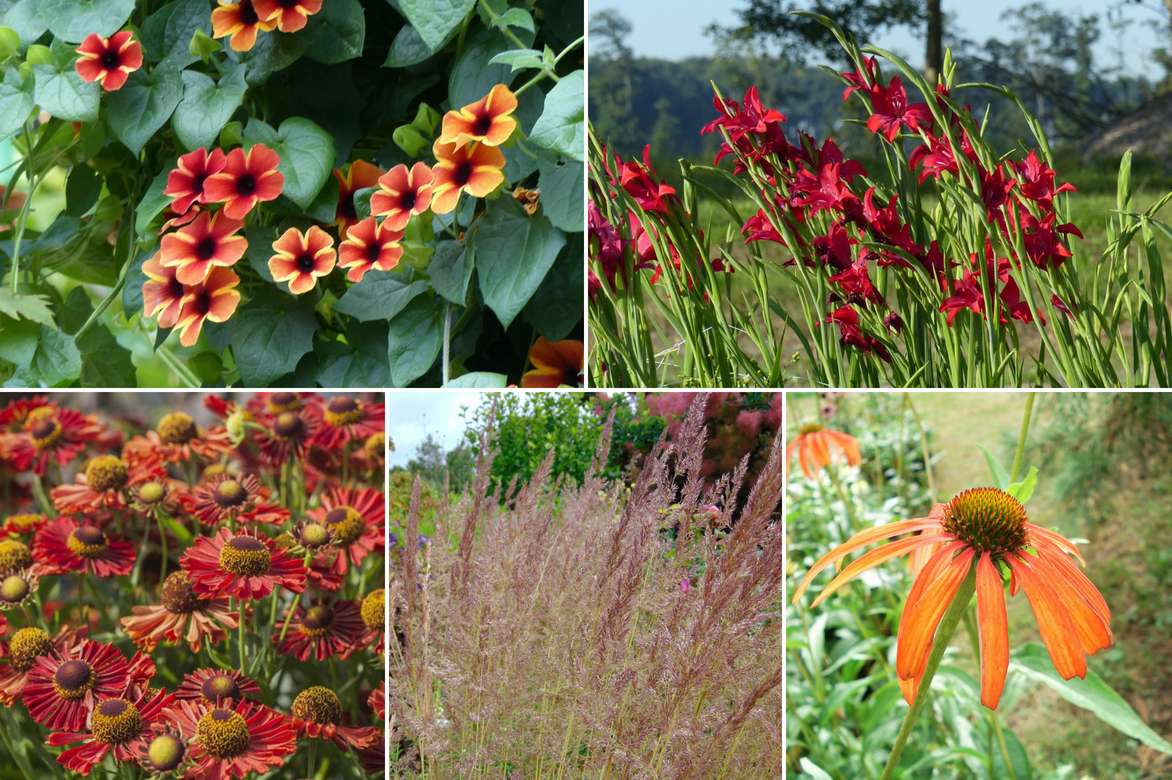
An example of a warm-toned combination: Thunbergia ‘Tangerine Slice’, Gladiolus ‘Robinetta’, Helenium ‘Ranchera’, Calamagrostis acutiflora ‘Avalanche’, Echinacea ‘Tomato Soup’.
Thunbergia pairs easily in a shrub border with many flowering shrubs suited to mild climates, with the red blooms of oleanders, the dwarf pomegranate or the sky-blue of a Scaevola.
Its distinctive flowering will echo the mandarin-coloured trumpet flowers of Campis radicans or trumpet creeper or another perennial climber such as a herbaceous clematis.
It also makes a big impact in a hanging basket or a large container alongside petunias, ivy-leaved geraniums, Lobularia (or sweet alyssum) or Mandevilla.
Pair it with marigolds (Tagetes), gaura or salvias, which will help keep soil cool at its base.
→ Discover other pairing ideas with black-eyed Susan in our advice sheet!
Useful resources
- Find the best black-eyed Susan seeds here!
- Discover our tips to sow black-eyed Susan successfully
- Achieve beautiful, original, long-flowering summer or spring planters — it’s possible and even easier than it seems with our annual plug plants!
- Just bought our black-eyed Susan plug plants? Discover on our blog how to plant and care for these beautiful annuals.
- Do your plants seem ill? Discover how to help them in our advice sheet: Diseases and pests of black-eyed Susan
Frequently asked questions
-
How to harvest seeds of black-eyed Susan?
Thunbergia, or black-eyed Susan vine, only sets seed in warm climates, so it's quite rare to see this happen in our gardens. However, plants grown in pots and kept warm indoors may, after flowering, form small globose capsules hidden between two green bracts. Leave capsules to dry on plant but harvest seeds before they burst, catapulting small round seeds away; you will then have great difficulty retrieving them!
- Subscribe!
- Contents
This form is protected by reCAPTCHA - the Google Privacy Policy and Terms of Service apply.

































Comments