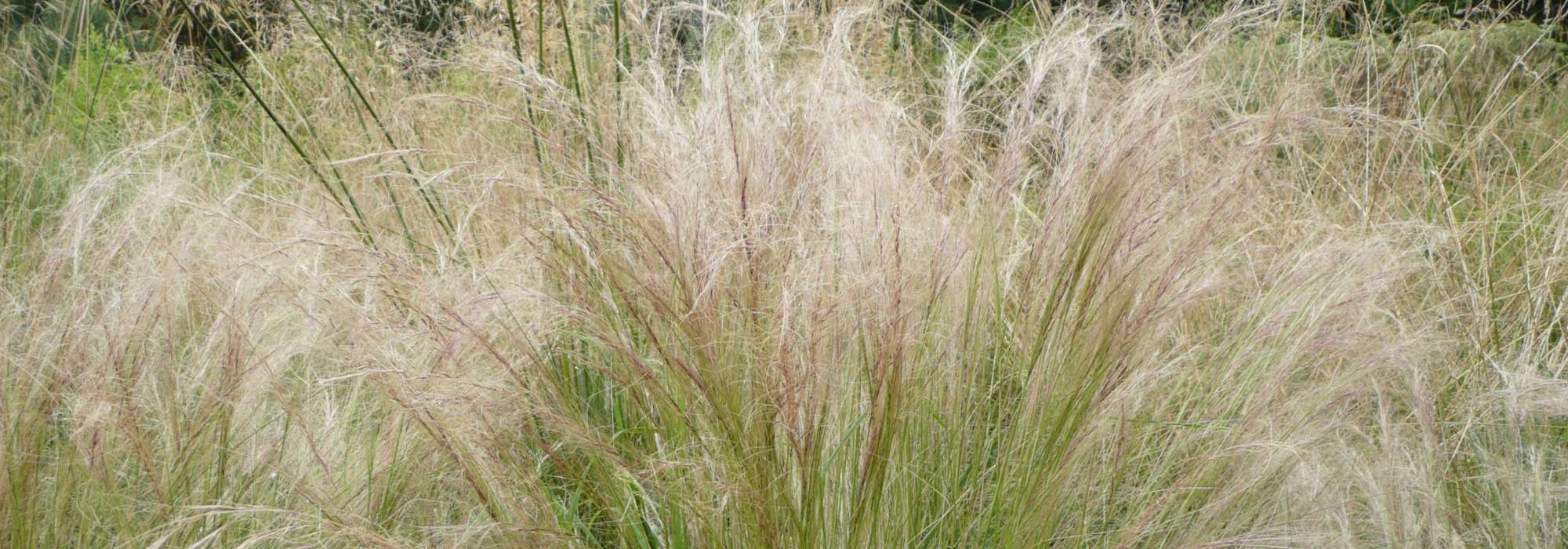
Stipa, feather grass: planting, pruning, care
Contents
Feather grass in a nutshell
- Undoubtedly the most popular grass
- With silky spikes that dance in wind and light, its flower display is one of the most beautiful
- Unafraid of wind or heat, it grows in dry or well-drained soil
- Easy to grow, it quickly fills sunny, dry, exposed and arid areas of the garden
- Attractive all year round, equally at home in natural or contemporary gardens, in borders, rockeries and even in pots
Message from our expert
Fans of wild gardens are well acquainted with Stipa, this grass with silky, lightweight tufts that ripple at the slightest breeze.
Proudly upright yet supple and airy, it lightens all natural compositions or softens the clean lines of a mineral garden and, in recent years, has become a must-have, one of the most beautiful flowering grasses.
Hardy and unfazed by harsh conditions, neither too large nor too small, Stipa is a perennial plant at ease in all gardens, from the wildest to the most contemporary.
From Stipa tenuifolia (syn. Stipa tenuissima), better known as “feather grass” or “ponytails” in English-speaking countries, to the giant Stipa gigantea and Stipa capillata with delicate, silvery, silky spikelets, they all offer a superb plume in every season that catches the light in dew or frost.
Stipa fears neither wind nor heat, tolerates drought and thrives in sun in dry or well-drained soil.
With its quivering silhouette and authentic wild look, it will add structure and volume to windy, arid areas of the garden, in naturalistic borders, dry rockeries, along paths and also in containers.
Add scale and poetry to your garden and discover the Stipa, one of the trendiest grasses right now.

Description and botany
Botanical data
- Latin name Stipa
- Family Poaceae
- Common name Feather grass
- Flowering June to November
- Height 0.45 to 2 m
- Sun exposure Full sun, partial shade
- Soil type Dry, well-drained
- Hardiness -5°C to -20°C depending on variety
Le Stipa est une plante vivace herbacée appartenant à la famille des poacées, comme de nombreuses graminées. Elle pousse aussi dans les sous-bois clairs et sur les pentes rocheuses d’Amérique centrale, de l’Argentine au Mexique, du sud de l’Europe et de l’ouest de l’Asie.
Stipa is a perennial herbaceous plant belonging to family Poaceae, like many grasses. It also grows in open woodland and on rocky slopes in Central America, from Argentina to Mexico, in southern Europe and western Asia.
Si le genre compte environ 300 espèces, dans nos jardins, on rencontre le plus souvent le Stipa tenuifolia (syn.Stipa tenuissima) surnommé “cheveux d’ange” avec ses épis à barbes blondes soyeuses, le Stipa pennata aux épis de graines argentés, Stipa gigantea, la stipe géante ou avoine géante qui peut atteindre 2 mètres de hauteur, Stipa capillata à souche épaisse et gazonnante et aux feuilles vert glauque, et Stipa arundinacea au feuillage vert teinté de rouille.
Although the genus includes around 300 species, in gardens the most frequently encountered are Stipa tenuifolia (syn. Stipa tenuissima), nicknamed “feather grass” for its silky, pale-bearded spikes; Stipa pennata with silvery seed spikes; Stipa gigantea, the giant stipa or giant oat that can reach 2 m; Stipa capillata with a thick, turf-forming clump and glaucous green leaves; and Stipa arundinacea with green foliage tinged with rust.
De croissance assez rapide, le stipa se tient dressé tout en restant souple, avec un port plus ou moins ample et retombant. Cette graminée rhizomateuse pousse en touffe compacte dense et vigoureuse, de 50 cm à 2 m de hauteur selon les espèces, hérissée à légèrement arquée, elle s’évase parfois en fontaine gracieuse formant une gerbe spectaculaire.
With quite rapid growth, Stipa stands upright yet remains flexible, with a habit ranging from fairly compact to arching and trailing. This rhizomatous grass grows in a compact, dense and vigorous clump, 50 cm to 2 m tall depending on species; bristly to slightly arched, it sometimes fans out into a graceful fountain forming a spectacular sheaf.
Persistantes en climat doux ou caduques, les feuilles longues de 10 à 70 cm, sont linéaires très fines, arquées, généralement enroulées, parfois plates, ondulant à la moindre brise. Luisantes et coriaces, elles sont vert frais à vert foncé ou vert-bleuté. Les jeunes feuilles printanières vertes du Stipa arundinacea, se distinguent en se panachant d’orange brûlé en été puis virant au rouille cuivré en hiver.
Evergreen in mild climates or deciduous, the leaves 10 to 70 cm long are very fine, linear, arching, usually rolled but sometimes flat, and ripple at the slightest breeze. Shiny and leathery, they range from fresh green to dark green or blue-green. Spring growth of Stipa arundinacea is green, becoming flushed with burnt orange in summer and turning coppery rust in winter.
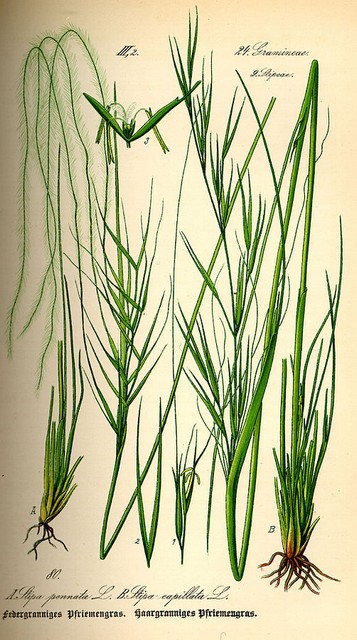
Stipa pennata et Stipa capillata – illustration botanique
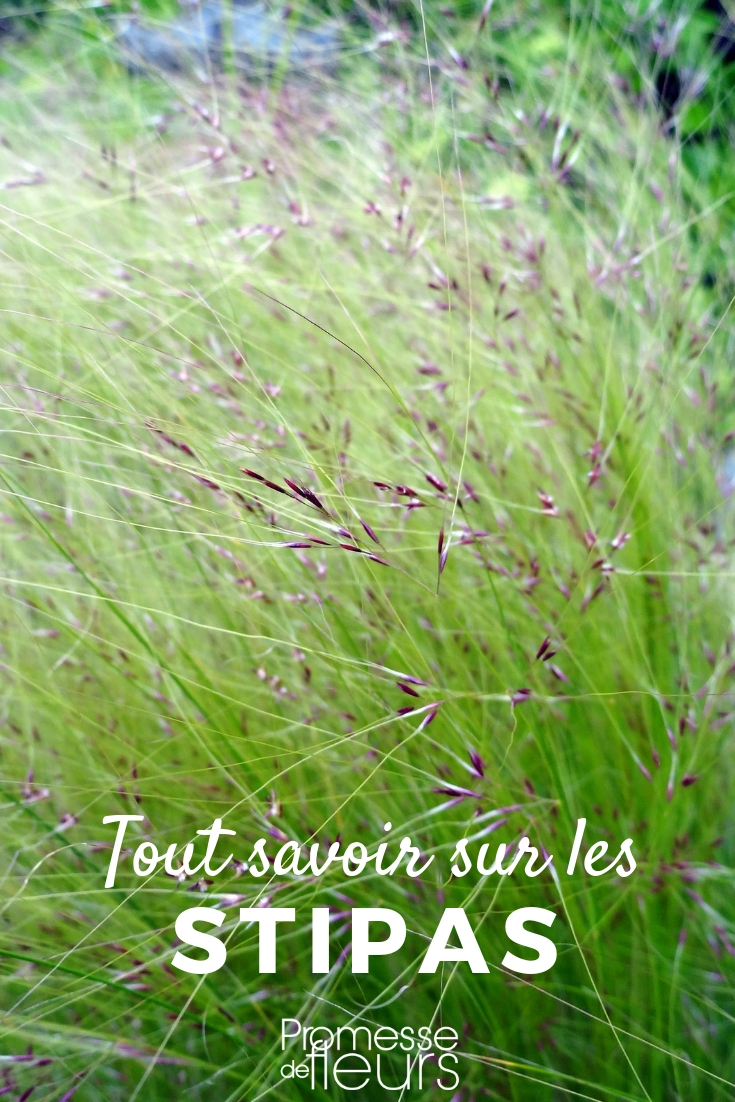
De cette masse de feuillage rubané émergent de nombreux chaumes élancés très solides, portant de mai-juin à octobre à leur extrémité, des inflorescences en panicules duveteuses, étroites, légèrement courbées vers le sol. Formées d’épillets aplatis portant des éperons plumeux ou soyeux de 10 à 80 cm de longueur, elles se balancent au moindre souffle d’air.
From this mass of ribbon-like foliage rise numerous tall, sturdy culms bearing, from May–June to October, narrow, fluffy panicle inflorescences that nod slightly towards the ground. Made up of flattened spikelets with plume-like or silky awns 10 to 80 cm long, they sway at the slightest breath of air.
Si chez le Stipa gigantea la floraison retombe en panicules mordorées ressemblant à celles des avoines, la plupart des stipes évoquent une chevelure d’ange d’une poésie sans pareil.
While in Stipa gigantea the flowering falls into coppery panicles resembling those of oats, most stipes recall an angelic mane of unparalleled poetry.
Argentés, blancs teintés de pourpre, blond couleur de parchemin devenant bronze doré en automne ou rose foncé à brun, ces épillets barbus sont si fins qu’ils ressemblent de loin à un nuage scintillant.
Silver, white flushed with purple, parchment-blond turning bronze-gold in autumn, or deep pink to brown, these bearded spikelets are so fine they look like a shimmering cloud from afar.
Durant l’été, les plumets fructifient et se métamorphosent en des graines spectaculaires prolongées par de longs fils aux allures de barbes soyeuses ou de filasse qui flottent au vent et scintillent sous la rosée du matin et au moindre rayon de soleil. Disséminées par le vent, elles se ressèment où bon leur semble dans la nature.
During summer the plumes set seed and transform into spectacular seeds extended by long threads resembling silky beards or floss that float on the wind and sparkle under morning dew and at the slightest sun. Wind-dispersed, they self-seed freely in the wild.
Très graphiques, ils sont très appréciés pour les compositions de fleurs séchées et poursuivent le spectacle en hiver quand une gelée blanche recouvre les chaumes et les inflorescences desséchées.
Highly graphic, they are much prized for dried flower arrangements and continue the show in winter when a hoar frost coats the culms and desiccated inflorescences.
Faciles à cultiver, rustiques pour la plupart (-10 à -20°C°), acceptant même les vents desséchants, les vents marins chargés d’embruns, et les averses sans frémir, les stipes peuvent être plantées dans la majorité de nos régions : certaines plus frileuses (-5°) sont cependant à réserver aux climats doux.
Easy to grow and hardy for the most part (-10 to -20°C), even tolerating drying winds, sea winds with salt spray, and heavy showers without flinching, stipes can be planted in most regions: some more tender forms (-5°C) should be reserved for mild climates.
Le Stipa a besoin du plein soleil pour se développer correctement et prospère sur des terres ingrates se contentant d’un sol sec, léger, calcaire, plutôt pauvre, très drainant : il redoute l’humidité hivernale.
Stipa needs full sun to develop properly and thrives on poor ground, content with dry, light, calcareous, rather poor, very free-draining soil: it dislikes winter wet.
Sous la lumière rasante d’une fin d’été comme sous le givre, le Stipa apporte toujours une présence forte, une belle structure et une légèreté incomparable au jardin, du plus sauvage au plus contemporain ou urbain. C’est une plante incontournable pour les jardins secs.
In the low light of late summer as under frost, Stipa always brings a strong presence, lovely structure and an incomparable lightness to gardens, from the wild to the contemporary or urban. It is an essential plant for dry gardens.
Il se plante en isolé ou en grande masse dans les grands massifs et les prairies naturalistes, pour souligner une allée ou une bordure ou dans un grand pot.
Plant as a specimen or in large drifts in large beds and naturalistic meadows, to line an avenue or a border, or in a large pot.
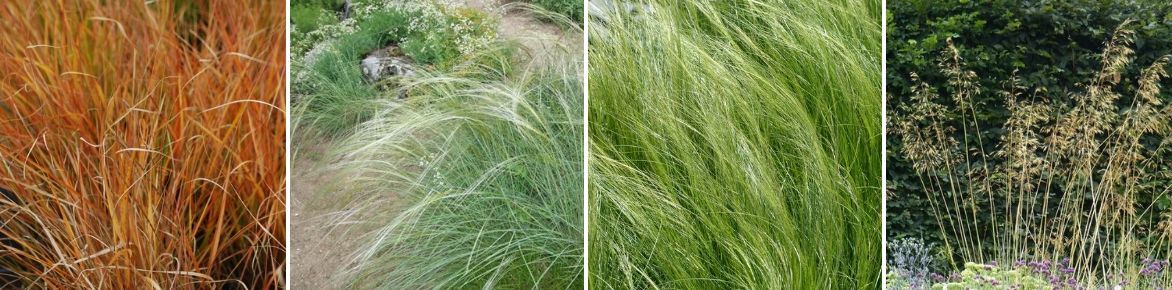
Les stipes forment un groupe quelque peu hétéroclite : Stipa arundinacea, Stipa capillata, Stipa tenuifolia, Stipa gigantea.
Stipes form a somewhat motley group: Stipa arundinacea, Stipa capillata, Stipa tenuifolia, Stipa gigantea.
Main species and varieties
A small number of Stipa species are available for sale, varying in size (from 45 cm for the best-known Stipa tenuifolia or “feather grass” to 2 m in height for Stipa gigantea, best placed at the back of a border) and in hardiness. While most tolerate severe cold (down to -20°C in well-drained soil) without flinching, others are only moderately hardy (-5°C).
All are sun-loving perennials (that prefer full sun) that dislike excess water and clay soils. Stipas adapt very well to growing in pots and form in the garden an ornamental clump all year round!
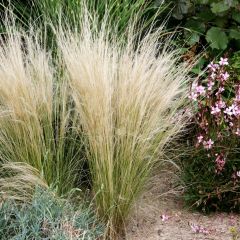
Stipa tenuifolia
- Flowering time August, September
- Height at maturity 45 cm
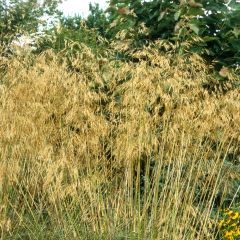
Stipa gigantea
- Flowering time June to August
- Height at maturity 2 m
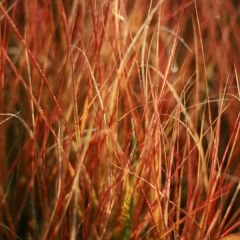
Stipa arundinacea
- Flowering time September to November
- Height at maturity 1 m
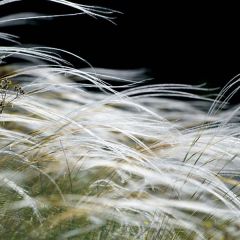
Stipa pennata
- Flowering time August to November
- Height at maturity 40 cm
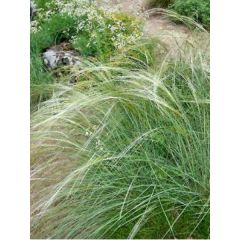
Stipa capillata
- Flowering time August, September
- Height at maturity 60 cm
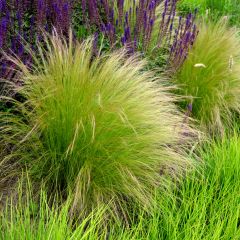
Stipa tenuissima Angel Hair
- Flowering time August, September
- Height at maturity 45 cm
Discover other Stipa
View all →
Available in 0 sizes
Available in 3 sizes
Available in 2 sizes
Available in 1 sizes
Available in 3 sizes
Available in 2 sizes
Available in 2 sizes
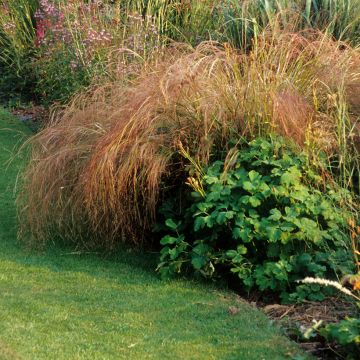
Available in 2 sizes
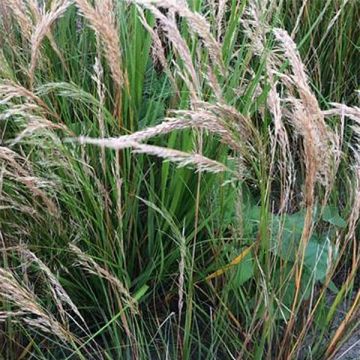
Available in 2 sizes
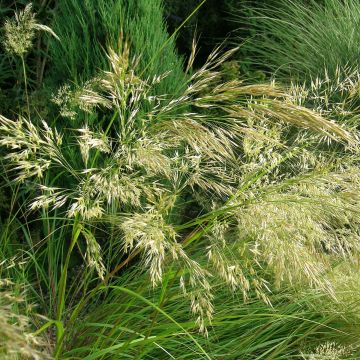
Available in 1 sizes
Planting
Where to plant Stipa
Most Stipa offer good frost resistance (down to -15°C to -20°C in well-drained soil) and grow throughout France.
Stipa needs light and will be vigorous in full sun, in warm sites, though it tolerates light shade. It withstands drought, heat, drying winds and sea spray. It is perfectly suited to seaside gardens exposed to maritime winds.
It is undemanding and tolerant of harsh conditions, thriving in poor, stony or sandy soils. It prefers dry, light, rocky, even calcareous soils that are well drained and low in fertility. A cool, very well-drained soil will give some species, such as Stipa gigantea, a lusher appearance.
Only heavy, waterlogged soils that remain too wet in winter are detrimental.
Give it a sunny, open position: it fills out in two seasons and tends to form large, airy clumps. Until it reaches full development, fill gaps with annuals.
It can lift the back of a border by adding height and volume and help structure it, but it can also serve as a groundcover for the lowest species.
Essential in a dry or gravel garden, it suits all styles from the wilder to the more graphic and modern, blending very well into contemporary schemes. Its decorative appearance for much of the year offers many uses: as a specimen for large Stipa, planted en masse or in groups scattered through large wild borders that it lightens, to edge a path, in dry rockeries, in a mixed-border weaving among larger companions and even in a large pot on a terrace to allow frequent contact with those wind-tossed spikelets of extreme softness.
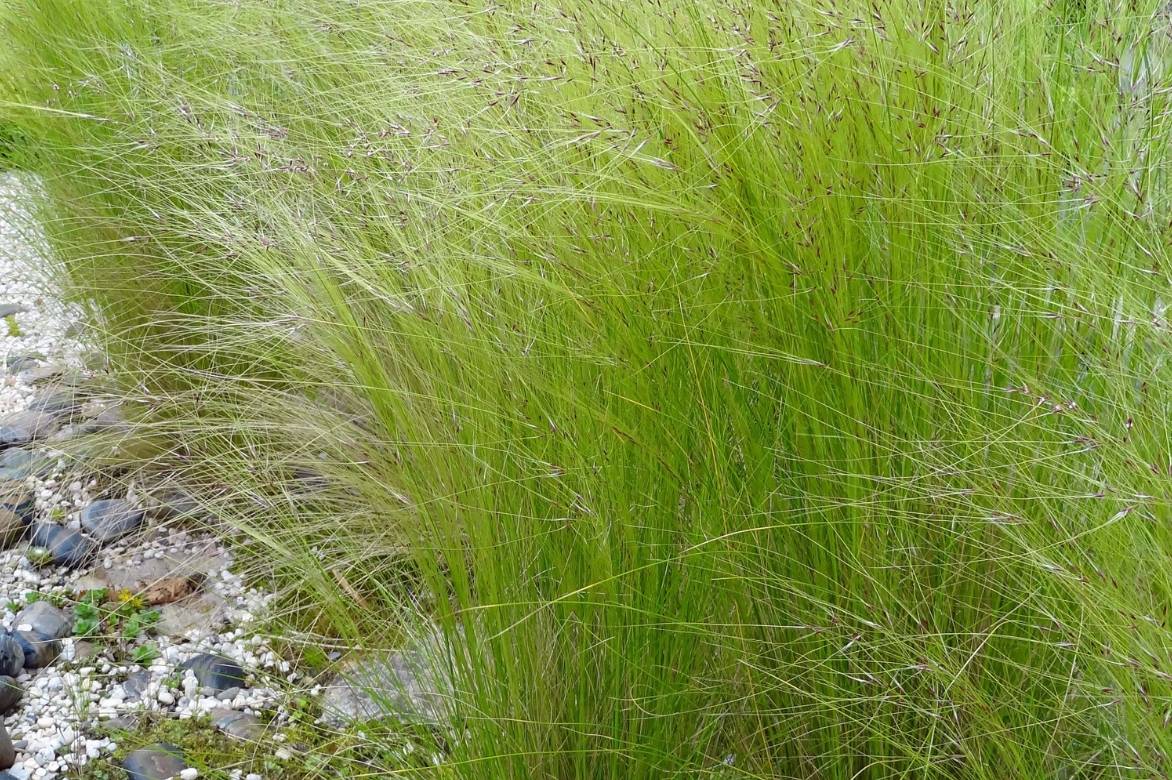
Stipa planted among stones and gravel
→ Watch our video ‘Grasses for summer‘
When to plant Stipa
Plant Stipa in spring from March to May in cold, wet regions, or in autumn from October to November to allow good root establishment before summer in warm, dry climates. In all cases, plant when frosts are no longer expected.
How to plant Stipa
In open ground
Stipa must be planted in well-draining soil that does not retain winter waterlogging. Plant giant Stipa as specimens for a dramatic effect or at one plant per m². For a linear planting, space plants 40 cm apart. To structure a large wild area, favour mass planting in groups of 3 to 7 plants per m².
Do not add compost or fertiliser at planting, but add a good shovelful of gravel, especially in heavy or clay soils, to improve drainage. In very wet or clayey ground, plant on a raised, stony bank and in pure sand.
- Dig a hole 2 to 3 times wider than the rootball diameter
- Loosen excavated soil well and add a shovelful of potting compost and river sand to lighten it
- Spread a drainage layer at the bottom of the hole
- Place the rootball in the centre of the hole; collar should be level with soil surface
- Firm lightly
- Water once a week during summer following planting
Growing a Stipa in a pot
Substrate must be light. Group several plants together.
Stipa can also be sown. Discover our advice in our tutorial How to sow Stipa?
- In a large terracotta pot of at least 50 cm diameter, lay a drainage layer (gravel, mix of stones…)
- Plant in a mix of loam, potting compost and 20% coarse river sand
- Water at planting then regularly
- Place in full sun
→ Learn more in our advice sheet: Growing a Stipa in a pot to liven up your terrace or balcony.
Read also
Grasses: which variety to choose?When and how to sow feather grass seeds
Sowing takes place in spring, from February to May using mature seeds harvested in the garden at the end of summer or with our Stipa seeds in sachets. They can prove rather tedious as a period of cold is necessary to break their dormancy. Germination is slow.
- Sow in seed tray or pot in a very fine mix of seed compost and sand
- Cover seeds with a little compost
- Place seedlings at a temperature of 15 to 18 °C for 2 weeks then put in fridge for 3 to 6 weeks
- Keep substrate moist until seedlings emerge
- When seedlings have two or three leaves, prick out into individual 7.5 cm pots
- Overwinter them frost-free and plant out in open ground the following spring or autumn
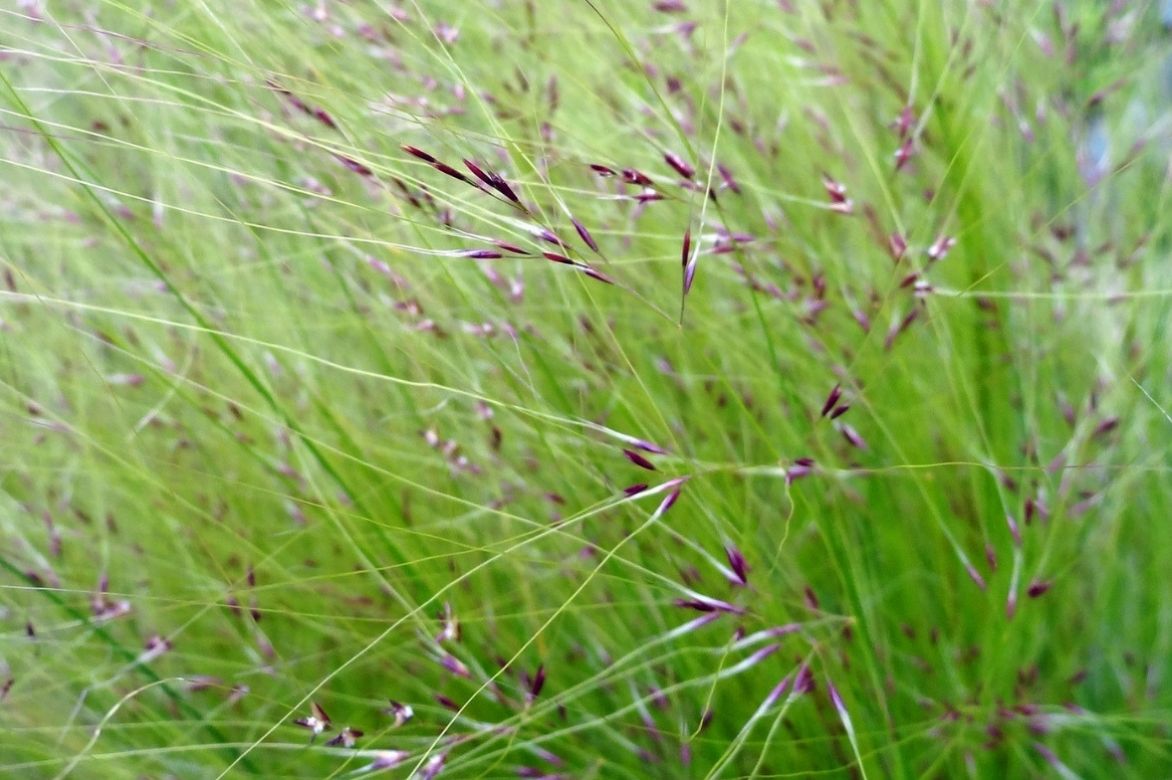
Close-up of inflorescences of Stipa tenuifolia that will later produce seeds.
Care and pruning of feather grasses
Le Stipa is a robust plant, ideal for sustainable gardens, drought-tolerant and maintenance-free! It copes perfectly with cold and drought and once established, requires no watering. However, remember to water Stipa grown in pots; they will need more water, especially in very hot, windy weather.
The foliage of Stipa, evergreen, does not flop over but can be combed simply by hand (with gloves) or with a rake, at the end of winter or in early spring. This operation removes dead leaves that weigh it down and stimulates growth of new foliage. For more on the subject, discover Michaël’s advice : Grasses: those that are pruned, those that are clipped )
Stipa are resistant to disease.
Multiplication
Dividing clumps of Stipa in spring or late summer remains the simplest method. It should be done when clumps are well established, after 3 or 4 years’ cultivation. In addition, most Stipa reseed readily.
- Using a garden fork, gently lift the clump
- Insert two spades back-to-back into its centre and lever one up
- Divide into several divisions
- Replant divisions immediately in pots under a cold frame to encourage establishment
- Water thoroughly
- Plant out at beginning of autumn or following spring
Read also our tutorial : How to divide a Stipa to successfully propagate it?
Combining feather grass in the garden
Centrepiece of scree gardens and wild areas scorched by sun or exposed to sea spray, Stipa stands out with grace in exuberant scenes of a country-style border as well as in the cleaner lines of a contemporary garden.
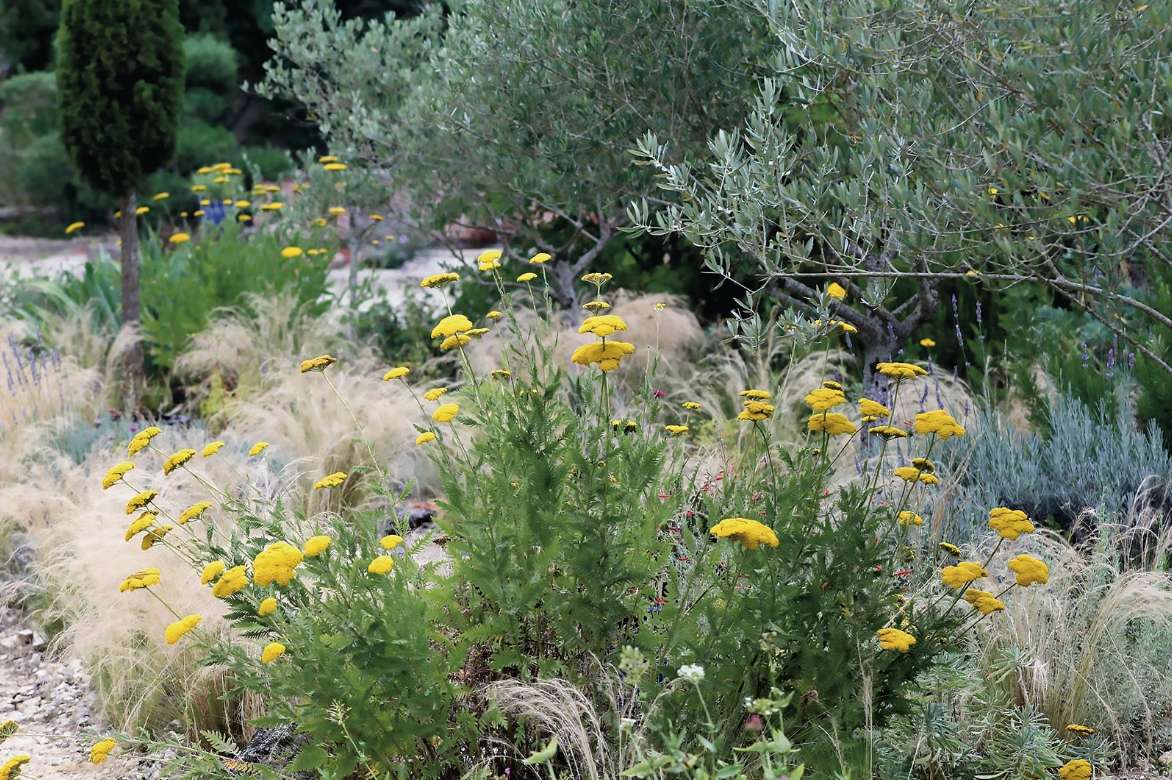
An example of a Mediterranean association: Stipa tenuifolia, Achillea filipendulina ‘Golden Plate‘, Lavender and Olea Europea (Entëoulet garden – Gers © Renée Boy-Faget)
Its silky tufts with shimmering tones and decorative foliage for much of the year bring a trembling poetry, great softness, lightness and movement, easing heavier flower displays. Its often oat-coloured hues and parchment-toned plumes have the advantage of tempering fiery colours in some combinations.
To avoid monotony of mass planting, plant it within subtle themes that rely on contrast of shape and tone.
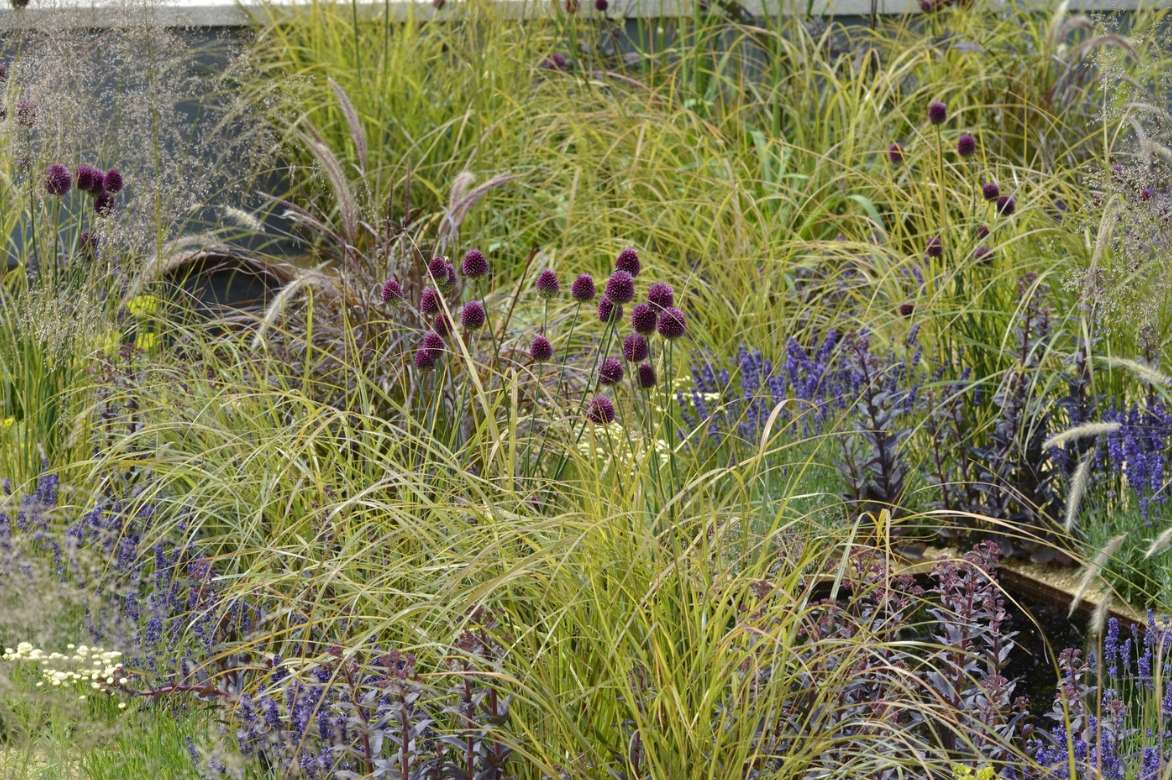
An example of a natural, colourful association: Allium sphaerocephalon, Stipa arundinacea, Lavender, purple Sedum such as ‘Purple Emperor‘ and some Pennisetums (© Nathalie Pasquel – MAP)
Stipa likes to be surrounded by equally undemanding plants that enjoy sun and free-draining soil, such as Eryngium with spiky flowerheads, artemisias and the prickly stems of rosemary.
It will punctuate mineral scenes with airy presence, surrounded by other grasses such as Canche flexueuse, Pennisetum that sway at the slightest breeze or medium-sized phormium.
In large beds, it pairs easily with many perennials that flower in summer or autumn such as Agastache and Allium sphaerocephalon. It will accompany floriferous, airy perennials such as Gauras, Buenos Aires verbenas, linarias, sages, penstemons, Asters, scabious or Nigella damascena. It lightens heavier perennial displays such as oriental poppies or irises.
Stipa adapts perfectly alongside prairie flowers in natural-style gardens. Golden spikes of Stipa gigantea will contrast in shape with large, flat yellow Achillea flowerheads or big oxeye daisies.
Planted in numbers, Stipa and Pennisetum will form a backdrop to colourful summer flowering of Echinacea, daylilies, Helenium or Kniphofia, bringing contrast or restoring harmony between overly strong tones. In a flaming mixed border, they will soften the rather upright habit of these tall plants.
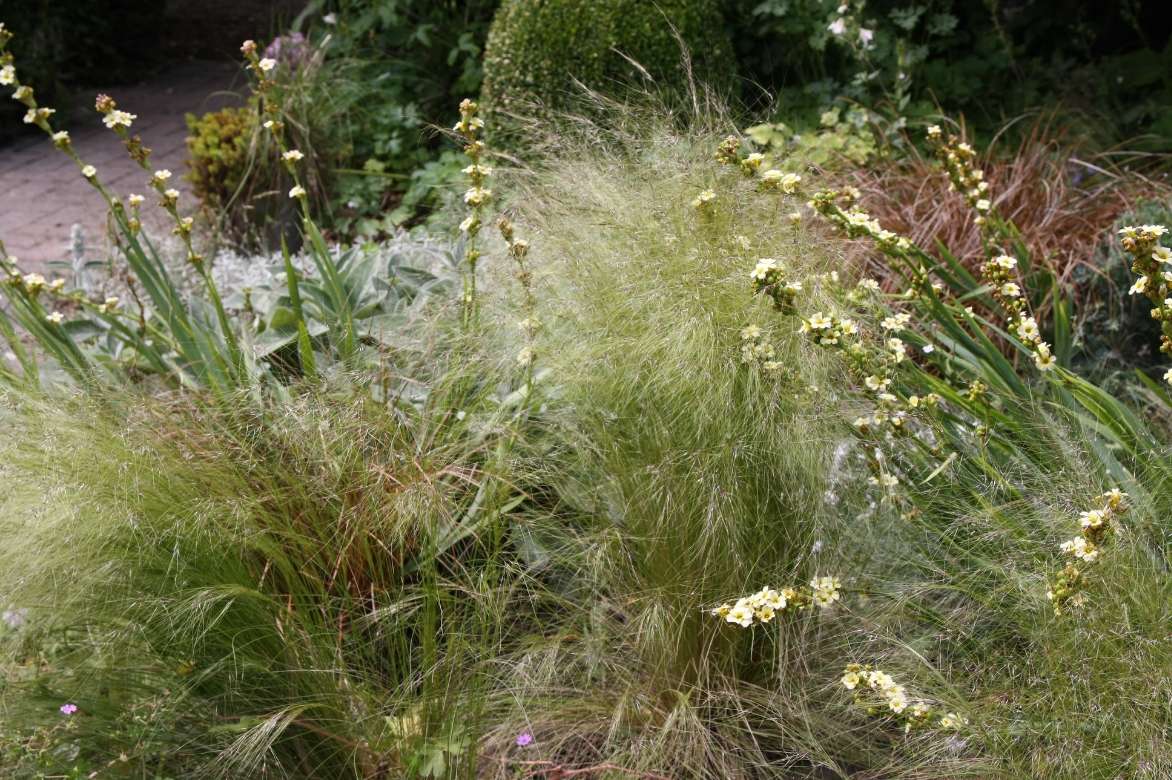
An example of a light association: Stipa tenuifolia, Sisyrinchium striatum, Carex comans ‘Bronze Form’ (Sophie Mestdag garden – photo Virginie Douce).
In the foreground of a border, surround Stipa with plants such as small orpins, dwarf chrysanthemums and sedum.
Silky clumps of stipas are well highlighted by dark foliage of smoke tree, Taxus baccata or Physocarpus.
Useful resources
- Which varieties of grasses to choose, how to prune, plant and pair them — discover all our tips on our blog!
- Create a sunny naturalistic garden with Stipa from our collection!
- Which plants to pair with our Stipa in a dry garden?
- Stipa: which variety to choose for your garden?
- How to comb and care for Stipa: the complete guide
- Discover our ideas for pairing Stipa
- Discover other doudou plants in our advice sheet
- Discover 7 grasses for a south-facing garden
- Discover indestructible grasses
- Subscribe!
- Contents
This form is protected by reCAPTCHA - the Google Privacy Policy and Terms of Service apply.

































Comments