Parsnip: sowing, growing, harvesting and store
Contents
Parsnip in a nutshell
- Parsnip is a root vegetable that belongs to the Apiaceae family, and it is consumed for its fleshy root.
- It is a vegetable that has seen a well-deserved resurgence in interest over the past few years.
- In the vegetable garden, its cultivation is simple as it is a robust plant with few pests and diseases.
- It is no more difficult to sow than carrot, but its seed viability is short: seeds only last for 1 to 2 years.
- In the kitchen, parsnip can be prepared in various recipes (mash, soup, chips), and it is energising and good for health.
A word from our expert
Parsnip, Pastinaca sativa, belongs to the Apiaceae family like carrot, parsley, celery, etc. Cultivated since the Middle Ages, this vegetable has been relatively under-consumed in recent decades. However, it deserves its place in the garden as well as in the kitchen and has seen a well-deserved resurgence of interest in recent years.
Unlike carrot, the variety choice is relatively limited, but there are still opportunities for delightful discoveries: ‘Tender and True’ is a variety renowned for its sweet flavour and subtle taste; ‘De Guernesey’, a more classic variety, is very effective in the garden as it generally produces very well; ‘White Gem’ is a variety of good taste quality, which develops a sweeter flavour after the first frosts, and it is also better suited to heavy soils as its root is shorter.
In the vegetable garden, sowing is sometimes feared (wrongly) but its cultivation is simple and productive, ideal for beginners! Indeed, parsnip is a robust vegetable that resists diseases well and pests like carrot fly larvae. One should simply pay particular attention to sowing: the seed takes between 12 to 25 days to germinate, and during this time, care must be taken to ensure that the soil does not dry out. Similarly, the germination capacity of the seed (that is, its lifespan) is only 1 to 2 years. Therefore, it is necessary to frequently buy seeds unless you harvest your own seeds (we will see how to proceed in the section “make your parsnip seeds” below.)
Description and Botany
Botanical data
- Latin name Pastinaca sativa subsp. sativa
- Family Apiaceae
- Common name Parsnip
- Flowering Biennial grown as annual
- Height 1 year (sometimes 2 years)
- Sun exposure Sun
- Soil type Deep, rich without fresh manure, light
- Hardiness hardy to very hardy
The parsnip is a plant native to the Mediterranean region where wild forms of carrots and parsnips were gathered without true distinction. A confusion that lasted until the 16th century, and also at the level of terms, indeed “pastinaca”, “siser”, “gingidion” could refer to both carrot and parsnip. Scientifically, it is still accepted that cultivated parsnip is a domestication of wild parsnip (Pastinaca sativa L. subsp. sylvestris), a form very common in Southern Europe.
Etymologically, the genus name Pastinaca comes from the Latin Pastus and means food, nourishment. The species name sativa means cultivated. The term parsnip is therefore a derivative of Latin.
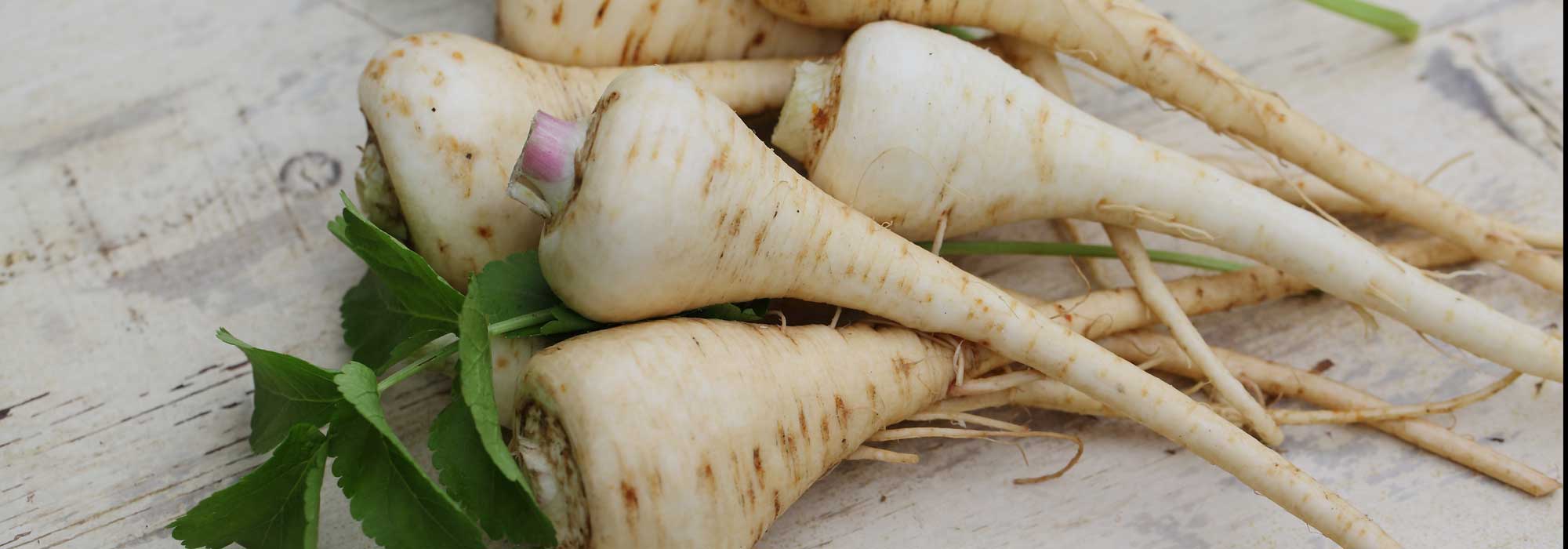
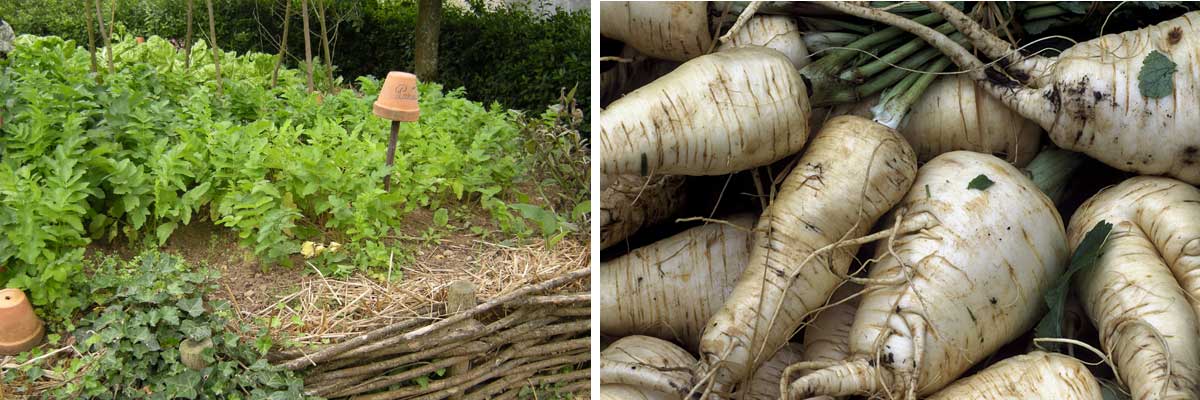
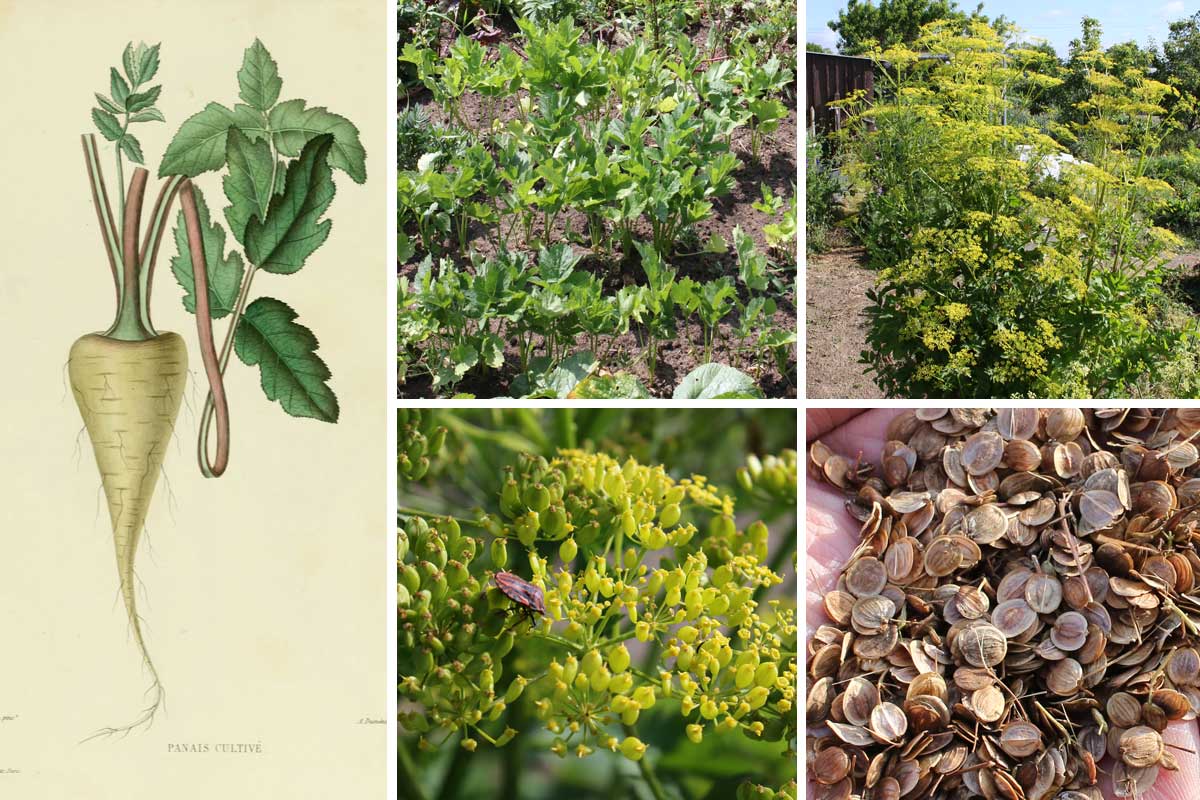
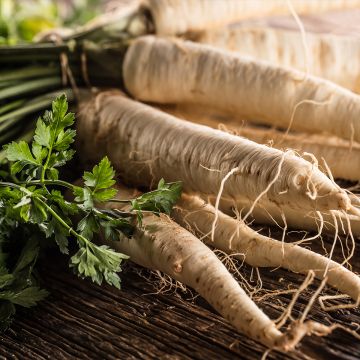
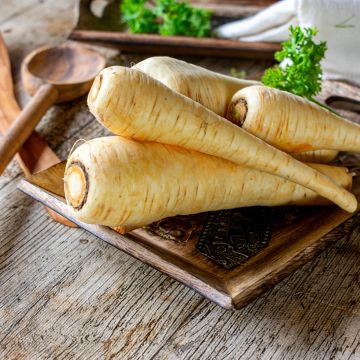
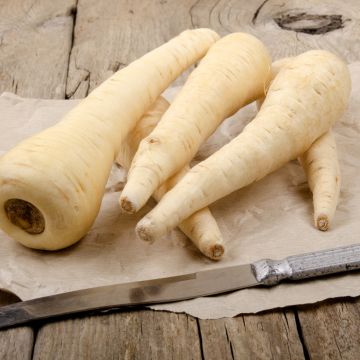
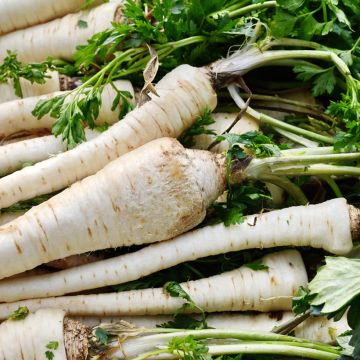
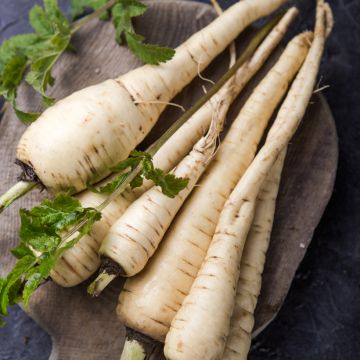
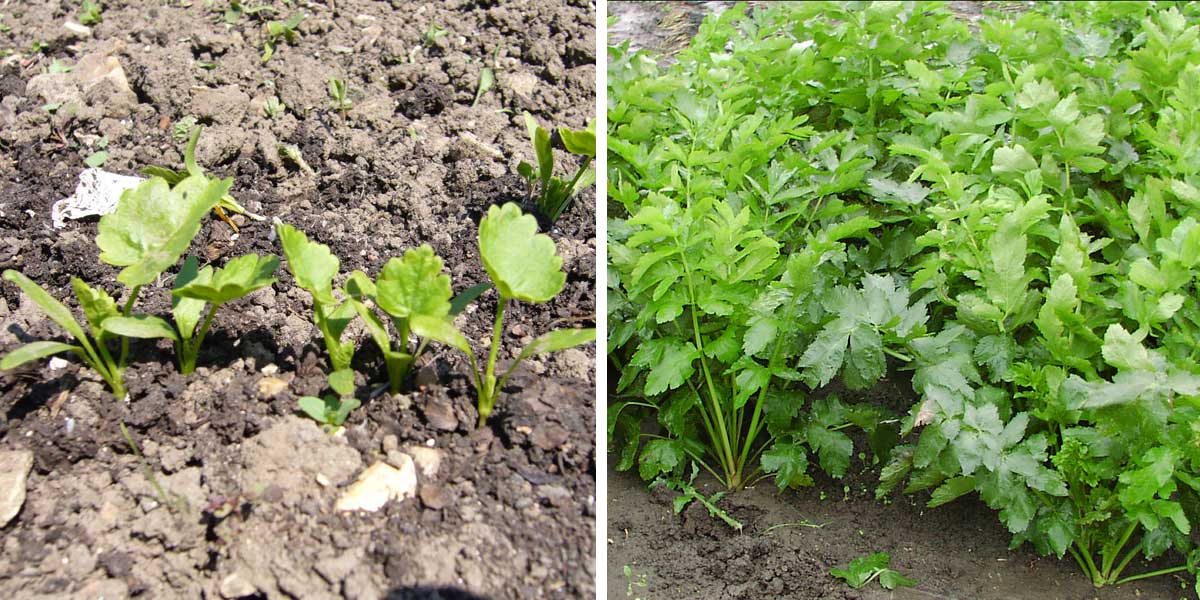
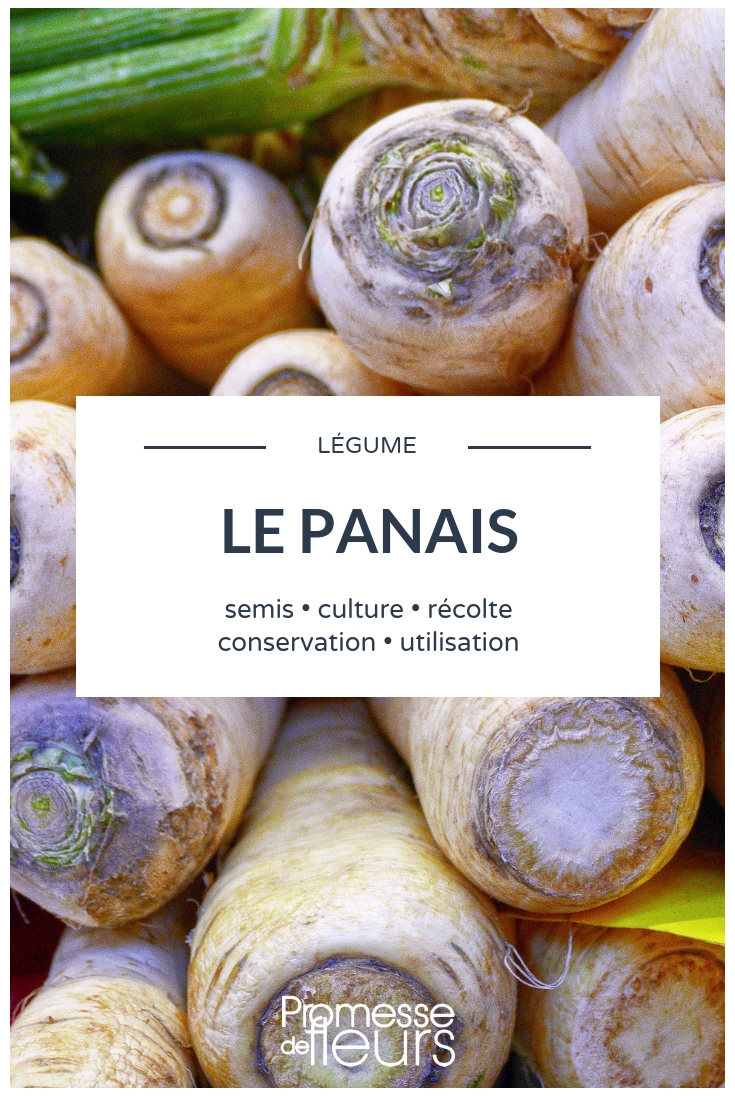
The parsnip, Pastinaca sativa subsp. sativa is a biennial plant (grown as annual) that belongs to the Apiaceae family like carrot, fennel, and parsley. It consists of a root similar to carrot, its colour is always white to cream, even yellowish, it has more rootlets than carrot. The leaves are tougher, larger, and less dissected than those of carrot. They are pinnate, lobed, and dentate. In the first year, the parsnip forms the root and foliage, in the second year, it flowers and emits a large hollow flower stalk in summer that bears multiple umbels of small yellowish-green flowers. The parsnip flower is allogamous and entomophilous, many insects come to visit it. The seeds at ripeness are light brown.
Parsnip varieties
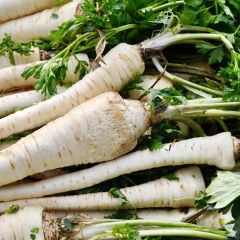
Parsnip Half Long Guernsey - Vilmorin Seeds
- Flowering time June to August
- Height at maturity 50 cm
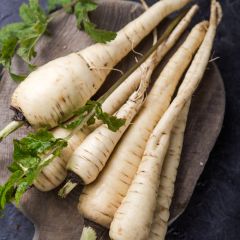
Parsnip Tender And True - Ferme de Sainte Marthe Seeds
- Flowering time June to August
- Height at maturity 50 cm
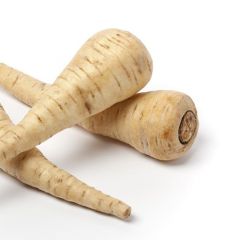
Parsnip Halblange Weisse - Ferme de Sainte Marthe Seeds
- Flowering time June to August
- Height at maturity 50 cm
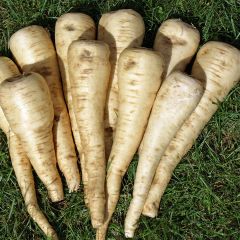
Parsnip Turga - Ferme de Sainte Marthe Seeds
- Flowering time June to August
- Height at maturity 50 cm
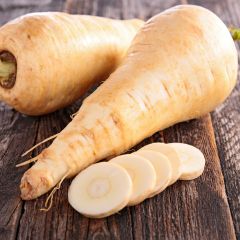
Parsnip White Gem
- Flowering time June to August
- Height at maturity 50 cm
Discover other Parsnips
View all →
Available in 1 sizes
Available in 1 sizes

Available in 1 sizes

Available in 1 sizes
Available in 1 sizes
Available in 1 sizes
Available in 1 sizes
Available in 1 sizes
Available in 1 sizes
Available in 1 sizes
Sowing parsnip
Where and when to sow parsnip?
Parsnip can be sown in all regions of mainland France. It is generally sown from February to June. However, in the south of France, particularly in Provence, it is advisable to avoid sowing in June. In mild climates, it is possible to sow parsnip at the end of September.
How to sow parsnip?
Due to the length of its root, parsnip prefers deep soil, so it is essential to properly loosen the soil before sowing. For this operation, use a broadfork or a spading fork, loosening the soil deeply without turning it over. If necessary, add well-matured compost to the bed, then level it with a rake and break up the last clumps until a fine structure is achieved. Seeds are sown directly in the ground in rows spaced 40 cm apart.
To sow:
- Draw deep furrows of 1 cm.
- Sow one seed approximately every 3 cm.
- Cover the seeds with 1 cm of fine soil.
- Firmly press the sowing furrow with the back of the rake.
- Water gently to avoid creating a crust.
Parsnip germination takes between 12 and 25 days; water regularly and gently, ensuring the soil does not dry out during this period.
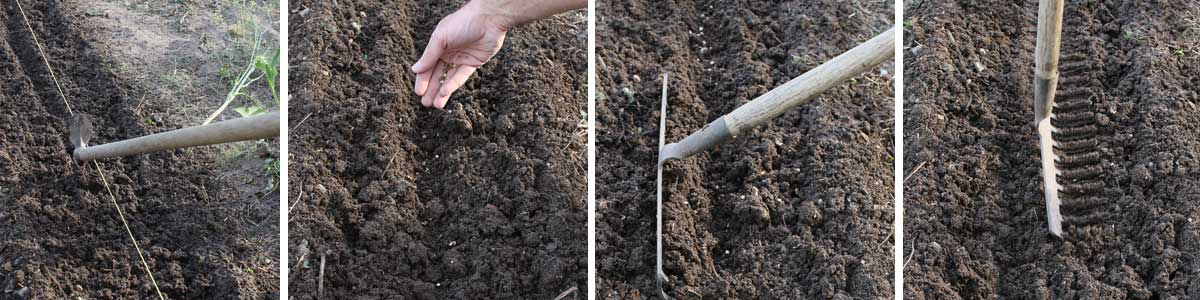
Steps for sowing parsnip – Photo: A. Gourmelen
Cultivation, care and companion planting
Parsnip requires normal fertilisation (about 3 kg/m²) using well-composted manure or decomposed plant compost, at the end of autumn or the beginning of spring. Note that parsnip cannot tolerate undecomposed organic fertilisers. It is a robust, hardy plant that encounters few diseases and pests.
Maintenance tasks include:
- Thinning to 10 – 15 cm apart in the row when the plants have 3 to 4 leaves.
- Weeding and hoeing regularly.
- Watering during dry and hot weather, in the morning or evening.
- Mulching when the soil is sufficiently warmed.
Good companions for parsnip are beetroot, kohlrabi, onion, and radishes. It does not like being near lettuce. I recommend associating it only for root consumption: if you are sowing parsnip seeds, do not associate it with other vegetables. Indeed, when it produces its seeds (second year of cultivation), parsnip has an adverse effect (this is referred to as negative allelopathy) on the growth of its neighbours.
Harvesting and storing
Harvesting takes place from October to November. Early parsnips are more tender and have a finer flavour, so don’t hesitate to harvest them earlier to enjoy them. As the root can be very deep, it is advisable to use a fork to uproot them.Parsnips can be left in the ground and harvested as needed, especially in regions with mild winters. In this case, it is better to cover the soil with straw or dry leaves. Otherwise, parsnips are generally uprooted in November, the leaves are cut, and left to dry for a few hours on the ground before being stored in the cellar, in crates, alternating with layers of sand.
At home, they can be stored for up to 4 weeks in the bottom of the refrigerator, wrapped in a cloth. Be sure to cut the leaves so that the roots remain as firm as possible. It is also possible to freeze them after peeling and cutting them into pieces, then blanching for 3 minutes before placing them in freezer bags.
Uses and nutritional benefits
Parsnip has a rather distinctive flavour, it complements stews, casseroles, and flavours soups. It is also consumed fried, stir-fried in a wok with soy sauce (for example), and is excellent in mash, gratin, soufflé, or with béchamel. Raw and grated, it can be enjoyed as a salad with vinaigrette, either alone or accompanied by beetroot, carrot, or celeriac.
Sometimes parsnips may have a slightly fibrous core, which can be unpleasant in the mouth. If this is the case, you can easily remove it: cut it into four lengthwise, then remove the fibrous part from each segment with a paring knife.
Parsnip provides slow sugars, fibre, has diuretic, nutritional, and anti-rheumatic properties, and contains vitamins C and B as well as minerals (especially potassium).
Produce your parsnip seeds
Parsnip is a biennial plant, with seed production occurring in the second year. In regions with mild winters, it is possible to leave a few plants in the ground for consumption and allow them to flower in the second year. Simply keep the best parsnips and remove those that are too thin. Leave about double the distance – around 30 cm – between two parsnips intended for seed production.
In regions with harsher winters, or if you wish to carry out more advanced selection work, the roots will all be removed in the first year and stored in a silo or cellar. The parsnips will be selected based on the criteria that define the variety: without too many forks, good length and thickness at the collar, and good regularity of the root. The roots will be replanted in March of the second year, at collar height.
The flower stalk forms at the end of spring, in June, and the seeds follow, maturing by the end of July or in August.
A particular warning should be heeded at the time of seed harvest: parsnip produces furanocoumarins, photosensitive toxic agents. Under the effect of sunlight, these molecules can cause burns on the skin. It is recommended to protect your hands and body and to harvest preferably in the evening.
The umbels are cut and placed on a large cloth where they are beaten to detach the seeds. They can be passed through various sieves to remove debris and be winnowed in the Egyptian style to separate out the light seeds that will not germinate.
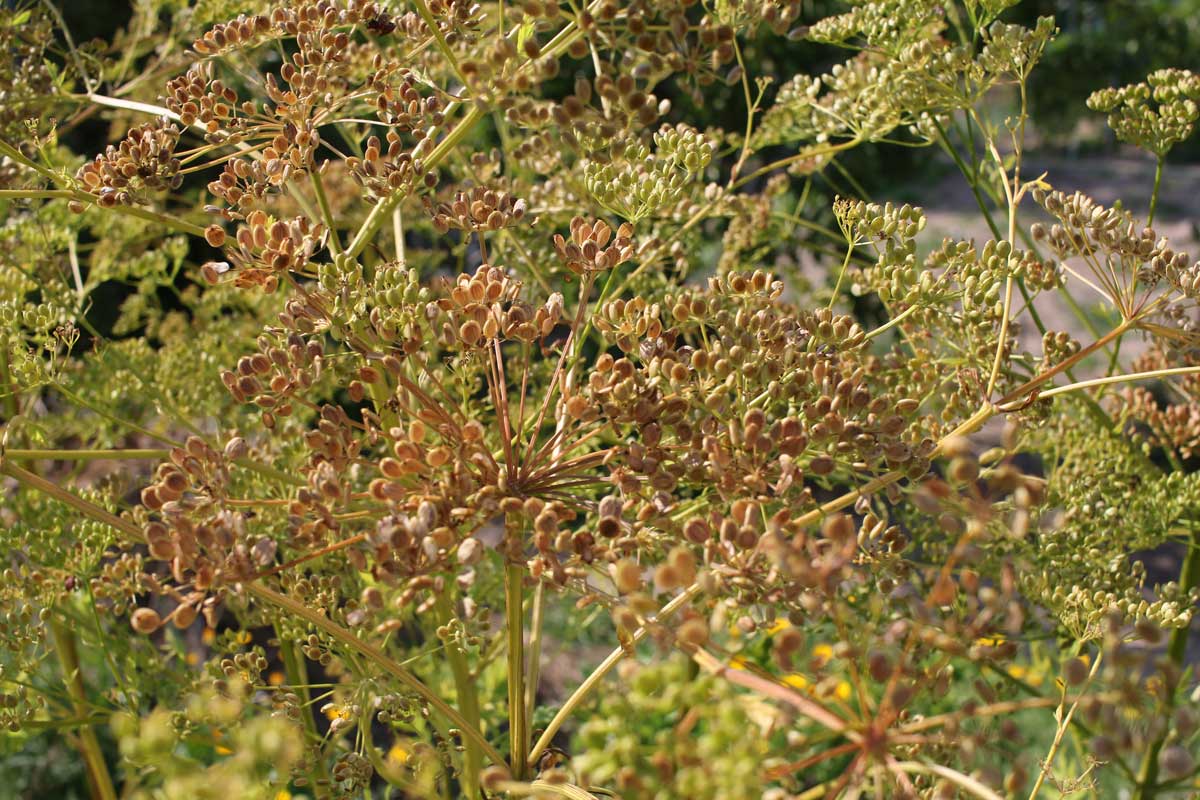
Parsnip seeds on the umbels – Photo: A. Gourmelen
Useful resources
- Discover in our shop our range of parsnip seeds.
- Pascale explains to you how to make vegetable chips and how to choose the best parsnip variety!
- Discover how to recognise and treat parsnip diseases and pests
Frequently asked questions
-
Why aren't my parsnips germinating?
Parsnip seed is quite temperamental! Firstly, its germination capacity, that is to say the time during which it is able to sprout, is only 1 to 2 years, which is relatively short! Be sure to check the "expiry" date or the harvest year on your seed packets. The second difficulty is the germination time. Once sown, parsnip seed, like many other species in its family, can take up to 25 days to germinate, so patience is required. It is important, from the moment the seed is sown, to check the moisture of the soil and water, if necessary, until the seeds sprout.
- Subscribe!
- Contents
This form is protected by reCAPTCHA - the Google Privacy Policy and Terms of Service apply.

































Comments